



Ashley Zhang, chief representative at the Institute of International Finance, speaks at a panel discussion, part of the inaugural Fortune Southeast Asia 500 Summit held in Ho Chi Minh City, November 3, 2026. Photo: Supplied
Vietnam is presented with an opportunity to expand its role in regional finance, not only by attracting international financial institutions but also by developing the IFC and modern digital payment infrastructure to facilitate the smoother movement of capital and money.
The growth of electronic payment platforms, financial technology, and cross-border transaction solutions is opening up new opportunities to connect financial flows across ASEAN.
IFC ready to begin operations
At a panel discussion titled ‘International Finance and the Role of International Financial Centers,’ held as part of the inaugural Fortune Southeast Asia 500 Summit in Ho Chi Minh City on Tuesday, experts said Vietnam’s advantages extend beyond its promising economic growth prospects.
The country also has substantial capital needs to develop infrastructure, production and trade, while transitioning toward higher value-added industries.
The IFC is expected to serve as a bridge connecting international financial institutions with domestic businesses and investment projects, thereby diversifying funding sources for economic growth.
Ashley Zhang, chief representative at the Institute of International Finance, said one of the key functions of an international financial center is to connect markets and facilitate capital flows toward new investment opportunities.
“Ho Chi Minh City does not necessarily have to position itself as a competitor to Singapore or Hong Kong,” she said.
“Instead, it can play a complementary role, contributing to the development of the region’s broader financial ecosystem.”
Her remarks suggest an alternative development strategy for Vietnam’s IFC: identifying areas where the country has competitive advantages and leveraging them to participate more deeply in the regional financial network.
Achieving this will require a transparent regulatory environment, predictable policies, and convenient transaction infrastructure.
Richard D. McClellan, CEO of the Vietnam International Financial Center in Ho Chi Minh City (VIFC-HCMC), said the center had approved a regulation some two months ago allowing its members to engage in a wider range of activities.
Another related regulation is expected to be approved in the coming weeks.
These will enable the IFC to expand the range of products and services available to the market.
“The IFC can now begin operations,” he said.
Looking ahead over the next five to 10 years, McClellan expects the IFC could facilitate capital flows worth hundreds of trillions of U.S. dollars by offering a diverse range of financial products, services, and structures.
However, achieving this ambition will require a phased development roadmap.
Rather than focusing solely on when the financial center will officially open, he said attention should be paid to when individual types of financial services can begin operating.
Each sector has different requirements in terms of regulations, human resources, and infrastructure, meaning implementation timelines will vary.
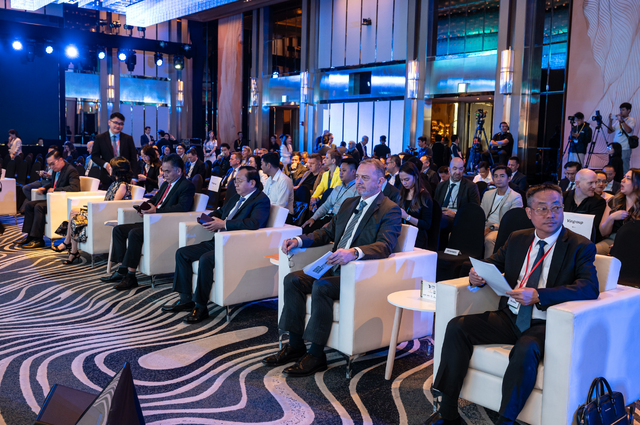
A general view of the discussion, part of the inaugural Fortune Southeast Asia 500 Summit held in Ho Chi Minh City, November 3, 2026. Photo: Supplied
Bigger opportunities to attract investment into Vietnam
While the IFC aims to attract and connect international capital, digital payment infrastructure will play a decisive role in determining how efficiently money can move across markets.
In recent years, countries have witnessed growing competition between commercial banks and central banks as they seek innovative solutions to modernize payment systems.
Winnie Chen, APAC head of global payment solutions at Bank of America, noted that Southeast Asian countries have distinct characteristics in terms of capital flows, monetary policies, and payment system development.
Some markets have established relatively comprehensive electronic payment solutions, while others still have population groups with limited access to financial services.
Chen said that some 50 percent of the region’s population currently uses or has access to banking services.
Therefore, the challenge is not simply to develop more standalone payment platforms, but also to learn from one another and connect existing systems into a common network that facilitates cross-border transactions.
In Vietnam, the presence of numerous electronic payment platforms and e-wallets, including MoMo and ShopeePay, should not be viewed solely through the lens of competition among service providers.
Vietnam’s population of more than 100 million, combined with increasingly widespread access to banking and electronic payment services, offered considerable room for market expansion, Chen said.
Notably, the total value of electronic payment transactions rose by nearly 46 percent in the first quarter of 2026, highlighting continued growth in market demand and scale.
According to businesses, the expansion of electronic payment platforms also creates additional opportunities for the banking system.
The key issue is not merely competing to attract customers, but also drawing more money into the financial system, increasing deposit mobilization and strengthening banks’ funding capacity for lending activities.
To turn these opportunities into tangible advantages, Vietnam needs to further improve its regulatory framework, strengthen risk management capabilities, and promote connectivity among banks, regulatory authorities, and financial technology companies.
With these components developing in a coordinated manner, Vietnam will not only have greater opportunities to attract global capital but also strengthen its position in ASEAN’s financial, trade, and payment networks.


Max: 1500 characters
There are no comments yet. Be the first to comment.