


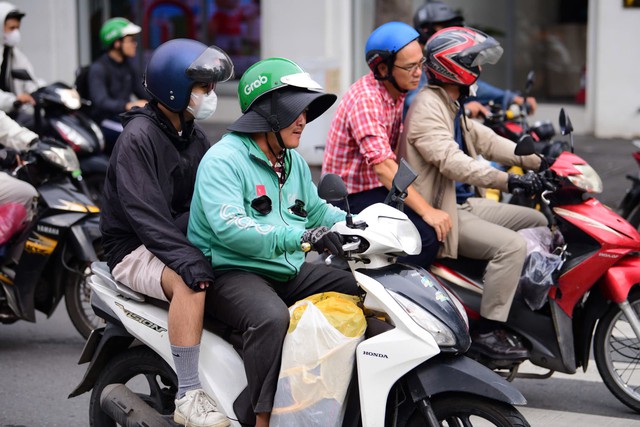
A Grab driver carries a passenger in Ho Chi Minh City. Photo: Quang Dinh / Tuoi Tre
At a recent seminar titled "Social Security for Ride-Hailing Drivers: Current Situation and Solutions," organized by Ho Chi Minh City Labor Federation’s worker consultation and support center in coordination with the city's Social Security Agency, many ride-hailing drivers shared the hardships behind every trip.
Working from early morning until late at night and facing various risks, drivers still lack comprehensive social security protections.
Still driving at seven months pregnant
Le Duc Kiet, a ride-hailing driver, said driving allows workers to manage their own schedules, but their earnings depend on the number of trips, market demand and their ability to work each day.
The nature of the job means drivers earn their livelihoods on the road, making their health their most valuable asset.
"When health problems arise, we not only lose income but also have to deal with medical expenses," Kiet said.
Based on these realities, Kiet said social security for ride-hailing drivers should be addressed with a longer-term perspective.
He emphasized that social security is not a privilege but a foundation that allows workers to feel secure in their jobs and contribute to society.
Ride-hailing drivers also create value every day.

Ride-hailing driver Le Duc Kiet speaks at the seminar. Photo: Thu Hien / Tuoi Tre
Le Thi Tuyet Hoa, a female driver and member of the rescue team under the Binh Tan ride-hailing drivers association, said she was still working to earn additional income despite being seven months pregnant and only a few weeks away from giving birth.
Although she had tried to save money beforehand, she remained worried about the coming period, when she would be unable to work and the entire financial burden would fall on her husband.
"As members of the rescue team, we still have to drive and take part in rescue operations every day, regardless of the weather,” Hoa said.
“Previously, I worked for a company for eight years, during which I received full health insurance, compulsory social insurance and unemployment insurance,” she added.
“But in eight years of driving for ride-hailing platforms, I have never been covered by social insurance.”
Hoa added that despite being women, drivers sometimes get only four to five hours of sleep a day.
Some female drivers have to work at night to earn more when they have few customers during the day.
The work is physically demanding, while earnings also depend on the number of customers and promotional programs offered by platforms.
Some people in their 50s and 60s, and even older, still have to work as ride-hailing drivers without being adequately protected in terms of their rights and benefits.
When they fall ill or reach an age at which they can no longer continue driving, they receive no benefits and must make their own arrangements to support themselves.
What it really takes to make VND15m a month driving ride-hail
Pham Mi Sen, deputy chairman of the Binh Tan ride-hailing drivers' association, said that in their daily interactions with customers and platforms, drivers are referred to as "valued partners."
However, when delivering orders to restaurants and buildings, they may be called "motorbike taxi guys" by security guards or staff, prevented from entering through the main entrance, forced to wait in out-of-the-way corners or denied access to elevators to reach upper floors.
Sen also said that when people hear drivers can earn VND15 million (US$576) a month, some may readily compare them with office workers who have spent years studying but earn similar salaries.
"However, that comparison does not fully reflect reality. Many female drivers, including single mothers, have to wake up at 5 am and work until 10 pm, working all 30 days of the month and 365 days of the year," Sen said.
According to him, drivers have virtually no days off during public holidays and Tet and can only take a break when they fall ill or no longer have the health to continue driving.
In addition, the VND15 million in revenue shown on the app is not the actual income drivers take home, as it does not account for fuel, vehicle breakdowns and various other expenses.
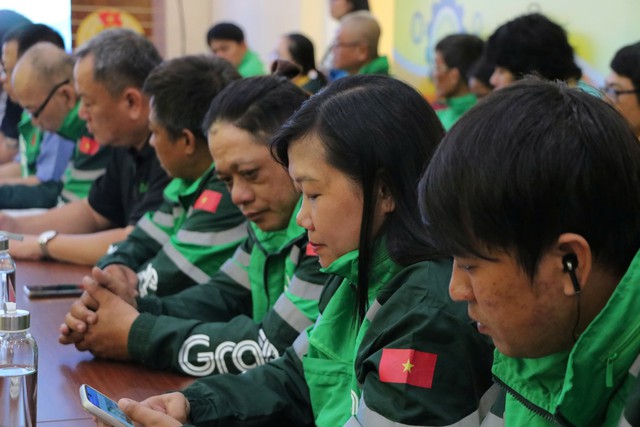
Ride-hailing drivers attend a seminar on social security for ride-hailing drivers in Ho Chi Minh City. Photo: Thu Hien / Tuoi Tre
The Ho Chi Minh City Labor Federation's worker consultation and support center recently conducted a quick survey on employment, income, working conditions, risks and the legitimate needs of ride-hailing drivers in the city.
The survey covered 141 drivers working on Grab, Be and Xanh SM platforms.
Although its findings cannot fully represent the ride-hailing driver workforce in Ho Chi Minh City, they offer an initial glimpse into the living and working conditions of this group.
Notably, 93.6 percent of respondents said driving was their main job. For many, it is no longer a side job but their primary means of earning a living.












Max: 1500 characters
There are no comments yet. Be the first to comment.