


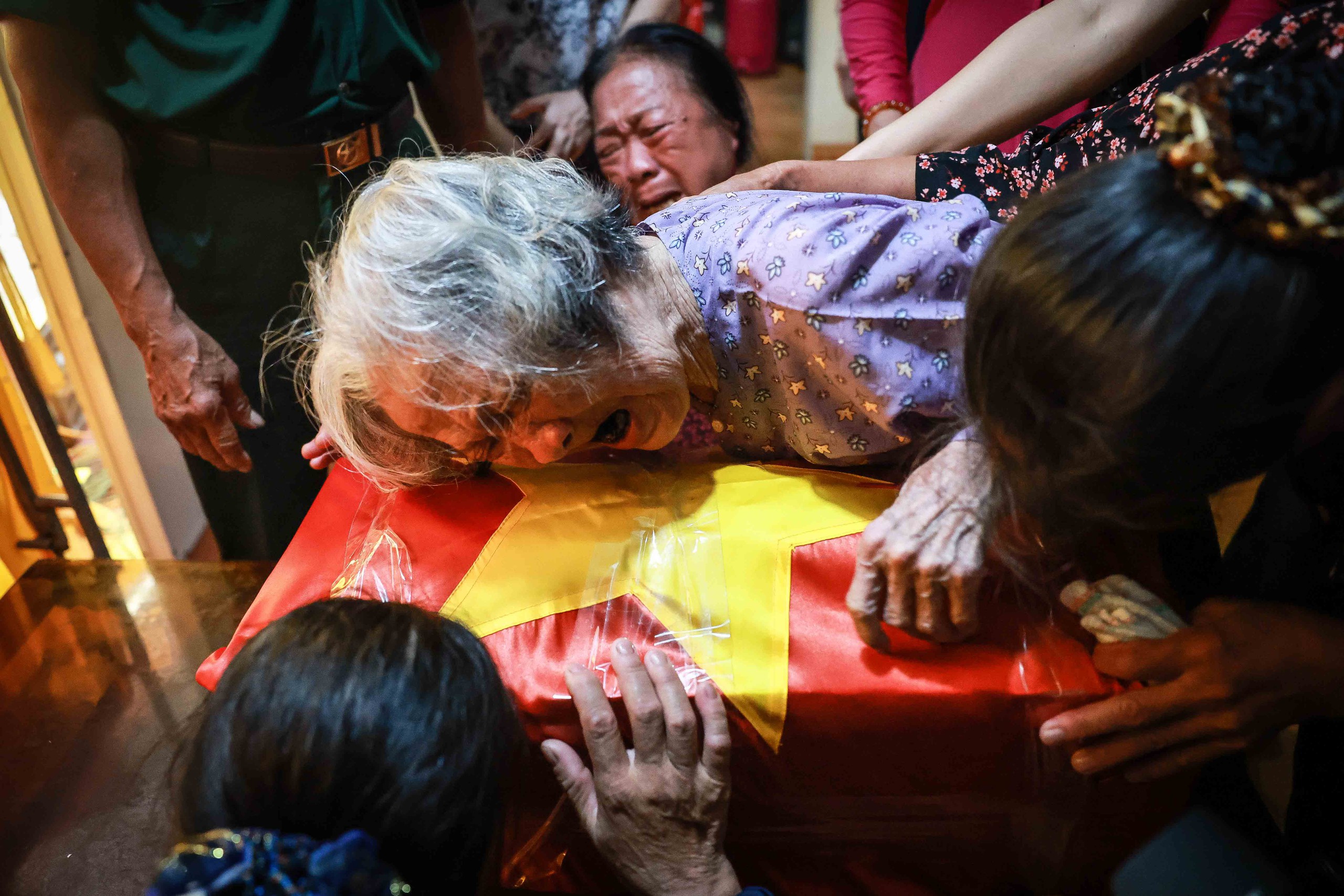
Nguyen Thi Tuu, 95, the mother of fallen soldier Phan Van Canh, breaks down in tears as she embraces her son's remains. On July 17, 2026, the National Institute of Forensic Medicine under the Ministry of Health confirmed through DNA testing that the remains labeled NCC5279 shared a maternal bloodline with Phan Thi Cuc, the fallen soldier's biological sister. Photo: Nguyen Khanh / Tuoi Tre
From the battlefields of Vi Xuyen in Tuyen Quang Province, where sites known as “Hamburger Hill” and the “Century's Lime Kiln” bear witness to fierce fighting, to Le Thi Rieng Park in Ho Chi Minh City, search teams have been working through harsh weather and difficult terrain to bring fallen soldiers home.
Launched as a national effort to honor those who sacrificed their lives for the country, the campaign has been described by Party General Secretary and State President To Lam as a sacred responsibility and a “command from the heart.”
In an official dispatch issued on July 8, Prime Minister Le Minh Hung stressed the importance of accelerating the search, recovery, and identification of fallen soldiers' remains, calling it a vital political mission that reflects Vietnam's tradition of honoring those who sacrificed for the nation.
As of October 13, authorities had recovered the remains of 3,611 fallen soldiers, meeting 51.59 percent of the campaign's target.
Of these, 2,374 were recovered in Vietnam, 217 in Laos, and 1,020 in Cambodia.
Notable discoveries included five mass graves in Tuyen Quang Province and the remains of 731 fallen soldiers at Le Thi Rieng Cultural Park in Ho Chi Minh City.
A total of 32 search and recovery teams, comprising 1,588 personnel, are currently deployed, including 13 teams in Vietnam, eight in Laos, and 11 in Cambodia.
Authorities have also held 24 memorial and burial ceremonies, laying the remains of 1,118 fallen soldiers to rest in military cemeteries.
Meanwhile, efforts to identify previously unidentified remains through DNA testing have made progress.
All seven military regions and 34 provinces and cities have completed a review and sampling effort at military cemeteries, covering 211,301 graves.
Of these, 147,640 graves, or 69.87 percent, were deemed eligible for sampling, while 63,661 were not.
Authorities have also collected 265,761 biological samples from relatives of fallen soldiers, of which 71,102 have been analyzed and 66,909 integrated into a national database.
The campaign aims not only to recover and identify fallen soldiers but also to bring closure to families who have spent decades waiting for news of their loved ones.
Among them is a 95-year-old mother who was finally reunited with the remains of her son, 53 years after his death.
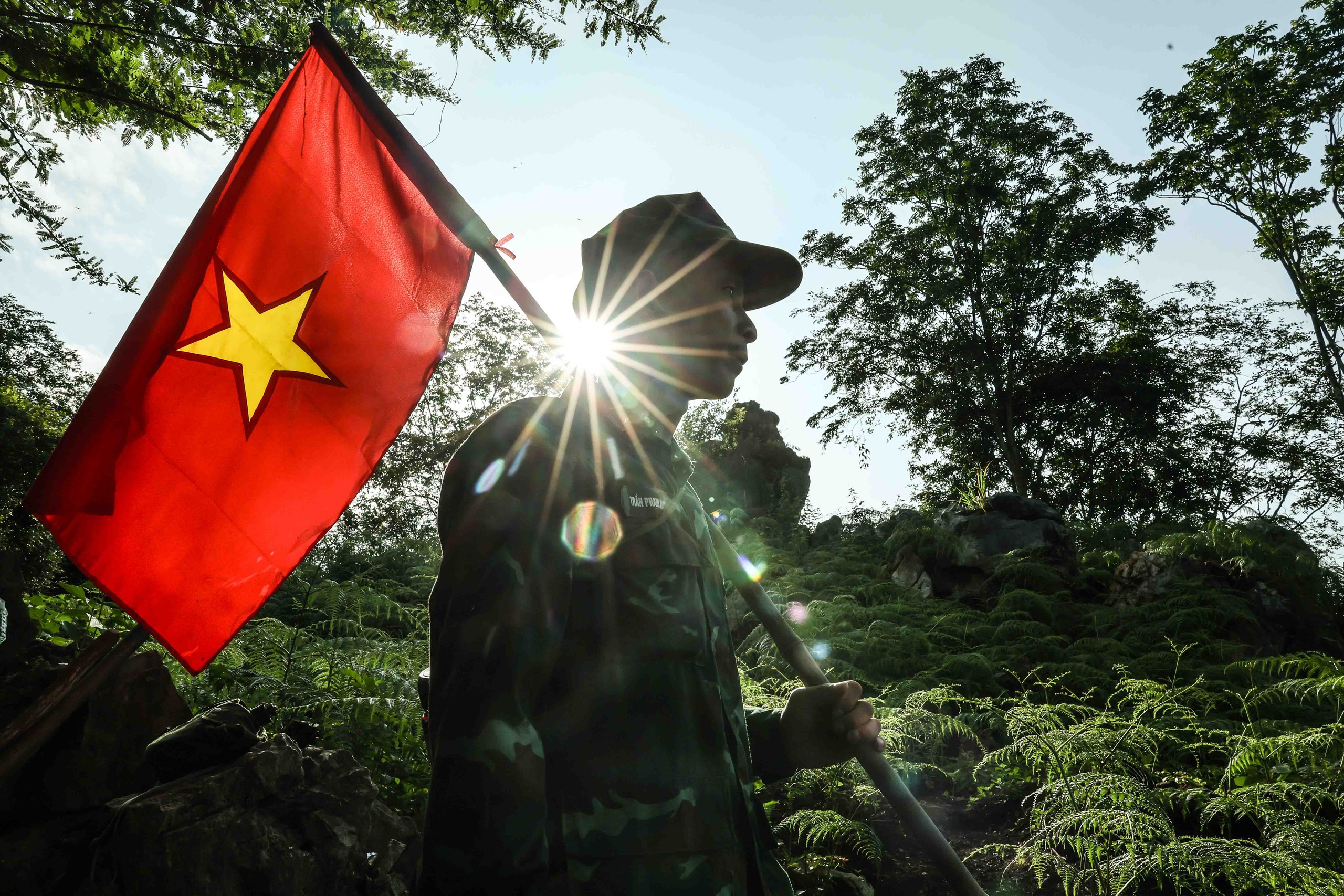
At dawn, members of a search and recovery team under the Tuyen Quang Provincial Military Command trek through forests along a steep, slippery trail toward Hill 685. Photo: Nguyen Khanh / Tuoi Tre
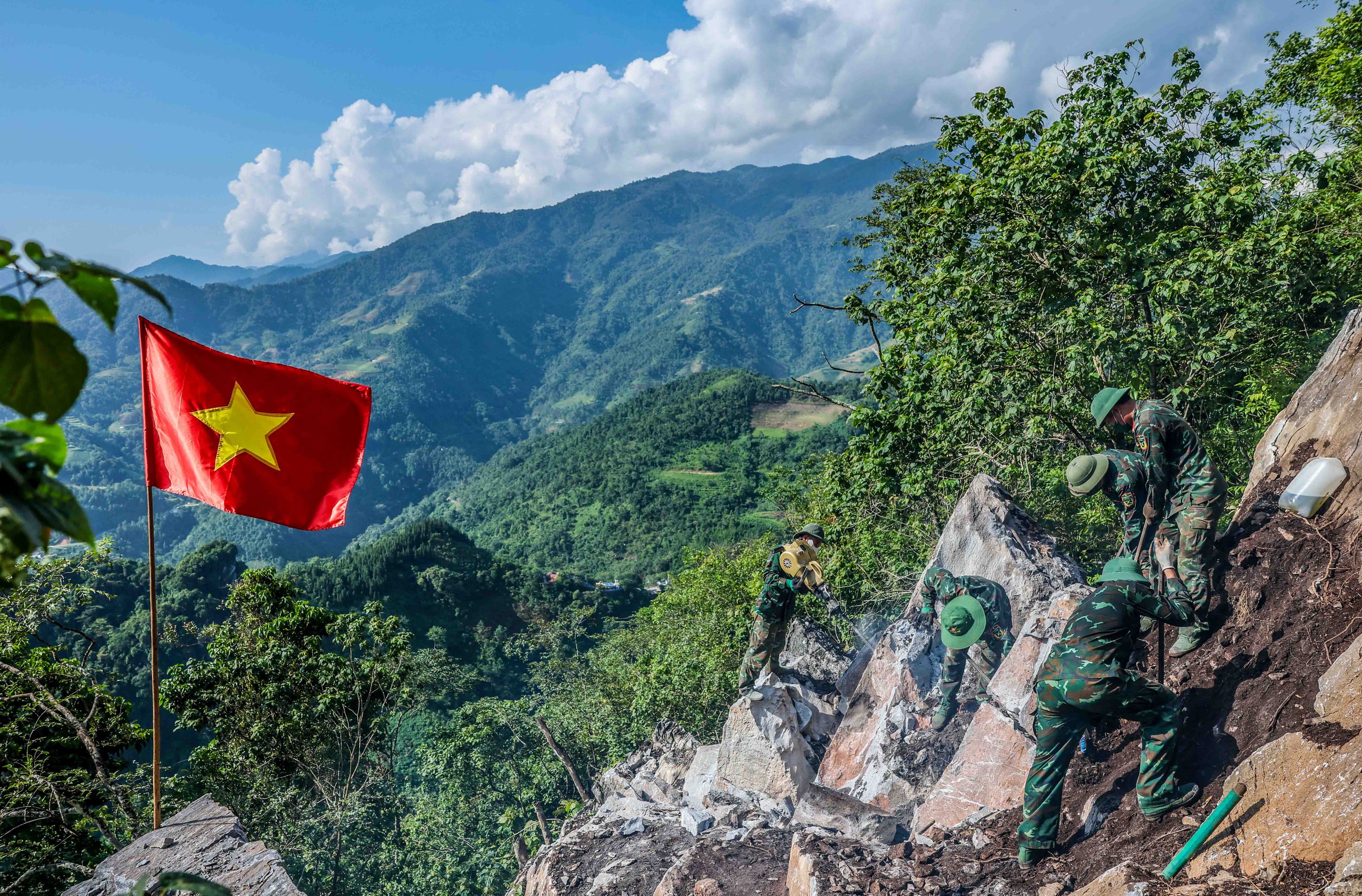
Members of a search and recovery team under the Tuyen Quang Provincial Military Command drill through rock at a collapsed cave on Hill 685, where veterans believe the remains of many fallen soldiers may still be buried. Photo: Nguyen Khanh / Tuoi Tre
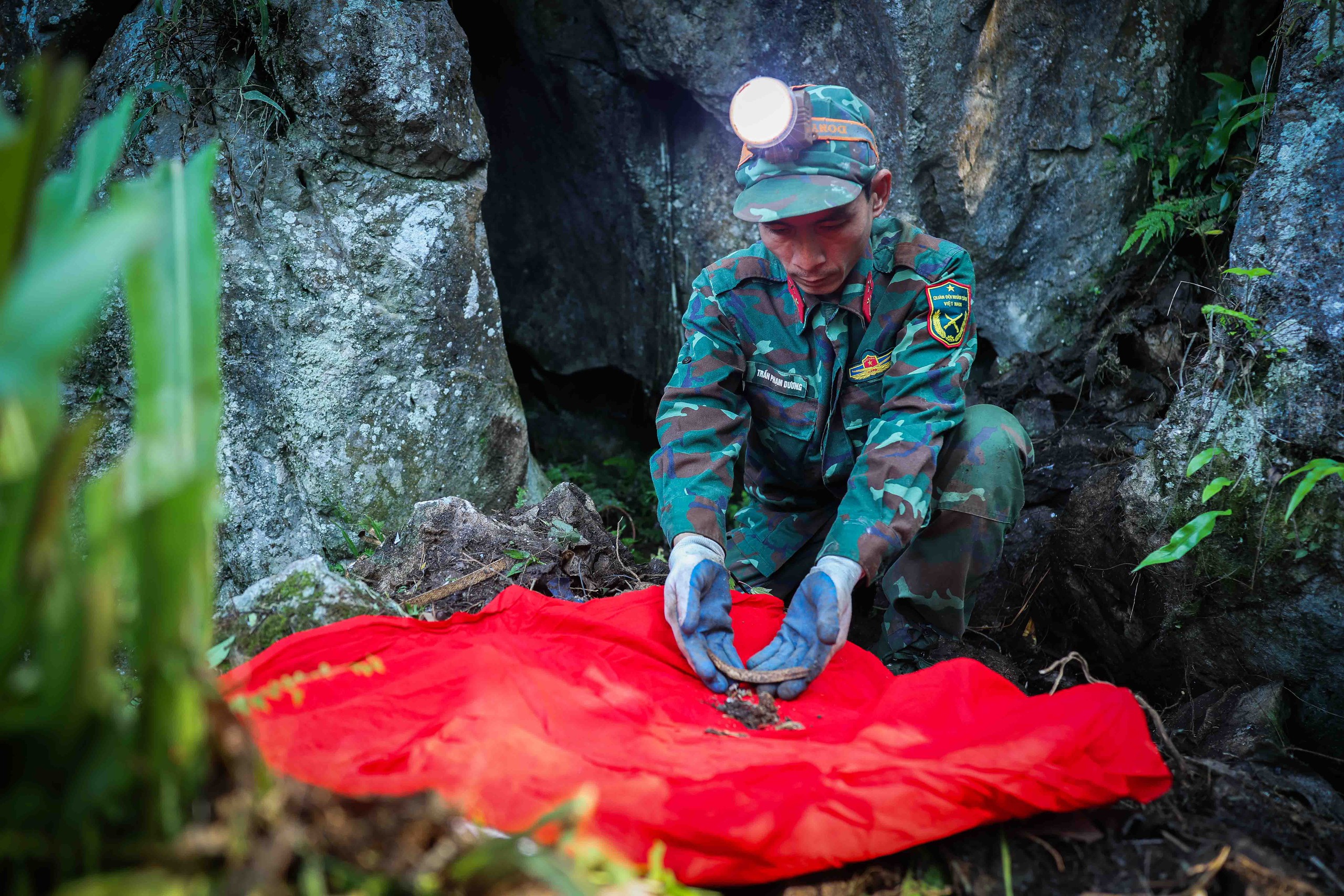
Major Tran Pham Duong, one of the most experienced members of the search and recovery team under the Tuyen Quang Provincial Military Command, carefully places a bone fragment on a red cloth at Hill 685. Photo: Nguyen Khanh / Tuoi Tre
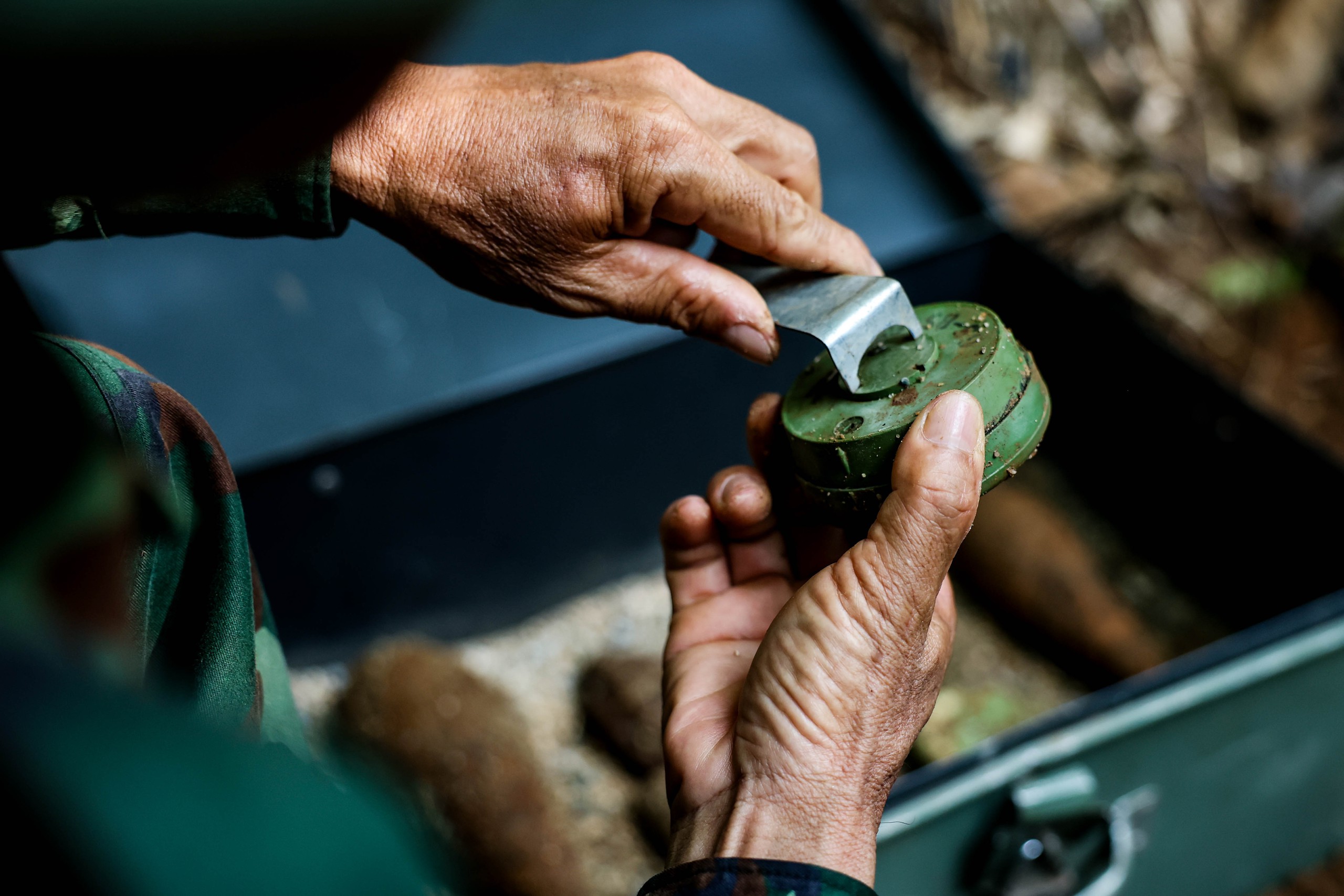
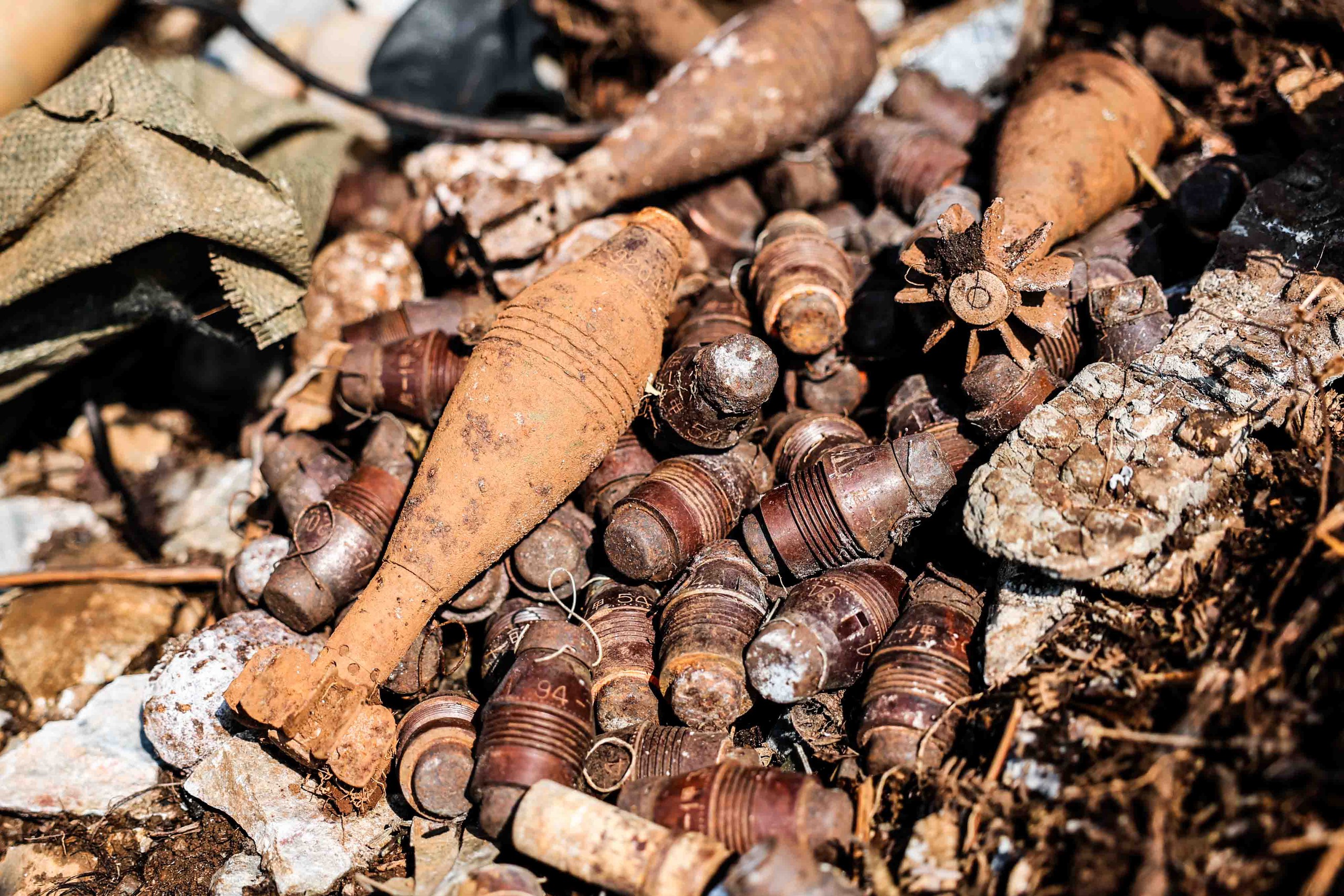
About 70,000 hectares of land in Tuyen Quang Province remain contaminated with unexploded ordnance, mainly along Vietnam's northern border. Under the 500-day campaign, authorities aim to clear 4,000 hectares, prioritizing key areas for the search and recovery of fallen soldiers' remains. In the photo, soldiers conduct mine clearance operations at the former Vi Xuyen battlefield in Tuyen Quang. Photo: Nguyen Khanh / Tuoi Tre
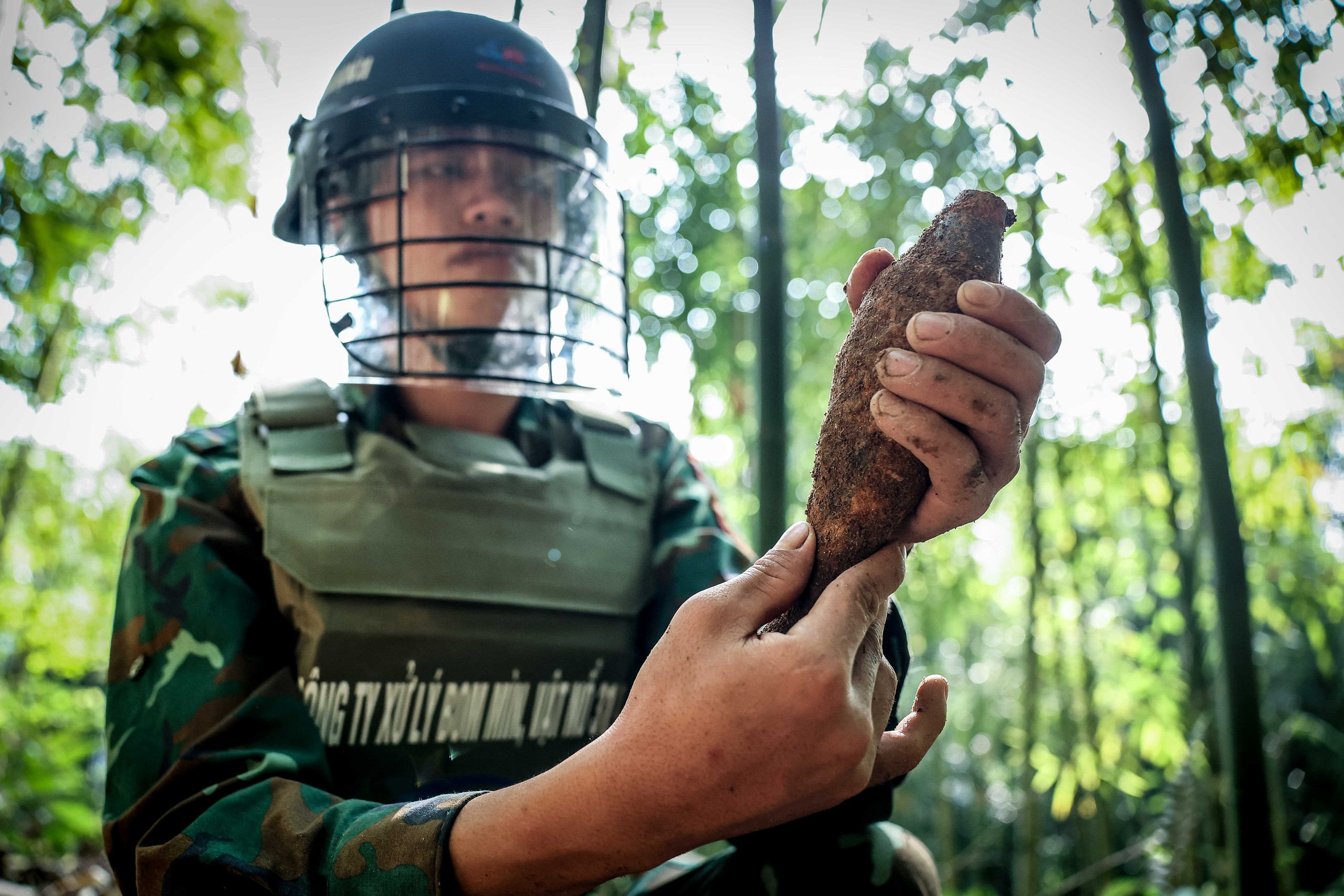
Soldier Dang Van Thong from Mine and Explosive Ordnance Disposal Company 319 under Corporation 319 of Vietnam's Ministry of National Defense holds a newly discovered B60 mortar round found in a bamboo forest. Photo: Nguyen Khanh / Tuoi Tre
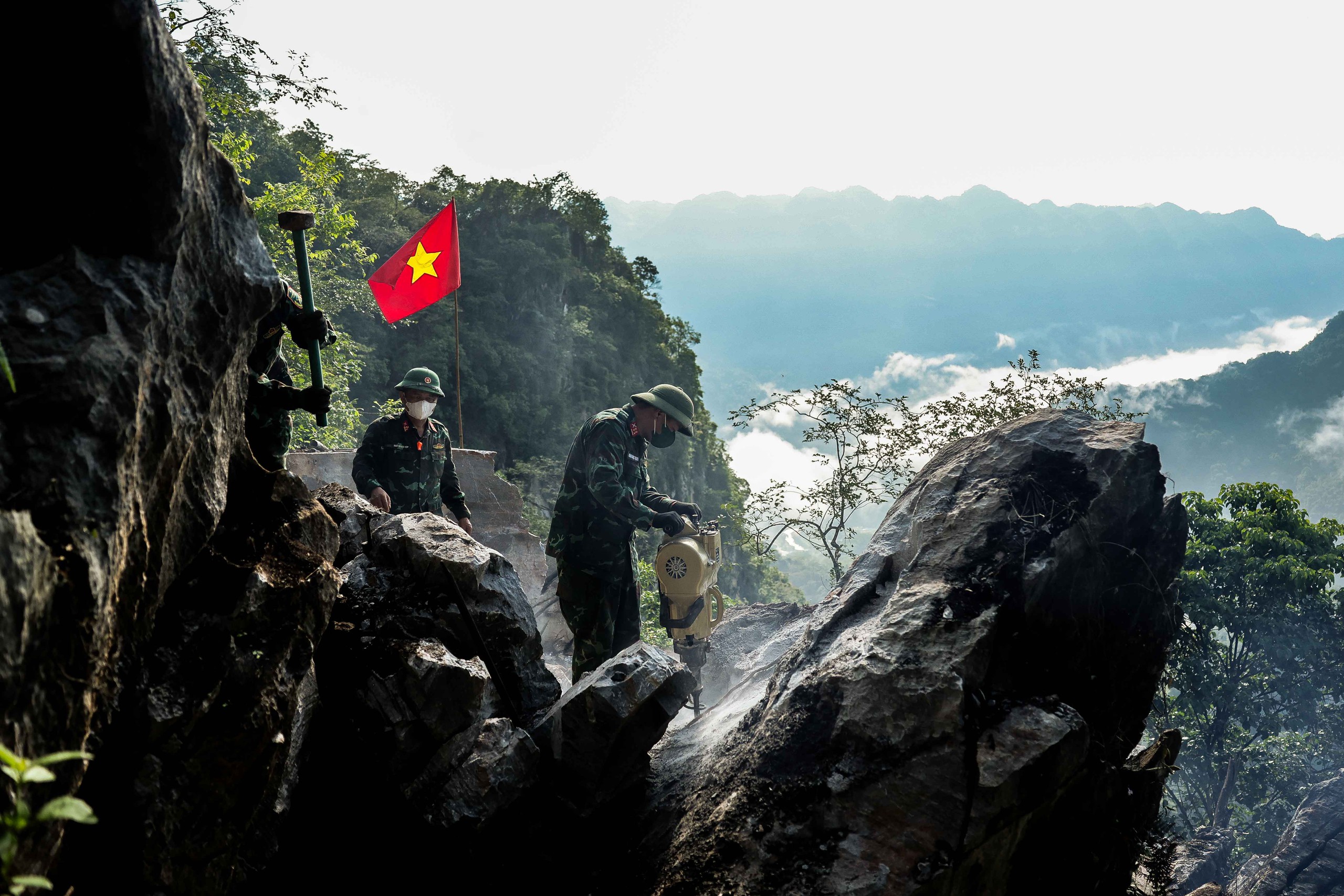
Despite the scorching heat, search team members work tirelessly to break through rocks and gain access to a collapsed cave. Photo: Nguyen Khanh / Tuoi Tre
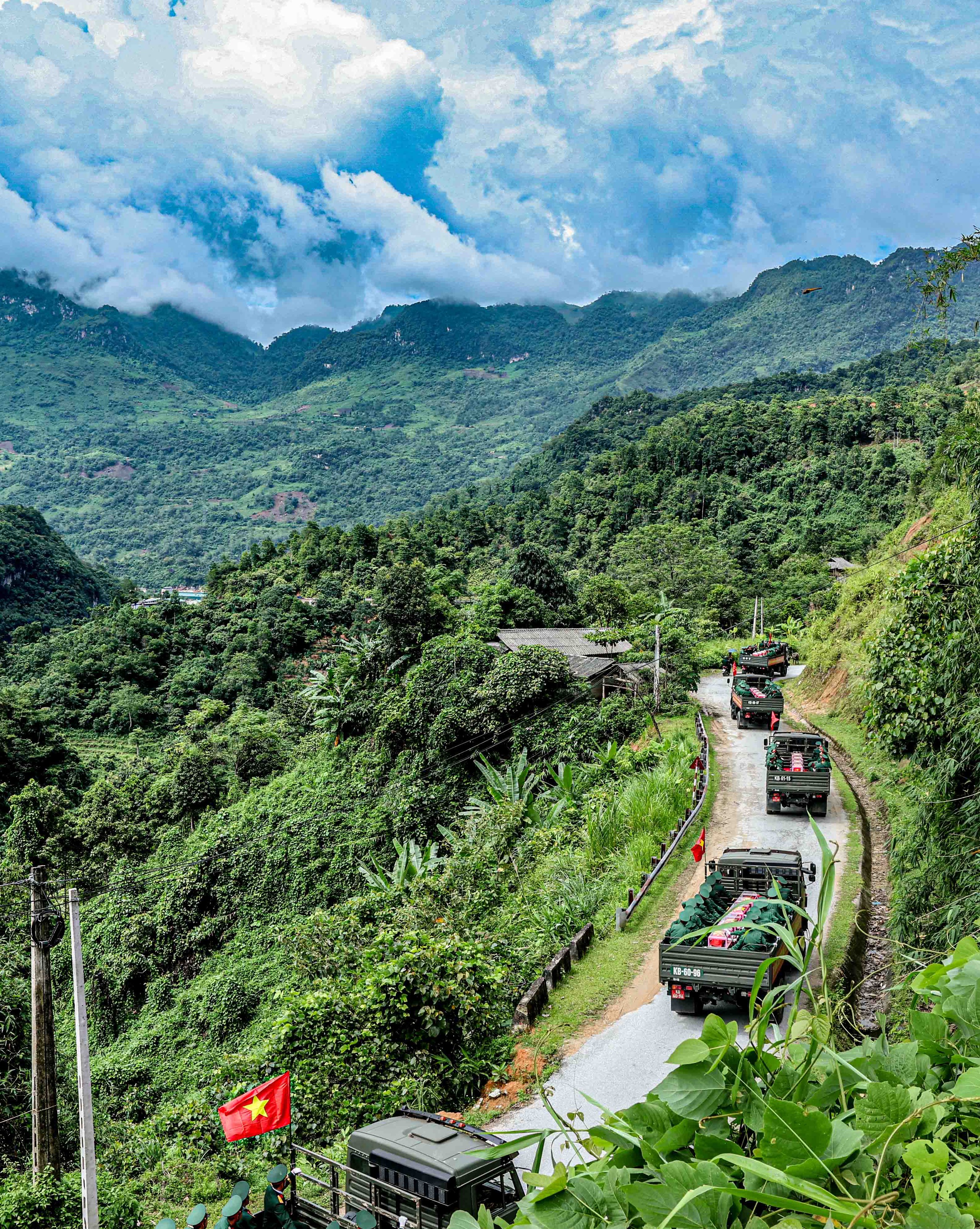
A convoy carrying the remains of 34 fallen soldiers departs from the search and recovery team's base for the Vi Xuyen National Martyrs' Cemetery. In the distance are the former battlefields where the remains were recovered. Hills 685 and 772 were among the sites of fierce fighting during Vietnam's northern border conflict from 1979 to 1989. Photo: Nguyen Khanh / Tuoi Tre
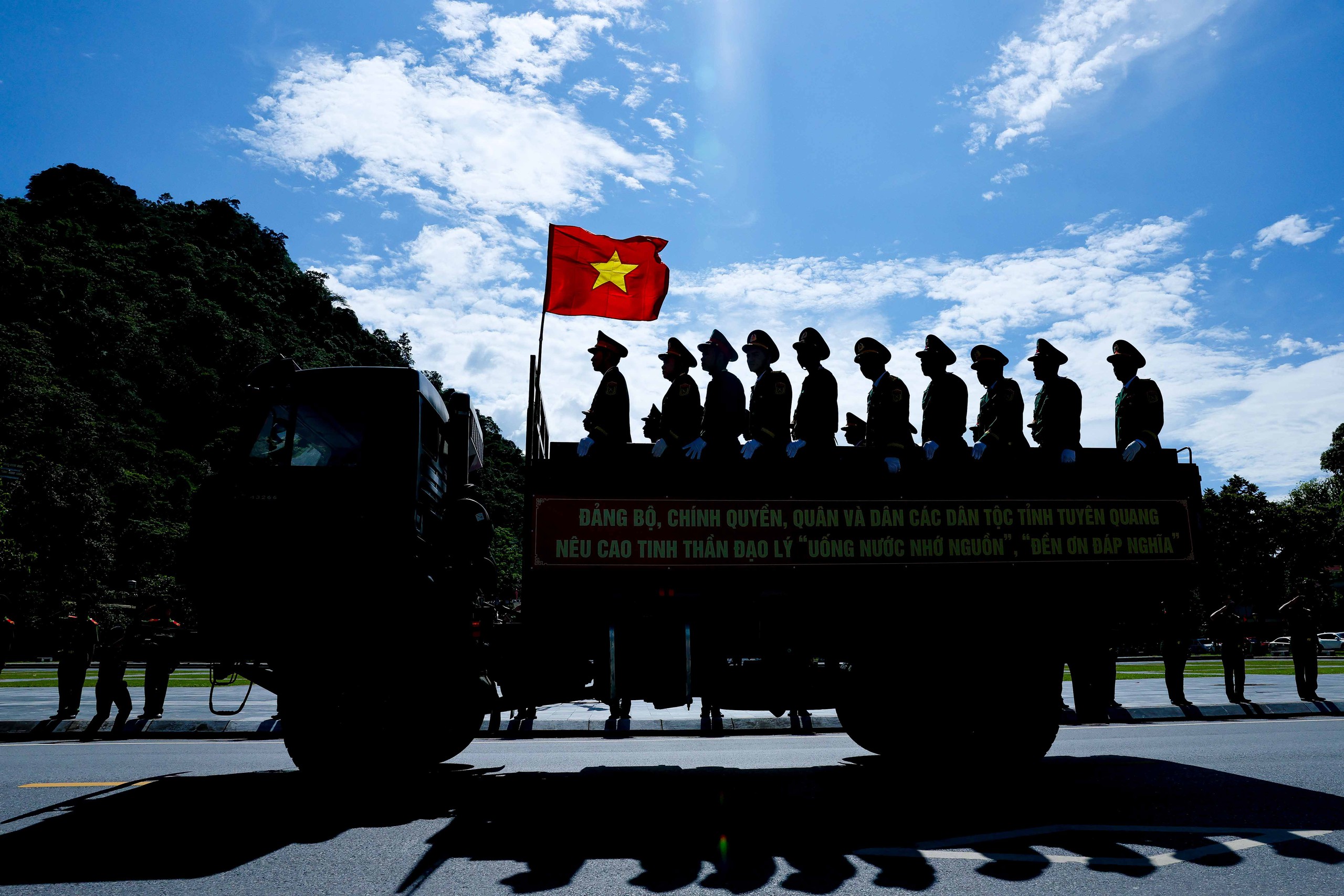
A convoy carrying the remains of fallen soldiers passes through March 26 Square in the center of Ha Giang 2 Ward, Tuyen Quang Province. Photo: Nguyen Khanh / Tuoi Tre
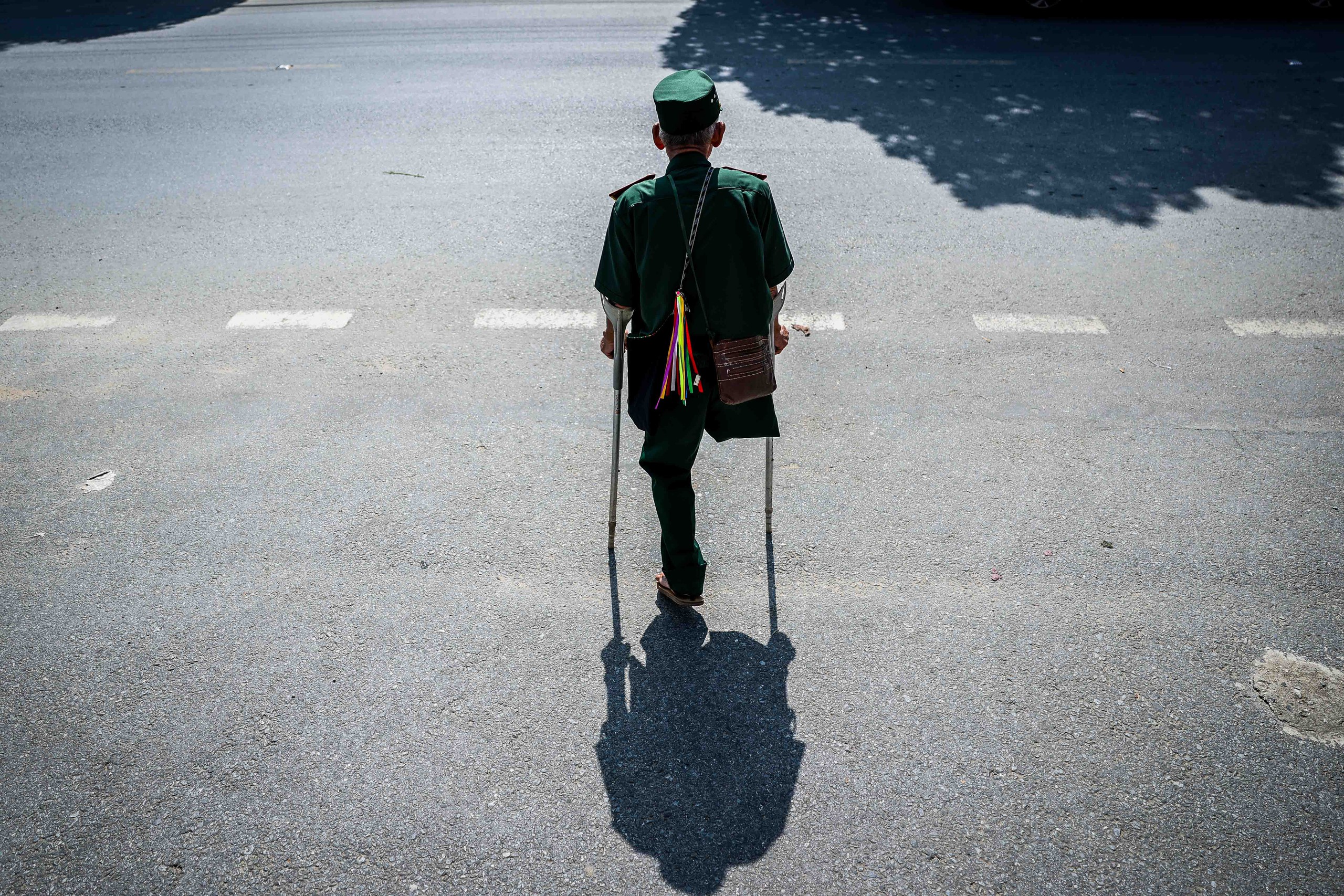
A veteran who fought at the Vi Xuyen front attends an annual commemoration of the July 12 battle. Photo: Nguyen Khanh / Tuoi Tre
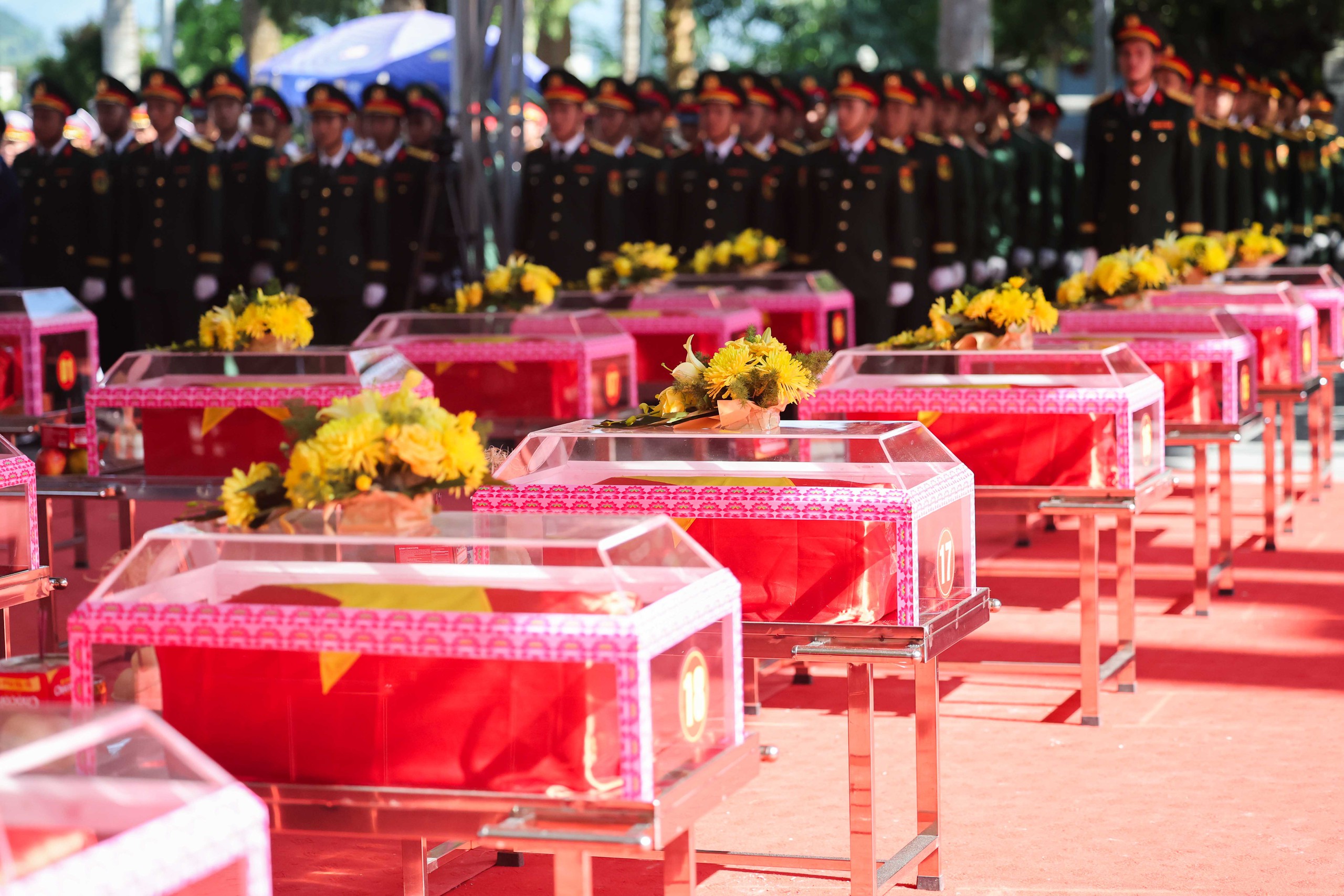
A memorial ceremony for 34 fallen soldiers whose remains were recovered from former battlefields in Vi Xuyen, Tuyen Quang Province, is held at the Vi Xuyen National Martyrs' Cemetery on July 26, 2026. According to authorities, more than 4,200 soldiers died fighting along the Vi Xuyen border, with nearly 3,100 having been recovered and buried, while more than 1,000 remain missing on the former battlefields. Photo: Nguyen Khanh / Tuoi Tre
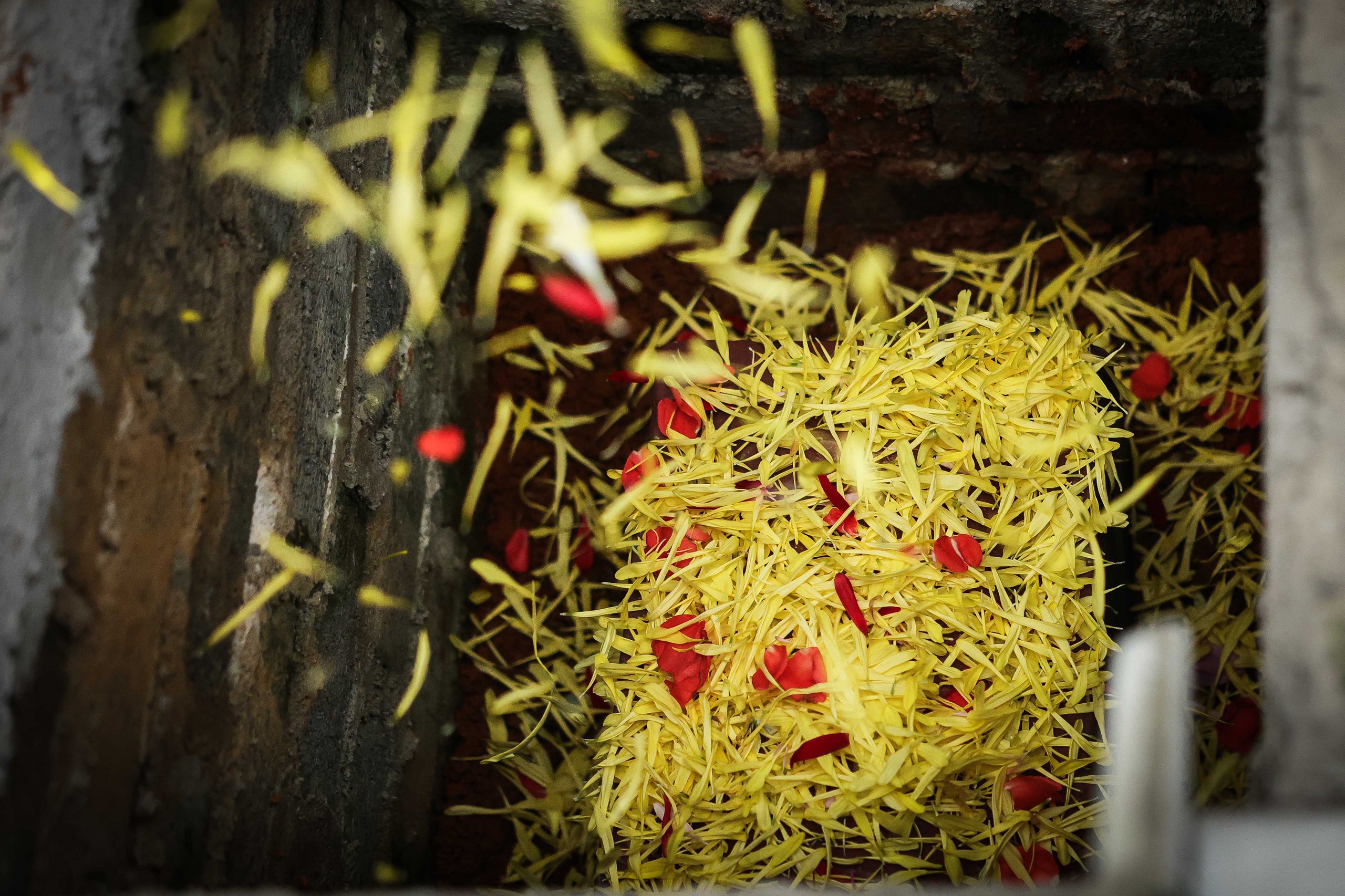
Yellow chrysanthemum petals are scattered over the grave of a fallen soldier whose remains were recovered from the former Vi Xuyen battlefield. The photo was taken at the Vi Xuyen National Martyrs' Cemetery in Tuyen Quang Province. Photo: Nguyen Khanh / Tuoi Tre
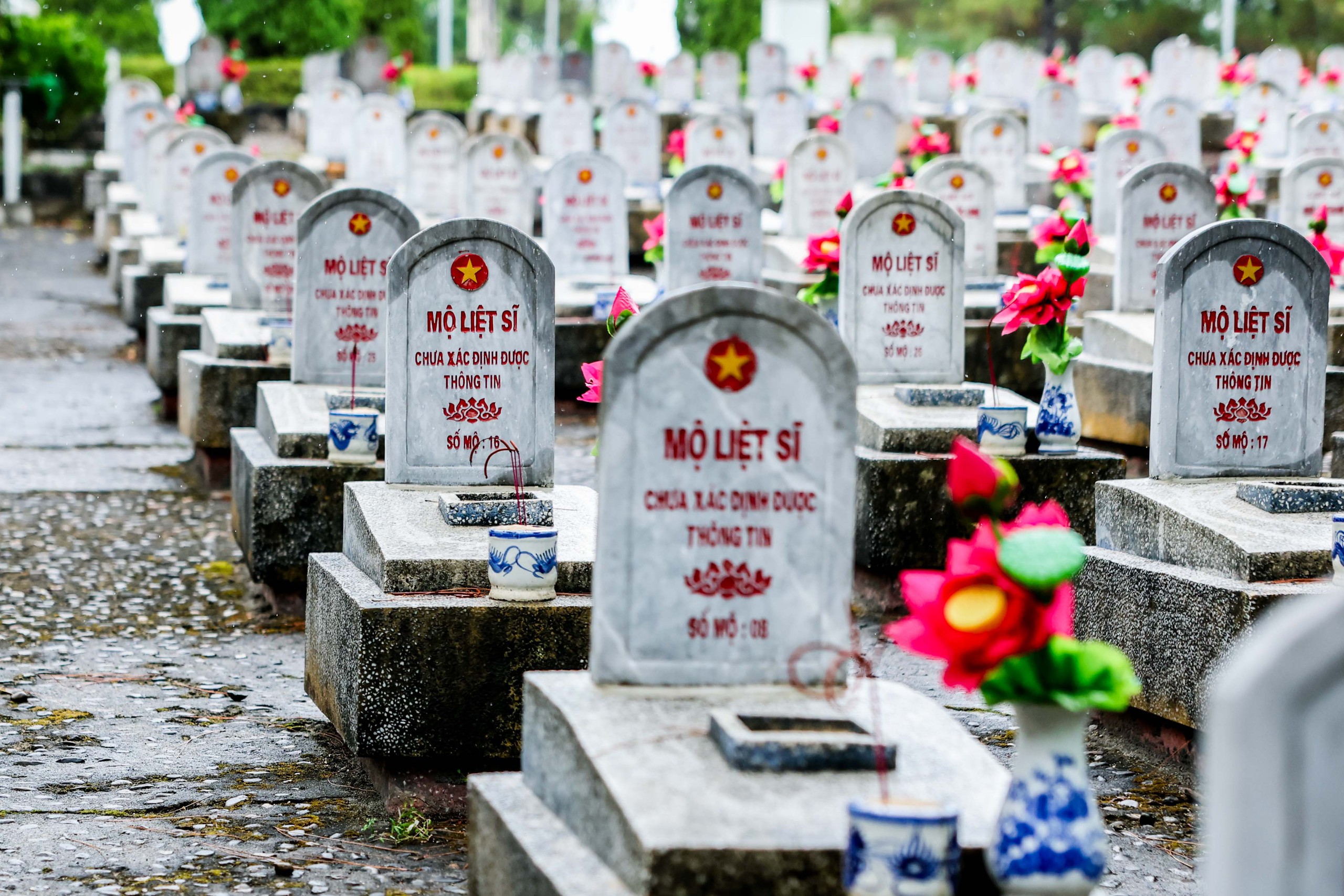
Graves of unidentified fallen soldiers at the Road 9 Martyrs' Cemetery in Quang Tri Province. Photo: Nguyen Khanh / Tuoi Tre
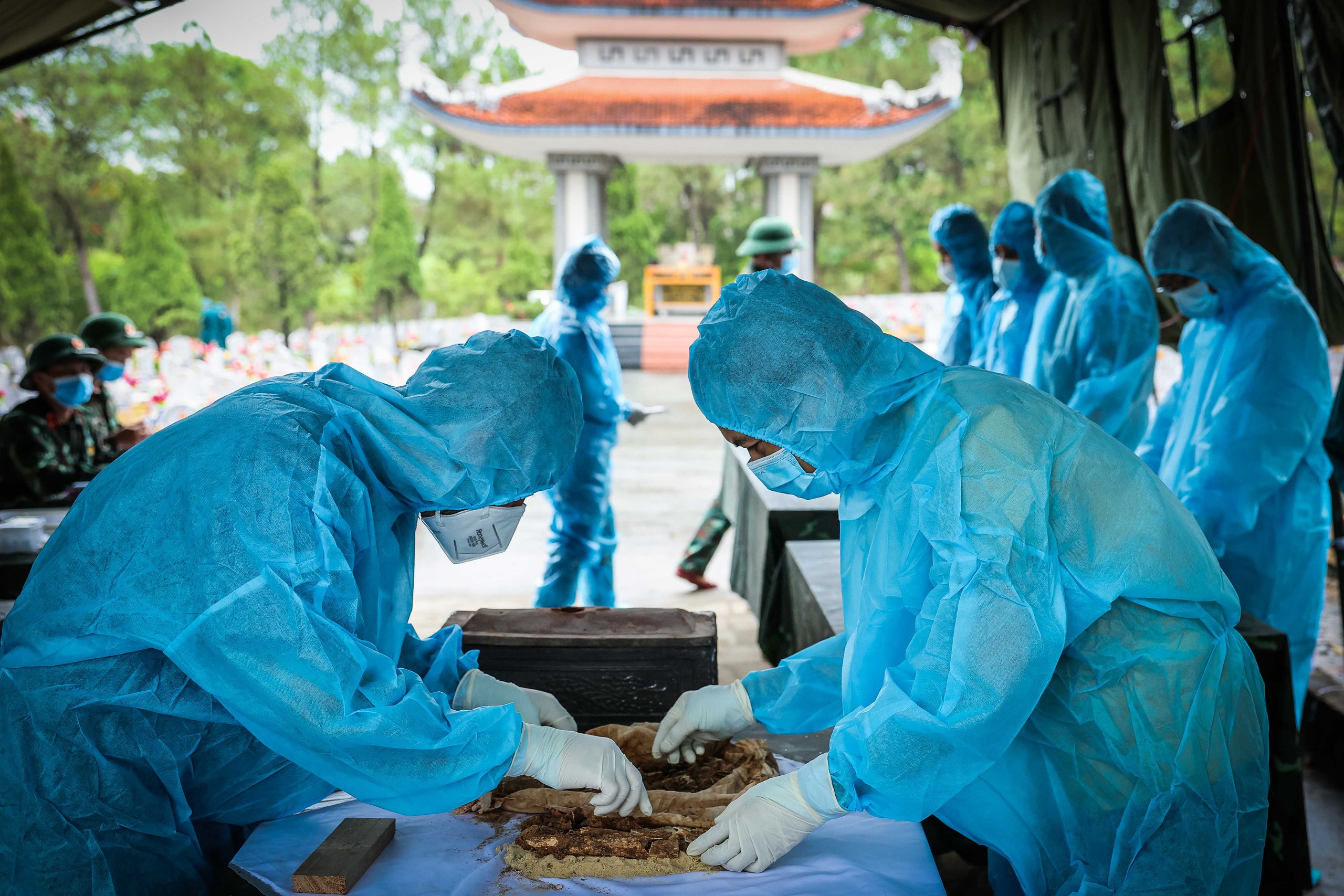
Personnel collect samples from fallen soldiers' remains at the Road 9 Martyrs' Cemetery in Quang Tri Province for DNA testing. Photo: Nguyen Khanh / Tuoi Tre
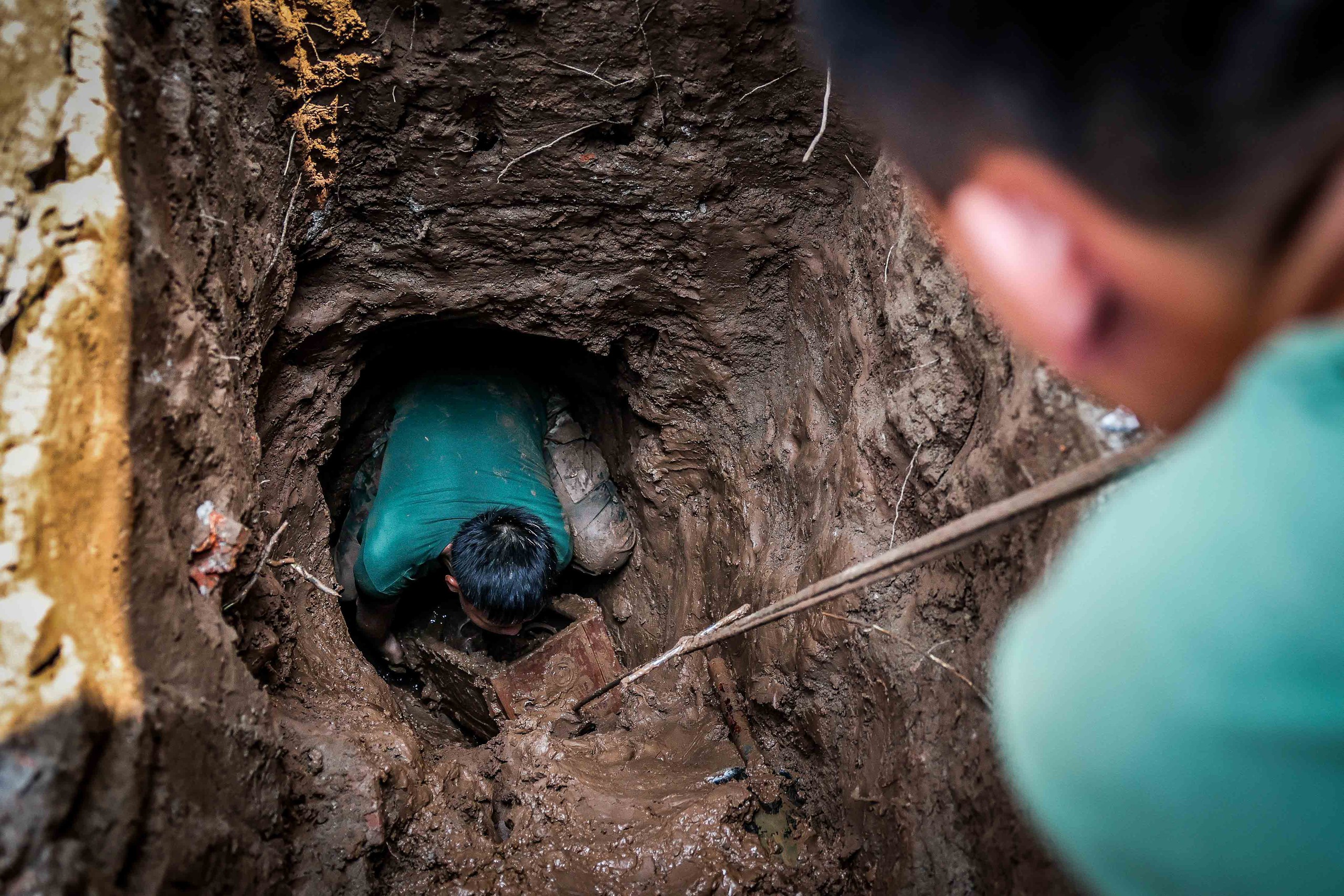
A soldier carefully lifts the remains of a fallen soldier who died during the resistance war against French colonial forces from nearly three meters underground at Mai Dich Cemetery in Hanoi. Most of the remains were buried in 1956, some 70 years ago. Photo: Nguyen Khanh / Tuoi Tre
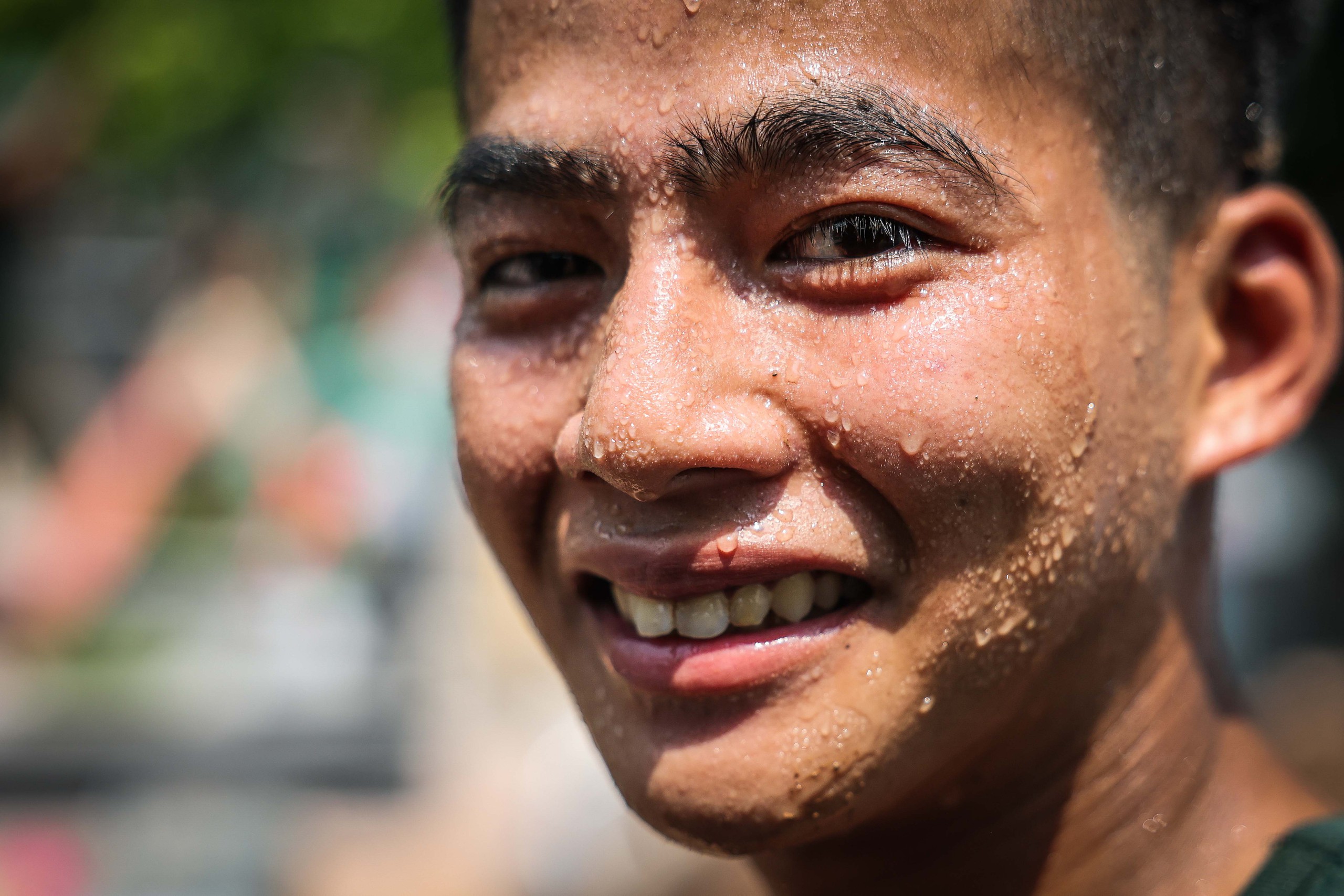
Sweat streams down the face of Do Hung Viet, a soldier from the 301st Infantry Division under the Hanoi Capital Command, after hours of working in temperatures approaching 40 degrees Celsius at Mai Dich Cemetery in Hanoi. Photo: Nguyen Khanh / Tuoi Tre
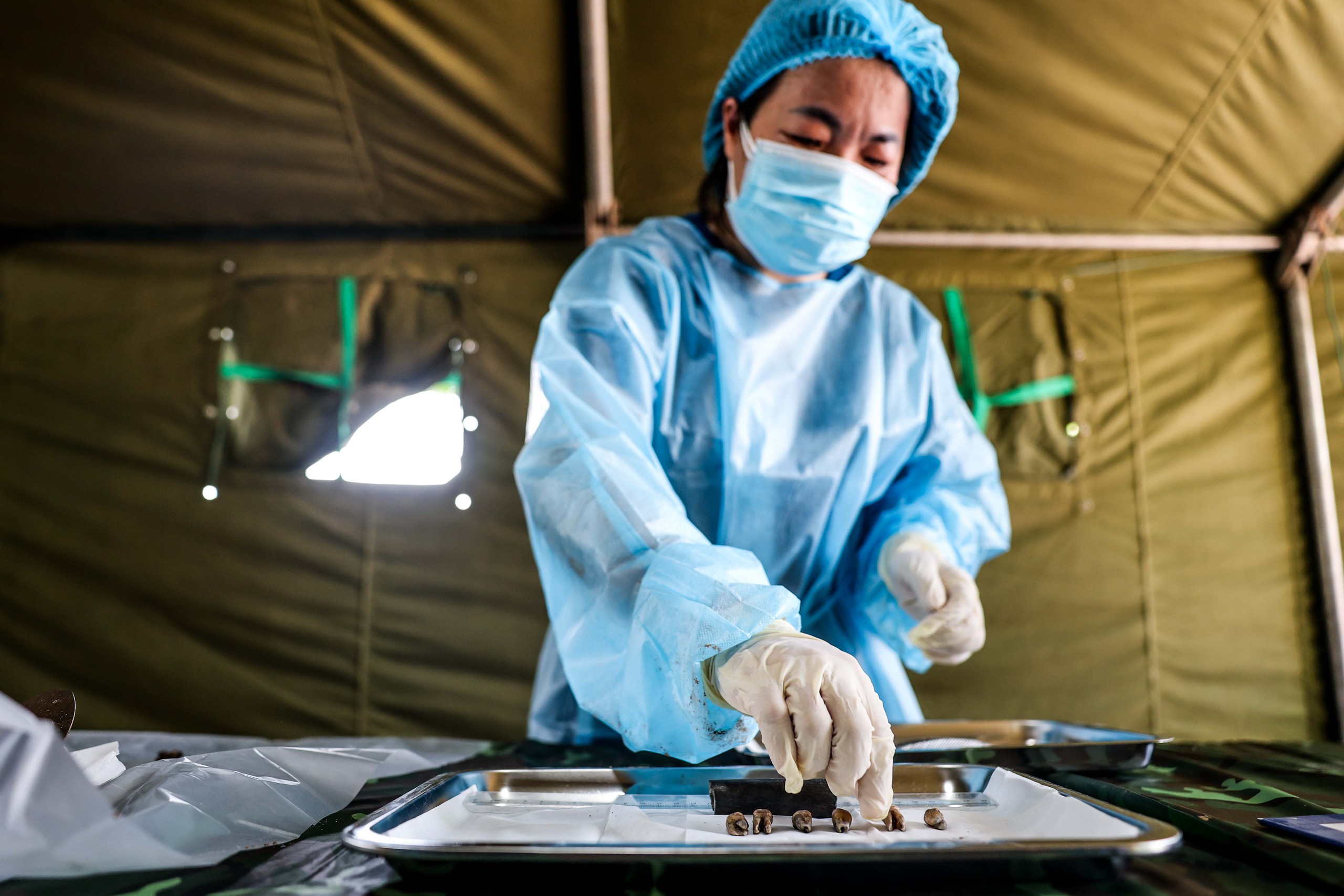
Teeth and bone samples are collected from fallen soldiers' remains for DNA testing. Forensic examiner Dang Thi Tham says she is proud to play a small part in helping restore the identities of fallen soldiers. The photo was taken at Mai Dich Cemetery in Hanoi. Photo: Nguyen Khanh / Tuoi Tre
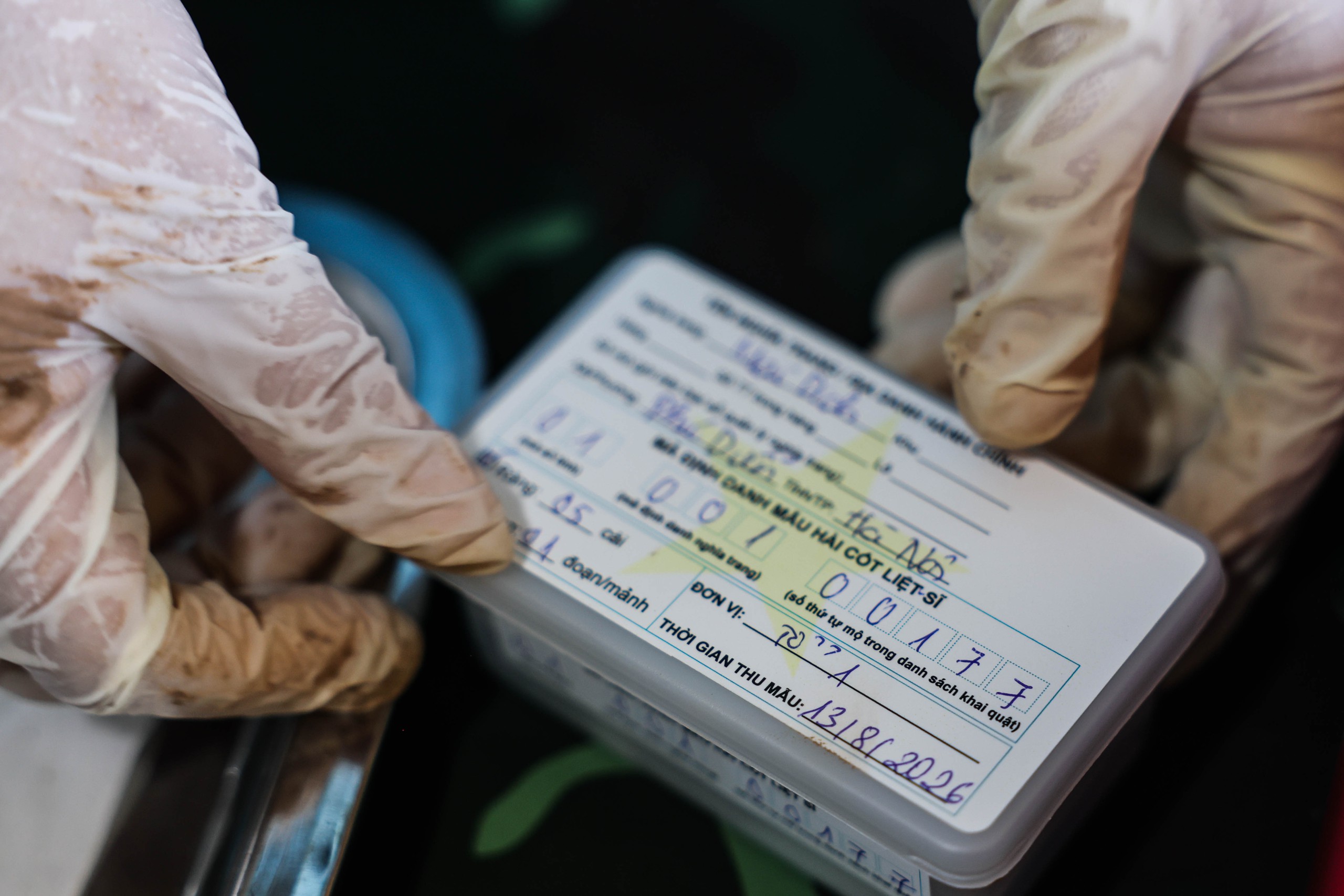
Samples collected from fallen soldiers' remains are stored in plastic containers labeled with detailed information about their graves at Mai Dich Cemetery in Hanoi. Photo: Nguyen Khanh / Tuoi Tre
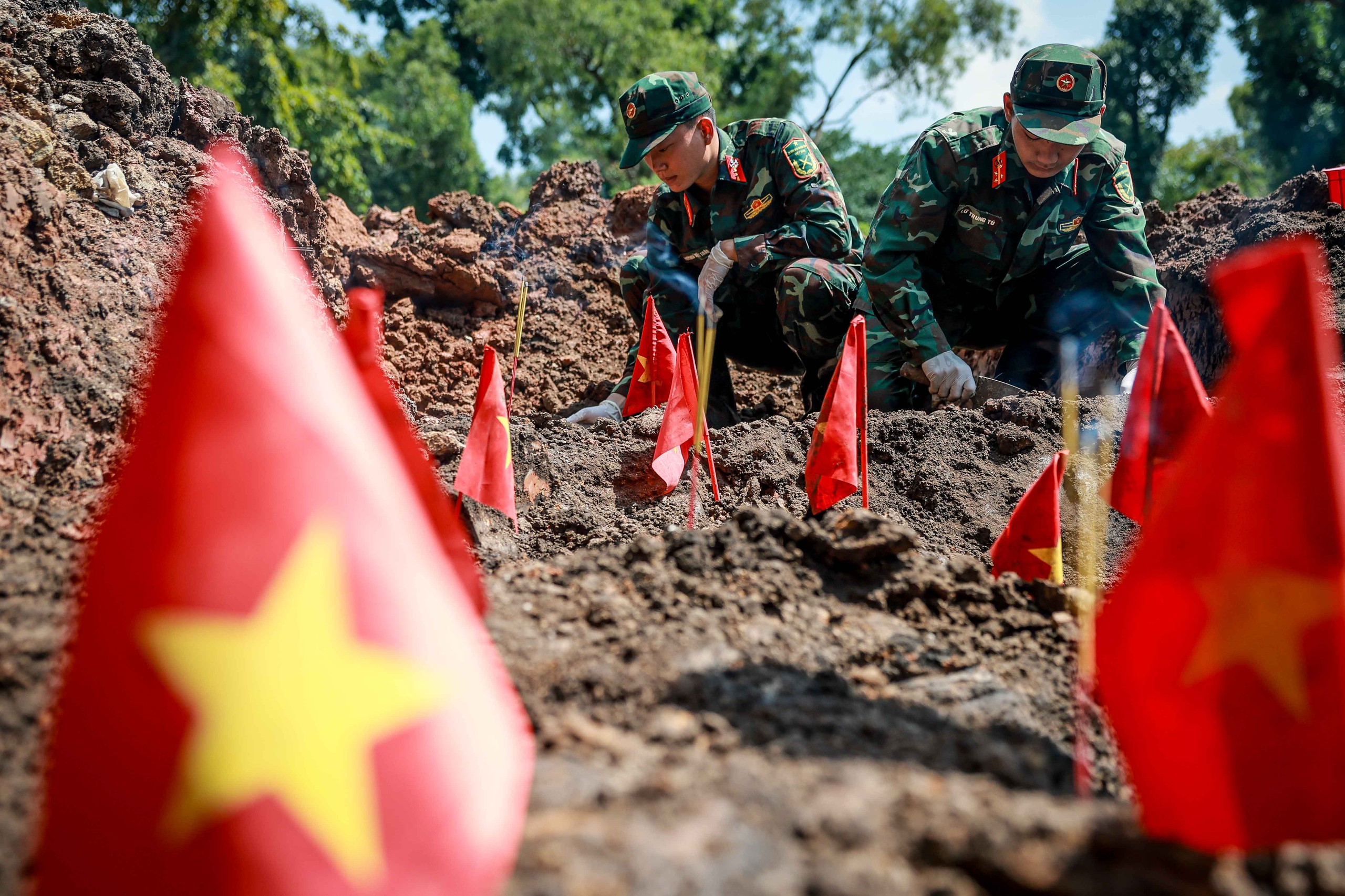
Vietnamese national flags mark the locations where fallen soldiers' remains have been discovered at Le Thi Rieng Park in Ho Chi Minh City. Photo: Nguyen Khanh / Tuoi Tre
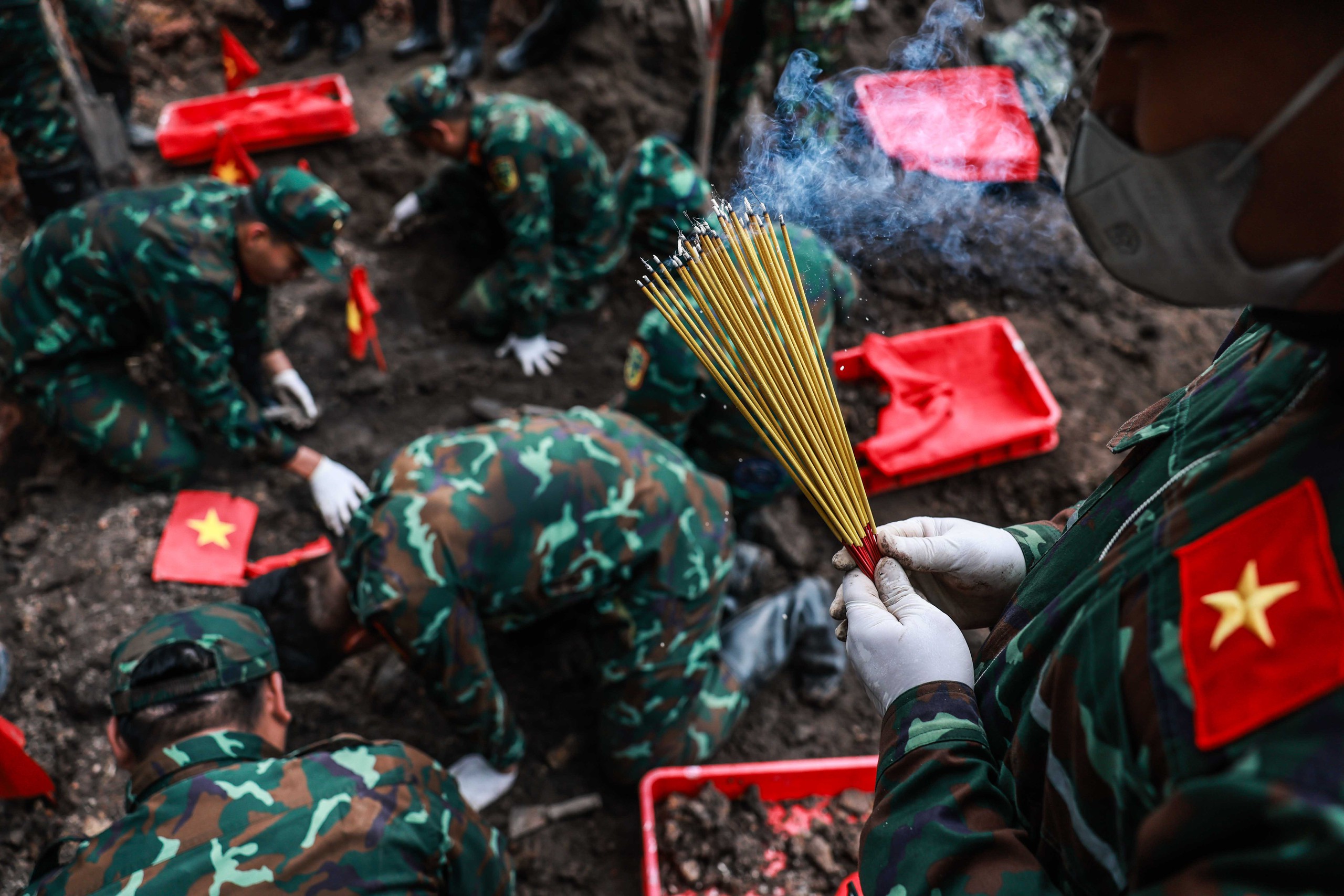
A soldier lights a bundle of incense sticks before placing them at sites where fallen soldiers' remains have been found at Le Thi Rieng Park in Ho Chi Minh City. Photo: Nguyen Khanh / Tuoi Tre
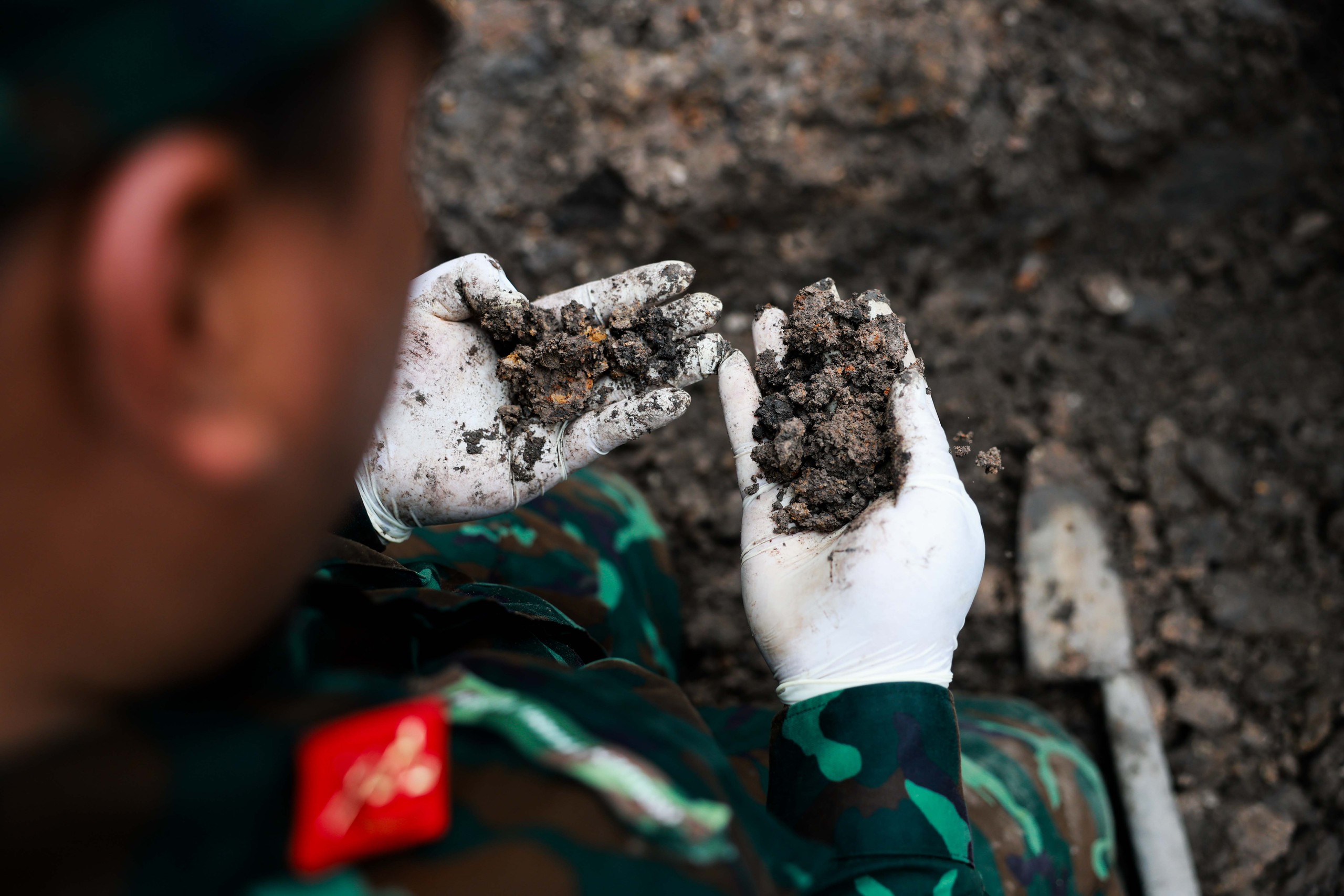
After decades underground, many fallen soldiers' remains have deteriorated significantly, requiring recovery teams to rely on soil discoloration and nearby artifacts to carefully distinguish and recover bone fragments. Photo: Nguyen Khanh / Tuoi Tre
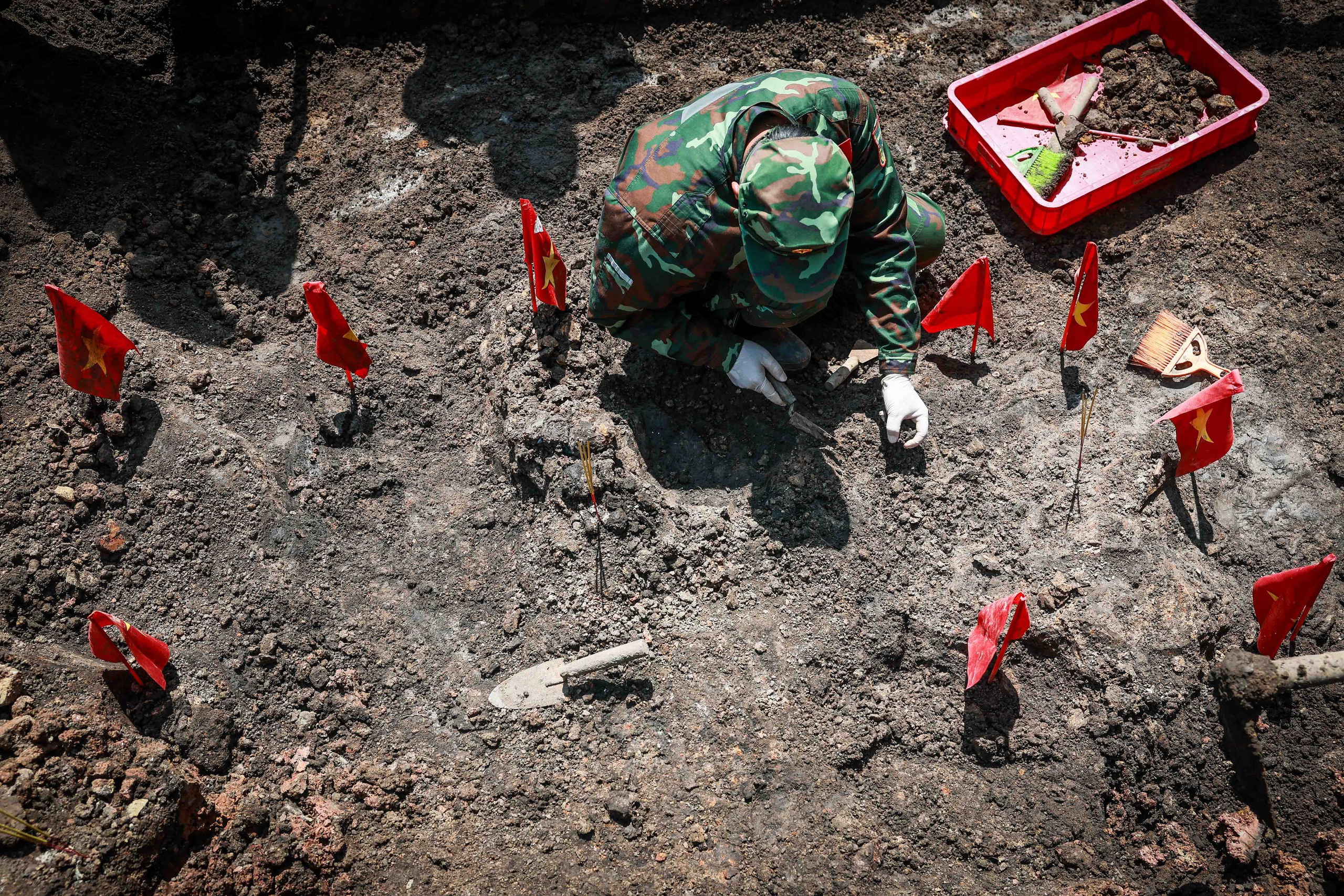
Despite the scorching heat, members of the K74 search and recovery team continue their efforts to locate fallen soldiers' remains at Le Thi Rieng Park in Ho Chi Minh City. Vietnamese flags mark the sites where remains have been discovered. Photo: Nguyen Khanh / Tuoi Tre
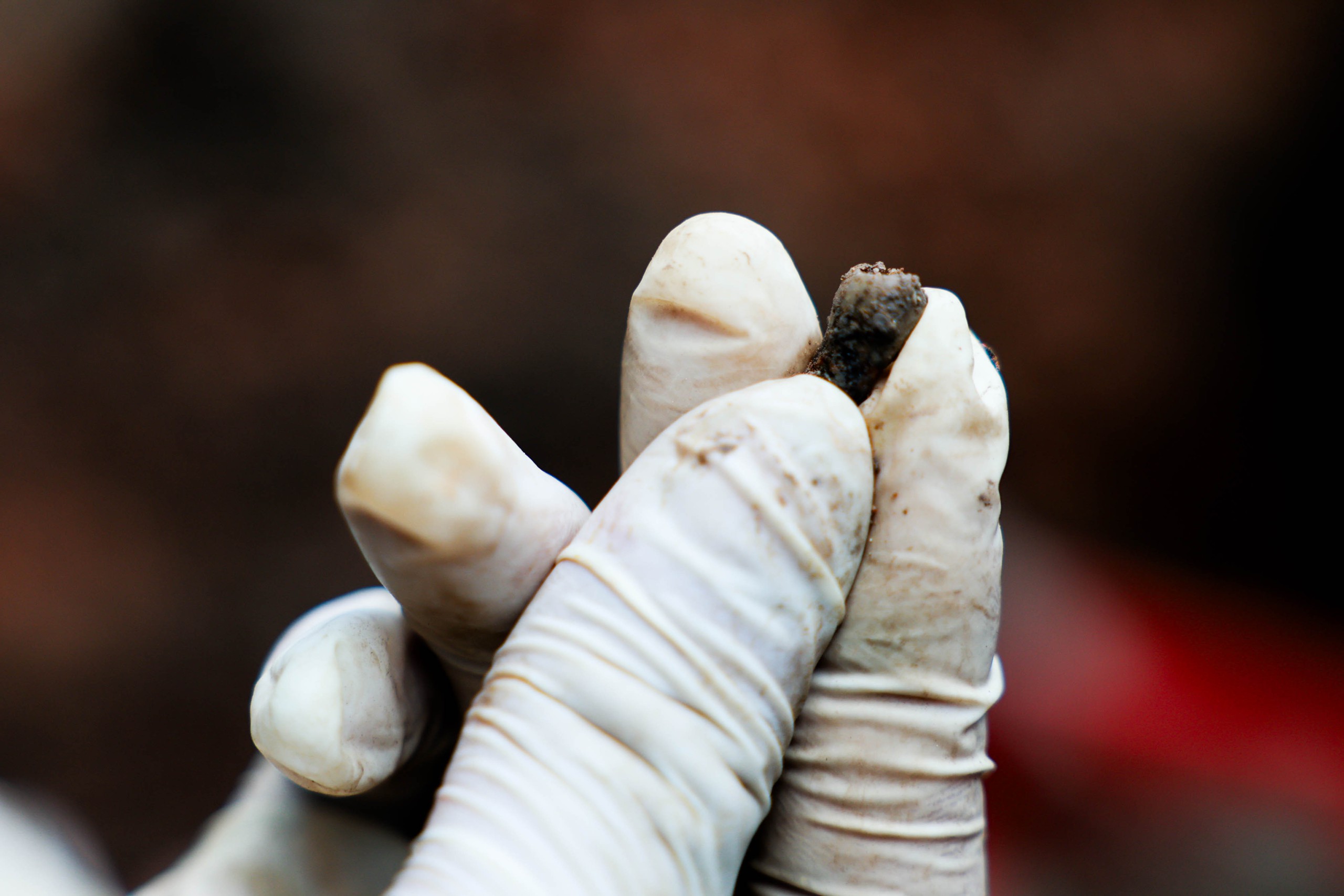
A fallen soldier's tooth is discovered at Le Thi Rieng Park in Ho Chi Minh City, a significant find for DNA identification. Photo: Nguyen Khanh / Tuoi Tre
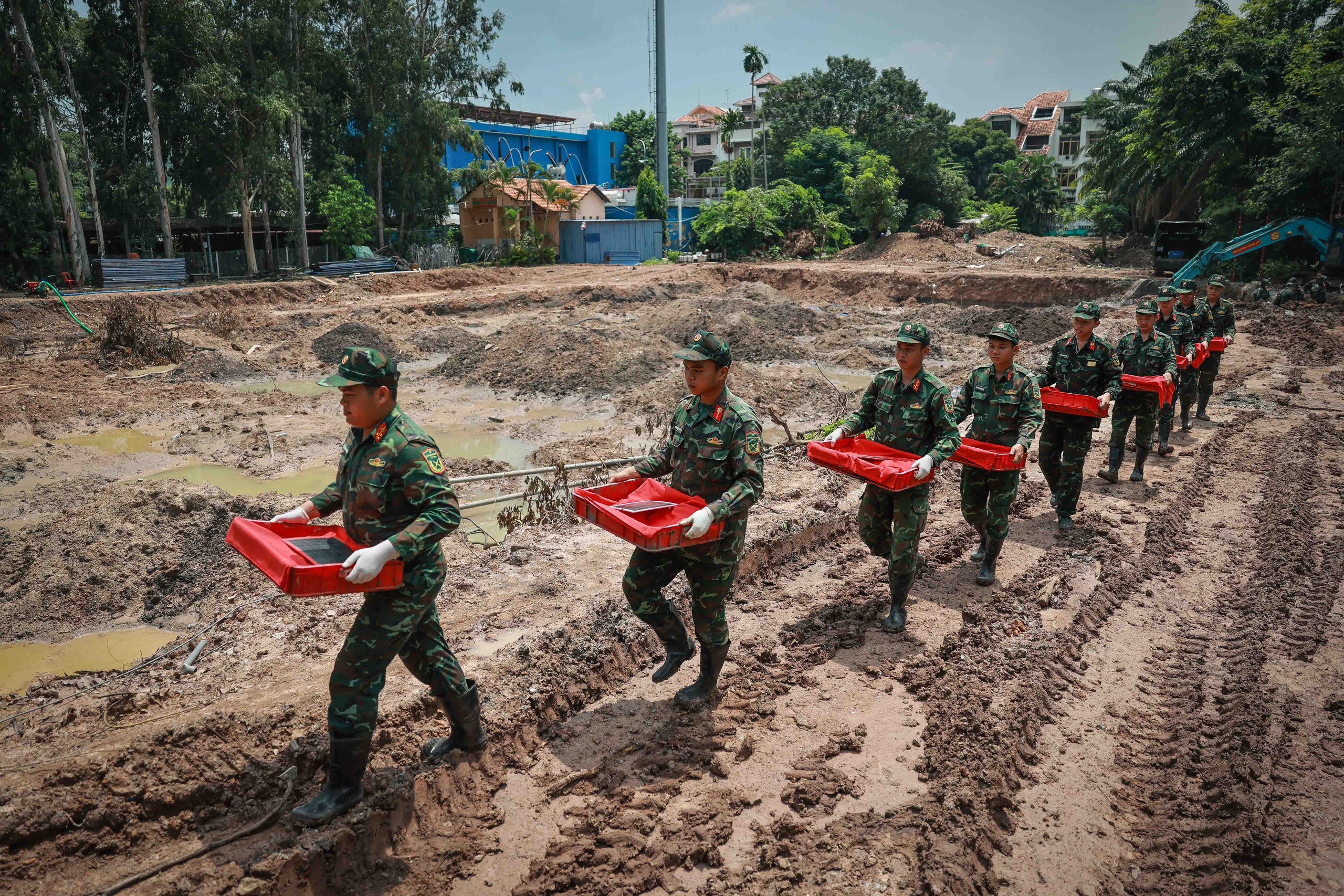
Members of the K74 search and recovery team carry newly recovered remains to a sampling area at Le Thi Rieng Park in Ho Chi Minh City. On October 1 alone, the team recovered the remains of 19 fallen soldiers in Zone B of the park. Photo: Nguyen Khanh / Tuoi Tre
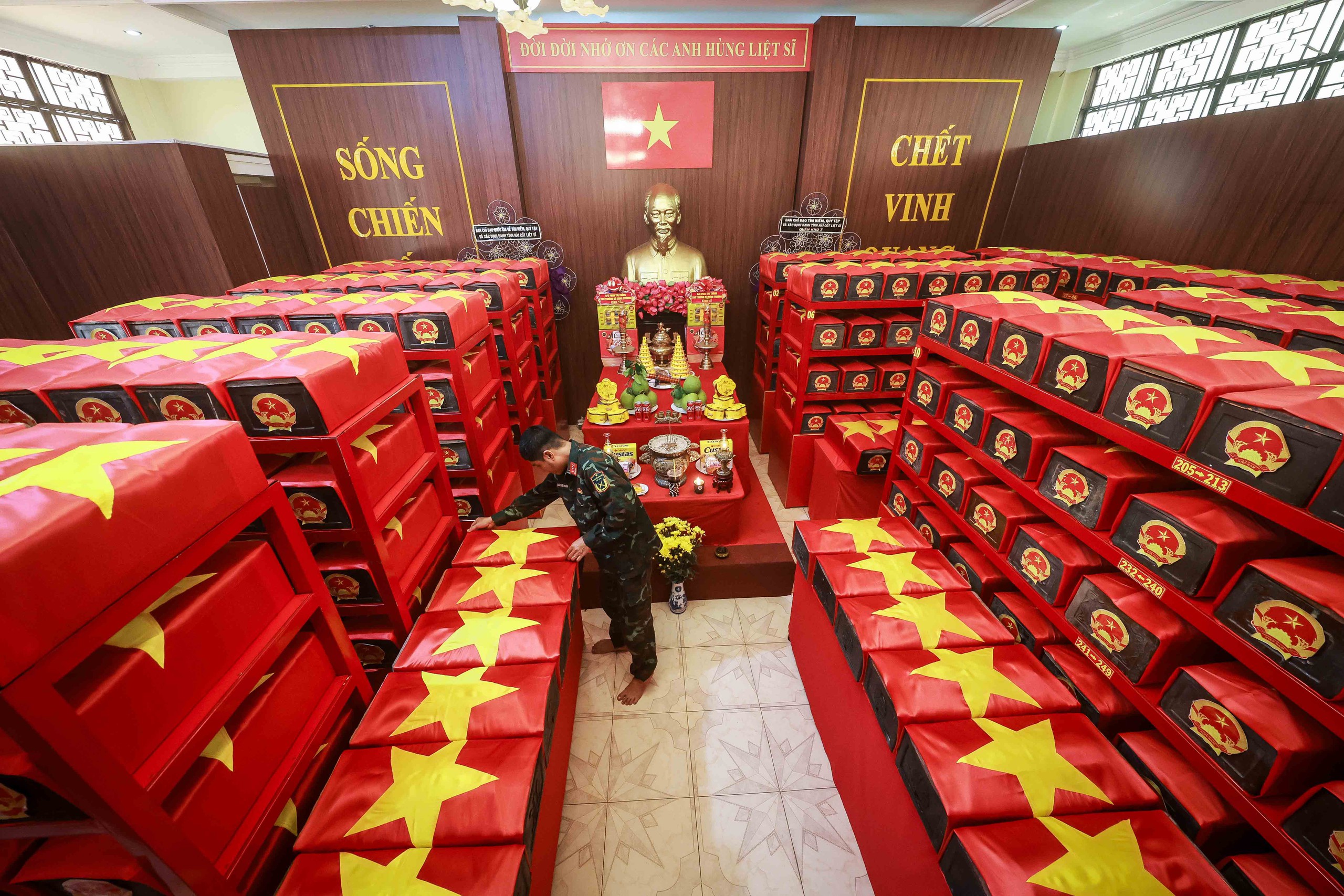
Lieutenant Colonel Tran Duc Thuan adjusts a Vietnamese national flag draped over a small casket containing the remains of fallen soldiers recovered from Le Thi Rieng Park in Ho Chi Minh City. Photo: Nguyen Khanh / Tuoi Tre
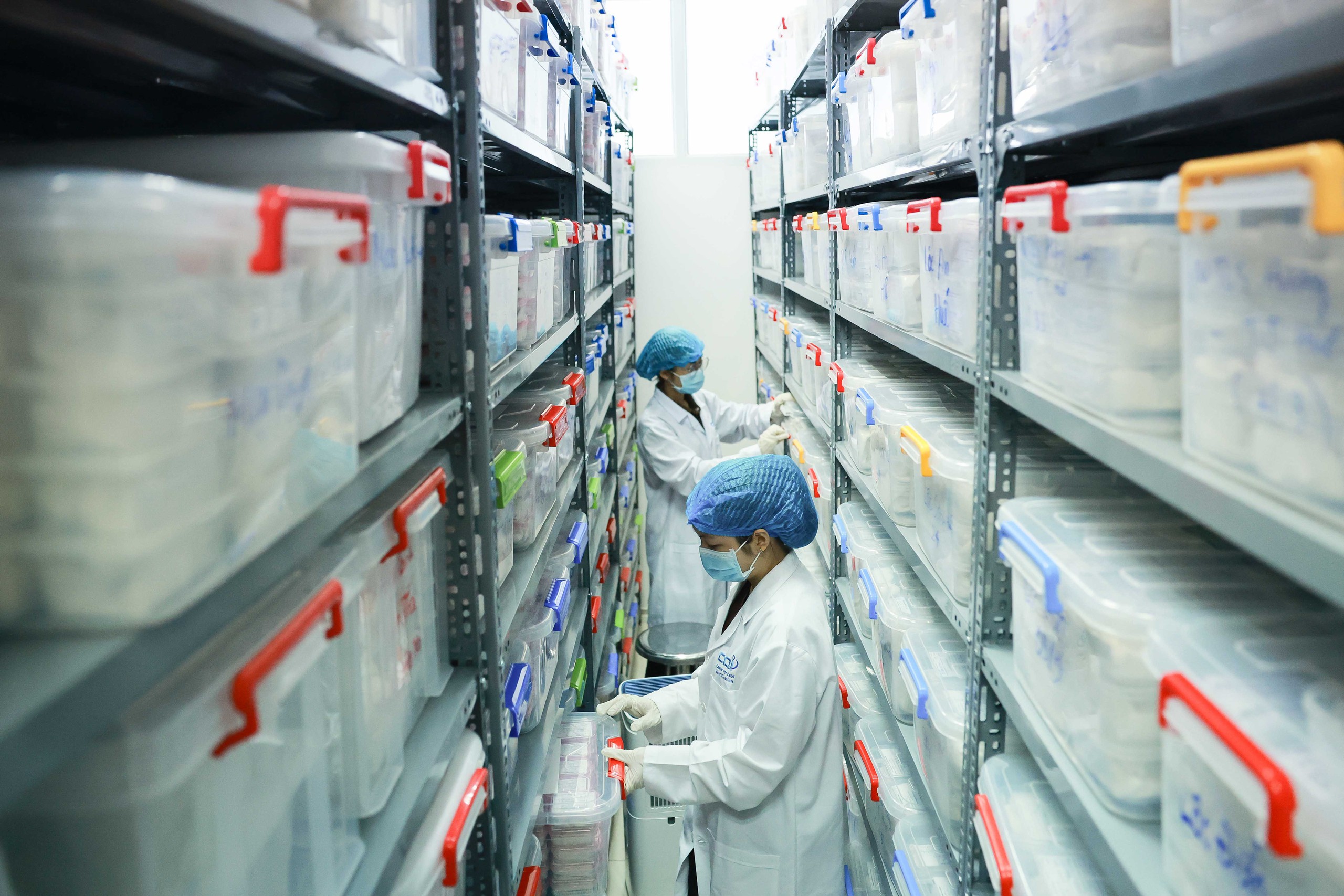
The remains of fallen soldiers recovered from cemeteries across Vietnam are transferred to the DNA Identification Center under the Institute of Biology at the Vietnam Academy of Science and Technology for forensic examination. Photo: Nguyen Khanh / Tuoi Tre
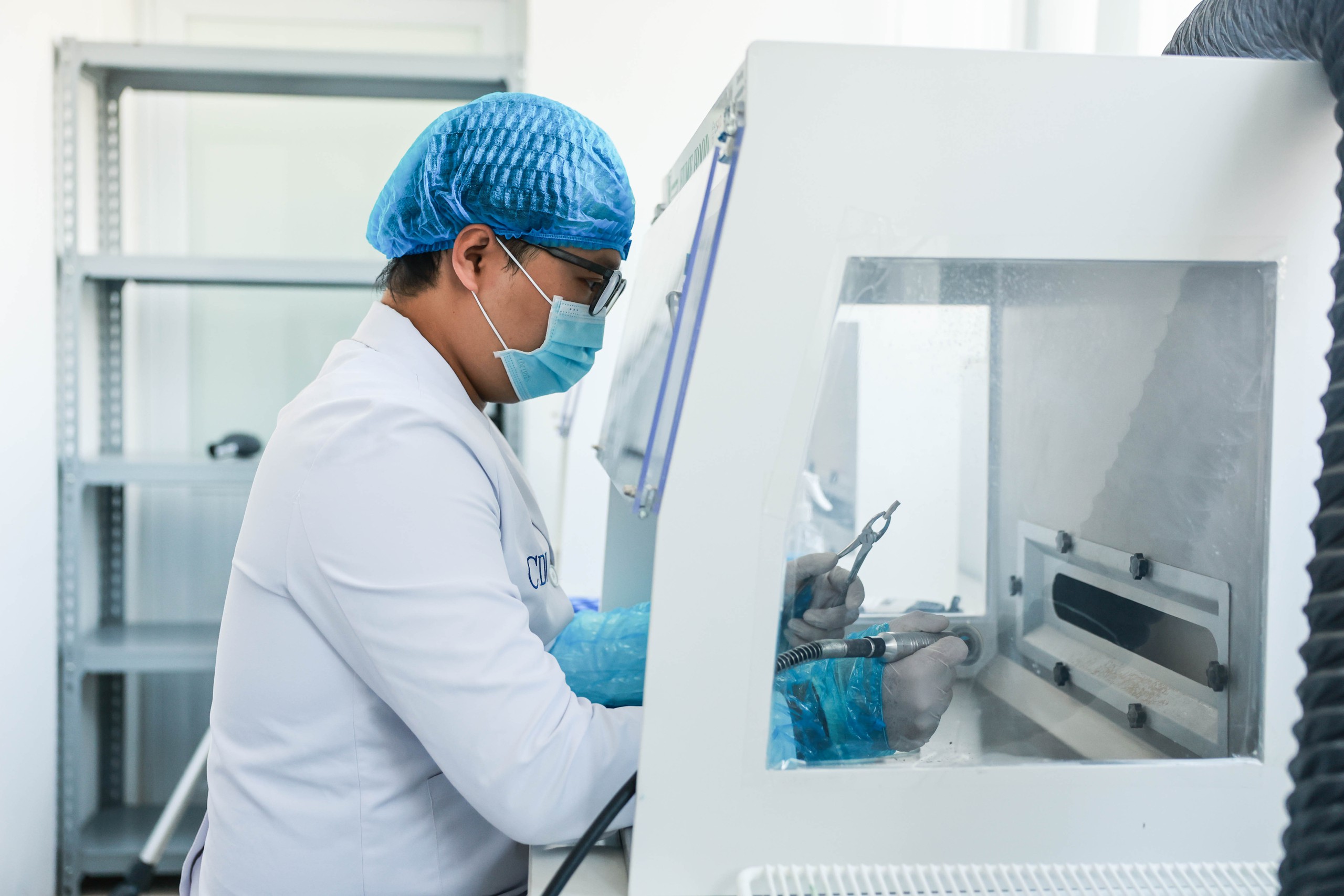
A forensic examiner grinds bone samples to the appropriate size for DNA analysis. Photo: Nguyen Khanh / Tuoi Tre
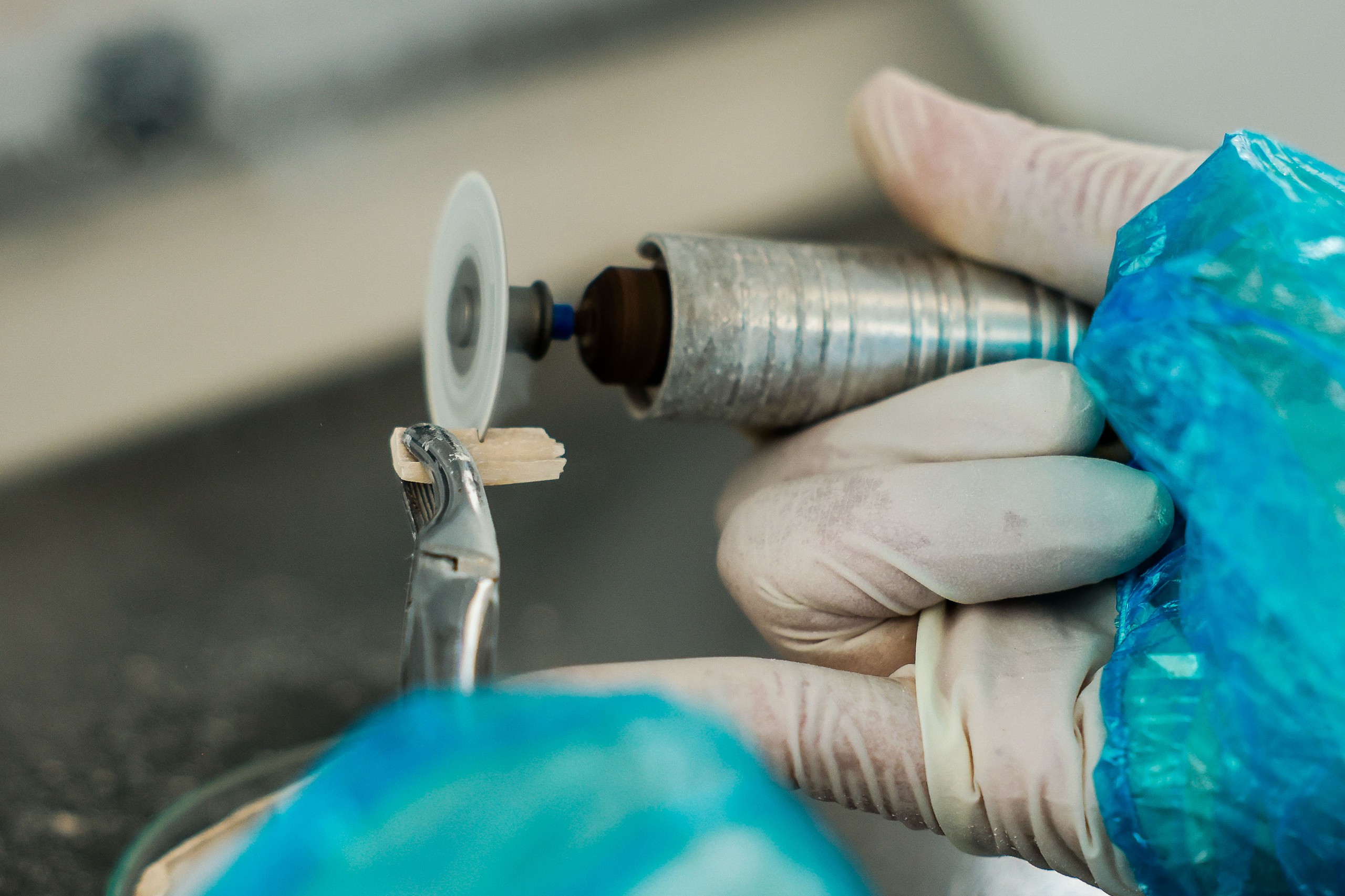
Identifying fallen soldiers' remains in Vietnam is considered one of the world's most challenging forensic identification tasks. Many unidentified remains were buried in rudimentary conditions and relocated multiple times. The country's hot, humid tropical climate and prolonged exposure to water have also caused severe DNA degradation. In the photo, a bone fragment is cleaned before being placed in a grinder. Photo: Nguyen Khanh / Tuoi Tre

The DNA identification process requires meticulous attention to detail, with results determined by precise scientific analysis. Photo: Nguyen Khanh / Tuoi Tre

An estimated 175,000 fallen soldiers have yet to have their remains recovered, while another 300,000 sets of remains have been recovered but remain unidentified. In the photo, forensic examiners conduct DNA extraction and sequencing. Photo: Nguyen Khanh / Tuoi Tre
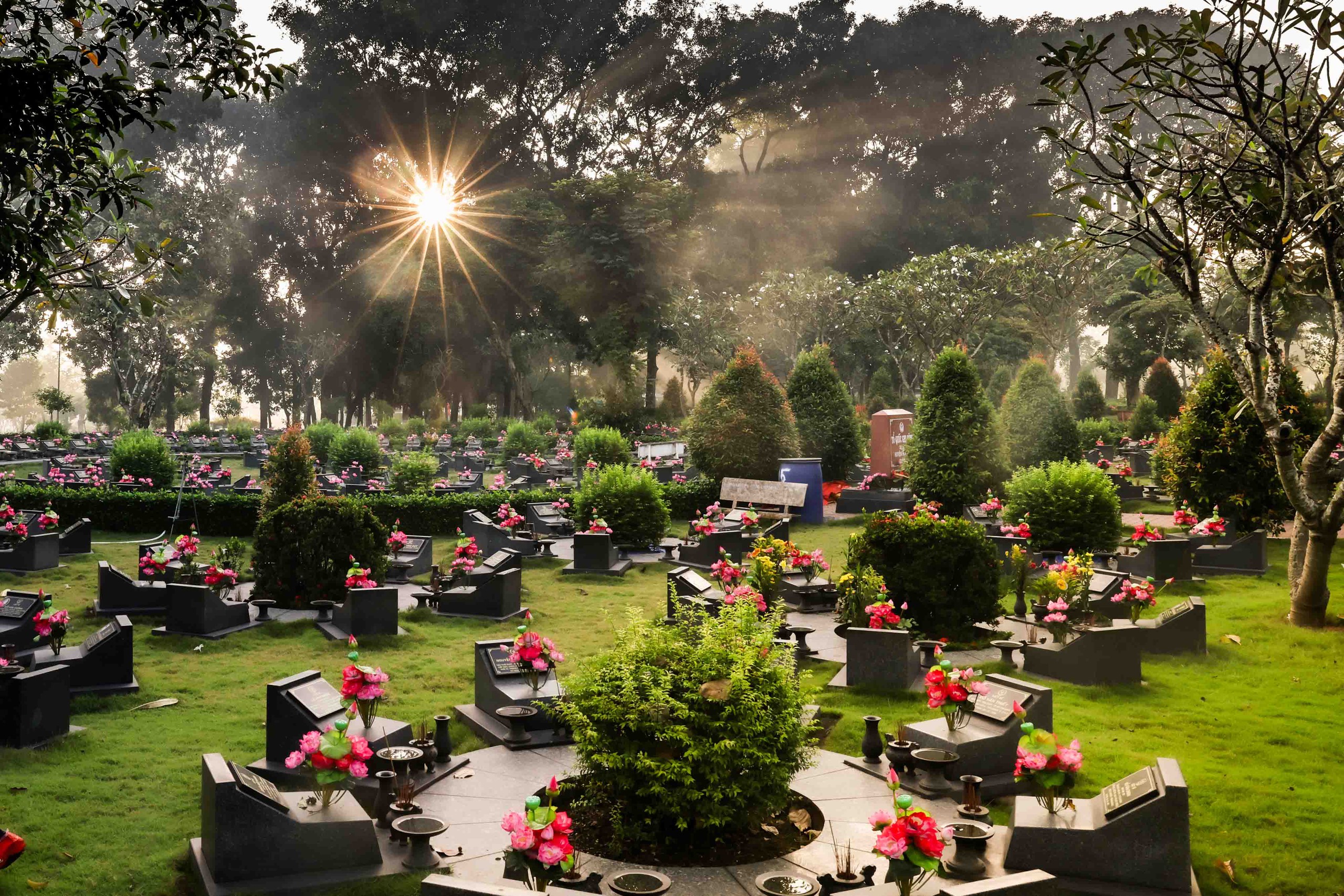
Ho Chi Minh City Martyrs' Cemetery at 6:00 am on October 14, 2026. Cool, dry weather provides favorable conditions for a memorial and burial ceremony for the remains of 731 fallen soldiers recovered from Le Thi Rieng Park. Photo: Nguyen Khanh / Tuoi Tre
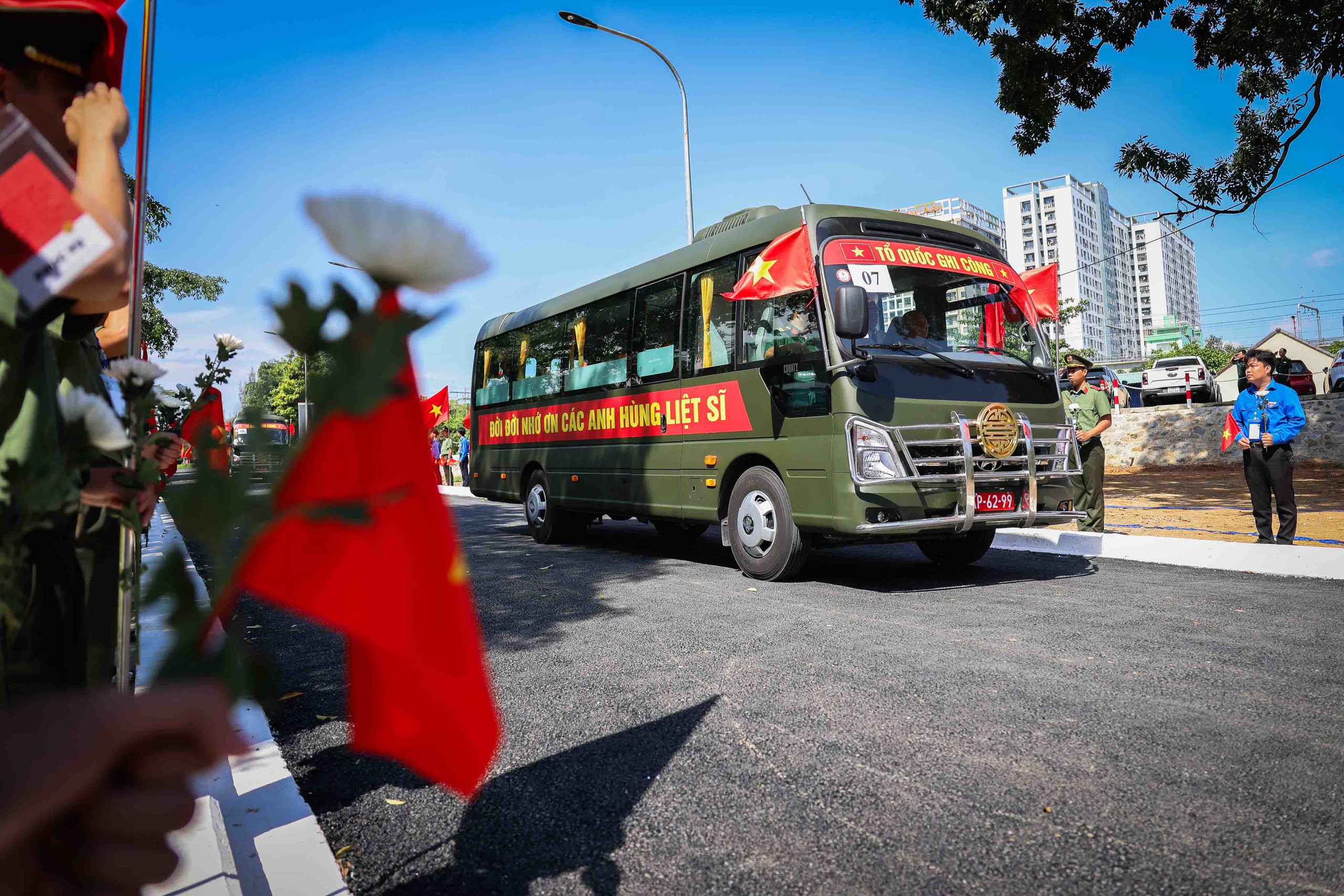
A convoy carrying the remains of fallen soldiers recovered from Le Thi Rieng Park travels to Ho Chi Minh City Martyrs' Cemetery for a burial ceremony. Photo: Nguyen Khanh / Tuoi Tre
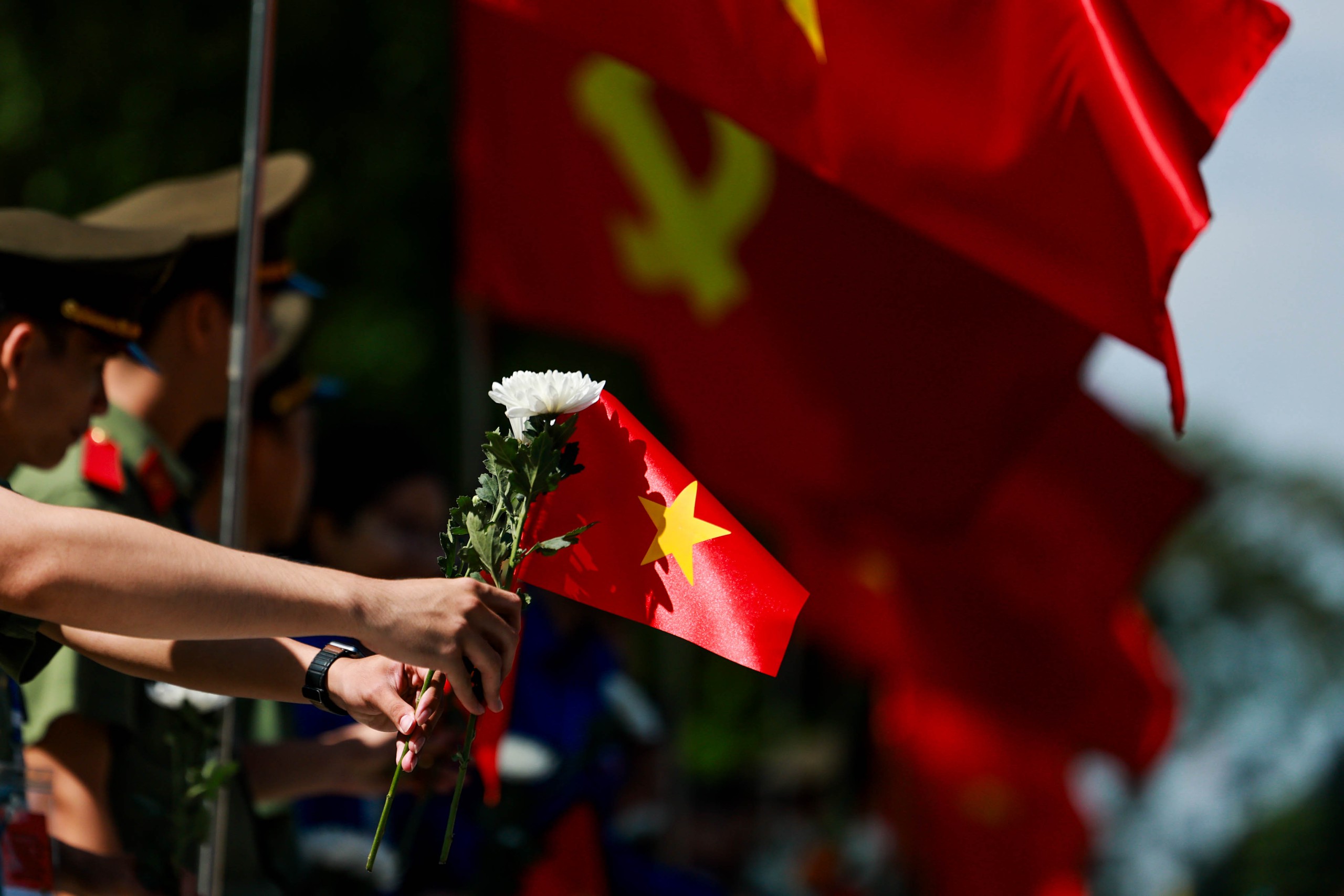
Residents line the streets, waving white chrysanthemums and Vietnamese national flags to pay tribute to fallen soldiers as the funeral convoy passes. Photo: Nguyen Khanh / Tuoi Tre
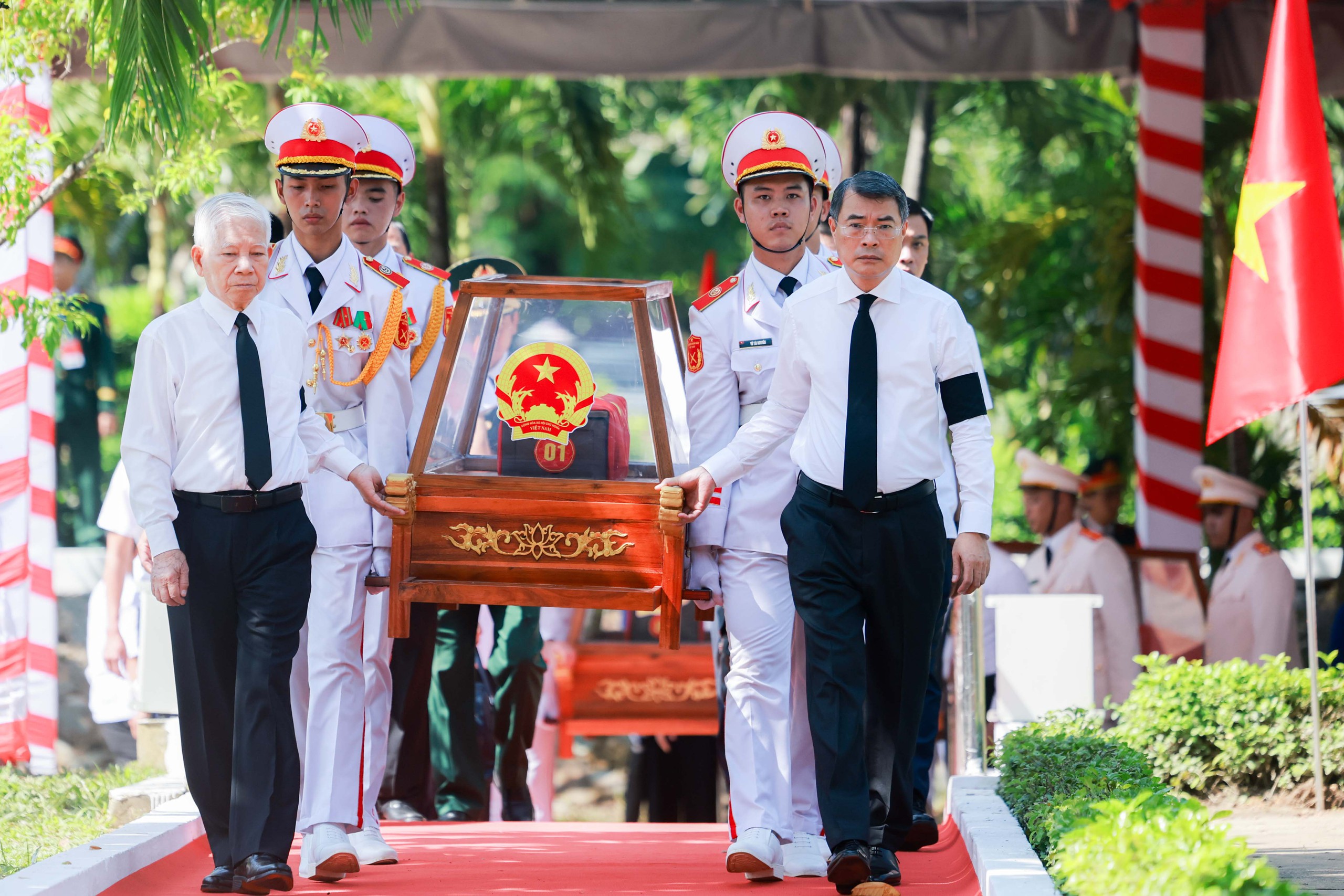
Former State President Nguyen Minh Triet and Prime Minister Le Minh Hung help carry the remains of fallen soldiers recovered from Le Thi Rieng Park for burial at Ho Chi Minh City Martyrs' Cemetery on the morning of October 14, 2026. Photo: Nguyen Khanh / Tuoi Tre
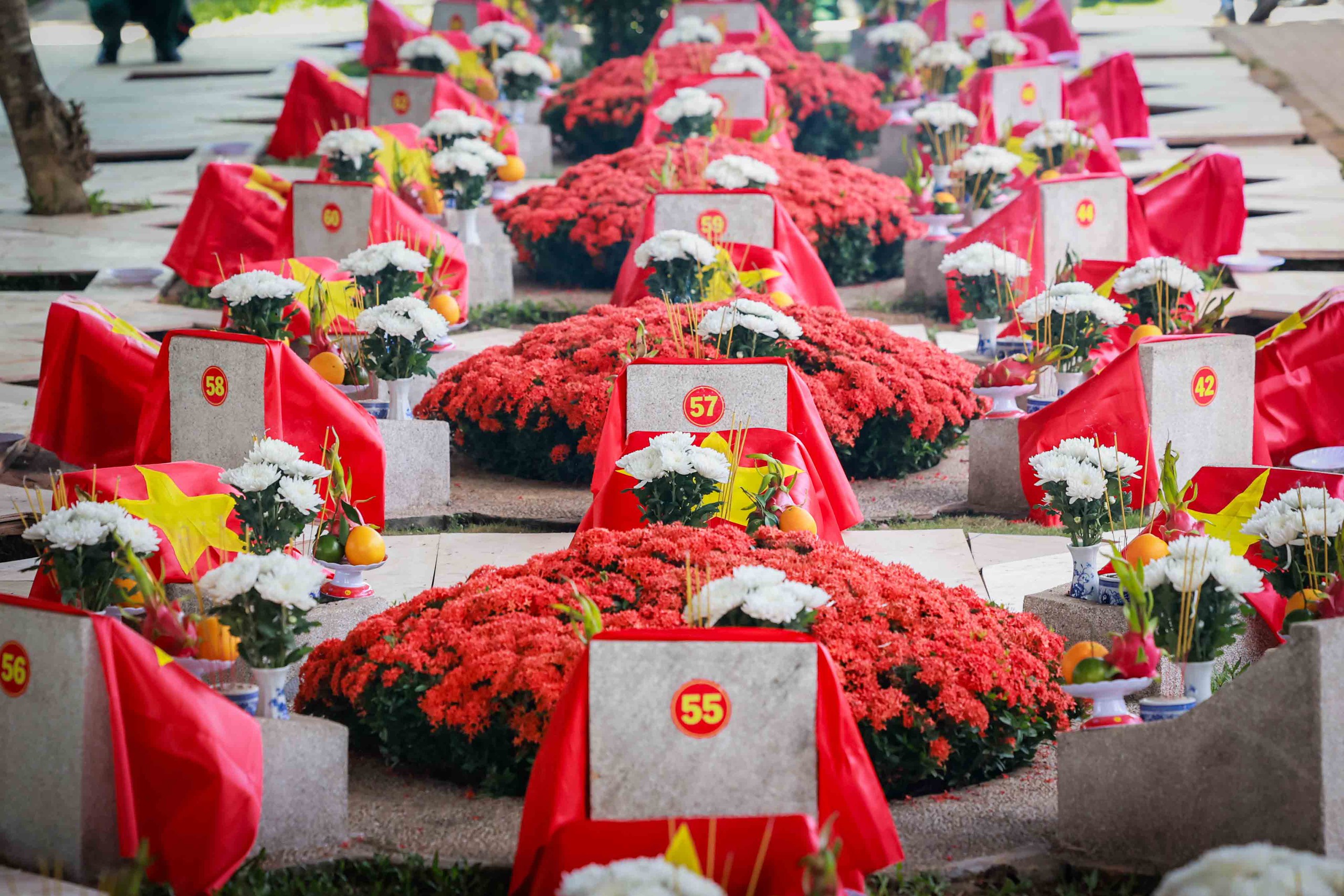
The remains of fallen soldiers recovered from Le Thi Rieng Park are laid to rest at Ho Chi Minh City Martyrs' Cemetery. Photo: Nguyen Khanh / Tuoi Tre
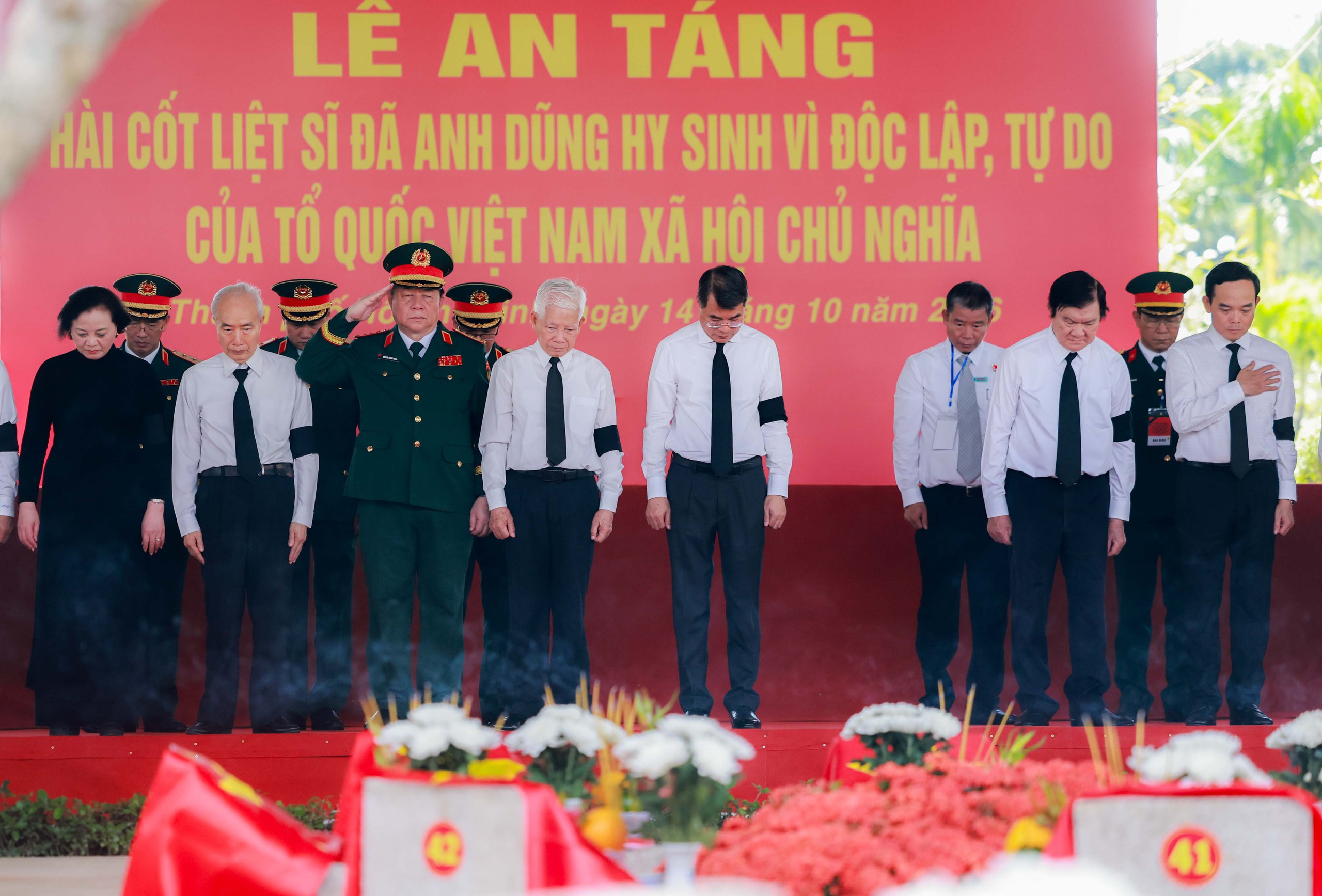
Prime Minister Le Minh Hung joins current and former Party and state leaders in observing a minute of silence to honor fallen soldiers. Photo: Nguyen Khanh / Tuoi Tre
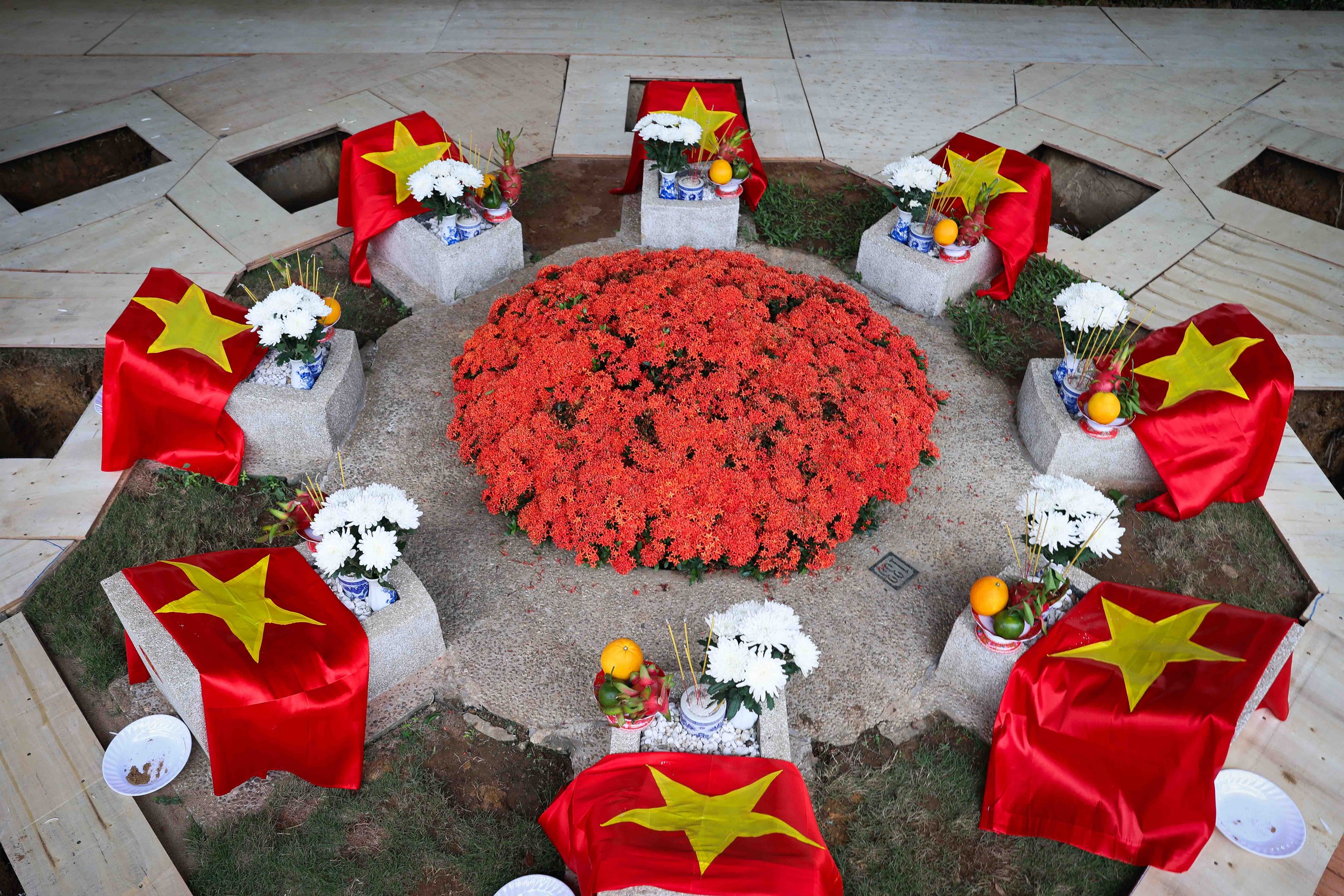
Rows of neatly arranged graves, with flower beds in between, mark the final resting place of fallen soldiers at Ho Chi Minh City Martyrs' Cemetery. Photo: Nguyen Khanh / Tuoi Tre
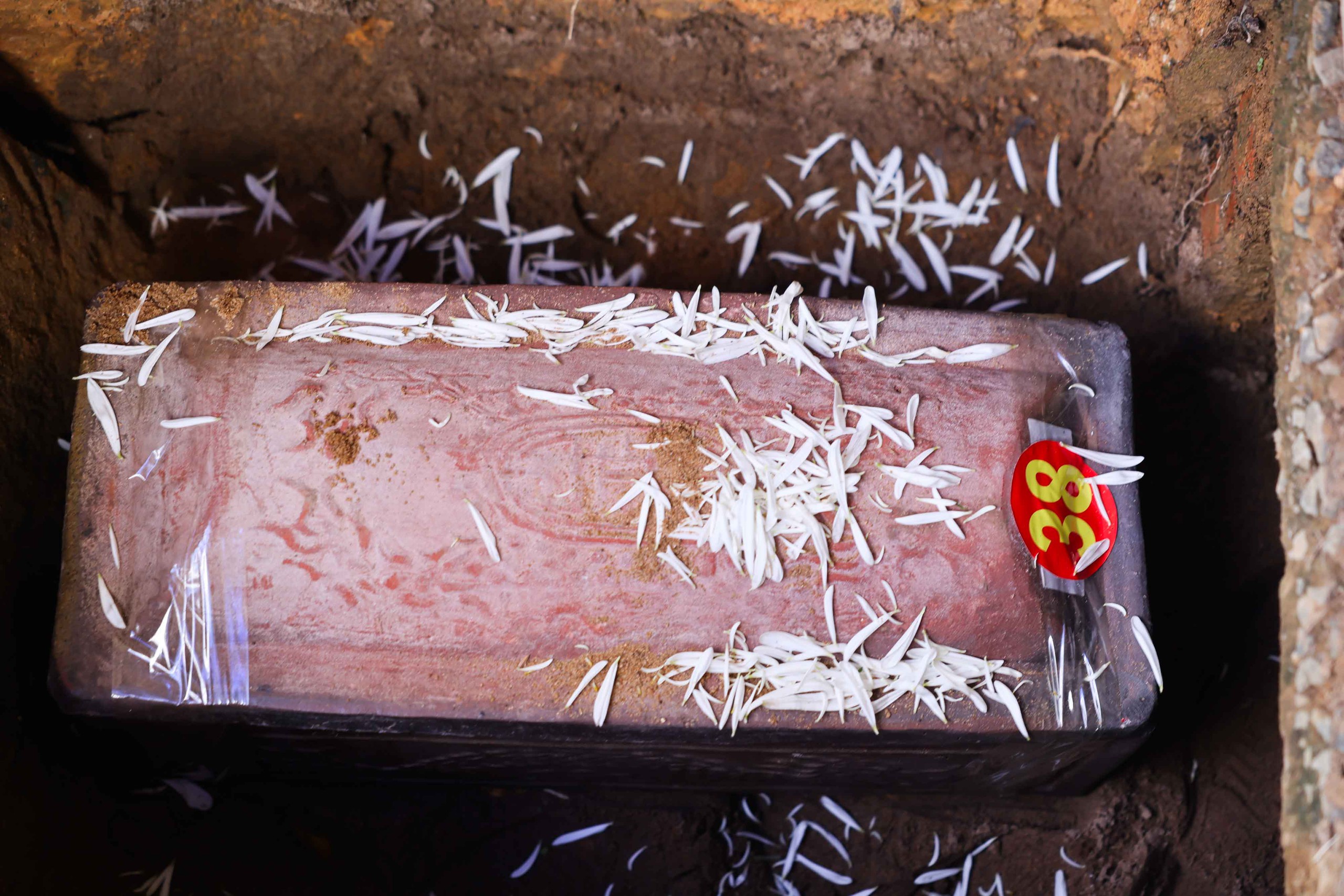
White chrysanthemum petals cover the graves of fallen soldiers whose remains were recovered from Le Thi Rieng Park. Photo: Nguyen Khanh / Tuoi Tre
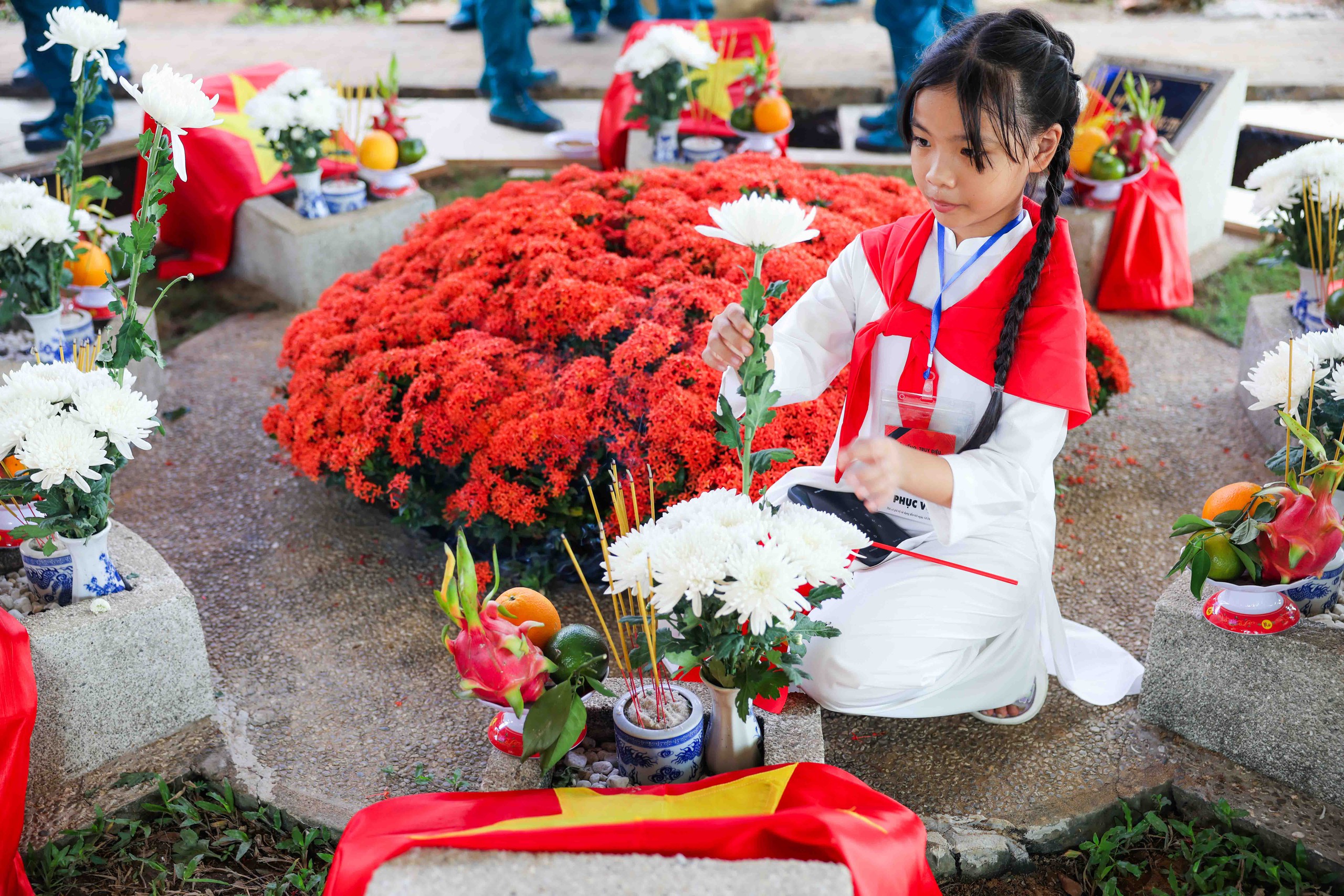
A young girl named My places white chrysanthemums on the graves of fallen soldiers at Ho Chi Minh City Martyrs' Cemetery. Photo: Nguyen Khanh / Tuoi Tre
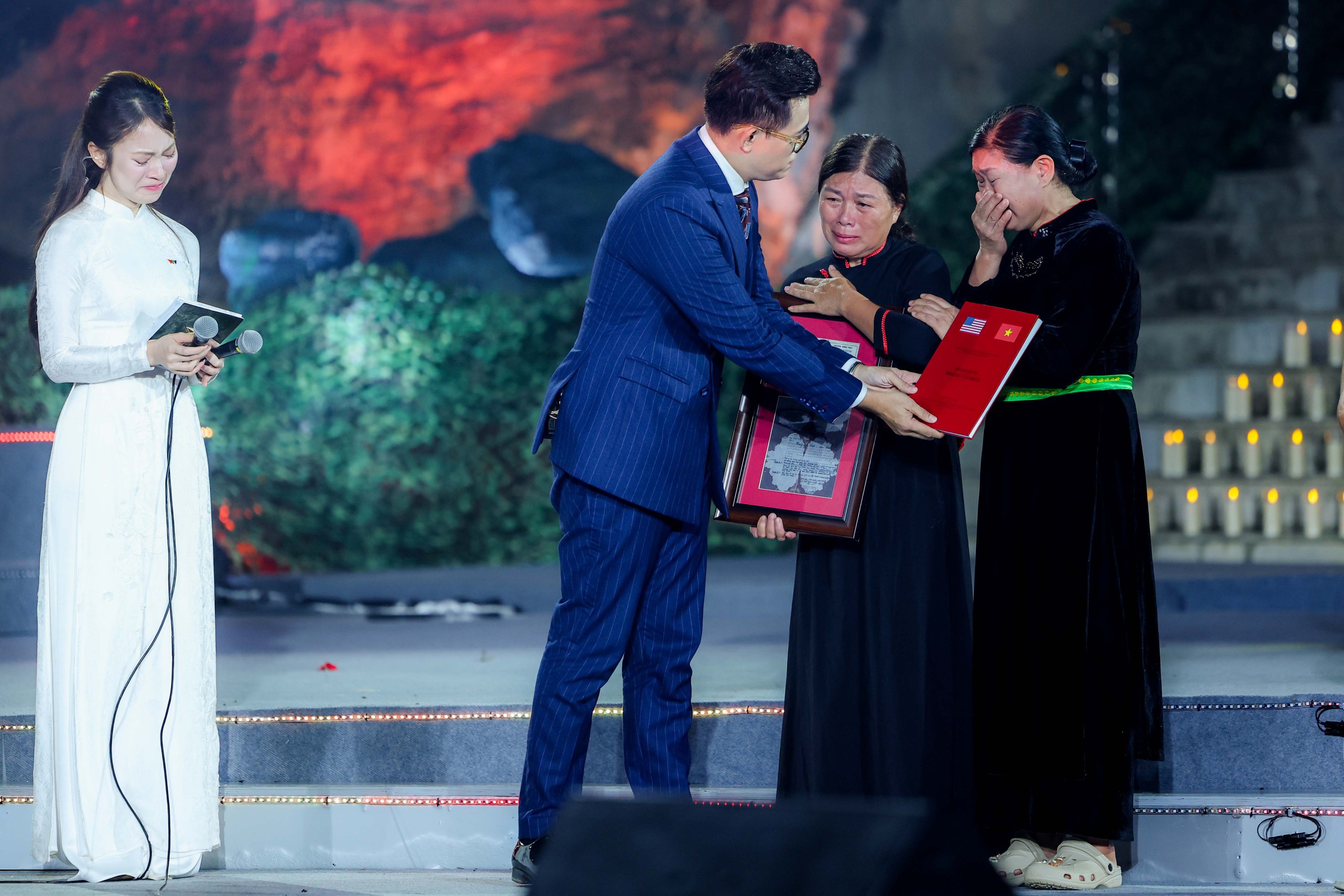
Family members of fallen soldier Hoang Van Dich are overcome with emotion as they receive their father's personal belongings at the memorial site for fallen soldiers in Thanh Thuy Commune, Tuyen Quang Province, during a live television broadcast titled "Sao Sang Dan Duong" (Guiding Stars). Photo: Nguyen Khanh / Tuoi Tre
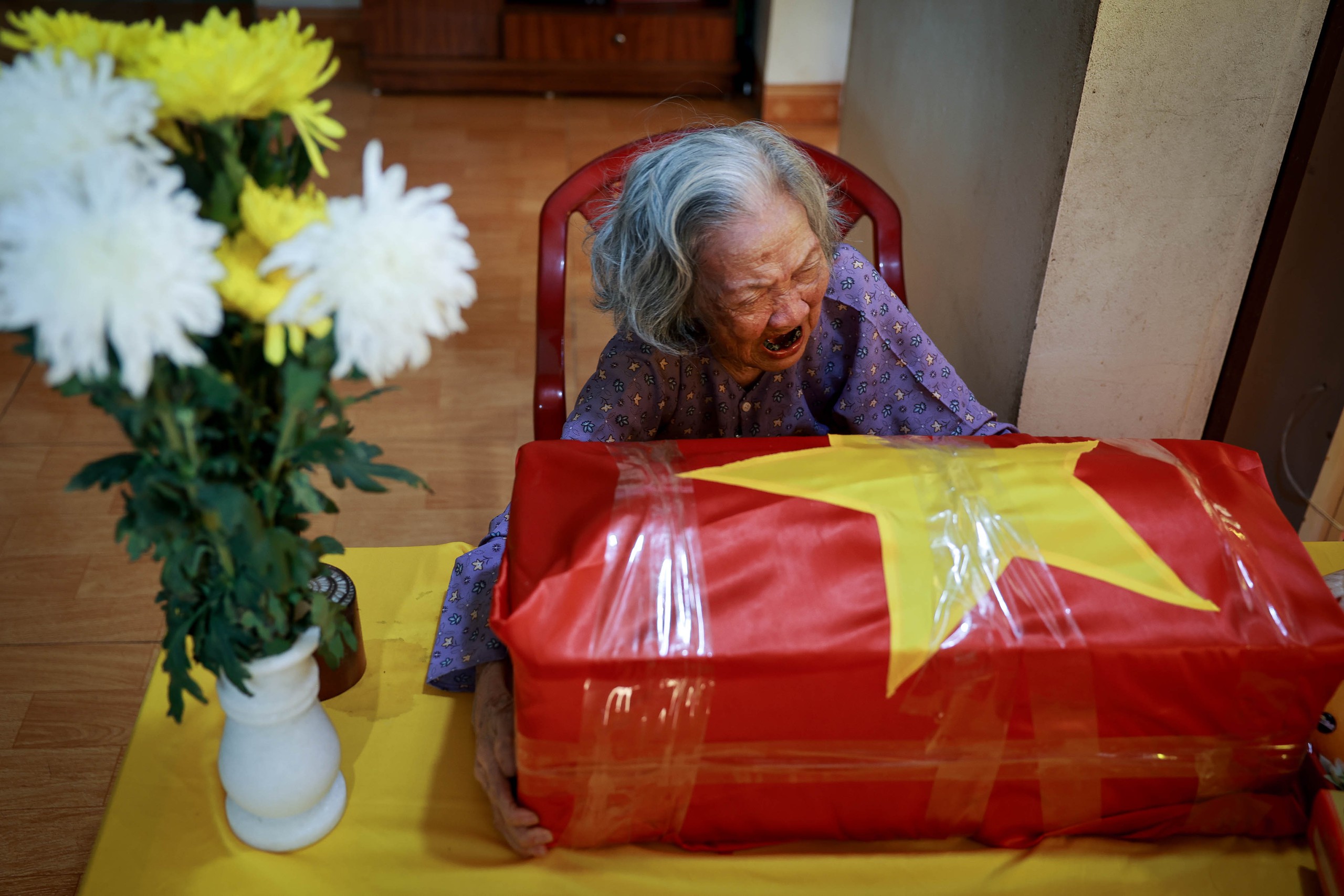
Nguyen Thi Tuu, 95, the mother of fallen soldier Phan Van Canh, breaks down in tears as she embraces her son's remains after 53 years apart. Photo: Nguyen Khanh / Tuoi Tre
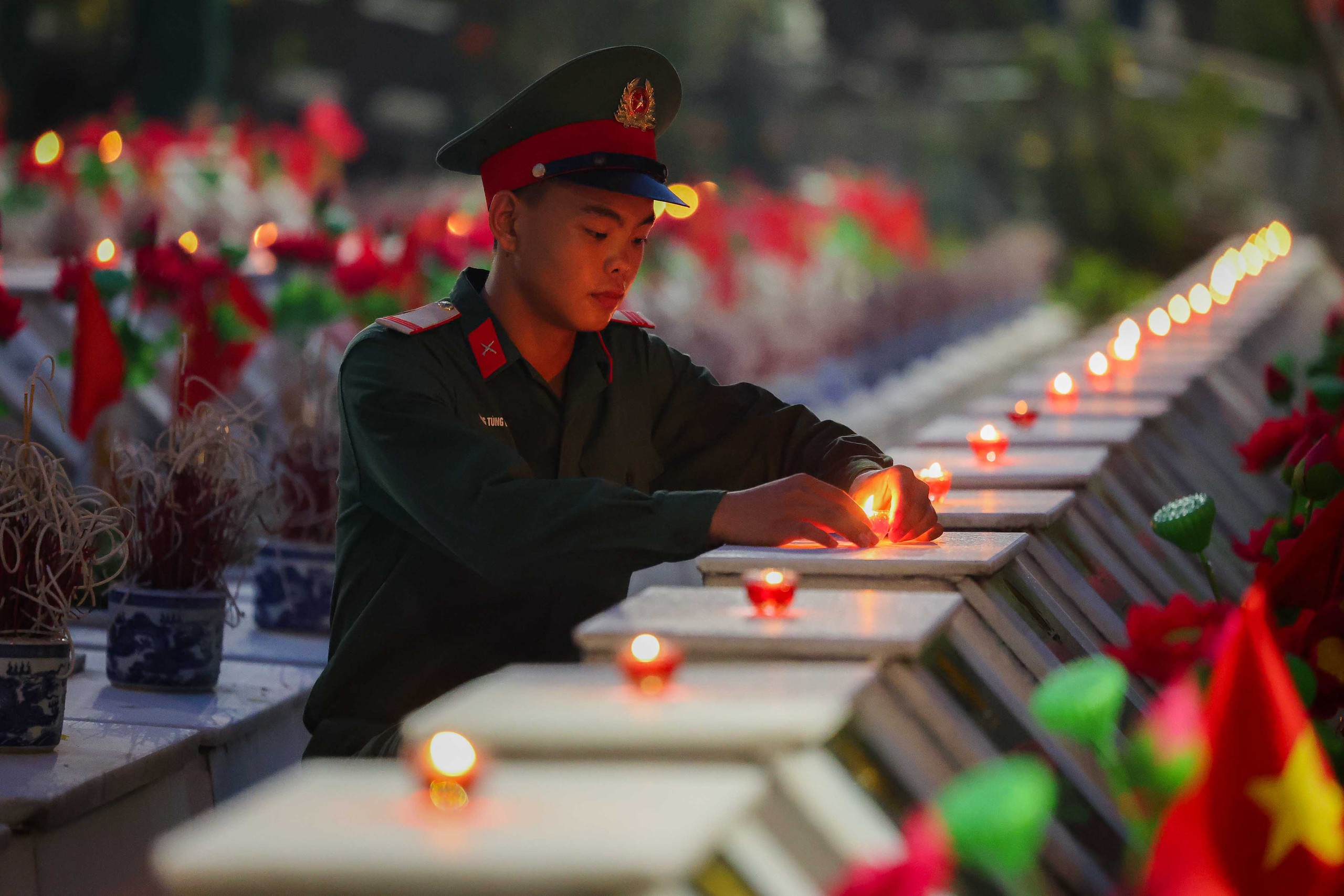
Soldier Vang Tung Duong of the 877th Infantry Regiment under the Tuyen Quang Provincial Military Command lights candles in remembrance of fallen soldiers at the Vi Xuyen National Martyrs' Cemetery. Photo: Nguyen Khanh / Tuoi Tre


Max: 1500 characters
There are no comments yet. Be the first to comment.