


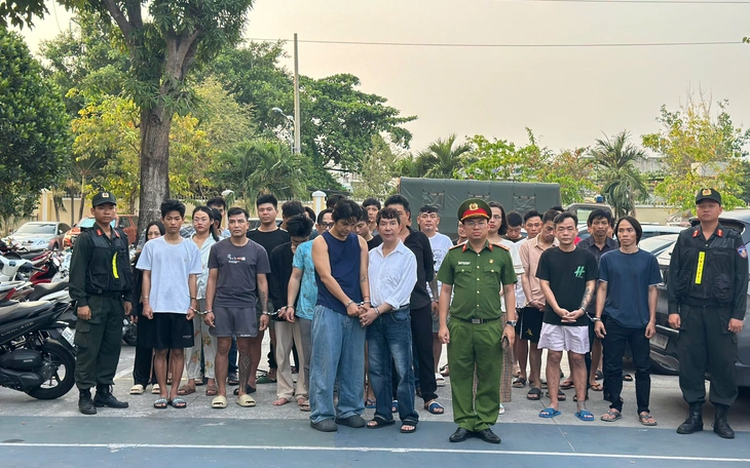
During the 45-day campaign against drug-related crime, Ho Chi Minh City police arrested more than 10,300 people linked to drug-related offenses, including several well-known figures. Photo: Ho Chi Minh City Police
More than six months after the Ho Chi Minh City Party Committee issued Resolution No. 02 on building a drug-free city by 2030, the city's police have reported major results while changing how they tackle drug-related crime.
Lieutenant Colonel Pham Ngoc Tuan Dung, deputy head of the Ho Chi Minh City Police Department's drug crime investigation police office (PC04), told Tuoi Tre (Youth) online newspaper that dismantling drug trafficking rings alone cannot produce lasting results.
“When one ring is dismantled, another can quickly emerge if drug users and conditions for criminal activity remain in the area,” he said.

Lieutenant Colonel Pham Ngoc Tuan Dung, deputy head of the Ho Chi Minh City Police Department's drug crime investigation police office. Photo: Ho Chi Minh City Police
PC04 has therefore advised the city's police leadership to adopt a broader approach: attack the “supply” aggressively while tightly managing “demand,” tackle offenders while making high-risk areas safer, and mobilize the entire political system and society rather than relying solely on the police.
It has also worked to strengthen cooperation between police, other departments, the Vietnam Fatherland Front, mass organizations and local authorities in preventing drug crime and managing people addicted to drugs and those illegally using them.
A key change is putting residents at the center of prevention efforts.
When people can identify risks, proactively report crimes, better monitor their children and help build safe neighborhoods, prevention becomes much more effective, Dung said.
That approach has also prompted PC04 to step up public communication. Alongside direct outreach in residential areas, schools and businesses, the police have developed a Facebook fanpage in a more accessible and modern style aimed at young people.
Following the flow of drugs
At the same time, PC04 has significantly changed its investigative approach by adopting what it calls “following the flow of drugs.”
A drug user, retail dealer or a small drug-use venue can provide a starting point for a wider investigation into suppliers, organizers and the networks behind them.
Rather than focusing on the number of small cases uncovered, investigators aim to dismantle entire trafficking networks and eliminate the conditions that allow drug crime to continue.
“We believe the biggest result is not reflected in the number of cases handled or arrests made, but in the change in how drug crime is prevented and fought across the city,” Dung said.
In the first six months of 2026, Ho Chi Minh City police uncovered 4,064 drug-related cases and arrested 10,304 people, up 55.41 and 43.73 percent, respectively, from the same period last year.
Dung said the sharp increases reflected the determination of the entire police force. But more importantly, he said, the results came from a change in approach rather than simply increasing arrests.

Suspects in an interprovincial drug trafficking ring dismantled by Ho Chi Minh City police. Photo: Ho Chi Minh City Police
Police conducted a large-scale review for the first time of drug addicts, illegal drug users and people considered at risk. A total of 16,759 people were detected and dealt with, up more than 63 percent year on year.
Of those, 989 faced criminal proceedings, more than 11,200 had files prepared for compulsory rehabilitation, and more than 3,500 new cases of illegal drug use were placed under management.
Many people had previously remained outside the management system. The review has given police a more comprehensive database to support management, education, law enforcement and investigations, Dung said.
Drug crime evolves fast
Drug crime is changing rapidly, both in how offenders operate and how they reach users.
Drug dealing and the organization of illegal drug use were once commonly associated with bars, karaoke venues and other relatively visible locations. Offenders are now increasingly moving their activities into more closed environments.
They exploit rented apartments, homestays and private homes, while using encrypted messaging apps and social media to communicate and conduct transactions. Delivery services are also used to conceal criminal activities.
The review during the first six months found and dealt with 16,759 drug addicts and illegal drug users, an increase of more than 63 percent year on year.

Police in Thong Tay Hoi Ward, Ho Chi Minh City, investigate a suspect accused of organizing illegal drug use at a hotel. Photo: Dan Thuan / Tuoi Tre
Police are particularly concerned about how offenders are targeting young people.
Drugs no longer necessarily appear in easily recognizable forms. Offenders are constantly changing their methods of disguising drugs and mixing them into products that may appear harmless.
One of the most notable concerns is etomidate being mixed into e-cigarette liquid used in ‘pod chill’ products.
Synthetic drugs and new psychoactive substances are also having their chemical compositions continually changed.
This requires specialized police units to keep updating their knowledge of emerging methods and tactics. Public education must also evolve, going beyond explaining the harms of drugs to helping people recognize new ways offenders disguise them.
“Drug crime always changes faster than what we can see,” Dung said. “That is why PC04 has determined that we cannot fight drug crime with old thinking.”
The department will continue advising authorities to focus on prevention, area management, enforcement and digital transformation.
Another priority is improving basic police work.
PC04 and local police will regularly review and update data. The more accurate the data, the more effective management and crime-fighting efforts can be, Dung said.
PC04 will also continue following the “flow of drugs,” recognizing the close links between illegal drug users, retail dealers and trafficking networks.
Mapping these relationships can help investigators identify entire networks and pinpoint masterminds and ringleaders for focused action.
Police will also step up efforts to detect drug crime in cyberspace and gradually build a database to help forecast and identify crime trends.
However, Dung stressed that no single force can solve the drug problem on its own.
Drug prevention and control requires cooperation among authorities, mass organizations, residents, and the police.

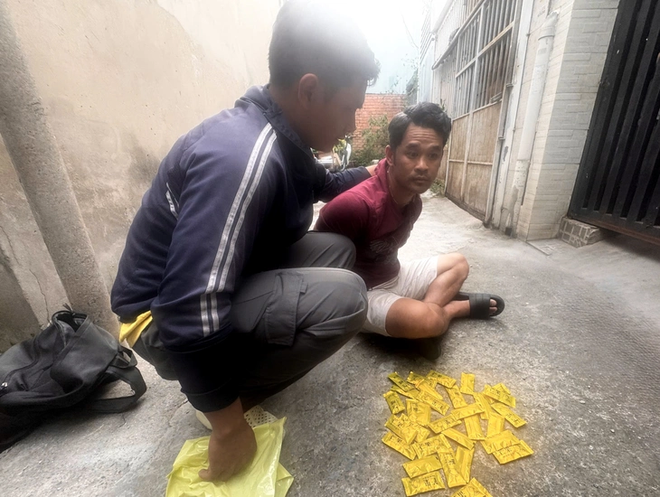
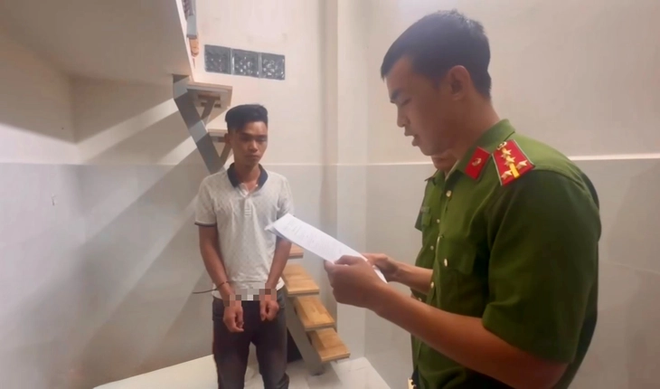
Starting from a drug user, Ho Chi Minh City police's drug crime investigators have dismantled several etomidate trafficking rings. Photo: Ho Chi Minh City Police
Campaign may end, but the fight continues
Maintaining the “spirit” of the 45-day citywide campaign aimed at intensifying crime prevention efforts does not necessarily mean keeping the same intensity of work, Dung said. What matters is maintaining the campaign's approach and methods after it ends.
“If we return to the old way of working after the campaign, it will be difficult to preserve the results,” he said.
The campaign may officially end according to schedule, but efforts to make communities drug-free have no finish line.
Only when neighborhoods are genuinely safe and residents genuinely feel secure will the goal of Resolution No. 02 be realized, Dung said.











Max: 1500 characters
There are no comments yet. Be the first to comment.