


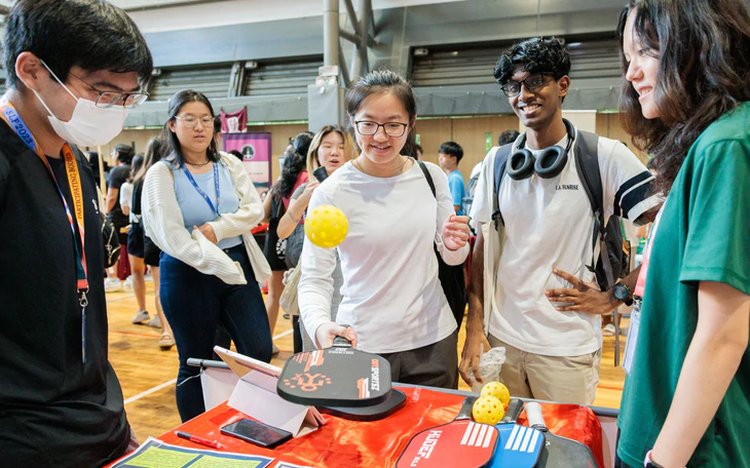
Vietnamese students studying at the National University of Singapore. Photo: NUS
With Vietnam increasingly capable of providing an international education, what is the point of studying abroad?
If the main goal of studying abroad is simply to obtain a better education or a foreign degree, that rationale is becoming less compelling.
Vietnam’s education sector is changing rapidly. More Vietnamese universities are appearing in international rankings, while English-language programs and partnerships with foreign universities are becoming increasingly common.
International lecturers are coming to Vietnam to teach, overseas Vietnamese academics are returning to contribute to education, and many Vietnamese lecturers trained in developed countries are returning to teach and conduct research.
In other words, many of the benefits that once required students to go overseas can now be accessed in Vietnam.
But this very change calls for a different way of looking at study abroad. A university can bring international knowledge into Vietnam. But it is much harder to bring an entire international society into a classroom.
This can be viewed through three layers of value.
The first is international knowledge — curricula, textbooks, teaching methods and knowledge updated to international standards. Vietnam is becoming increasingly capable of providing this.
The second is the international learning environment — studying in English, learning alongside students from different countries, working in multicultural teams and encountering different ways of thinking. Vietnam is also gradually developing such environments.
The third is international life experience — actually living, studying and growing in a different society. This is perhaps the most difficult value to replicate.
However, going abroad does not automatically give a young person a global mindset.
A student in Vietnam can still develop an international outlook by studying in a multicultural environment, using foreign languages and regularly engaging with the wider world.
Conversely, a student who studies abroad but spends most of their time within a familiar community may not necessarily develop a broader worldview.
A global mindset therefore depends on how a person experiences and views the world, whether they remain in Vietnam or study abroad.
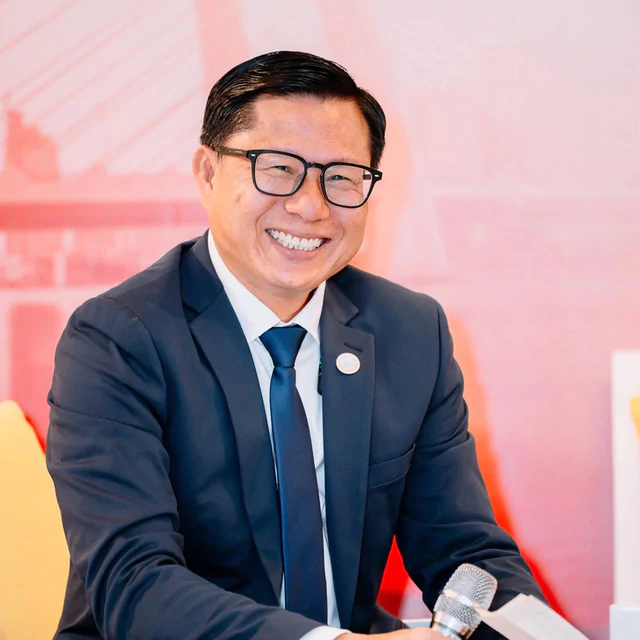
Dr. Dinh Hoang Ha, country director of Hanbridge Institute in Vietnam. Photo: Supplied
Changing future of studying abroad
Over the next five to 10 years, mass study-abroad programs are expected to decline significantly, particularly among students who go overseas mainly because they believe a "foreign degree is automatically better."
This does not mean young Vietnamese people will become less internationally connected. Instead, there could be a shift from study abroad toward international education and international mobility.

A student could complete high school and university in Vietnam while participating in exchange programs, international internships or studying part of a program overseas.
Another student might choose to study abroad full-time as preparation for living and working in another country.
If Vietnam can provide all these opportunities, there is not necessarily a need to go far from home.
But if a young person needs to step outside their comfort zone, experience another society, broaden their worldview and prepare for a cross-border career, studying abroad still offers unique value.
What, then, should young people prepare for to be ready to engage internationally, whether they study in Vietnam or abroad?
First, they need to develop independence. In addition to mastering their academic field, they need to be able to manage their time, money, daily life, health and unexpected problems on their own.
They also need adaptability. Entering an international society means being prepared to deal with differences in language, culture, communication styles, social norms and learning methods.
Young people should actively make international friends, participate in activities, work in multicultural teams and engage with communities. This is when an international mindset is developed through real-life experiences.
Finally, young people should know what they want, whether they study in Vietnam or overseas. Do they want a degree, preparation for an international career, exposure to another culture, a professional network, or preparation to live and work at home or abroad?
Only with a clear goal can they determine what experiences they need to actively seek overseas.
* This article was originally written in Vietnamese by Dr. Dinh Hoang Ha, country director of Hanbridge Institute in Vietnam, and rewritten in English by Tuoi Tre News.








Max: 1500 characters
There are no comments yet. Be the first to comment.