


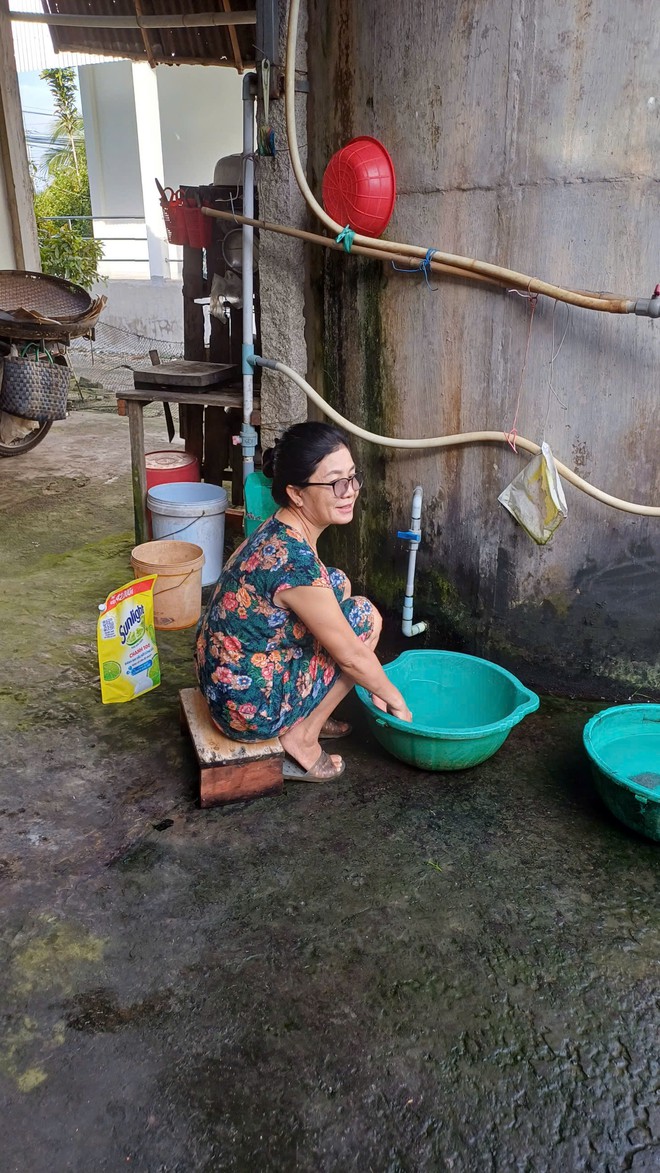
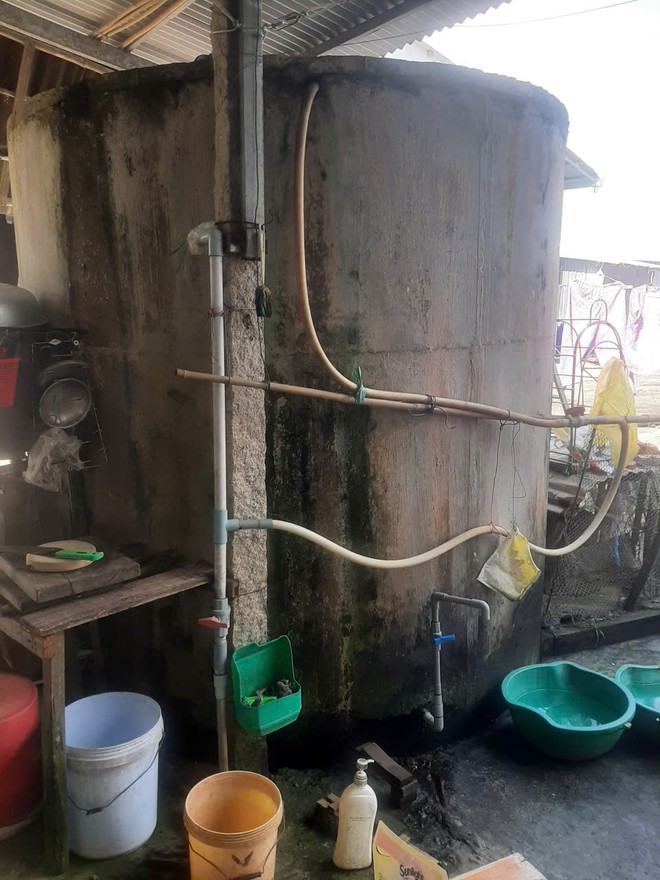
Residents of Thanh Quoi Commune in Can Tho City, southern Vietnam use concrete tanks to store rainwater for year-round use. Photo: Duy Linh
With severe drought and saltwater intrusion forecast for the 2026-27 dry season, residents across Vietnam's Mekong Delta are finding creative ways to store water for household use and irrigation as freshwater supplies come under threat.
Rainwater becomes key source of fresh water
Rainwater storage has long been common in Hamlet E1 of Thanh Quoi Commune, Can Tho City, where nearly every household has built concrete tanks or purchased plastic or stainless steel containers to collect rainwater for daily use.
Duy Linh's family, from Hamlet E1, has built three concrete tanks with a combined capacity of 25 cubic meters, providing enough rainwater for year-round use and eliminating concerns about water shortages or pollution in nearby canals.
Linh said his family prioritizes rainwater for cooking and washing vegetables during the dry season, while relying entirely on stored rainwater during the rainy season.
He said building a concrete tank with a capacity of 15-16 cubic meters costs more than VND10 million (US$390). The tanks are durable, safe to use, and can be relocated when needed.
Nearby, Thien Thuat's family has invested in a 10-cubic-meter plastic tank to collect rainwater for use throughout the year.
The couple mainly use rainwater for daily household activities, while relying on tap water for bathing and laundry.
With only two people in the household, their stored supply is sufficient to last the year. "The initial investment is not substantial, but it gives our family access to rainwater throughout the year," Thuat said.
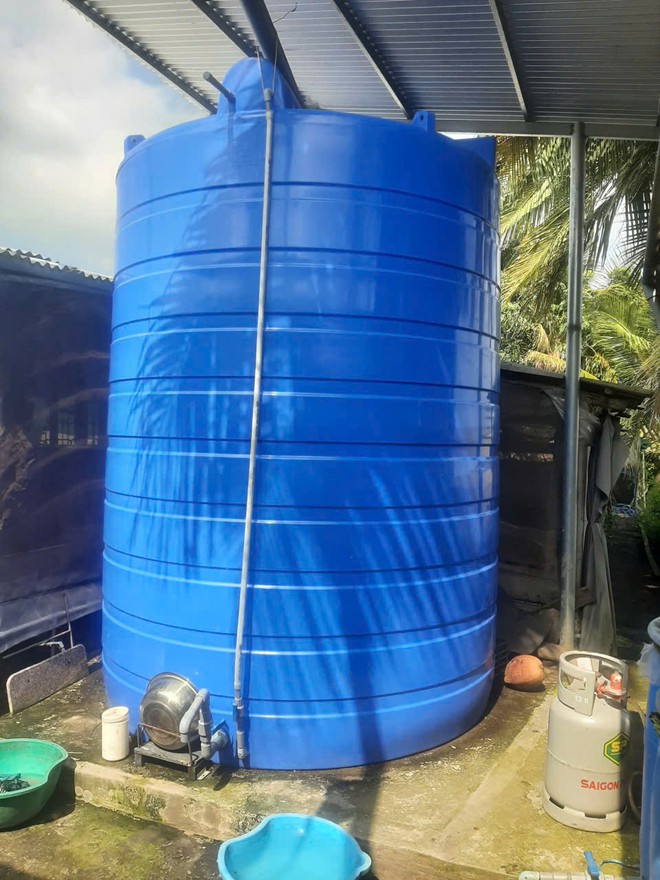
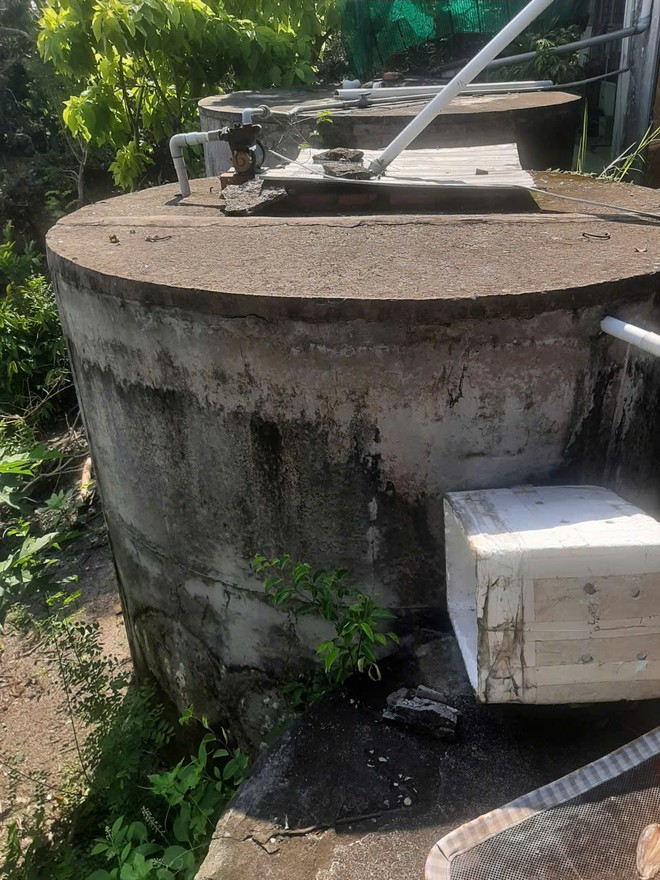
Duy Linh's family uses plastic tanks to store rainwater alongside its concrete tanks. Photo: Duy Linh
Meanwhile, Ngoc Nhan, head of the Binh Hoa Phuoc Rambutan Cooperative, said its members had taken steps to prepare for drought and saltwater intrusion.
These include dredging canals in their fruit gardens to improve water flow, strengthening embankments to keep saltwater out, and regularly checking salinity levels so they can close sluice gates before saltwater enters.
However, closing the gates does not solve the entire problem. While it prevents salt water from entering, keeping them closed for an extended period can also leave farmers short of fresh water stored inside their gardens, Nhan said.
He therefore advised residents to collect and store fresh water early, rather than depend solely on the sluice gates to protect their crops.
One method local farmers have adopted is to make large water bags using white plastic sheeting about two meters wide.
They sew or tie both ends tightly to form sealed bags, then place them in the canals running through their gardens.
Fresh water is pumped into the bags and stored there for use during the dry season. When their fruit trees need watering, farmers can pump the water directly from the bags into their gardens.
Nhan said the approach allows farmers to turn existing garden canals into water storage space, helping them maintain a supply of fresh water for irrigation when drought and saltwater intrusion affect the area.
Early planting to avoid peak drought, salinity
Pham Van Nhut, a resident of Phong My Hamlet in Luong Hoa Commune, Vinh Long Province, is preparing to store fresh water and adjusting his planting schedule to reduce potential losses during the coming dry season.
His family expects to harvest in about two months and plans to skip the next crop after the Lunar New Year, when freshwater shortages are expected to make irrigation more difficult.
He hopes to resume farming around April, when rainfall is expected to return.
To prepare for the dry season, Nhut is also cleaning two water storage bags his family invested in 2016. Each has a capacity of about seven cubic meters and is used to store fresh water for household needs.
The initial investment totaled around VND27 million ($1,050), including the bags, a storage tank, and a water pump.
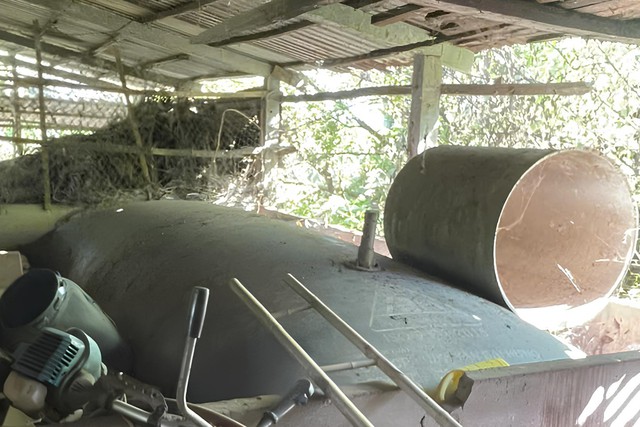
Pham Van Nhut said he plans to clean his family's water storage bags before filling them with fresh water for use during the coming dry season. Photo: Phan Trung
Nhut said his family uses stored water sparingly during the dry season, mainly for household needs. In some years, they use only one of the two storage bags and keep the other as a backup.
However, the stored water may still be insufficient if drought and saltwater intrusion persist for an extended period.
"During the 2015-16 dry season, salinity levels reached 10 parts per thousand at one point. Over the past month, many people I know have called to advise me to store fresh water because forecasts suggest severe drought and saltwater intrusion next year," Nhut said.
"I'm now preparing to clean our storage bags and other containers so we can collect fresh water as soon as it rains.
"With water from the municipal supply and the two storage bags, I hope my family can get through the coming dry season."
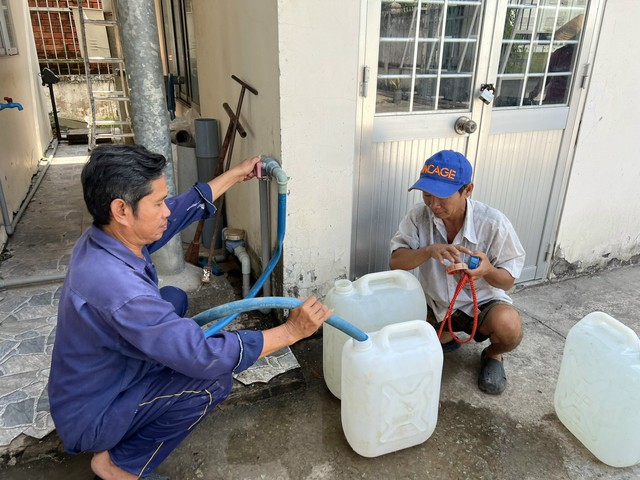
Local authorities across Vietnam's Mekong Delta are working to secure freshwater supplies for residents. Photo: Phan Trung


Max: 1500 characters
There are no comments yet. Be the first to comment.