


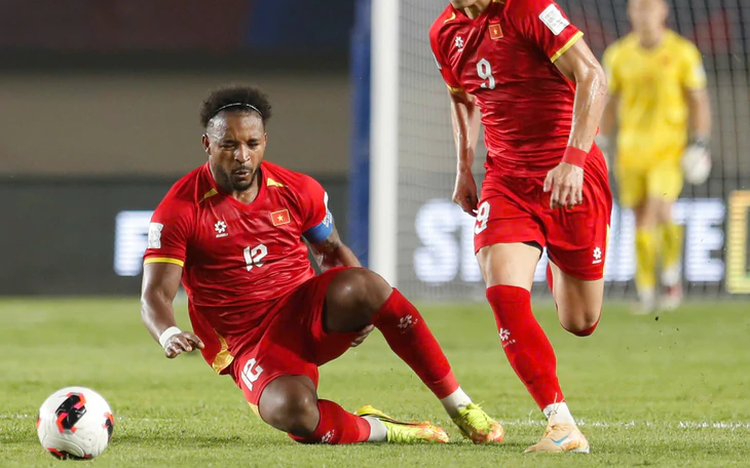
Xuan Son (left) suffered an injury, leaving Vietnam struggling to score. Photo: Anh Khoa / Tuoi Tre
Vietnam finished fourth at the 2026 FIFA ASEAN Cup in Indonesia after losing 1-0 to Malaysia in the third-place playoff.
The team, coached by Kim Sang Sik, had earlier missed out on a place in the final after losing to Thailand in the group stage.
With naturalized striker Nguyen Xuan Son in the lineup, Vietnam struggled at the start of the tournament but managed to beat the Philippines 1-0.
However, after the Brazilian-born striker was ruled out with a thigh muscle tear, Vietnam’s performance declined despite having two other naturalized forwards, Do Hoang Hen and Nguyen Tai Loc, available.
Too dependent on naturalized striker
Without Xuan Son, Vietnam struggled to create chances in its 2-0 loss to Thailand and 1-0 defeat to Malaysia at the 2026 FIFA ASEAN Cup.
Kim no longer had a striker capable of creating chances on his own, scoring goals or drawing defenders away to create space for teammates.
This is not a new problem. Vietnam had struggled in the same way before Xuan Son joined the team.
At the 2024 ASEAN Cup, Kim’s side labored to a 1-0 win over Indonesia and drew 1-1 with the Philippines in the group stage.
After Xuan Son became eligible to play for Vietnam in the final group-stage match against Myanmar, Vietnam cruised to a 5-0 victory, with the Brazilian-born striker scoring twice.
He then scored five goals in the next three knockout matches before suffering a broken leg in the 34th minute of the second leg of the final.
Xuan Son has gained weight and become less mobile since returning from the injury, while his finishing has also declined noticeably.
But with him on the field, Vietnam still has a clear attacking outlet instead of becoming as toothless as it was at the 2026 FIFA ASEAN Cup.
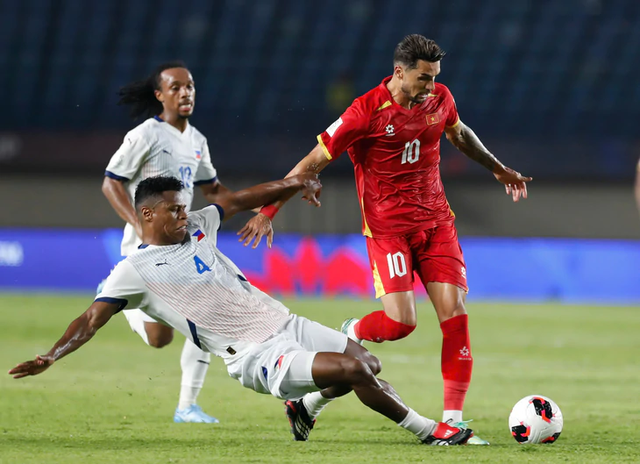
Hoang Hen (right) in the match against the Philippines at the 2026 FIFA ASEAN Cup. Photo: Anh Khoa / Tuoi Tre
Questions over naturalized players
Xuan Son is only 29 and could still perform at a high level for several more years. But with injuries becoming more frequent, his contribution could become increasingly limited.
If Vietnam continues to rely on a foreign-born striker, the team will either have to hope Xuan Son remains fit or find another naturalized striker to fill the gap.
Nigeria-born striker Olaha Manh Duc of Ho Chi Minh City Police is already eligible to play for Vietnam, although he is also 29. Whether he can adapt and succeed at international level remains to be seen.
This raises a bigger question: how effectively the team can use naturalized players to meet both short- and long-term goals.
In reality, the other two naturalized players, Do Hoang Hen and Nguyen Tai Loc, have made limited contributions and increasingly disappointed fans.
Hoang Hen performed reasonably well as a winger at the 2026 ASEAN Cup but struggled when deployed as a central midfielder at the FIFA ASEAN Cup.
Tai Loc has also failed to impress whether playing as a center forward, winger or central midfielder at the two tournaments.
Kim explained that both Hoang Hen and Tai Loc were not in their best physical condition at the 2026 FIFA ASEAN Cup because of injuries and a heavy workload.
But if naturalized players cannot perform better than their Vietnamese counterparts or offer greater physical readiness, Kim should perhaps give domestic players opportunities instead. Both Hoang Hen and Tai Loc are 32.
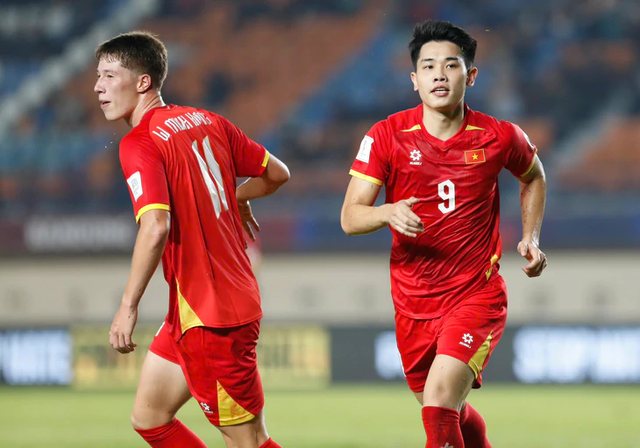
Giving young players such as Dinh Bac (right) opportunities could benefit Vietnamese football. Photo: Anh Khoa / Tuoi Tre
Which path should Vietnam take?
Vietnam’s failure at the 2026 FIFA ASEAN Cup is disappointing, but it has also highlighted the team’s weaknesses, including the question of whether it should continue relying heavily on naturalized players.
Naturalization is a global trend in football, not something unique to Vietnam. It can strengthen squads and increase their chances of competing successfully at major tournaments.
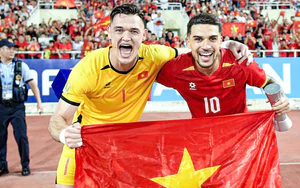
However, the limitations exposed by Vietnam’s three naturalized players also suggest that the team needs to make better choices.
Vietnam should only select naturalized players who are clearly superior to domestic options and use them to fill positions where the national team lacks quality and depth, particularly center forward and defensive midfield.
Otherwise, giving younger Vietnamese players opportunities to develop could benefit the national team more in the long run.
Naturalized players can deliver immediate results, but they cannot replace youth development, which is essential for sustainable growth.
The key question is which path Vietnamese football wants to take: short-term results or long-term development.
Is Vietnam willing to accept short-term setbacks while persistently improving its youth development system and the quality of the V.League?
Developing a strong generation of successors is a difficult challenge, but it is crucial to the future of Vietnamese football.








Max: 1500 characters
There are no comments yet. Be the first to comment.