


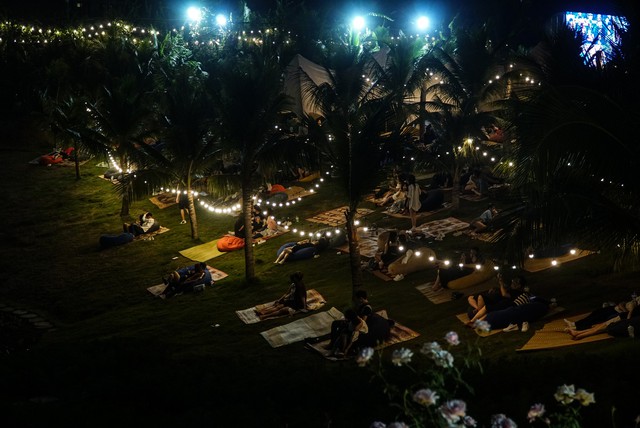
Young people gather at an all-night cafe near Hanoi’s West Lake to unwind over the weekend. Photo: Nguyen Hien / Tuoi Tre
Coffee is more than a drink. Across cultures, it brings people together, shapes daily routines, and gives public spaces a life of their own.
Coffee culture has deep roots in the Islamic world. In 15th-century Yemen, Sufi monks used coffee to stay awake during nighttime rituals.
It later spread to cities such as Mecca, Cairo, Damascus, and Istanbul, where some of the earliest coffee houses emerged.
From Brazil, Italy, France and Finland to the United States, and even traditionally tea-drinking countries such as the United Kingdom and China, coffee plays different roles in social life.
Across these diverse settings, one pattern stands out: where coffee becomes part of the rhythm of nightlife, the night-time economy tends to be more vibrant and culturally rich.
How the world is brewing a night-time economy
A successful night-time economy is not just about attracting people after dark. It also depends on how long people stay and what they can do during those hours.
Coffee culture can help create this value by turning cafés into places where people gather, socialize, and spend time, rather than simply stop for a drink.
Around the world, different coffee traditions show how a simple cup can shape the way people use public spaces.
In Brazil, cafezinho, a small, sweet cup of coffee, is offered everywhere, from homes to shops. More than a drink, it is a warm gesture of connection.
In France, coffee invites people to slow down. Parisian cafés are places to spend hours reading, watching the streets or debating ideas. The coffee itself is often just an 'excuse' to linger.
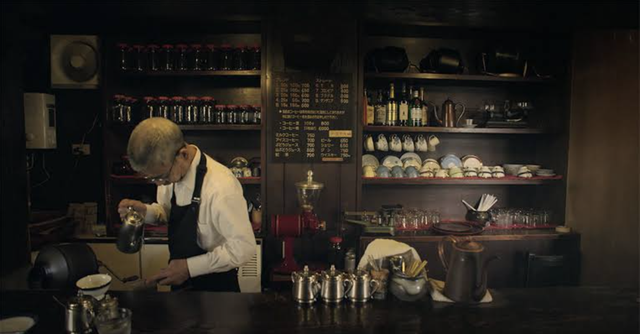
Nel drip coffee is rooted in Japan’s traditional kissaten café culture. Photo: 'A Film About Coffee' documentary
Italy offers a contrast, with its emphasis on speed and precision. An espresso is often consumed standing at the counter in just a few minutes, while cappuccino is traditionally associated with the morning.
In the United States, coffee culture spans everything from takeaway cups to specialty brews. Cafés serve as places to work, meet and express personal style, with some staying open late into the night.
Once known primarily for tea, the United Kingdom has also seen the growth of specialty coffee. Independent cafés offer spaces to unwind throughout the day and into the evening.
In Finland, kahvitauko, or coffee break, is an established social ritual that gives people time to rest and talk. Finns consume around 12 kilograms of coffee per person annually, placing Finland among the world's highest coffee-consuming countries.
China, long known for its centuries-old tea culture, is seeing a shift in consumer tastes. Over the past decade, its coffee market has grown by around 15-21 percent annually, far outpacing the global average.
These traditions show how coffee can do more than attract customers. By giving people reasons to gather and linger, coffee culture can help sustain activity into the evening, a key ingredient of a vibrant night-time economy.
Vietnam's coffee culture: Crowded cafés, limited night-time gains
Vietnam has deeply adapted coffee to its own way of life. Unlike cultures that emphasize speed or ritual, Vietnamese coffee is closely tied to leisurely socializing and street life.
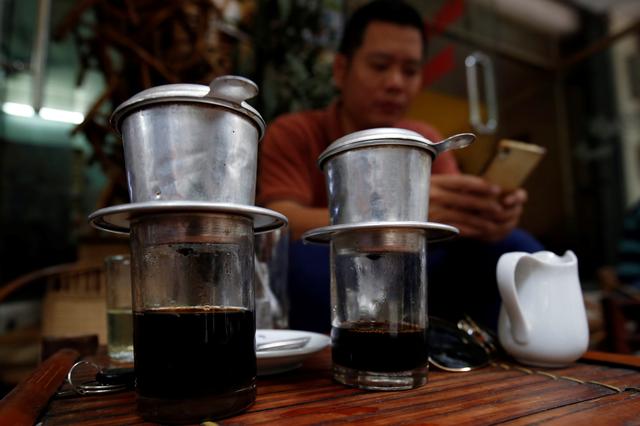
Vietnamese phin coffee is more than a brewing method; it is part of the country’s coffee culture. Photo: Reuters
Slow-dripped phin coffee symbolizes patience and relaxation, while ca phe sua da, made with strong Robusta coffee, condensed milk and ice, reflects the country's distinctive take on the drink.
For decades, low plastic stools at sidewalk cafés have brought people from all walks of life together, often for hours at a time.
Vietnam's coffee culture has continued to diversify, from instant coffee to Hanoi's egg coffee, Hue's salted coffee, and coconut and durian coffee. People drink coffee from early morning until late at night, making it an integral part of everyday life.
Yet a vibrant café scene has not necessarily translated into strong night-time economic activity.
Many cafés stay open late, but the sector still lacks coordinated planning, distinctive cultural offerings, and connections across the value chain.
The challenge is to turn Vietnam's busy cafés and diverse coffee traditions into a stronger driver of the night-time economy.
Six ways to boost Vietnam’s night-time coffee economy
Drawing on international experience and domestic practices, several measures could be implemented nationwide, with Da Lat serving as a pilot city.
First, create 'slow spaces' at night. Inspired by French and Middle Eastern models, clusters of cafés could combine acoustic music, coffee storytelling, and live brewing demonstrations.
In Da Lat, these could be developed around Xuan Huong Lake, the Hoa Binh area, and night-time scenic spots.
Hanoi, Ho Chi Minh City, Hoi An, Da Nang, Quang Ninh, and Can Tho could adopt similar models tailored to their local characteristics.
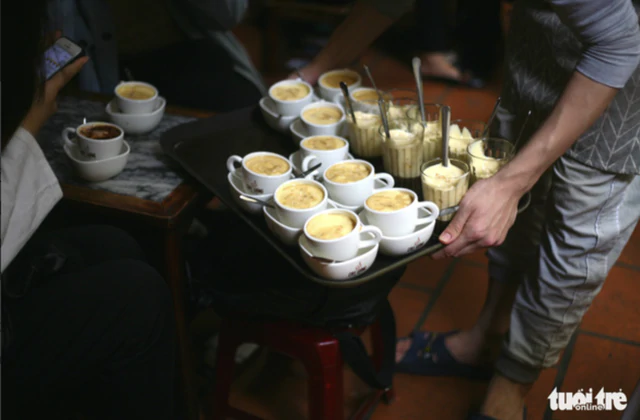
Egg coffee is a must-try specialty for visitors to Hanoi. Photo: Nguyen Hien / Tuoi Tre
Second, tradition should be combined with specialty coffee. Vietnam should preserve signature drinks such as phin coffee and iced milk coffee, alongside local variations, while developing specialty coffee with traceable origins.
Da Lat could host a 'Nostalgic Coffee Night' connecting traditional cafés with modern spaces, before expanding the concept to other localities with coffee-growing regions and vibrant nightlife.
Third, develop night-time coffee streets. These areas could combine cafés with light dining, live music, OCOP products, and souvenirs to encourage longer stays and higher spending.
Coffee served at night should also be of high quality, with moderate caffeine content and a distinctive aroma.
In cooler destinations such as Da Lat, Sa Pa, and Mang Den, the night-time climate can add to the experience of enjoying freshly brewed coffee.
Fourth, capitalize on climate and scenery. Da Lat can draw on its cool climate, mist, and night-time scenery.
Other destinations can draw on their local character, from bustling urban streets and Mekong Delta waterways to beaches and historic towns.
Linking local landscapes and natural conditions with coffee culture can create a distinctive identity, instead of turning cafés into mere photo opportunities.
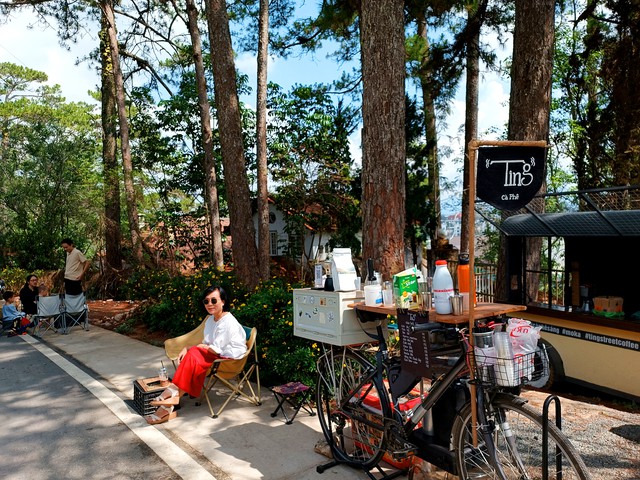
Ting Coffee in Da Lat. Photo: Phan Tan Dat
Fifth, sell the story, not just the coffee. This means highlighting local history, culture, and memories of traditional cafés.
Da Lat could tell the story of efforts to revive Bourbon, a traditional Arabica coffee variety, or of cafés dating back to the 1950s and 1960s. Other provinces and cities could develop their own narratives around local coffee-growing regions, heritage, and festivals.
Sixth, localities should strengthen the night-time value chain by integrating OCOP products and short experiences such as coffee roasting, storytelling, and farm visits.
Hotels, homestays, and travel companies should work together to develop night-time coffee trails and help small businesses and coffee cooperatives join the value chain.
Vietnam has a rich coffee culture, but many localities have yet to fully capitalize on it. As tourism shifts toward higher quality, sustainability, and local identity, coffee can help strengthen the cultural industries and night-time economy.
By making better use of coffee culture, Da Lat, a popular tourist destination in the Central Highlands, could serve as a starting point for a broader effort to strengthen the country’s night-time economy.
The goal is not just to attract more people at night, but to create distinctive experiences that encourage visitors to return.


Max: 1500 characters
There are no comments yet. Be the first to comment.