


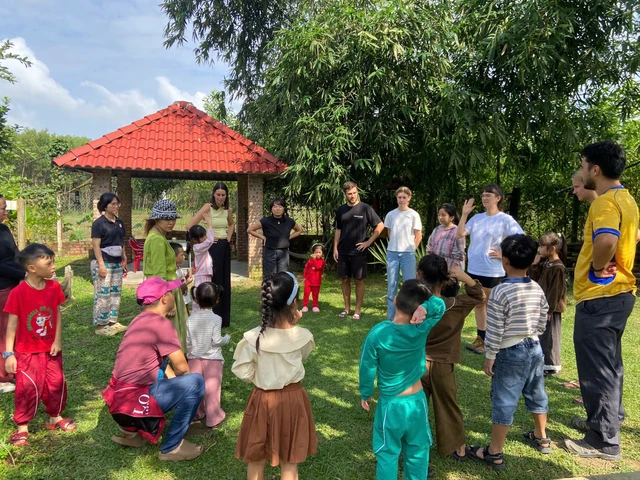
At The Hygge Farm, children practice English directly with foreigners through workshops featuring simple activities such as growing vegetables, cooking rice, and basic forest survival skills. Photo: Supplied
After graduating from university, Tran Thanh Ha, 32, went on to study high–tech agriculture in Israel, experiential education in Singapore, and worked at organic farms in Denmark.
He later decided to return to his hometown in Que Son Trung Commune, formerly Que My Commune, to establish The Hygge Farm, an educational farm where children can practice English communication through life skill experiences.
At The Hygge Farm, experiential workshops are held regularly with simple activities such as growing vegetables, cooking rice, and basic forest survival skills.
Through these activities, children can communicate directly in English with foreigners, improving their listening and speaking skills, and practicing what they have learned at school.
The farm attracts not only children from nearby areas but also from other parts of Da Nang and neighboring provinces.
Notably, all English learning activities are completely free for children from disadvantaged backgrounds.
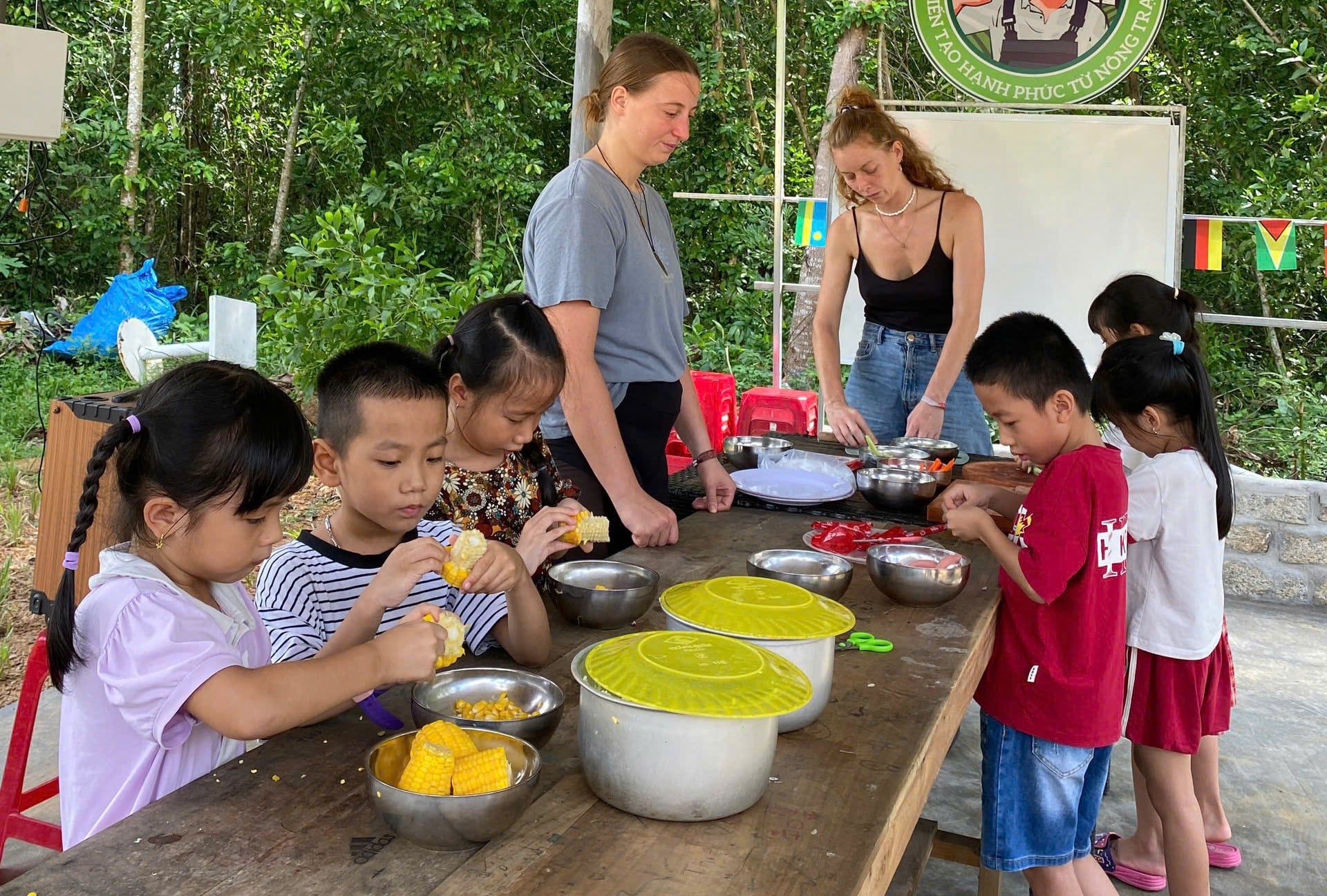
All English learning activities at the farm are completely free for children from disadvantaged backgrounds. Photo: Supplied
Hands-on experiences for tourists
Beyond developing The Hygge Farm as an educational site, Ha hopes it will serve as a bridge connecting foreigners and international volunteers with local culture.
Out of love for his hometown and a wish to make it better known while boosting the local economy, Ha developed the farm into a destination for experiential tourism.
The farm hosts foreign visitors and regularly organizes experiences linked to traditional occupations, including visits to cassava noodle, rice noodle and Quang noodle workshops, sugarcane processing facilities, rice wine brewing, dried sweet potato production, and rice harvesting.
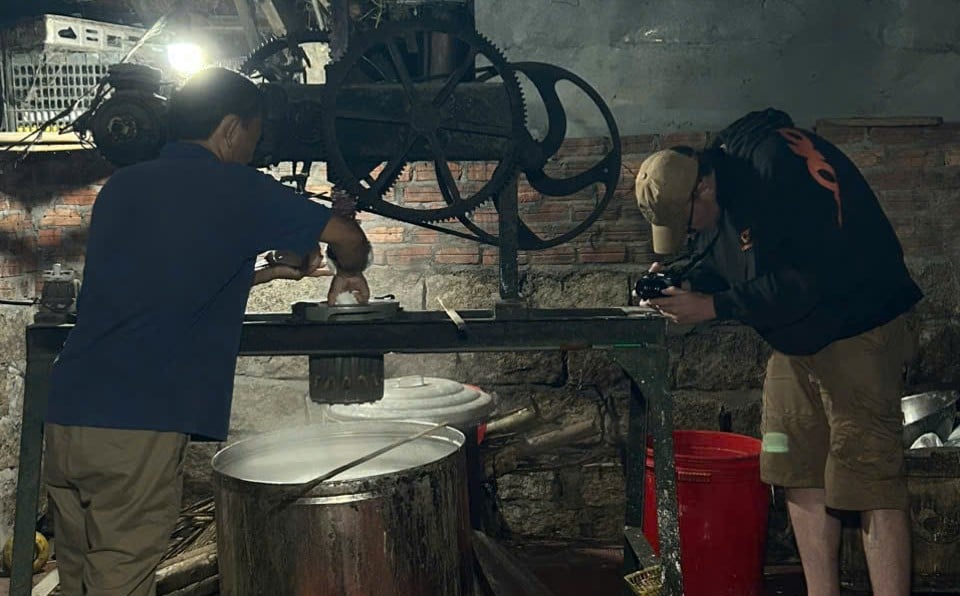
Tourists visit a local rice noodle production facility. Photo: Supplied
These activities give visitors a deeper understanding of local culture and help connect them with residents.
According to Ha, when tourists take part directly and observe the production process first-hand, they better appreciate the value of the experience.
Visitors are particularly fascinated by cultural practices tied to traditional crafts.
“We just made Christmas cards with the children. They learn more about our culture, and I learn more about local culture through Vietnamese dishes they cook,” said German tourist Helena.
“When I visited the noodle workshop and walked around the village, people were very friendly, as if I were not a stranger.
"That really impressed me.”
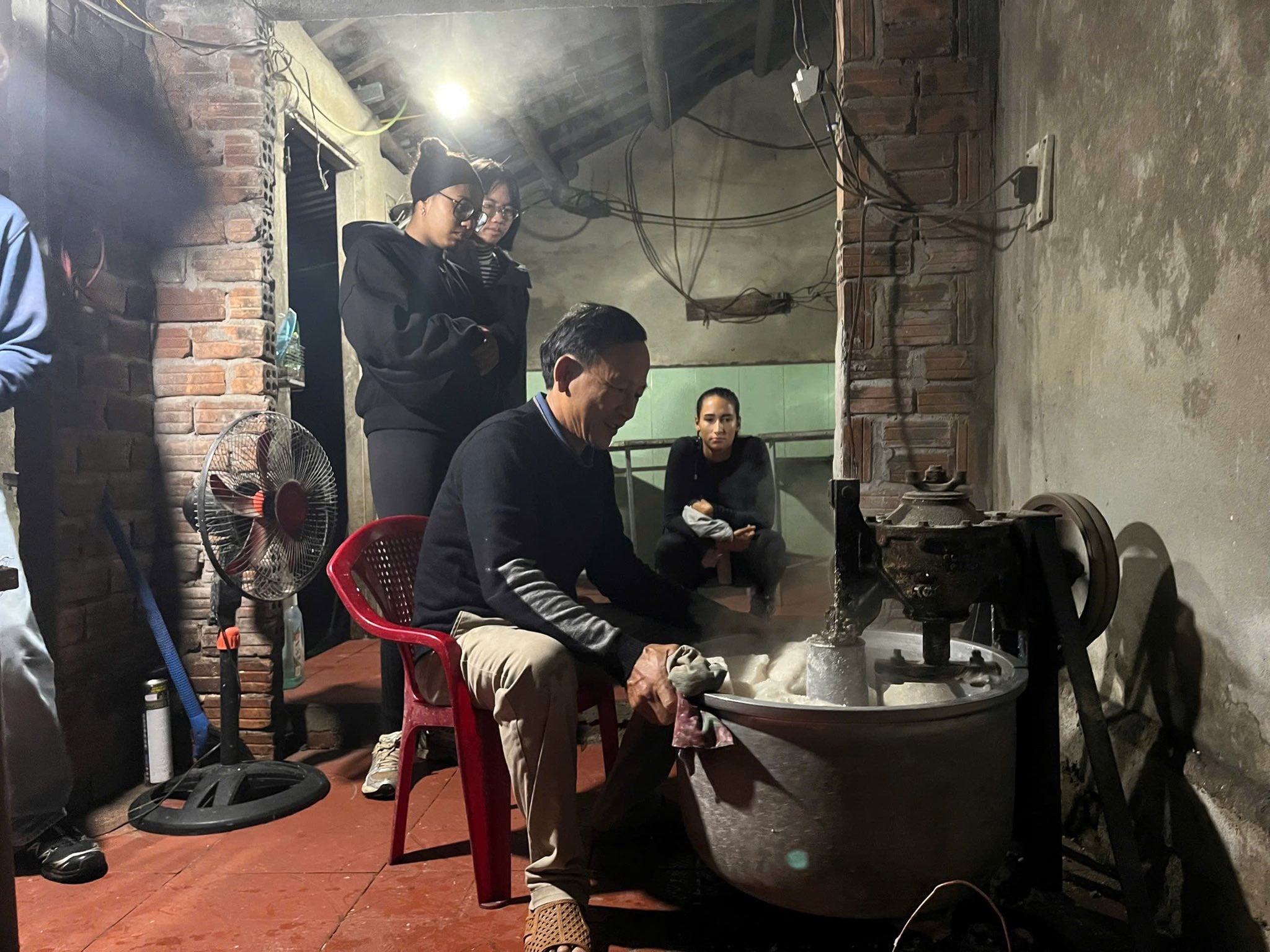
Tourists visit a local rice noodle production facility. Photo: Supplied
Meanwhile, local residents also gain additional income from tourists. All experiences are free, but visitors often leave tips to thank the hosts.
Thanks to a steady flow of community–based tourists, residents living around the farm also earn extra income by selling goods and providing services.
“I am happy that I can indirectly help people earn more,” Ha said.
“When I see that my farm brings value to the surrounding community, it makes me truly happy,” he added.
“No amount of money or material wealth can compare to that feeling.”
Free basic English class for locals
To help local residents communicate with foreign visitors, Ha opened free basic English classes, with learners being laborers, vendors, small business owners, or those who simply want to learn to communicate with foreigners.
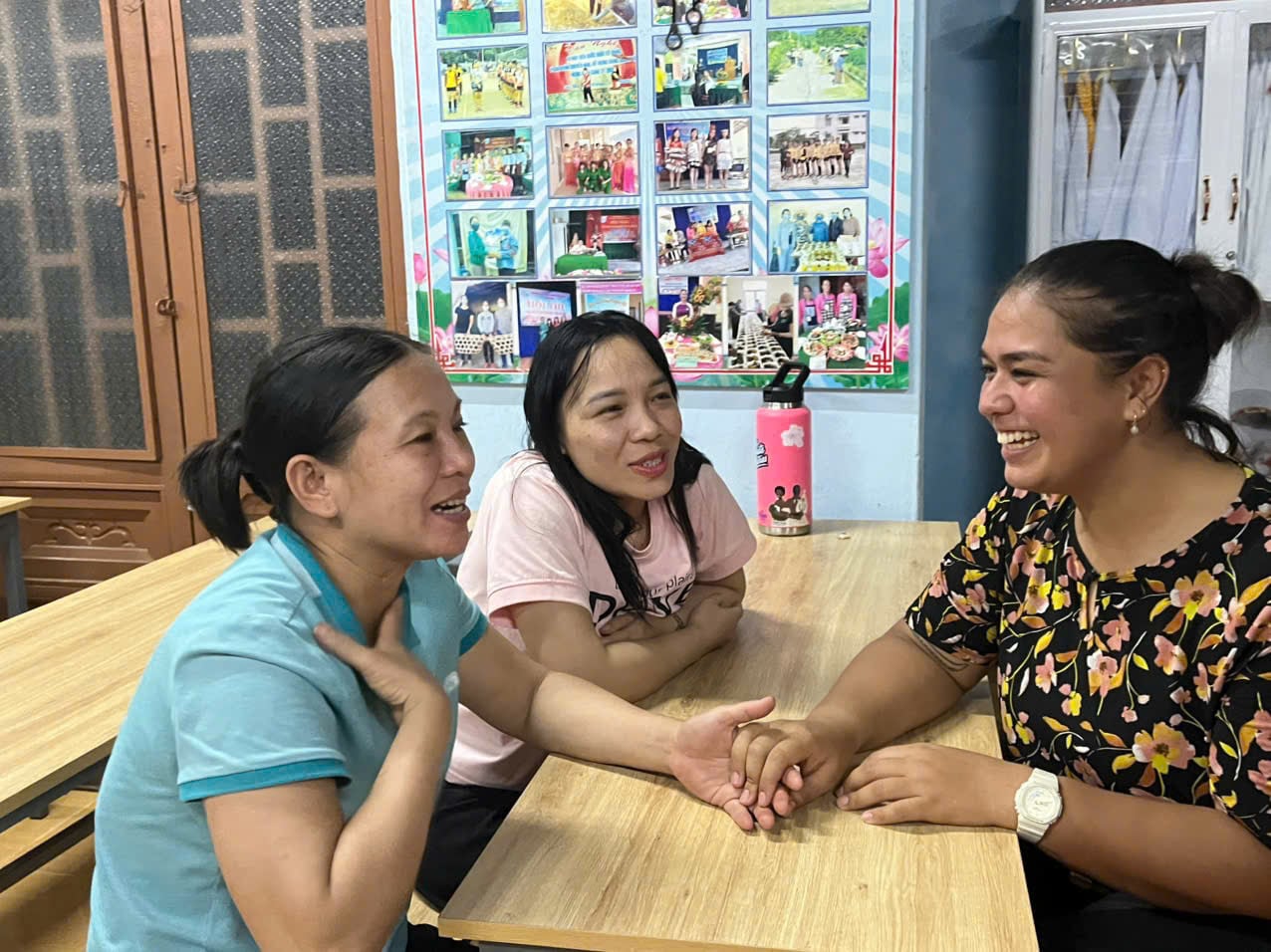
Learners of the English classes are laborers, vendors, small business owners, or those who simply want to learn how to communicate with foreigners. Photo: Supplied
Ha believes that when locals can talk with visitors, they gain opportunities to earn extra income, contributing to local economic development.
“If people involved in community tourism know a bit of English, things become much easier,” Ha said.
“Even basic English can help increase their income.
“When they can communicate with visitors, the experience improves, and the chance that tourists will buy something or return is higher.”
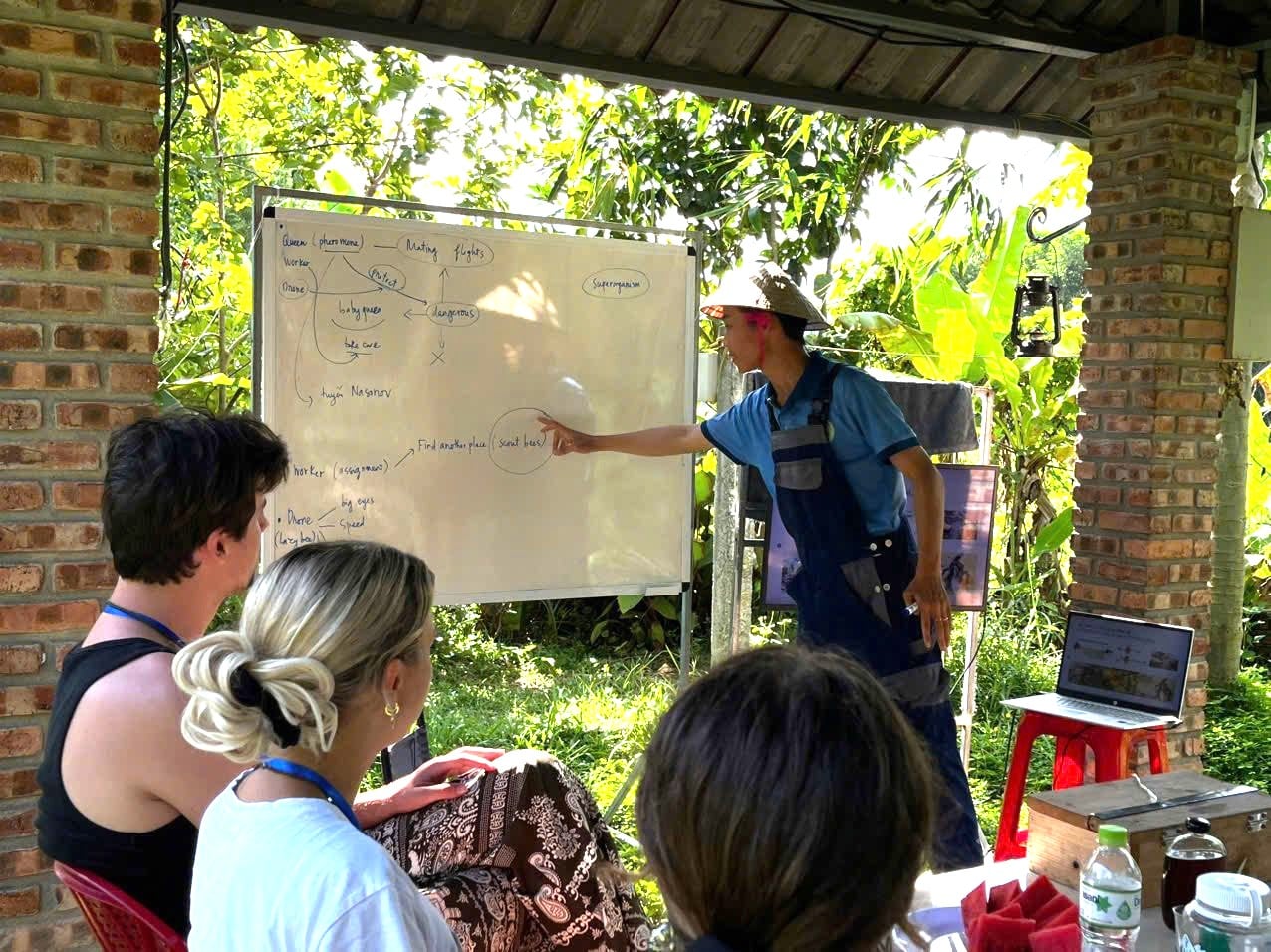
Ha believes that when local residents can communicate with tourists, it opens up opportunities to earn extra income and contribute to the development of the local economy. Photo: Supplied
The classes focus on listening and speaking skills with simple, practical phrases for greetings, buying and selling goods, and exchanging information.
Lessons are taught directly by foreign volunteers staying at the farm.
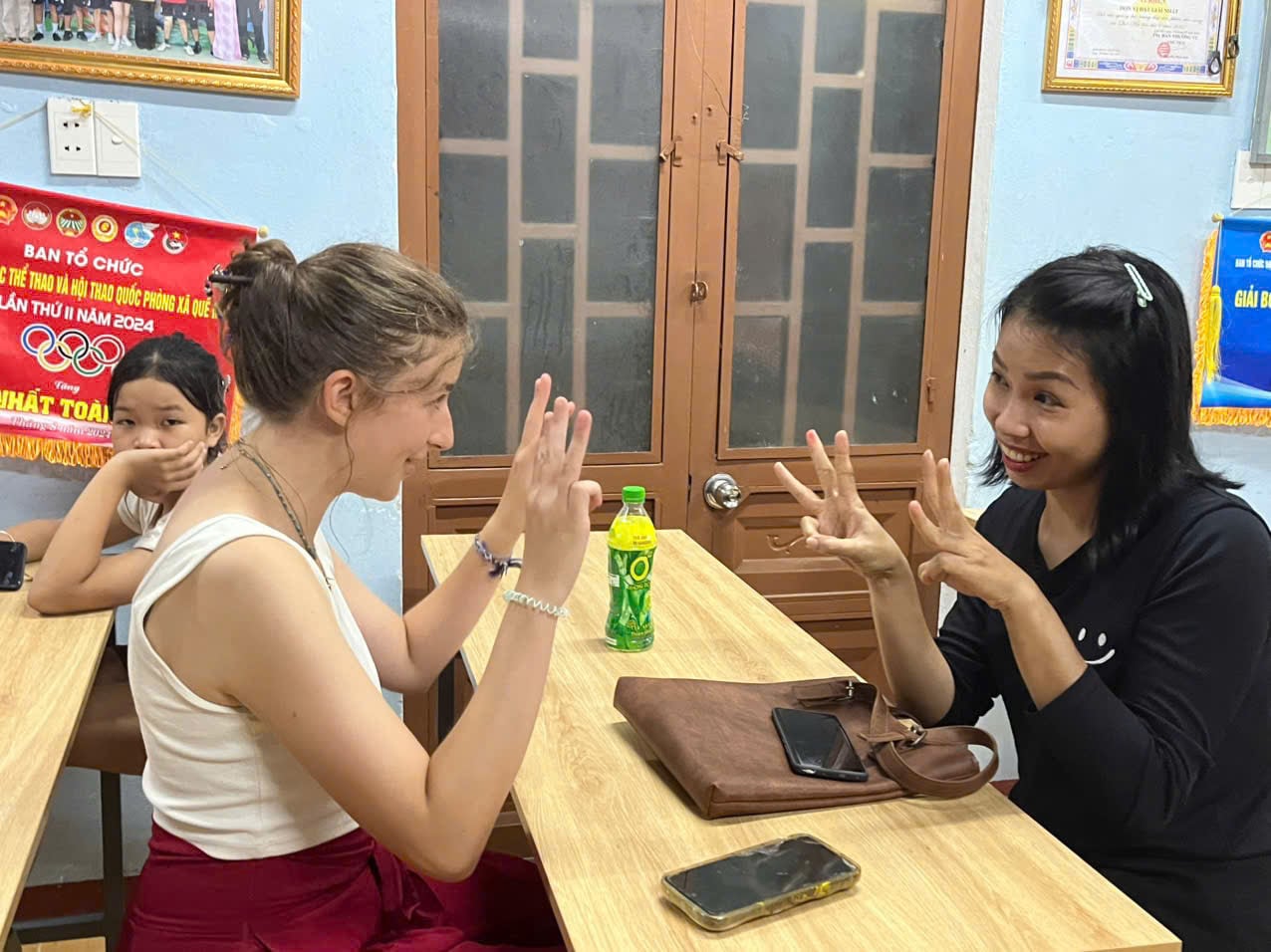
Tourists are offered free accommodation at The Hygge Farm and serve as volunteers who directly teach basic English to local residents. Photo: Supplied
“We are not only teaching and learning,” said Helena, who described the experience as far more than tourism.
“We connect, talk, and everything feels very natural and comfortable.”
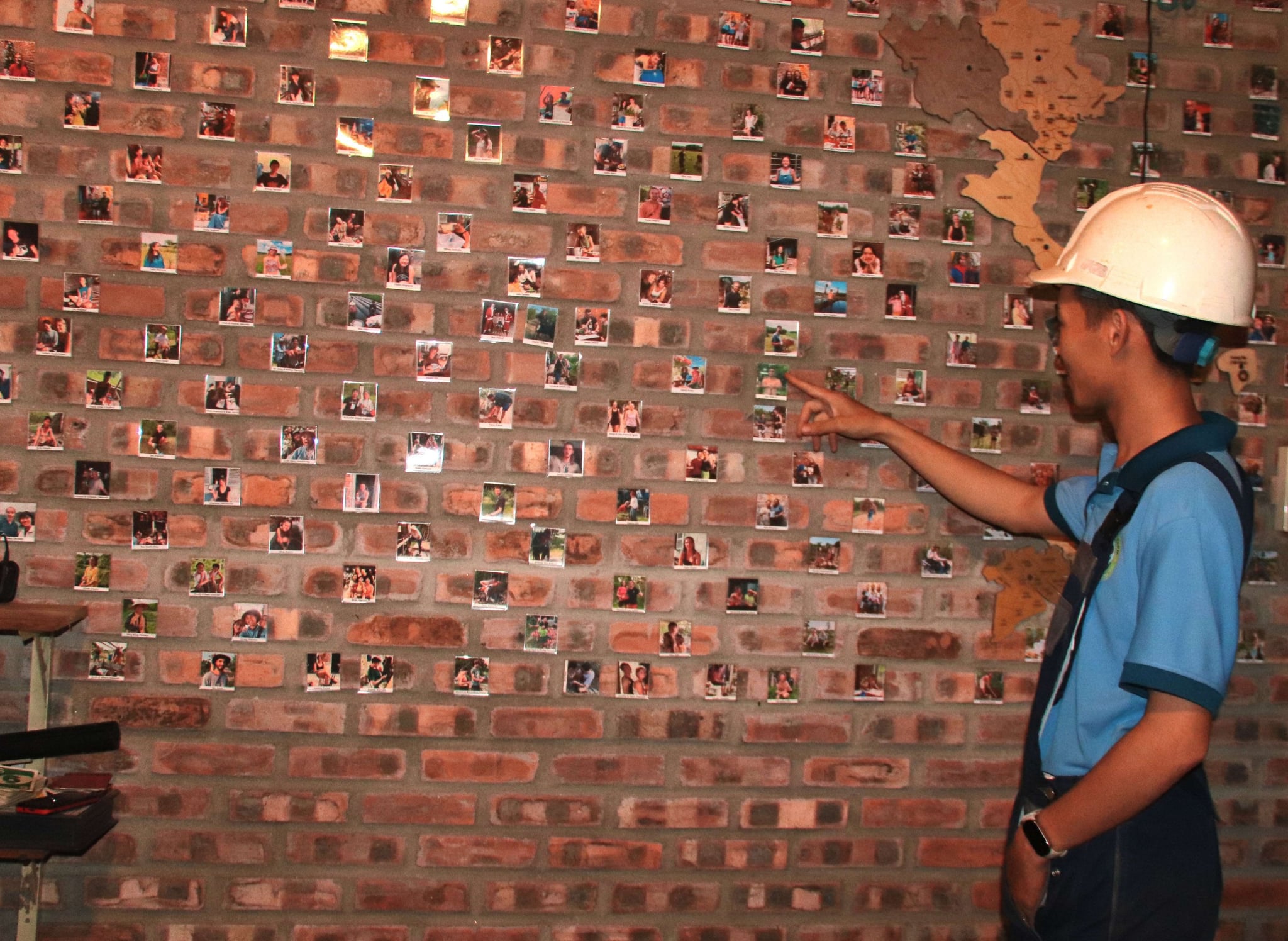
For Tran Thanh Ha, each volunteer is like a brick helping to build the farm. Photo: Thanh Thuy










Max: 1500 characters
There are no comments yet. Be the first to comment.