


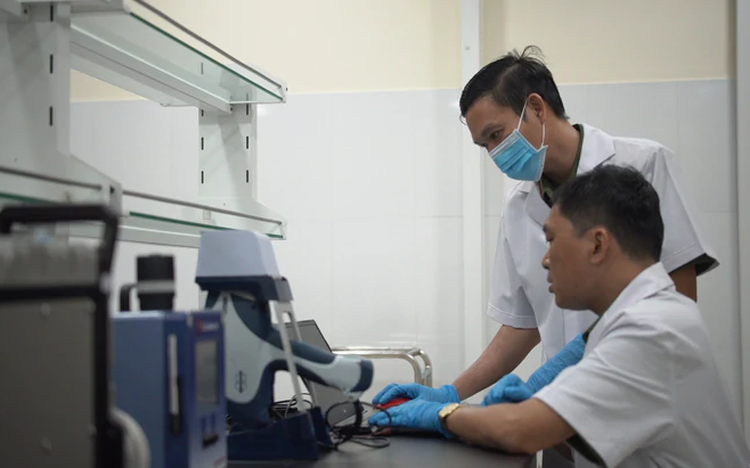
Lieutenant Colonel Nguyen Quang Huy and his colleagues work in a laboratory. Photo: Supplied
Lieutenant Colonel Nguyen Quang Huy, an officer at the southern division of the Security Guard Command under the Ministry of Public Security, told Tuoi Tre (Youth) online newspaper that he once discovered several jars of locally made fermented fish sauce that were not on the menu prepared for a delegation of government leaders in Can Tho City, southern Vietnam.
The jars were local specialties prepared by the local authorities as a treat for the guests.
But for security officers, any food item that appears outside the planned menu must still undergo the required inspection before a decision is made on whether it can be served to VIPs.
“It's a memorable experience and also a valuable professional lesson for me in handling unexpected situations," Huy said.
"If an officer conducting the inspection is not meticulous and thorough, it is very easy to miss something.”
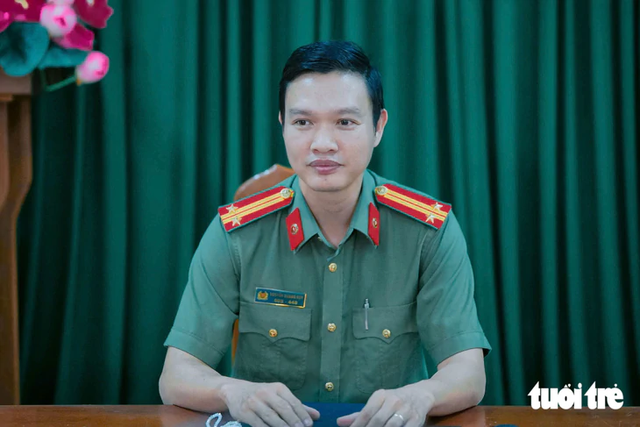
Lieutenant Colonel Nguyen Quang Huy, an officer at the southern division of the Security Guard Command under the Ministry of Public Security. Photo: Huu Duy / Tuoi Tre
Carefully checking every meal served to VIPs
After graduating from university in 2008, Huy began working at the southern division of the Security Guard Command and has remained in the field ever since.
His unit uses specialized technical equipment to check for security and safety risks involving fire and explosions, radioactive substances and toxic chemicals, as well as to inspect food and drinks served to protected VIPs.
Huy's main responsibility is inspecting food and water before they are served to VIPs.
According to Huy, behind what may appear to be an ordinary meal for a VIP is a strict safety-control process, beginning with checking the origin of ingredients, taking samples and inspecting each type of food, and continuing through food preparation and serving.
Under regulations, all food served to VIPs must be inspected, with the results obtained at least 30 minutes before serving.
Inspectors therefore have to carefully calculate the time needed from sampling and testing to obtaining the results so that inspections do not affect serving schedules while ensuring that no step is skipped.
Every stage of the process is carried out carefully to ensure safety before food and drinks reach the VIP.
The work does not end after the meal. Once the VIP has finished eating, inspectors collect samples of the food that was served and preserve them as required so they can be used for tracing if a problem arises later.
Many people may imagine that officers like Huy have to taste the food before serving it.
However, he said tasting is used only in special, unavoidable circumstances. Food inspections are now carried out mainly with specialized, modern technical equipment that provides a high degree of accuracy, along with professional testing methods.
“For example, during an unexpected activity, if a protected VIP arrives at a location where food has already been prepared and is going to eat immediately, officers on duty may have to apply an appropriate measure depending on the situation,” Huy explained.
However, Huy stressed that every location a VIP is scheduled to visit is surveyed and thoroughly inspected beforehand. Security officers then work out contingency plans to ensure the VIP's safety.
He also emphasized that food inspections are not based solely on experience or visual and sensory checks. They follow specific procedures and regulations set by the Ministry of Health and the Security Guard Command.
According to Huy, officers doing this work must receive specialized training and regular refresher training in food inspection. They must also conduct their own research and continue learning to improve their expertise and become proficient in using technical equipment.
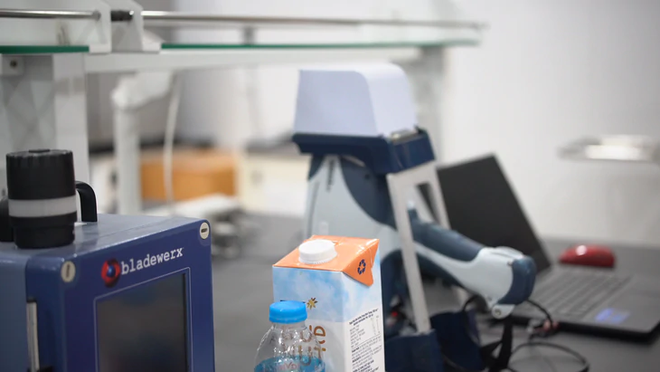
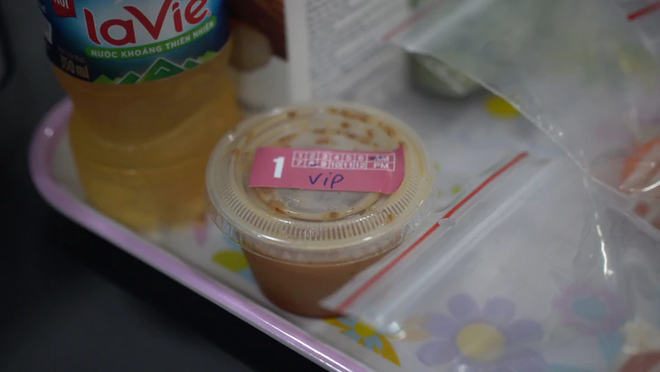
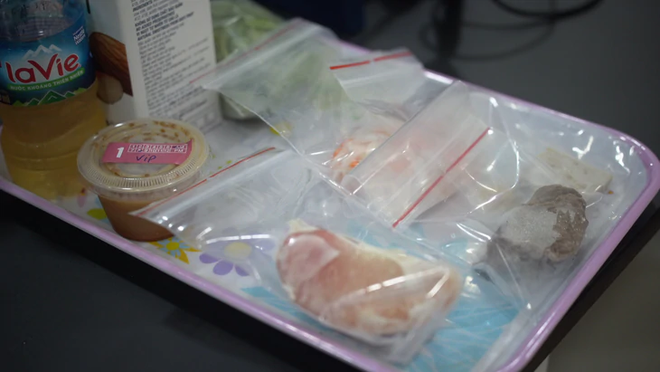
All food and drinks served to VIPs undergo careful inspection. Photo: Supplied
Pride in quiet but vital job
Over the past 18 years, Huy and his colleagues have taken part in security operations for activities involving Party and state leaders, international delegations and major events in southern Vietnam.
These included APEC meetings, the Vesak celebration in Ho Chi Minh City, and celebrations marking the 40th and 50th anniversaries of national reunification. One particularly notable assignment was U.S. President Barack Obama's visit to Ho Chi Minh City in 2016.
“During that visit, at the request of the U.S. side, the food served to the president was prepared by the U.S. team. But for other activities, such as drinking coffee outside, our technical security officers still had to go ahead to inspect the location and prepare safety plans and contingency scenarios,” Huy recalled.
Looking back on his 18 years on the job, Huy said he is proud that the inspection work carried out by him and his colleagues has not resulted in any incident affecting VIP safety.
“Being able to ensure the absolute safety of every meal served to Party and state leaders and international guests is a joy and also a source of pride in my work,” he said.
Huy also acknowledged that people tend to develop habits shaped by their professions. When choosing food for his family, he said he pays close attention to the source of ingredients, how they are prepared, and food-safety practices.
He added that his family sometimes complains that he is overly meticulous.








Max: 1500 characters
There are no comments yet. Be the first to comment.