


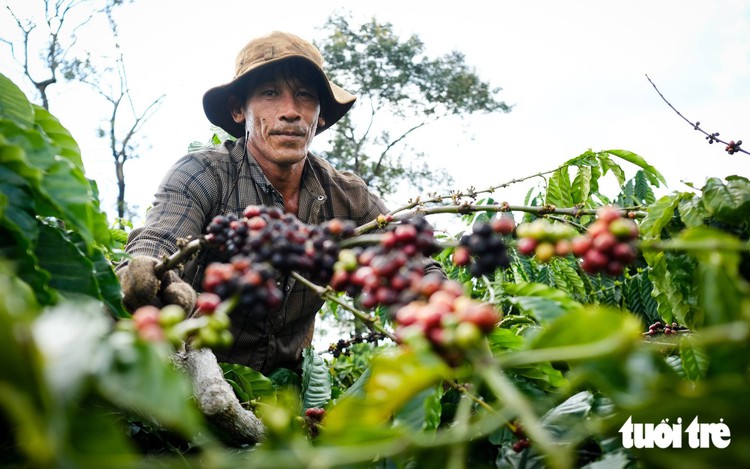
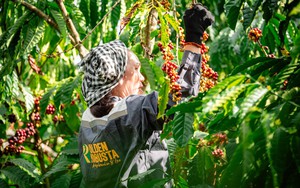
A farmer harvests Robusta coffee in Ia Hrung Commune, Gia Lai Province, located in Vietnam's Central Highlands. Photo: Tan Luc / Tuoi Tre
For the past seven to eight years, coffee growers in the region, particularly in Gia Lai Province, have struggled with prolonged dry seasons, water shortages, and trees dying from extreme heat.
This year's crop season, however, has brought excessive rainfall, disrupting coffee development.
Coffee yields, quality hit by extreme weather
Nguyen Van An (name changed), a farmer with 30 years of experience in Gia Lai's Bien Ho Commune, said weather patterns had become increasingly unpredictable since around 2018, alternating between severe drought and prolonged rainfall.
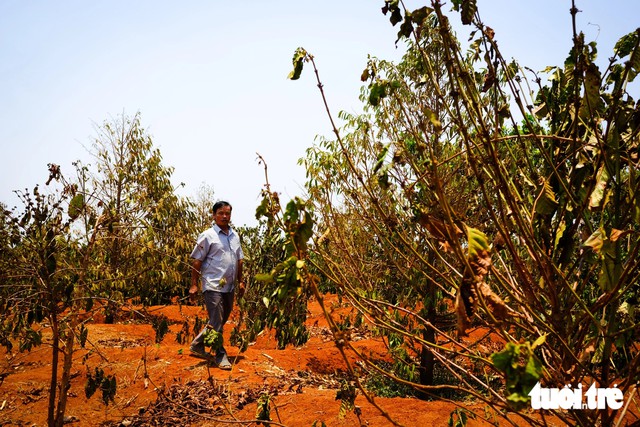
A coffee farm in Duc Co Commune, Gia Lai Province, located in Vietnam's Central Highlands, lies scorched by drought in April 2024. Photo: Tan Luc / Tuoi Tre
His area experienced more than two consecutive months of almost continuous rain this year, affecting coffee trees during early fruit development.
Excessive moisture caused cherries to develop poorly, resulting in undersized beans and lower yields.
Most beans from his first early-season harvest failed to meet Grade 1 standards, instead falling into Grades 2 and 3, he said.
His coffee output is expected to fall by around 20 percent from the previous crop, with smaller beans also fetching lower prices.
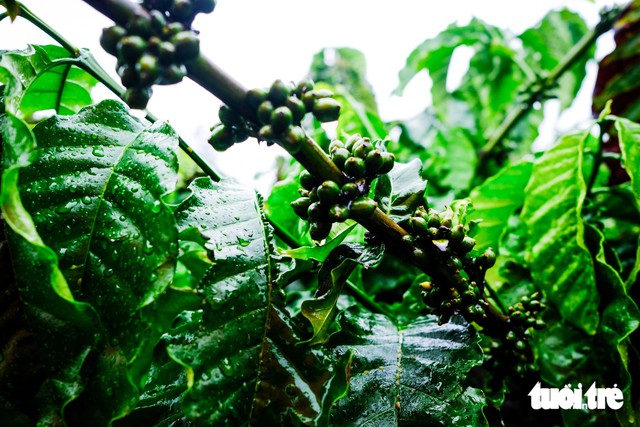
Prolonged rainfall during the 2026 crop season has affected coffee yields and quality in Gia Lai Province, located in Vietnam's Central Highlands. Photo: Tan Luc / Tuoi Tre
Another grower, Ta Thi Huyen in Ia Hrung Commune, expects her 3-hectare farm to produce less than 50 metric tons of fresh cherries this year, down from around 60 metric tons last year.
She said prolonged rainfall had also encouraged fungal diseases, mealybugs and anthracnose, causing young cherries to drop, while rain washed away pesticides shortly after application, reducing their effectiveness.
Climate risks extend across the supply chain
A Tuoi Tre (Youth) online newspaper's survey of growers in three coffee-producing areas in Gia Lai also found that excessive rainfall had reduced yields during the 2026 crop season.
Le Van Thanh, director of the Ia Mo Nong Agricultural Cooperative in Ia Ly Commune, said unpredictable weather was affecting both coffee yields and bean quality.
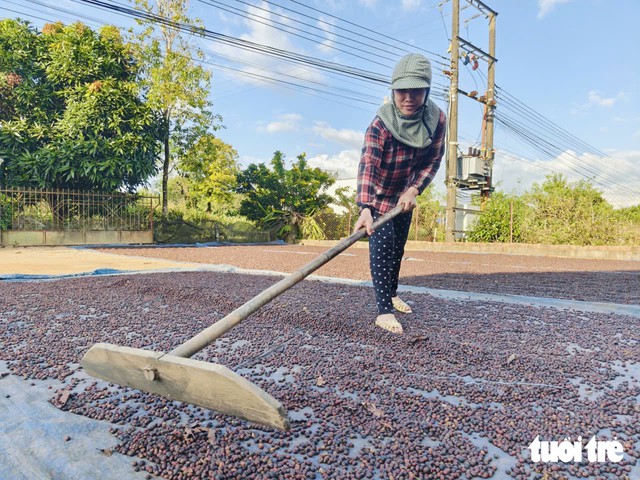
A farmer in Bien Ho Commune, Gia Lai Province dries an early-season harvest of ripe coffee cherries in 2026, with excessive rainfall resulting in smaller cherries and lower yields. Photo: Tan Luc / Tuoi Tre
The cooperative has nearly 300 members cultivating 330 hectares of coffee. Thanh said growers needed better farming techniques and more effective ways to apply fertilizers and pesticides to cope with extreme weather.
The impact also extends to processors and exporters, said Nguyen Manh Hung, CEO of Nghe An Province-headquartered Nafoods Group, a producer and exporter of green coffee beans and roasted coffee in the Central Highlands.
Businesses face risks of raw-material shortages, inconsistent bean quality, higher procurement costs, and difficulties meeting delivery commitments.
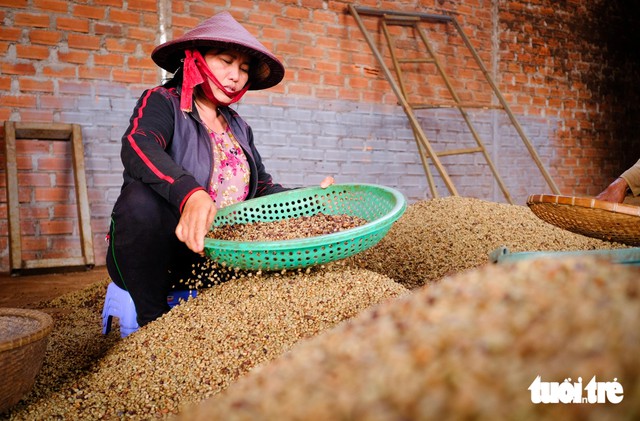
A farmer in Kon Gang Commune, Gia Lai Province, located in Vietnam's Central Highlands, processes high-quality green coffee beans. Photo: Tan Luc / Tuoi Tre
Hung warned that extreme drought, abnormal rainfall, and temperature fluctuations in major coffee-producing regions could reduce output, disrupt harvest schedules, and trigger price volatility in the global Robusta market.
Measures to build climate resilience
Hung proposed five groups of measures to help growers adapt to climate change.
These include selecting varieties suited to local conditions; improving water management and adopting water-saving irrigation; restoring soil health and diversifying farming practices; and using data to monitor weather, pests, and diseases.
He also called for stronger links among farmers, cooperatives, and businesses to improve technical support, traceability, and market access.
Vietnam should focus not only on Robusta production volumes but also on quality, added value, and sustainability, he said.
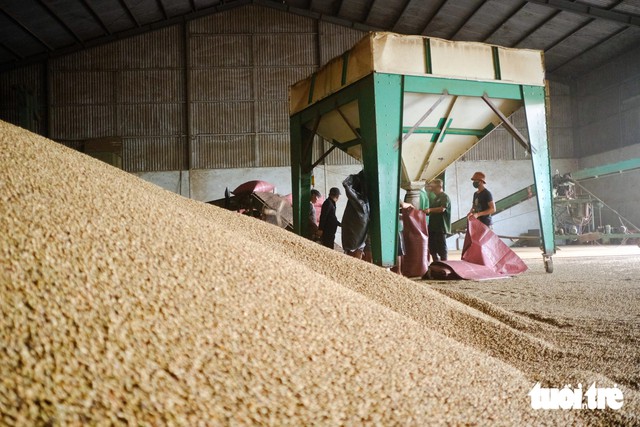
Workers bag green coffee beans at a factory in Ia Hrung Commune, Gia Lai Province, located in Vietnam's Central Highlands. Photo: Tan Luc / Tuoi Tre
According to Gia Lai's Sub-Department of Crop Production and Plant Protection, the province has nearly 109,000 hectares of coffee, mainly Robusta, with output exceeding 341,000 metric tons in 2025.
Some 45,530 hectares have been incorporated into production and marketing partnerships.
However, the sector remains constrained by fragmented smallholder production, inconsistent quality, and weak links between production and consumption, while importing markets are imposing stricter requirements on traceability, food safety, and pesticide residues.
Gia Lai aims to bring an additional 35,500 hectares into raw-material production areas linked to deeper processing by 2030.
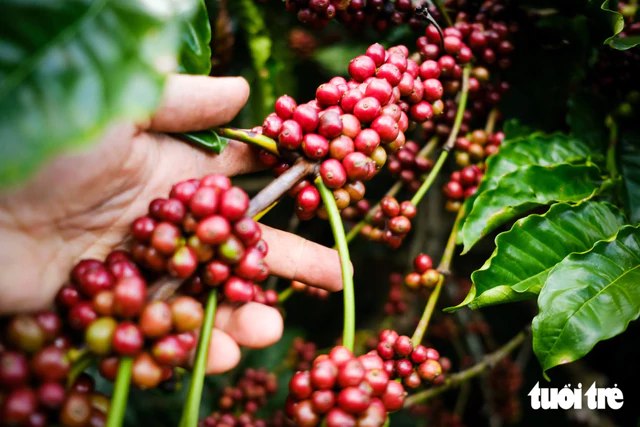
Coffee cherries with more than 95 percent ripeness are considered to have reached the optimal stage for harvesting to ensure quality. Photo: Tan Luc / Tuoi Tre
The province is also promoting high-tech farming and production practices that meet organic, GAP, 4C and Rainforest Alliance standards to improve productivity and quality.
Workshop to help growers protect Robusta
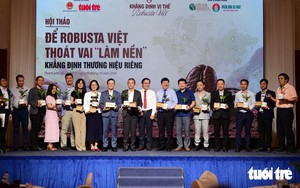
Tuoi Tre, in cooperation with Golden Coffee, a Vietnamese coffee producer and exporter, and Petrovietnam Ca Mau Fertilizer Corporation, will organize a workshop on Tuesday at the Hamlet 2 Cultural and Sports Center in Dak Doa Commune, Gia Lai Province to discuss ways to protect Robusta coffee from extreme weather.
The event will offer farmers practical solutions to reduce crop risks, improve harvesting and storage, and adapt farming practices to changing weather conditions.
Participants will also receive guidance on irrigation, plant nutrition, fertilization, flowering and fruit-setting management, pest and disease control, and using the 2Nong application for farm management.


Max: 1500 characters
There are no comments yet. Be the first to comment.