


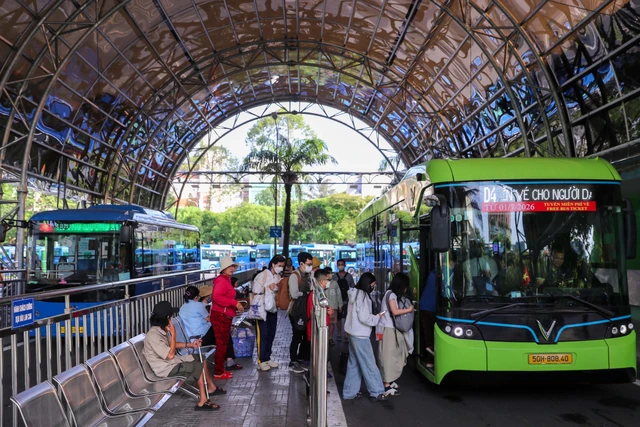
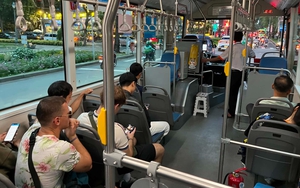
Passengers board a bus in Ho Chi Minh City. Photo: Hoang Trieu
Editor’s note: Darren Chua lived and worked in Ho Chi Minh City for more than a decade and now divides his time between Vietnam and Singapore.
In this commentary, he shares his vision of a greener, more forward-looking city, where policies encouraging people to shift from private vehicles to public transport help shape a more sustainable urban future.
Having lived in Ho Chi Minh City for over a decade, I’ve long accepted that the humble motorbike is the undisputed king of the southern metropolis. Back home in Singapore, our default daily reflex is to tap an EZ-Link card and hop onto a seamlessly timed, air-conditioned bus or MRT.
But here in Ho Chi Minh City, the nimble, door-to-door convenience of the motorbike has historically won the day, easily outcompeting any alternative.
That is, until July 1, 2026.
When the news broke that Ho Chi Minh City was rolling out completely free bus rides across 134 routes until the end of the year, it was a striking development.
In Singapore, we often talk about building a 'car-lite' society through fine-tuned pricing policies, but Ho Chi Minh City just executed a bold, sweeping move in urban governance: establishing a zero-dollar entry point to completely disrupt and reshape commuter behavior.
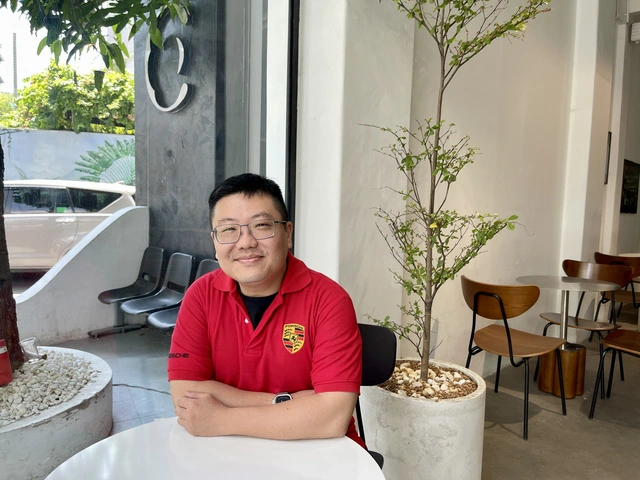
Darren Chua, a Singaporean who has lived in Ho Chi Minh City for over 10 years. Photo: Dong Nguyen / Tuoi Tre News
As the witty local proverb goes, 'Thả con tép, bắt con tôm' (Drop a shrimp to catch a lobster). Allocating an additional VND665 billion (about US$25 million) to cover 100 percent of bus fares for six months is a major fiscal sacrifice for the city's coffers – the shrimp. Yet, it is a pragmatic masterstroke to capture a massive long-term economic and environmental prize – the lobster.
Ho Chi Minh City’s free bus initiative transforms from a local welfare program into a critical macroeconomic shield. By aggressively reducing the city's collective dependency on petrol consumption, the initiative pushes public transport and keeps the domestic economy agile enough to chase Vietnam’s 10 percent growth target.
Crucially, planners aren't asking residents to ditch their beloved motorbikes entirely; that would be fundamentally unrealistic given the city's structure. Instead, it is an invitation to shift our daily dependency.
Households can absolutely keep a shared bike on standby for quick morning grocery runs, mid-day banking errands, or navigating the deep alleyways. But for the heavy, predictable daily commute to work or university, changing our habits to embrace public transportation makes massive economic sense.
For everything else, from weekend family dinners to sudden monsoonal downpours, the city's robust network of private-hire cars and bikes stands ready as a fallback.
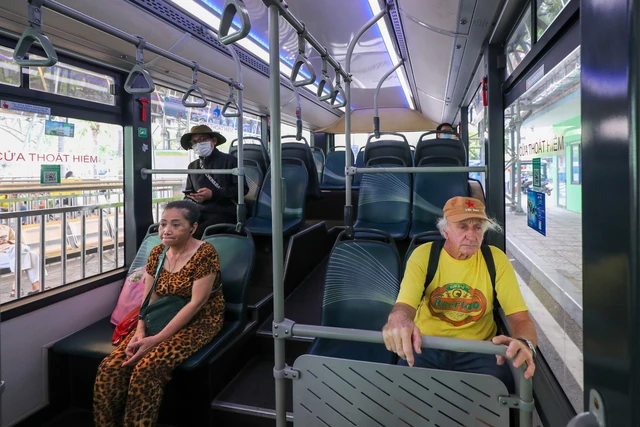
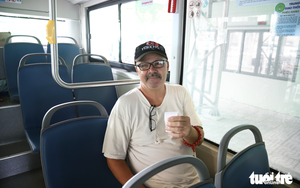
Richard (R), an 80-year-old British visitor, praises Ho Chi Minh City's bus service for being clean and convenient, adding that free fares encourage more people, especially tourists like himself, to use public transport. Photo: Hoang Trieu
Addressing remaining alleyway gaps
What makes this roll-out robust is how the city has proactively addressed the typical friction points of this new hybrid transit lifestyle.
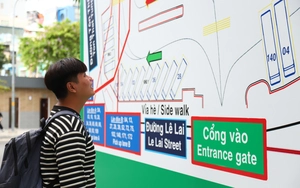
Navigating Ho Chi Minh City’s unique urban DNA, an incredibly dense network of narrow alleys has been managed with the newly launched 'MultiGo' app. By integrating the bus network with metro line No. 1, water buses, and public bicycles, commuters can easily bridge those remaining alleyway gaps through a single digital platform.
This bus initiative is also backed by a highly systematic technology and infrastructure overhaul. Over two-thirds of the fleet already runs on clean energy (electric and compressed natural gas), targeting a 100-percent green transition by 2027.
Upgraded bus shelters are being rolled out with modern aesthetics and integrated phone charging ports, showing that passenger comfort is a core element of this strategy.
For twelve years, I have watched this vibrant, resilient city grow at a rapid pace. By treating public transit not merely as a corporate revenue generator, but as a vital, high-priority public good during a global energy crunch, Ho Chi Minh City is proving it has the stamina for the long race.
For those living in the city, leaving the motorbike keys at home for the office run, downloading MultiGo, and taking a free ride are a highly practical option.
The future of our home is green, accessible, and remarkably forward-thinking.
- REFERENCE MORE
- REFERENCE MORE
- REFERENCE MORE
- REFERENCE MORE








Max: 1500 characters
There are no comments yet. Be the first to comment.