


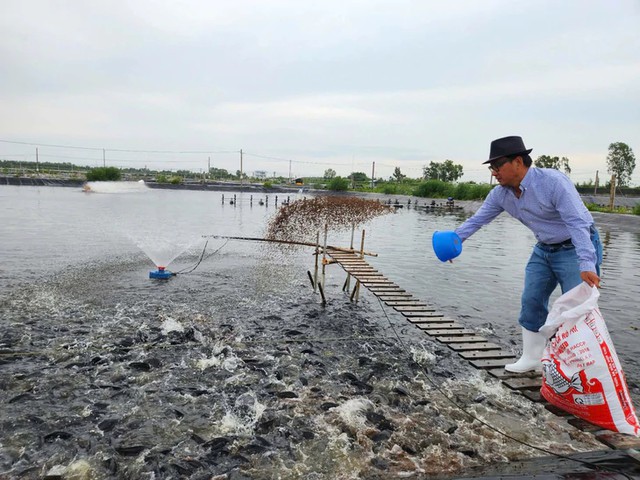
A brackish-water tilapia farm raising fish for sashimi exports to Japan from Can Tho City, Vietnam. Photo: Khac Tam / Tuoi Tre
Vietnam Clean Seafood Corporation, based in Can Tho City, has developed a farming and processing system that allows tilapia raised in brackish water to meet Japanese standards for raw consumption.
The company operates nearly 40 hectares of tilapia farms alongside around 300 hectares of shrimp farming area, helping it control raw materials and ensure traceability.
Vo Van Phuc, the company’s chairman and general director, said the idea emerged about two years ago as he looked for new aquaculture opportunities amid growing climate pressures on marine farming.
Instead of raising tilapia in conventional freshwater ponds, the company began farming monosex tilapia in brackish-water areas previously used for shrimp.
“Tilapia raised in fresh water is common, but farming it in coastal brackish water is less so,” Phuc said.
“Customers liked the taste when they first tried it, so I decided to develop the model.”

Vo Van Phuc. Photo: Supplied
In addition to tilapia farming, Phuc invested in a dedicated production line at his existing shrimp processing plant in An Nghiep Industrial Park in An Ninh Commune, Can Tho.
Its first shipment of tilapia fillets for sashimi was exported to Japan in February.
Since then, shipments have continued every month, while demand has grown faster than supply, according to Phuc.
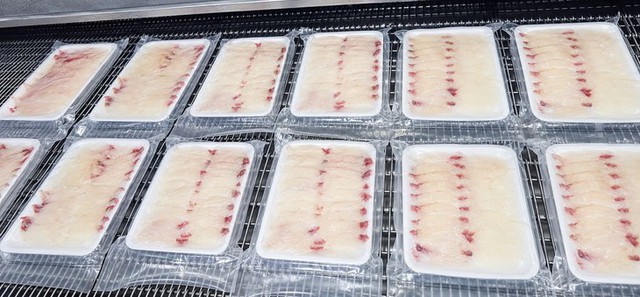
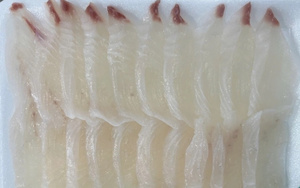
Tilapia prepared as sashimi for export to Japan. Photo: Khac Tam / Tuoi Tre
Six months to win Japanese approval
Getting the product accepted in Japan took about six months of testing and inspections.
Japanese buyers visited the farms to examine production practices and closely monitored fish quality. Fish samples from each pond had to be sent to Japan for testing before harvest.
Once the company established a track record, it was allowed to conduct the testing itself, while remaining responsible for the results.
Fish are transferred immediately after harvest into oxygenated containers so they remain alive until reaching the processing plant.
For sashimi-grade production, the tilapia are raised for eight to nine months until they weigh at least 1.7 kilograms each, much longer than the four to five months typically required for smaller market-size fish.
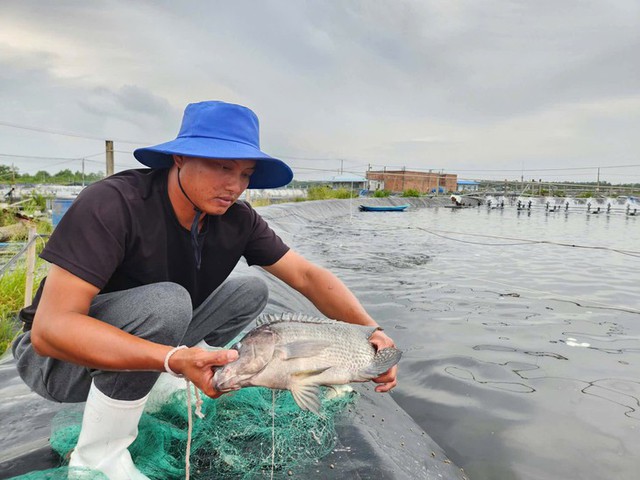
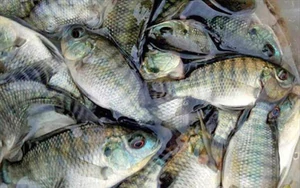
Tilapia raised for sashimi typically requires a longer farming period and must meet strict production standards. Photo: Khac Tam / Tuoi Tre
Phuc said water quality is critical because poor conditions can give tilapia an undesirable muddy smell or stronger fishy odor.
“The farming process has to be tightly controlled if you want the flesh to meet sashimi standards,” he said.
A major Vietnamese restaurant chain and a five-star hotel group are discussing purchases of the company’s sashimi-grade tilapia, according to Phuc.
Technology to raise value
The company is expanding the use of technology across its farming operations, including automated feeding and water-monitoring systems.
Its ponds are lined and equipped with standardized aeration systems. Fish are initially stocked at around 15 per square meter before being thinned out as they grow.
Phuc said technology helps reduce labor and operating costs while giving the company tighter control over quality.
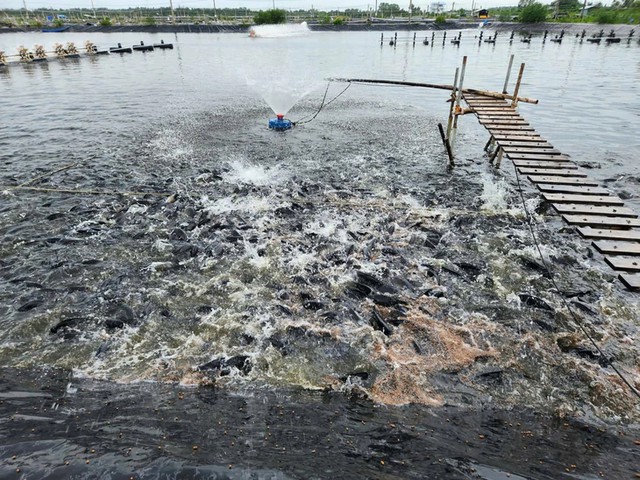
In addition to closely controlling water quality, Vo Van Phuc has introduced technology and gradually automated the farming process. Photo: Khac Tam / Tuoi Tre
The company is also testing several alternative farming models, including above-ground lined ponds and crop rotation between shrimp and tilapia, with the fish helping improve pond conditions.
One of its more unusual experiments involves feeding tilapia fruit.
Phuc has set aside five hectares to grow fruit for fish feed, aiming to produce a premium product for higher-end customers. Until the trees mature, the company purchases fruit from suppliers that can control pesticide residues.
Feed remains one of the industry’s biggest challenges, accounting for about 30 percent of tilapia production costs, Phuc said.
Phuc believes coastal provinces across the Mekong Delta have strong potential to expand tilapia farming for export, particularly by making use of existing shrimp ponds.
Demand for tilapia is strong in the United States, Japan, and Europe, he said, while brackish-water fish can offer firmer flesh, lower fat content, and a mild sweetness.
Expanding the model could help Vietnam diversify its seafood exports while creating more value from existing aquaculture infrastructure.








Max: 1500 characters
There are no comments yet. Be the first to comment.