


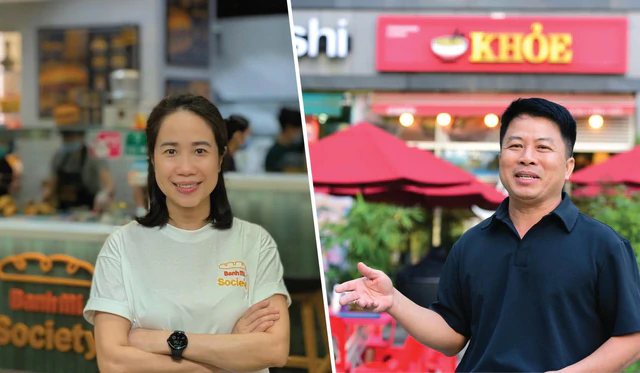
Ha Lam Tu Quynh (L), co-founder of Banh Mi Society in Singapore, and Nguyen Dinh Tuyen, owner of the Pho Khoe chain in South Korea. Photo: Supplied
“Wherever Vietnamese restaurants open, local people come to eat, and that positive influence spreads,” said Nguyen Dinh Tuyen, owner of the Pho Khoe chain in South Korea, who sees cuisine as a powerful way to strengthen Vietnam’s soft power abroad.
The United States has McDonald’s, KFC, and Starbucks. Japan is synonymous with sushi, South Korea with kimchi, and Italy with pizza.
For Tuyen, Vietnamese cuisine should aspire to the same global visibility.
His vision is simple: 'pho' and Vietnamese restaurants should one day be found everywhere, with every Vietnamese living abroad carrying part of the country’s culinary culture with them.
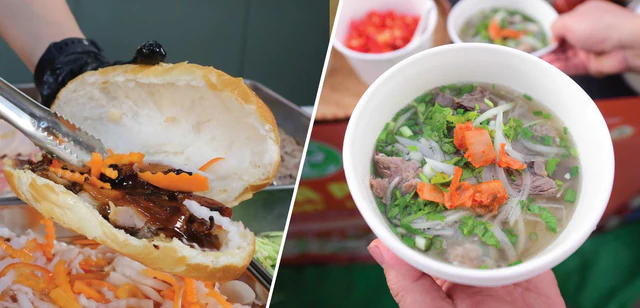
'Banh mi' and 'pho' are among the most recognizable Vietnamese dishes abroad. Photo: Supplied
From exotic food to everyday meal
More than a decade ago, Vietnamese restaurants were still debating how to translate 'pho' into English.
Today, little explanation is needed. 'Pho' has entered international culinary vocabulary in its original form, as has 'banh mi.'
For restaurateurs abroad, that shift matters because it signals that Vietnamese food is becoming more familiar to foreign diners rather than remaining something they try only while traveling in Vietnam.
Ha Lam Tu Quynh, a former Google communications director for Vietnam, had that goal in mind when opening her Banh Mi Society shop in Singapore.
Because Singapore’s Vietnamese community is relatively small, Quynh never intended to rely mainly on Vietnamese customers. Instead, she wanted local and international diners to understand and appreciate Vietnamese cuisine through 'banh mi.'
More than one year on, Singaporeans have become the largest group of repeat customers, followed by tourists and expatriates, while Vietnamese customers rank behind them.
Authentic ingredients such as spring onions, coriander, and pickled vegetables have also been well received.
Vietnamese-style roast pork 'banh mi' is among the shop’s best-selling items, despite Singapore’s large ethnic Chinese population having its own distinct traditions of preparing roast pork.
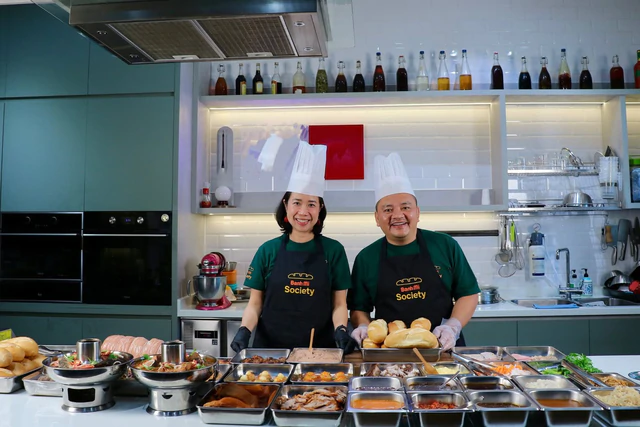
Ha Lam Tu Quynh and chef Vo Quoc at Banh Mi Society in Singapore. Photo: Supplied
A similar shift is taking place in South Korea, where 'pho' has moved well beyond the Vietnamese community and into the local mainstream.
After more than seven years running the Pho Khoe chain in South Korea, Nguyen Dinh Tuyen said 'pho' has become a regular main meal for many Koreans.
The country now has around 5,000 'pho' restaurants, about 70 percent of which are owned by Koreans.
His flagship restaurant alone serves around 1,000 customers a day, most of them international diners. Tuyen has also helped transfer his operating model to more than 100 Korean-owned restaurants and 20-30 Vietnamese-run establishments.
For Tuyen, those figures show that 'pho' is no longer seen as a dish belonging exclusively to Vietnamese people.
It has also won over Korean entrepreneurs, who increasingly see Vietnamese cuisine as a viable business opportunity.
Why Vietnamese food still trails behind
Despite those successes, Quynh said Vietnamese cuisine remains less visible than some other Asian cuisines in major commercial centers.
“If you want to know which cuisine has the greatest influence in a country, look at its shopping malls and food centers,” she said.
“In Singapore, nearly every shopping mall has Japanese, Korean, and Thai restaurants, but Vietnamese restaurants are much harder to find.”
For many Singaporeans, she said, Vietnamese food is still something chosen for a change of taste rather than a familiar and regular option.
She attributed that partly to the lack of major Vietnamese restaurant brands with a successful global footprint.
Large-scale promotional events are also still relatively limited, reducing opportunities for international diners to discover Vietnamese food.
“Culinary soft power has to go together with a country’s economic strength and influence,” she said.
“Japan and South Korea are among the leading economies in the Asia-Pacific, and their rise has also been accompanied by strong national promotion and cultural exports such as film.
"Vietnam is moving toward that goal.”
Quynh said the limited global reach of Vietnamese cuisine stems from several factors, including the lack of major homegrown food brands with a successful overseas presence and relatively modest promotional efforts.
Large-scale events that can generate curiosity and introduce Vietnamese food to international diners are also still limited.
She said she hoped to see more sustained, well-invested initiatives such as Tuoi Tre (Youth) online newspaper's 'Vietnam Pho Festival.'
“Culinary soft power has to grow alongside a country’s economic strength and international influence,” Quynh said.
“Japan and South Korea have built strong economies in the Asia-Pacific region, backed by waves of national promotion and cultural exports such as film.
"Vietnam is moving in that direction.”
Selling Vietnamese food without making it feel foreign
The promotion of Vietnamese culinary brands abroad is being driven largely by the people running the businesses themselves, with each restaurant adopting its own approach and philosophy.
At Banh Mi Society, Quynh stays true to traditional Vietnamese flavors while giving the shop a more international look and feel.
Familiar symbols such as conical hats and red plastic stools are deliberately left out of the decor.
She believes an overly distinctive setting may make foreign diners see Vietnamese food as an occasional cultural experience instead of something they can eat every day.
“The most important thing is to make customers feel familiar and comfortable when they walk in,” she said.
To become a breakfast stop for someone who has not decided what to eat, or a lunch option for office workers with only an hour to spare, a restaurant must be easy and convenient rather than feeling like 'a mini holiday,' she added.
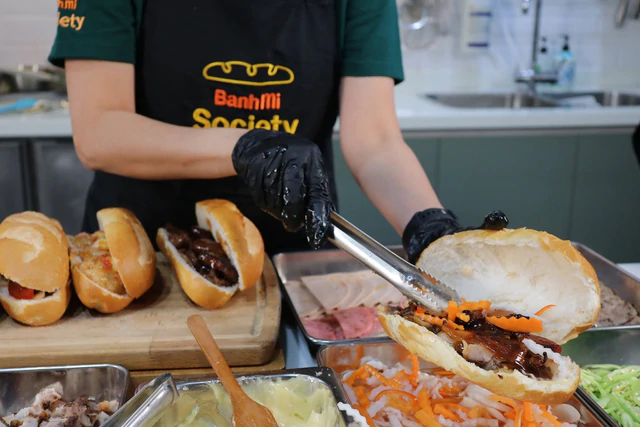
A corner of the kitchen at Banh Mi Society, stocked with typical Vietnamese 'banh mi' ingredients such as butter, pickled vegetables, pork sausage, and ham. Photo: Supplied
Tuyen has taken another route with Pho Khoe, focusing heavily on standardizing operations and ensuring the traceability of ingredients.
For him, Vietnamese food brands abroad should use ingredients with clear origins, ideally sourced directly from Vietnam.
“'Pho' already has a global reputation,” he said. “If we build the brand properly, with authentic origins and the right people, we can succeed.”
He also sees Vietnamese restaurants abroad as training grounds for cultural ambassadors.
Many Vietnamese students work part-time at his restaurants, where they not only earn an income but also experience their own food culture and learn how to tell the story of 'pho' to others.
“That is what I value most,” Tuyen said.
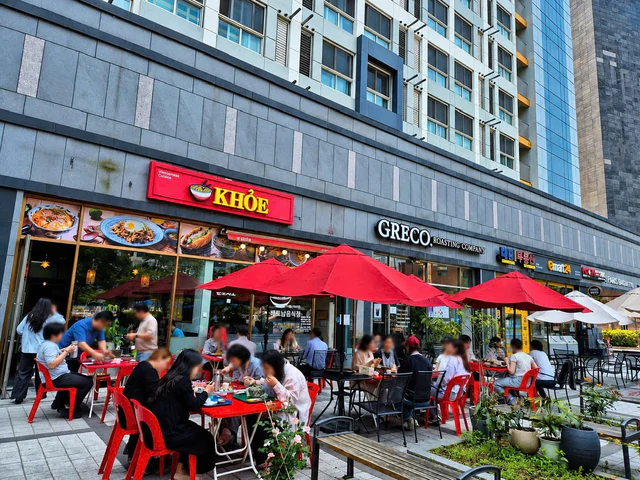
Nguyen Dinh Tuyen takes pride in Pho Khoe being one of the few eateries to have successfully introduced a Vietnamese-style sidewalk dining model to South Korea. Photo: Supplied
Beyond the bowl
The global expansion of Vietnamese cuisine is not only about selling more food. It is also about who supplies the ingredients, Tuyen said.
After more than a decade in South Korea, he said one of his biggest concerns is not that many 'pho' restaurants are owned by Koreans, but that more than half of them source dried 'pho' noodles, rice vermicelli, fish sauce, and seasonings from Thailand.
“Vietnamese people may run Vietnamese food businesses, but if they import agricultural products from Thailand or China, Vietnam loses out,” he said.
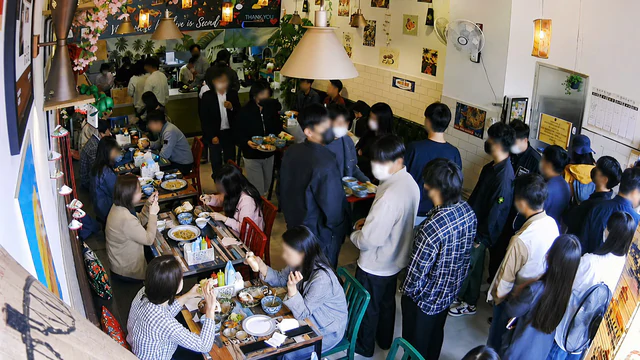
Pho Khoe in Seoul is regularly packed with customers, most of them Korean diners. Photo: Supplied
That is one reason Tuyen has increasingly focused on training and transferring his restaurant model, while encouraging the businesses he advises to import agricultural products directly from Vietnam.
The next step, he said, is to move 'pho' beyond restaurants and onto supermarket shelves.
He is working with Vietnamese manufacturers to produce packaged fresh 'pho' for export, following the model South Korea has used for products such as cold noodles and beef bone soup.
“Even when I am asleep, people can still buy 'pho' and eat it,” he said. “I may not be selling at that moment, but 'pho' can still be sitting in someone’s refrigerator.”
For Tuyen, the impact goes beyond business.
When Vietnamese restaurants operate professionally and local diners return day after day, he believes perceptions of Vietnam and Vietnamese people can also change.
“Wherever Vietnamese restaurants open, local people come to eat,” he said. “And from there, that positive image spreads.”
- REFERENCE MORE








Max: 1500 characters
There are no comments yet. Be the first to comment.