


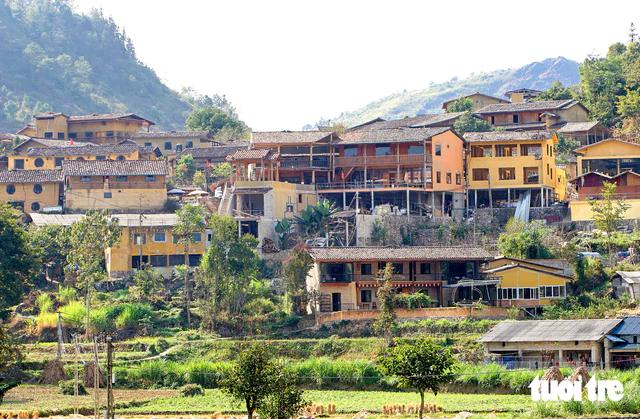
Lo Lo Chai Village, viewed from the Lung Cu Flag Tower, a national landmark near Vietnam’s northernmost point in Tuyen Quang Province, about 450 kilometers north of Hanoi. Photo: Vu Tuan / Tuoi Tre
Lo Lo Chai, named one of the world’s Best Tourism Villages and located in Lung Cu Commune, Tuyen Quang Province, is seeing a growing number of new houses.
Viewed from the Lung Cu Flag Tower, a national landmark in northern Vietnam, Lo Lo Chai is dotted with construction sites and rising concrete columns, raising questions about how the village can preserve its architectural heritage as tourism drives development.
Traditional in front, high-rises behind
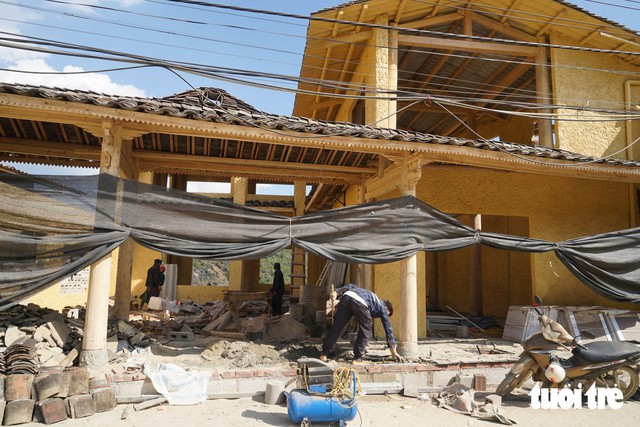
The front facade of a house under construction in Lo Lo Chai, designed to resemble traditional local architecture. Photo: Vu Tuan
Some homeowners are building bedrooms into the slopes behind their houses to give guests views of the Lung Cu Flag Tower, a landmark near Vietnam’s northernmost point.
Along the village’s concrete roads, the street-facing sections of new houses are limited to two stories.
Built with reinforced concrete and large windows, the structures are designed to make the most of the views and give guests photo opportunities.
Sinh Gi Gai, head of Lo Lo Chai Village, said the designs aim to imitate traditional Lo Lo houses, with rammed-earth-style walls painted earth yellow and yin-yang roof tiles.
Local regulations stipulate that houses in Lo Lo Chai must not exceed two stories and must follow traditional architectural styles. However, builders are allowed to use materials such as concrete, glass and wood.
Gai said the buildings may look dusty and unattractive during construction, when their bare concrete surfaces are exposed. Once completed, however, they will be painted earth yellow and fitted with wooden columns and yin-yang roof tiles to resemble the village’s traditional houses.
Since the beginning of the year, the Lung Cu Commune People’s Committee has issued construction permits to 20 households, according to local officials.
Only three are building traditional rammed-earth houses with yin-yang roof tiles, while the others are using concrete and imitating the traditional rammed-earth style.
During an inspection of construction activity ahead of the Lung Cu Buckwheat Flower Festival, the commune authorities suspended work on five projects.
Lung Cu currently has more than 1,000 accommodation rooms.
Demand for accommodation in Lung Cu and Lo Lo Chai has grown substantially in recent years, prompting local businesses to build or expand their properties to serve visitors.
However, the rise of concrete buildings designed to imitate traditional rammed-earth houses has also left many people lamenting the loss of authentic local architecture.
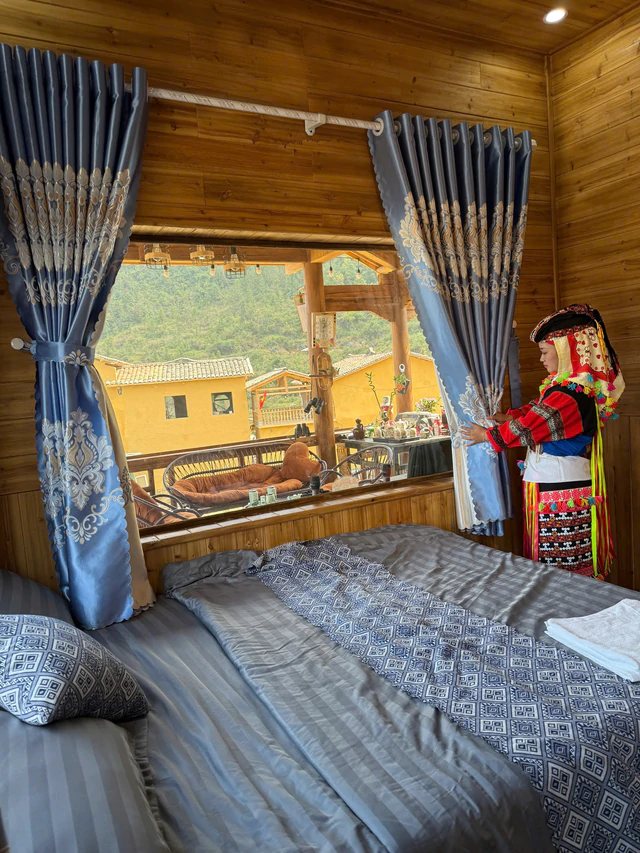
The interior of a newly built house in Lo Lo Chai, featuring wooden walls and large glass windows. Photo: Sinh Gi Gai
Traditional earthen houses struggle to accommodate tourists, driving a shift to concrete
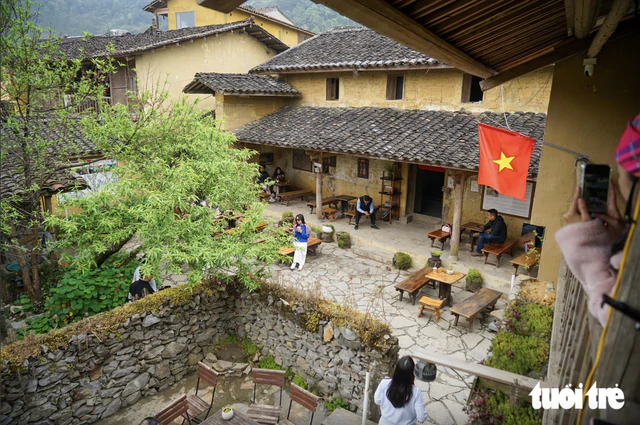
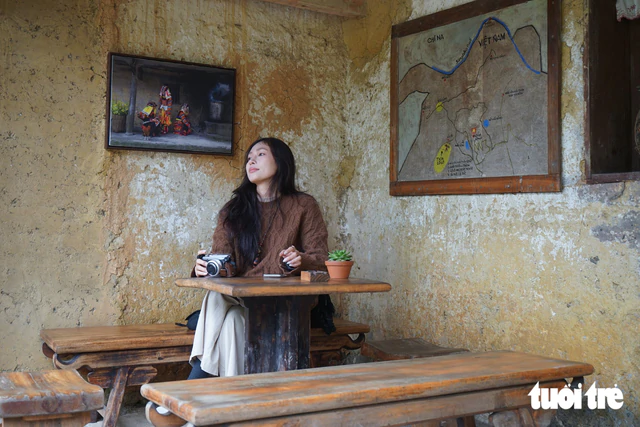
The grounds of Cuc Bac Coffee, home to a nearly 200-year-old traditional rammed-earth house that has been preserved. Photo: Vu Tuan
Sinh Gi Gai, head of Lo Lo Chai Village, said guests could not stay comfortably in traditional rammed-earth houses because of damp and mold.
“If you don’t light a fire inside a rammed-earth house, the walls become damp and moldy within a few days. Guests can’t stay there,” Gai said.
According to local residents, traditional rammed-earth houses are prone to dampness during the rainy season, make it difficult to install modern electrical amenities, and have tiled roofs that can shift and leak.
Their thick walls also leave less interior space, limiting the number of rooms that can be built compared with concrete houses. Traditional windows are small, allowing in little light while keeping out cold winter air.
As a result, most tourism businesses have opted for concrete houses designed to imitate old ones, offering guests air-conditioned rooms and views of the Lung Cu Flag Tower when they draw back the curtains in the morning.
Rooms with windows overlooking the flag tower have proved popular with tourists, prompting other homeowners to follow suit.
Residents are increasingly reluctant to build traditional rammed-earth houses because they take longer to construct, accommodate fewer guests and lack the scenic views that attract visitors looking for photo opportunities.

A newly built house in Lo Lo Chai features spacious rooms and open views to meet tourists’ needs. Photo: Sinh Gi Gai
What happens if Lo Lo Chai loses its traditional earthen houses?
An old-fashioned porch in Lo Lo Chai Village. Photo: Vu Tuan
Pham Thai Duong, a tourism entrepreneur in Tuyen Quang Province, said Lo Lo Chai was a source of pride for tourism operators in the former Ha Giang Province.
Few places, he said, could match its peaceful beauty. Its earthen walls, stone fences and timeworn tiled roofs give the village a distinctive charm, with beauty at every turn.
However, Duong said he was concerned that the village’s unspoiled beauty was coming under mounting pressure. Tourists want modern comforts while also seeking authentic experiences.
Construction, he said, is inevitable to improve local residents’ living standards and meet visitors’ accommodation needs.
The challenge is how to develop the village without allowing too much concrete to overwhelm its historic character.
“I believe building designs should be reviewed by experts in advance, with clear criteria to ensure that construction does not alter the distinctive beauty of traditional architecture or, above all, disrupt Lo Lo Chai’s overall landscape,” Duong said.
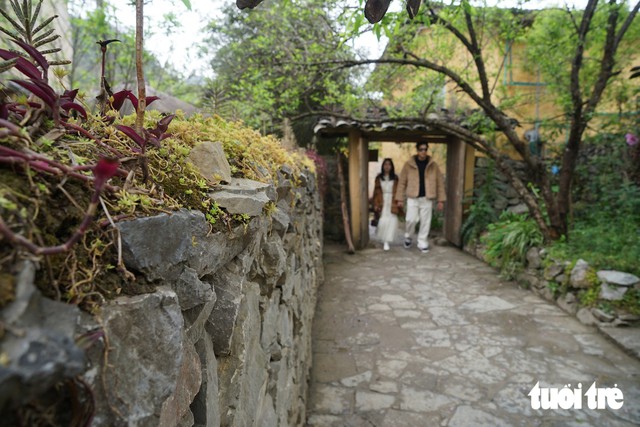
A stone fence in Lo Lo Chai Village. Photo: Vu Tuan
Nguyen Minh Thu, a resident of Hoang Mai Ward in Hanoi, said she was saddened by how quickly Lo Lo Chai was changing.
In the past, she said, almost every corner of the village made a beautiful photo. Stone fences, rustic earthen walls and delicate peach blossoms gave it a charm of its own.
But the village is increasingly taking on a modern look, with well-appointed rooms, large glass windows and electric lights strung throughout.
Thu traveled more than 500 kilometers to visit Lo Lo Chai for its distinctive beauty, which she believes cannot be found at just any other highland tourist destination.
“If Lo Lo Chai no longer has its traditional rammed-earth houses and is filled instead with concrete buildings made to look like wood, painted yellow and fitted with large glass windows, like those elsewhere, I think the village will have lost its competitive edge,” Thu said.





Max: 1500 characters
There are no comments yet. Be the first to comment.