



Foreign tourists stroll while visiting a popular destination in Hanoi, Vietnam. Photo: Nam Tran / Tuoi Tre
The platform, officially launched on Friday, is integrated into the iHanoi application and also available through a mobile app and website.
It brings information on tourist attractions, historical sites, accommodation, dining, events and travel services together in one system, making it easier for residents and visitors to explore the capital.
According to the department, HanoiGo currently provides information on 1,464 historical and cultural relic sites, 82 spiritual and religious destinations, 146 cultural heritage sites and 20 traditional craft villages, along with numerous architectural, ecological, shopping and entertainment destinations.
Each destination comes with photographs, general information, entrance fees, important visitor notes and directions for traveling by private vehicles or public transport.
The platform also provides information on 113 hotels, apartments, homestays and dining establishments, as well as 56 tour packages.
The platform also features 30 itineraries covering cultural experiences, traditional craft villages, cuisine and suburban ecological attractions, complete with schedules and estimated costs for visitors' reference.
AI helps visitors plan trips, navigate the city
One of HanoiGo's notable features is its AI-powered assistant, which helps users create sightseeing itineraries based on their personal preferences and available time.
The assistant supports voice interaction in both Vietnamese and English and can suggest itineraries lasting three hours, half a day or a full day, as well as nighttime tours.
Based on users' search needs and locations, it can recommend additional attractions and suggest suitable travel routes.
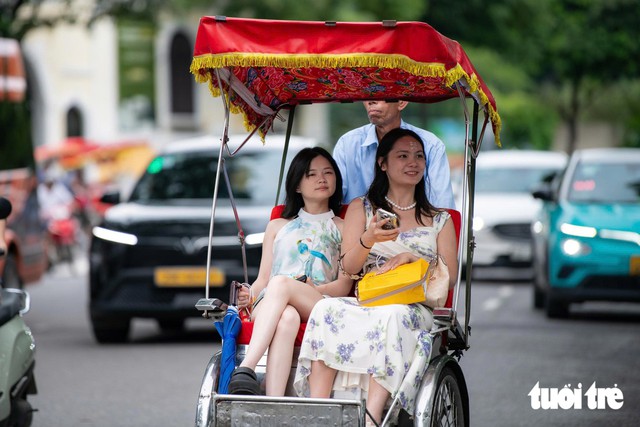
Tourists enjoy a cyclo ride during a tour of Hanoi, Vietnam. Photo: Nam Tran / Tuoi Tre
The platform also incorporates camera-based destination recognition technology, allowing visitors to obtain information about architectural works, historical sites and cultural spaces as they explore the city.
Its digital map helps users locate tourist attractions and essential amenities, with GPS coordinates for historical sites standardized to correspond to their actual visitor entrances to reduce navigation errors.
Visitors can use the map to check whether attractions are open or closed and locate parking lots, public restrooms, bus stops, ATMs and medical facilities within a radius of 500 meters to one kilometer.
The map also provides information on flood-prone areas, hospitals, police stations and urban railway lines.
According to the platform's introduction, its offline mode allows users to access certain essential information even when their Internet connection is unstable.
Information is classified into three levels based on its source: data verified by the city, information provided by individual destinations and content contributed by the community, allowing users to identify where the information comes from.
Platform integrates booking services, emergency assistance
Beyond providing travel information, HanoiGo connects users with tourism services, including restaurant reservations, accommodation bookings, tour purchases and electronic tickets with QR codes.
It also offers a guide for first-time visitors to the capital and updates on what's happening in Hanoi, including events, festivals and cultural activities.
Some destinations are showcased through 360-degree virtual reality technology, allowing visitors to preview their surroundings and landscapes before deciding on an itinerary.
For emergencies, an SOS button connects users to the Hanoi Department of Public Security's hotline and transmits their location coordinates through iHanoi.
According to the science and technology department, QR codes have been installed at 1,445 tourist attractions, Noi Bai International Airport and across the city's bus network, enabling residents and visitors to quickly access tourism information.
HanoiGo is expected to help unify tourism data, reduce the time visitors spend searching for information, enable them to plan their own itineraries and improve access to tourism services across the capital.




Max: 1500 characters
There are no comments yet. Be the first to comment.