


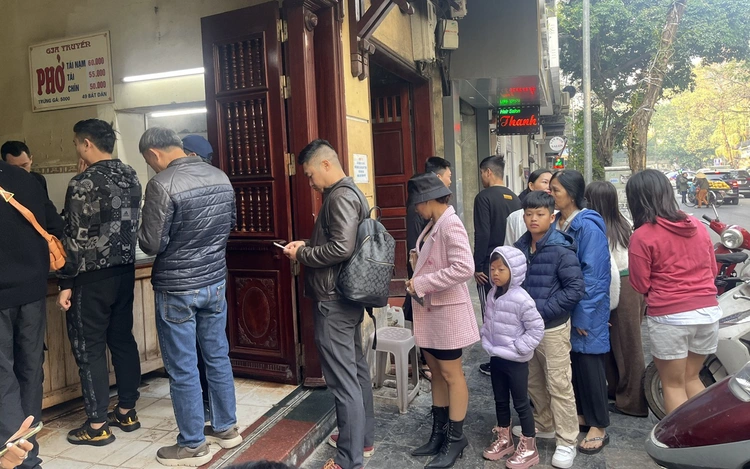
Customers line up at Pho Gia Truyen 49A Bat Dan. Photo: Nhu Binh / Tuoi Tre
The famed pho shop is known not only for its family recipe but also for preserving its self-service tradition dating back to Vietnam's subsidy era, the period of centrally planned rationing before the country's 1986 economic reforms.
News that Pho Gia Truyen 49A Bat Dan is heading to Australia has drawn attention from pho lovers, marking the brand's first official venture abroad.
At a time when customers are treated like royalty, this eatery still holds onto its old-fashioned, subsidy-era style of service: customers must line up and serve themselves.
Yet it is always packed, thanks to a flavor preserved across three generations of pho-making and the special love of the shop's husband-and-wife owners, who grew up together in the same house in Hanoi's Old Quarter.
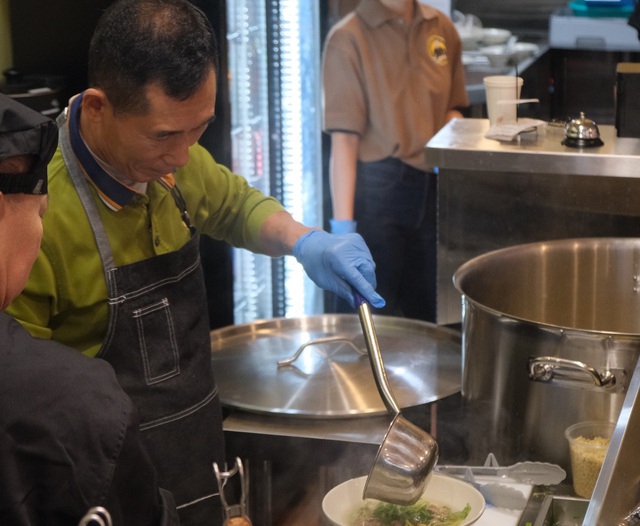
Nguyen Xuan Thang in the kitchen in Australia, at the first overseas franchise of Pho Gia Truyen 49A Bat Dan. Photo: M.D.
Staying true to original flavor
In early July, ahead of a flight to Australia to attend the opening of the brand's franchise outlet, the couple - Nguyen Xuan Thang and Co Thi Thanh Xuan - sat down with Tuoi Tre (Youth) newspaper to recount how pho became part of their lives.
The two grew up in the same house in the Old Quarter before eventually getting married, and together built up what has become a widely renowned brand: Pho Gia Truyen 49A Bat Dan.
At this shop, diners must line up and wait their turn, watching the owner prepare their bowl before carrying it to their own table.
Even so, some customers have remained loyal for a lifetime, even 'training' their children and grandchildren, generation after generation, to love this same traditional flavor.
It is not just the subsidy-era style of service that makes the shop unusual but it is the flavor that sets it apart.
Thang and his wife have steadfastly preserved both the recipe and the business practices passed down by her father, the late Co Nhu Chieu.
The broth's sweetness, aroma, richness, and clarity come purely from bones and beef simmered for hours, combined with charred onion, ginger, and good-quality traditional fish sauce, rather than being heavily seasoned with a lot of spices as is common elsewhere.
Thang still keeps to the practice of not using MSG to enhance sweetness, nor does he use cinnamon or star anise, unlike many pho shops today.
Even the condiments follow her father's ways to the letter: no lime or kumquat, and the vinegar is not steeped with garlic, as garlic would overpower the beef's flavor, making 'every bowl taste the same.' The shop only adds a few drops of chili-steeped vinegar to bring out the beef's flavor.
For a truly delicious bowl of pho, the ingredients must be top-notch.
Over the years, her family has only sourced ingredients from trusted, long-time suppliers who have been providing them since Chieu himself was still cooking.
The woman who has long supplied the family's traditional fish sauce used to sell at a state-run cooperative store, so she knows exactly where to find good-quality fish sauce; she is now in her seventies.
As for the crispy quay (deep-fried dough sticks) served with the pho, Xuan buys them from only one stall on Hang Bo Street that her father has trusted since the old days.
She has preserved both the family's recipe and its traditions.
Her grandfather, Co Nhu Than, sold pho from a shoulder pole, and her father later established the respected Pho Chieu in Hang Phen Alley before relocating it to 48 Hang Dong Street, where her eldest brother and his children continue the family business today.
She has also maintained the self-service style, along with the annual month-long summer closure and extended Tet holiday.
She said her parents had five children, and as they grew up, the sons, daughters, sons-in-law, and daughters-in-law took turns helping out at the shop whenever they had free time.
The family did not hire outside help; instead, Chieu chose to let customers serve themselves, using the money saved to add more meat to each bowl.
At the 49A Bat Dan shop, Xuan has had to hire extra staff because of the crowds, but cooking and slicing the meat remain entirely in the couple's own hands; for decades, it has been Thang alone who has personally tended the pot.
As a result, the pho here is not only rich in traditional flavor but also more 'generously portioned' than many other shops in Hanoi at the same price.
As for the month-long summer break, Xuan has simply followed her father's long-standing practice.
Even in tough economic times, Co Nhu Chieu still gave the whole family a month off from selling every summer, so they could rest after a long year of hard work.
Today, Xuan also gives her staff a month-long summer break with full pay.
During Tet, the shop follows another long-standing practice: it closes whenever beef prices surge and does not reopen until they return to normal.
She believes that if she raised prices along with the seasonal market surge during Tet, customers who do not understand might accuse the shop of 'price gouging.'
So she would rather close the shop instead, as giving staff extra days off only makes them feel more loyal to it.
When its staff are happy, the shop is filled with positive energy, and customers naturally want to come to a place that offers that feeling.
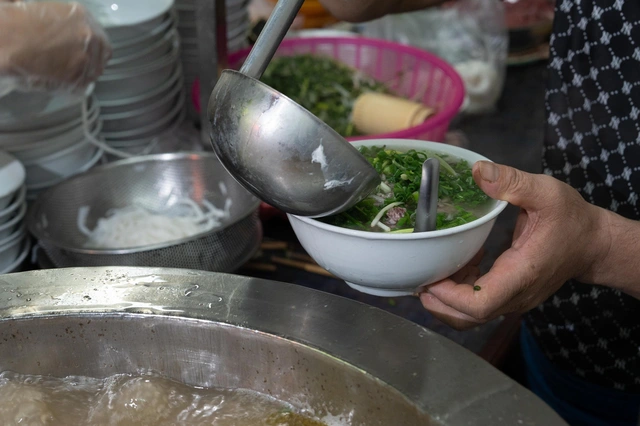
A bowl of beef 'pho' with rich broth and traditional flavor. Photo: Nhu Binh / Tuoi Tre
Integrity is the real brand
Customers of Pho Gia Truyen 49A Bat Dan probably all assume that Thang is Co Nhu Chieu's biological son, having inherited the pho-making craft since childhood.
It turns out he is actually Chieu's son-in-law, who was taught every secret of the trade by his father-in-law, holding nothing back.
"He lived a very moral life, and he was extremely fair -- he loved his sons, daughters, sons-in-law, and daughters-in-law all the same. He taught everything he knew to anyone who was hardworking, eager to learn, and truly devoted to the pho-making craft," Thang recalled.
Chieu did not just pass on the technique for making the traditional flavor to his children. The bigger lesson Thang learned from his respected father-in-law was that whatever one does, they must do it meticulously, with integrity and full responsibility.
"That's exactly what a brand is. If you're dishonest in your dealings and overcharge your customers, no matter how skilled you are, it's all worthless," he said.
In 1983, when he decided to propose to the young woman who lived in the same house at 48 Hang Dong Street (her family in the front section, his in the back), Thang had already made up his mind to take up the traditional beef pho trade of his wife's family.
He made the most of every opportunity to learn from his father-in-law, not just the techniques of cooking the dish, but also how to treat people, a love for the craft, and how to stay calm and composed while cooking.
"Even though he sometimes feels upset or angry with his wife, children, or others -- just like anyone else in life -- once he starts cooking pho, he leaves all those emotions outside. Sadness and worry never manage to intrude on his love for pho. It's strange, really. Pho is his own inviolable 'sanctuary,'” Xuan said, making no secret of her admiration for her husband.
"My father told us that when we went into business on our own, the first thing to remember was to love the craft and pour our heart into the broth -- only then would it taste good. My husband has spent his whole life living up to my father's words."
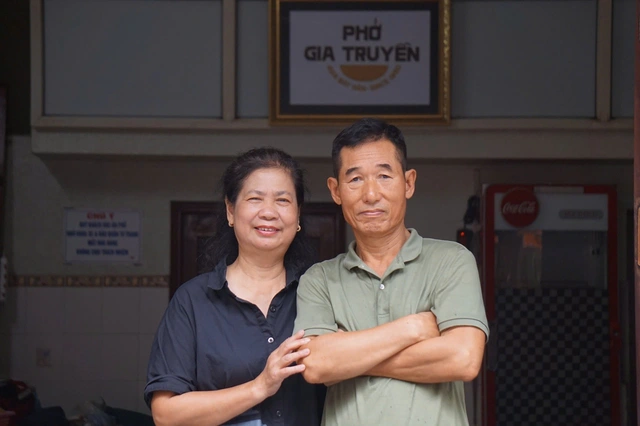
The shop's husband-and-wife owners, Nguyen Xuan Thang and Co Thi Thanh Xuan. Photo: Thien Dieu / Tuoi Tre
Not just a dish, but a way of telling Vietnam story
Pho Bat Dan Australia opened on July 3 in Melbourne, Australia, as the exclusive franchisee of the Pho Gia Truyen 49A Bat Dan brand.
Here, the shop targets the Vietnamese community while also expanding to local diners and Asian communities, including those from Japan, South Korea, and China, who are increasingly interested in Vietnamese cuisine.
The first store is located at 197 Lonsdale Street, Melbourne, Victoria, with the brand planning to open outlets in other cities in the near future.
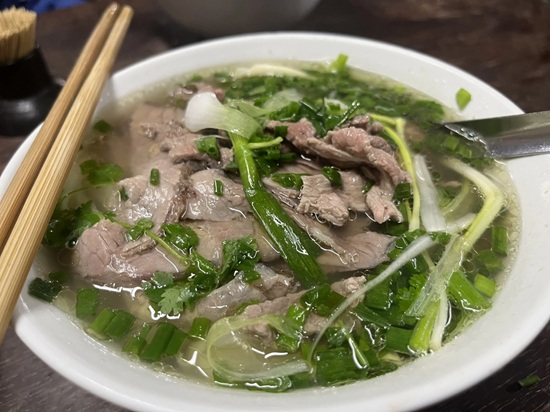
Close-up of a bowl of Pho Gia Truyen 49A Bat Dan. Photo: Nhu Binh / Tuoi Tre
According to a company representative, opportunities for Vietnamese food brands to go global are wide open as Vietnamese cuisine attracts growing interest. However, to go far, a brand needs more than just delicious food: it must preserve the original flavor, ensure consistent quality, and adapt to local markets.
"Brands looking to expand abroad need to carefully prepare in terms of brand ownership, operational processes, human resources, and the ability to maintain consistent flavor. If you can't maintain that consistency, it's very difficult to grow sustainably in the long run," said the representative of Pho Bat Dan Australia.









Max: 1500 characters
There are no comments yet. Be the first to comment.