


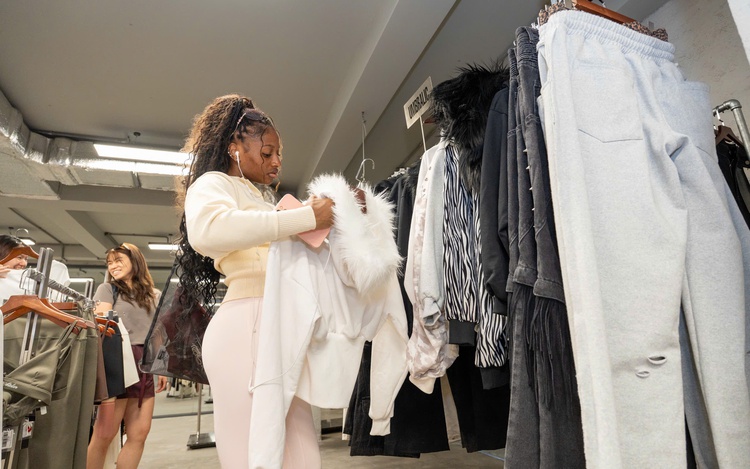
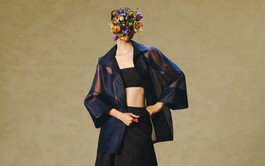
Unique, one-of-a-kind fashion designs make international customers eager to open their wallets. Photo: Huu Hanh / Tuoi Tre
Industry insiders say the city can further capitalize on this momentum by developing curated shopping experiences, including fashion maps, themed shopping tours, and events showcasing Vietnamese designers, helping position itself as both a creative center and a premier shopping destination.
Wish lists, shopping experience
Linda, 24, a Vietnamese-French tourist, returns to Vietnam every few years and spends her first days in Ho Chi Minh City shopping before continuing her trip to other provinces and cities.
"When I was little, my mother used to have clothes made in Vietnam and shipped to France. Now, every time I come back, I go shopping myself," Linda said.
Her itinerary includes not only popular eateries and tourist attractions, but also spots like The New Playground, the Ly Tu Trong apartment building -- now repurposed into boutiques and cafés in Saigon Ward -- and fashion streets such as Nguyen Trai and Tran Quang Dieu.
These are places she discovered on social media and continues to recommend to friends after each trip.
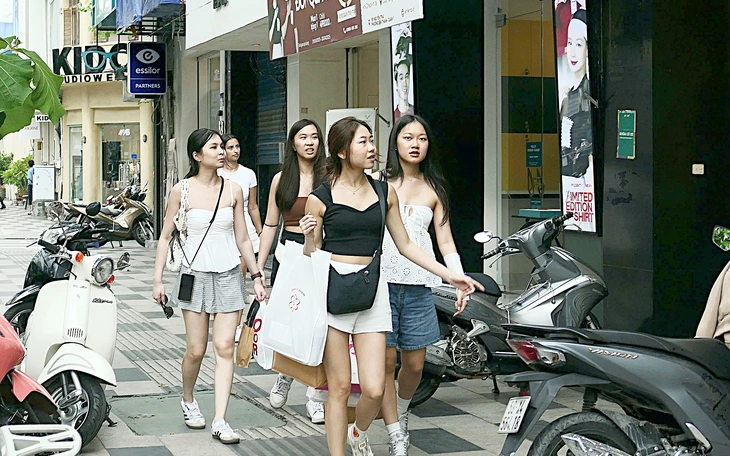
Linda is far from alone as an increasing number of international tourists now view Ho Chi Minh City as a ‘fashion shopping mecca’ and arrive with a wish list already in hand.
Rebecca Morris, a lecturer in fashion business management at RMIT Vietnam with more than 20 years of experience in retail, said many tourists now save product images from TikTok or Instagram and bring them into stores, asking staff to help find the exact items.
Hashtags such as #vietnamshoppinghaul and #vietnamlocalbrand are also helping Vietnamese fashion appear more frequently in international users' search results.
This demand is helping push Ho Chi Minh City toward a clustering model of fashion streets and complexes, where buyers and sellers gather in the same area.
Beginning with The New Playground -- one of the pioneering models more than a decade ago -- this kind of space has continued to expand, with new complexes such as 11 Garmentory and Rue Miche building a retail ecosystem that brings together many Vietnamese brands within a single area.
Huynh Dang Que, founder of local brand The Idiot, said tourists are now one of the brand's key customer segments.
"We used to see tourists simply as an additional source of revenue, but now they are one of our main customer groups," he said.
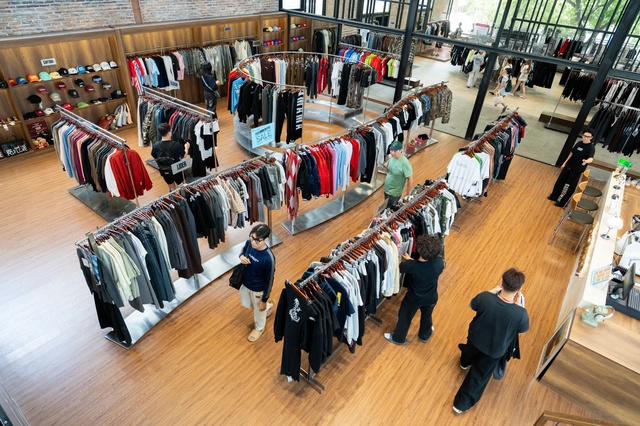
Shopping complexes have become the choice of many international tourists thanks to the experience and convenience they offer. Photo: Huu Hanh / Tuoi Tre
Big spenders on Vietnamese brands
According to a representative of 11 Garmentory, the appeal of Vietnamese brands today no longer lies mainly in low prices, but in design, quality, and the overall shopping experience.
The complex, located in Cau Kieu Ward, spans more than 1,000 square meters and opened only recently.
Instead of dropping by just to buy a single item and leave, many tourists now spend hours exploring the space.
For that reason, the complex has been developed to bring together multiple brands under one roof, combined with coffee shops, photo spots, and other experience zones, turning shopping into part of a broader exploration journey.
International visitors currently account for roughly 60-70 percent of the total foot traffic at the complex.
"Foreign customers tend to spend much more time experiencing the shopping space than simply looking for a specific item. Average spending is around VND3 million [US$114] per purchase, while some orders can reach VND60-70 million [$2,282-2,662]," the representative said.
Products at the complex are typically priced at VND300,000-3 million ($11-114).
On weekends, foot traffic can reach about 2,000 visits a day, roughly 1.5 times higher than on weekdays.
The two peak hours, around 2:00 pm and 6:00-7:00 pm, together constitute nearly half of the total customer traffic.
Meanwhile, a representative of ONONMM, a fashion brand for women, said the number of international customers shopping in-store and ordering online has risen markedly, particularly from South Korea, Thailand, China, and several other Southeast Asian markets.
The 7:00-10:00 pm time slot has a notably high conversion rate, especially among international customers and returning shoppers.
"Peak times usually fall during the tourist season or whenever Vietnam is hosting festivals, entertainment events or concerts. This is a positive sign that Vietnamese fashion is gradually becoming part of the travel experience for international visitors," the ONONMM representative said.
The company also noted that the trend of international tourists seeking out Vietnamese brands has become clearly visible over the past one to two years, especially after some designs were worn by South Korean K-pop stars and celebrities in Thailand and China.
‘Open early, close late’
‘Open early, close late’ is a defining feature of the vibrant rhythm of Ho Chi Minh City's fashion market.
A Tuoi Tre (Youth) Online survey found that many stores, including international brands like H&M and Uniqlo, open at around 9:30-10 am and stay open until 10:00 pm every day, while most shopping malls in Tokyo close by 8:00-9:00 pm, and in New York, only a handful of flagship stores stay open past that hour.
This late-closing rhythm gives tourists more time to shop after a day of sightseeing and dining, helping to boost the night-time economy.
"The city needs to make the most of this advantage to build a brand identity as an easily recognizable destination, such as by forming dedicated fashion streets and districts, creating a distinctive feature that tourists feel they must visit and experience," said tourism expert Nguyen Minh Man.








Max: 1500 characters
There are no comments yet. Be the first to comment.