


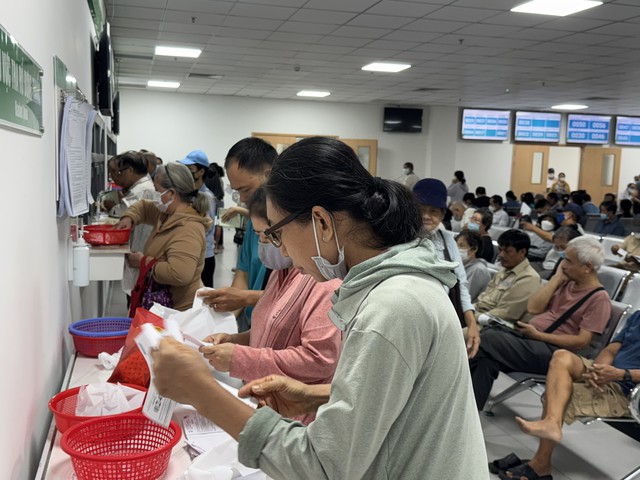
Elderly people in Ho Chi Minh City receive examinations for chronic diseases. Photo: Thu Hien / Tuoi Tre
From demographic dividend to population aging
The municipal People’s Committee has approved a project to develop a healthcare system for older people to adapt to population aging in the city for the 2026-30 period, with a vision toward 2045.
The project stated that Ho Chi Minh City officially entered the population aging phase in 2017, when people aged 60 and older accounted for 10.28 percent of the population, or 889,178 people.
By 2025, older people represented 11.4 percent of the city's population following its administrative merger, totaling 1,572,988 people, the largest elderly population of any locality in Vietnam.
According to analyses and projections, Ho Chi Minh City is expected to officially become an aged society in 2038, when its elderly population is projected to reach 3,004,387.
If fertility rates and migration patterns remain unchanged, the city is expected to enter the super-aged society phase in 2048, when the number of older residents is projected to reach 4,619,622.
These figures show that the city is rapidly transitioning from a period of demographic dividend to population aging, placing considerable pressure on healthcare, social welfare, and sustainable economic development.
However, the existing healthcare system is primarily designed to address acute illnesses, while older people increasingly need long-term care and rehabilitation.
The biggest gap is the lack of a unified citywide healthcare system for older people, leaving no continuous care pathway linking preventive services and community support with long-term residential care and specialized treatment.
International experience shows that a sustainable elderly healthcare system in Ho Chi Minh City should comprise multiple, interconnected levels of service, with home-based and community care forming the foundation, supported by residential care and specialized treatment.
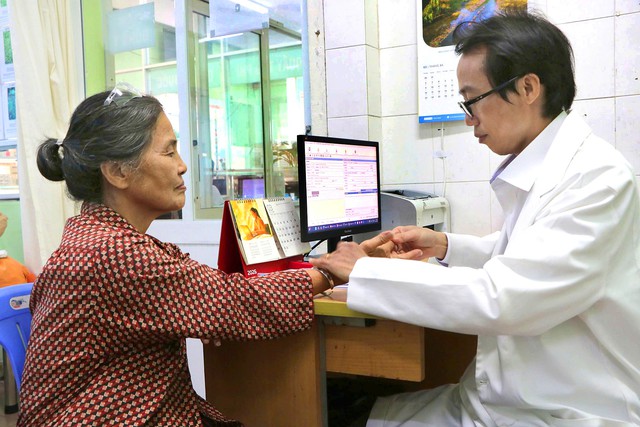
An elderly woman receives medical care and health monitoring at a local medical station in Ho Chi Minh City. Photo: Thu Hien / Tuoi Tre
Five tiers of elderly care
Under the project, the city will establish a unified five-tiered healthcare system for older people to ensure continuity, coordination, and services tailored to their needs.
The five tiers are as follows:
Tier 1: Self-care and health promotion. Older people will be encouraged to adopt healthy lifestyles, undergo regular health check-ups, manage risk factors, and use electronic health records to monitor their health.
Tier 2: Community-based support. The city will strengthen the role of local medical stations, community-based daytime care centers and facilities, elderly care clubs, organizations, volunteers and community collaborators in health monitoring, counseling, basic rehabilitation and helping older people maintain independent lives.
Tier 3: Home-based support. Healthcare services for older people will be expanded to their homes through continuous care teams, family doctors, home nursing, home-based rehabilitation and caregivers.
Tier 4: Residential care. The city will encourage the development of various facilities offering nursing care, rehabilitation, dementia care and palliative care, while ensuring professional coordination with the healthcare system.
Tier 5: Hospital care. General and specialized hospitals will treat complex cases, provide professional support to the wider system and ensure safe transitions for patients after treatment.
Movement between tiers will be based on assessments of older people's health, level of dependency and care needs, following a standardized process across the city.
The city will also develop assessment tools for older people's functional abilities that reflect their health conditions, cultural backgrounds, living environments and the practical conditions for implementation in Ho Chi Minh City.




Max: 1500 characters
There are no comments yet. Be the first to comment.