


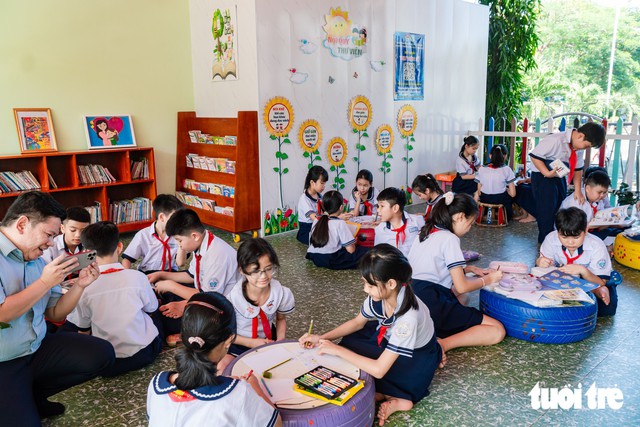
Students practice speaking English in a dedicated English-speaking area at Thuan Kieu Elementary School in Dong Hung Thuan Ward, Ho Chi Minh City. Photo: Quynh Tram / Tuoi Tre
From elementary to high school, these informal, pressure-free spaces for English practice are helping students build conversational skills and confidence without the pressure of grades.
Making English conversation second nature
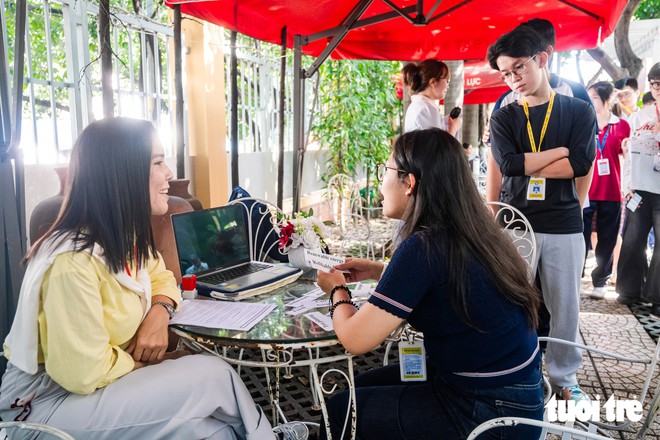
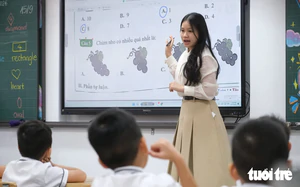
At Tay Thanh High School in Ho Chi Minh City’s Tay Thanh Ward, an English-speaking space run by the school’s English department has become a popular hangout for students after classes.
Moving beyond textbooks, the space offers a rotating mix of games and activities designed to help students sharpen their listening and speaking skills.
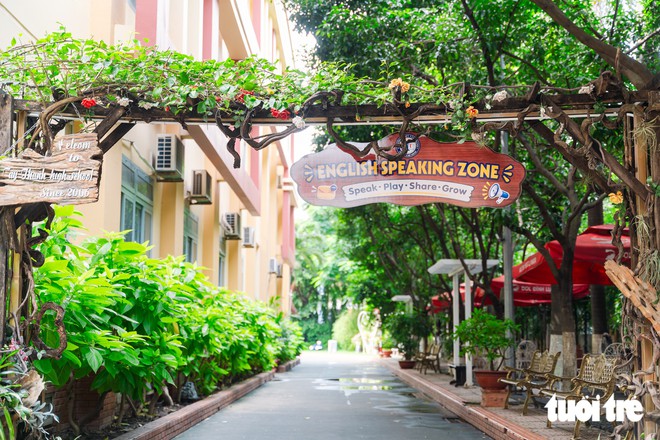
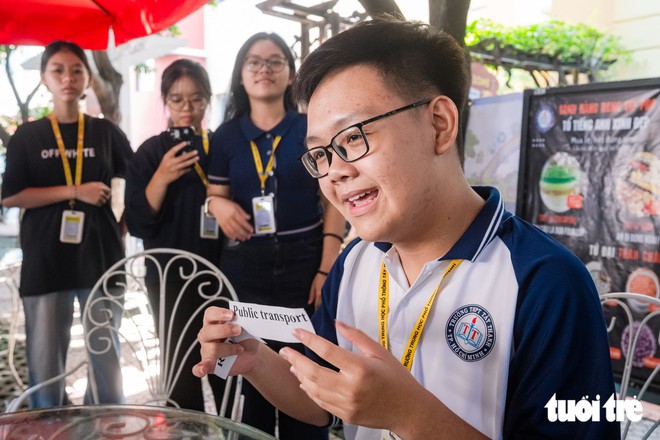
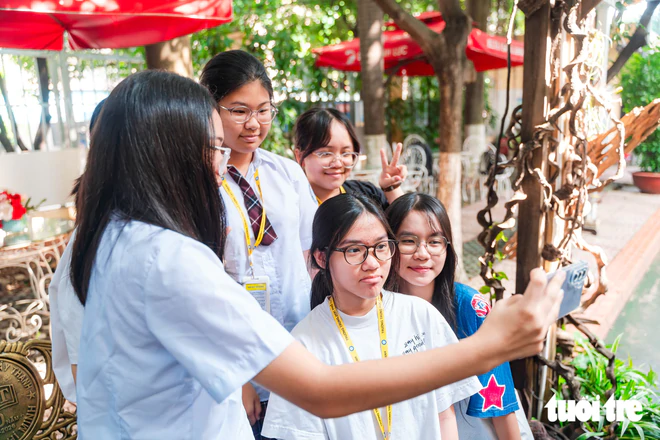
The English-speaking space run by the English department has become a popular gathering spot for students after classes at Tay Thanh High School in Tay Thanh Ward. Photo: Quynh Tram / Tuoi Tre
Mai Phuong Anh, an English teacher at the school, said the space was created to give students a fun, relaxed environment to practice English through games and activities. The school also hopes to reduce students’ use of phones during the school day.
“Without the pressure of grades or academic expectations, students can take part freely and enjoy themselves to the fullest,” she said.
The absence of grades also helps students overcome their fear of making mistakes, allowing them to improve their pronunciation and speaking fluency through practice.
The initiative has been further enriched by the participation of native English-speaking teachers, who interact directly with students.
Nazah, a Turkish teacher at the school, said she had noticed a marked change in the students.
“At first, they were always shy. But after just a few sessions, they became more comfortable, making a real effort to express their ideas and show their creativity. The students here particularly enjoy group activities, where they can share their perspectives with one another,” she said.
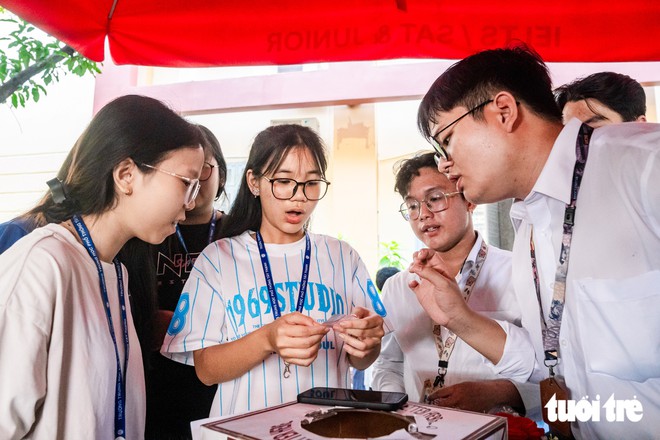
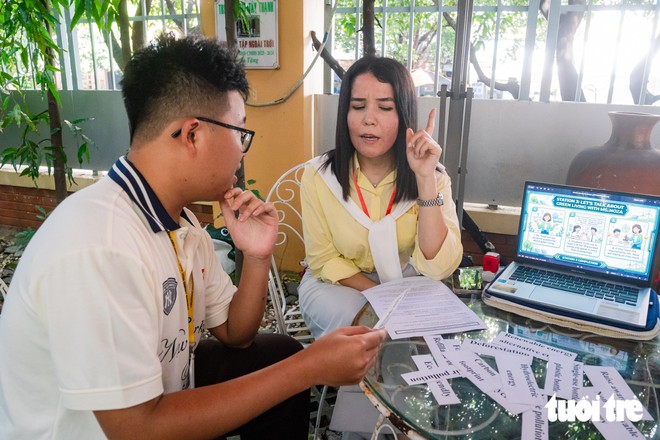
Nazah, a Turkish teacher at the school, said she enjoys working with Vietnamese children and students of all ages, from teenagers to younger pupils. Photo: Quynh Tram / Tuoi Tre
The approach appears to be paying off. Nguyen Thi Minh Tho, a student in grade 10, said her English skills had improved considerably since joining the program.
“My English has improved a lot. Here, we play vocabulary guessing games, practice listening and reading comprehension, build our vocabulary and take part in debate games. The activities keep coming, helping us learn a lot of new things in a fun way,” she said.
A structured approach starting from elementary school onward
The open-space model is not limited to high school students; it has also been adapted to suit the learning needs of younger children.
At Thuan Kieu Elementary School in Ho Chi Minh City’s Dong Hung Thuan Ward, the English-speaking space has been systematically developed and maintained as an engaging place for students to practice the language.
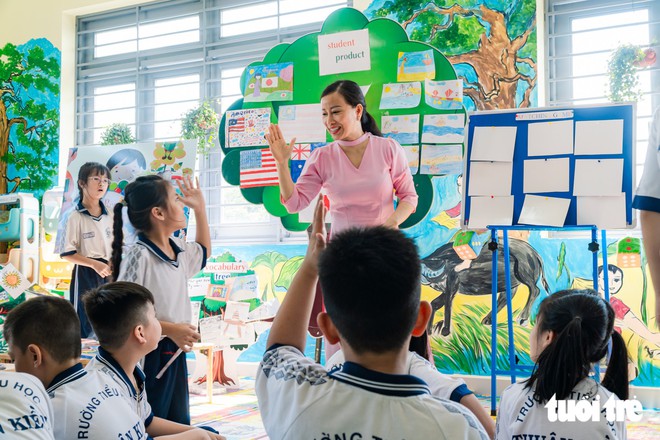
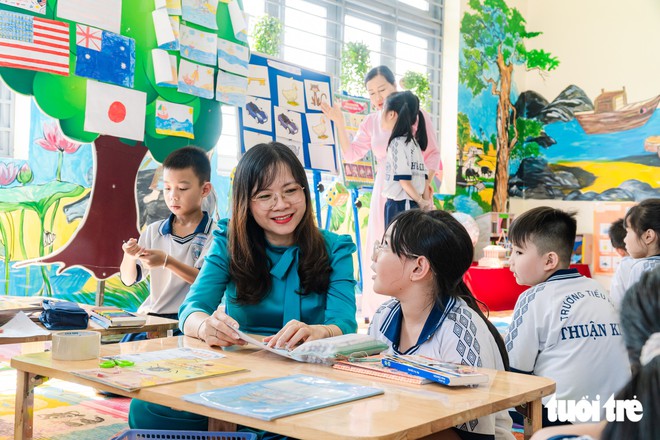
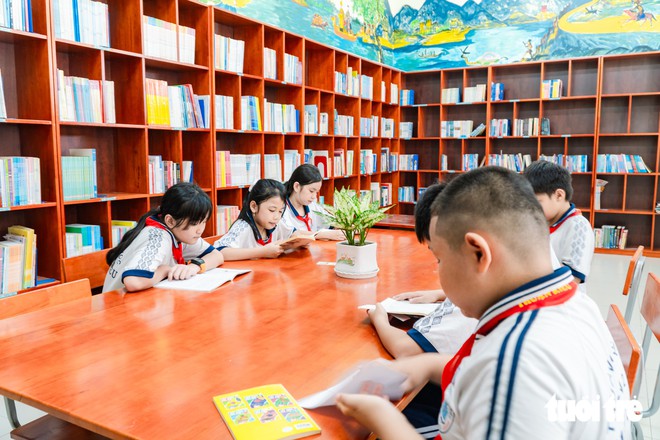
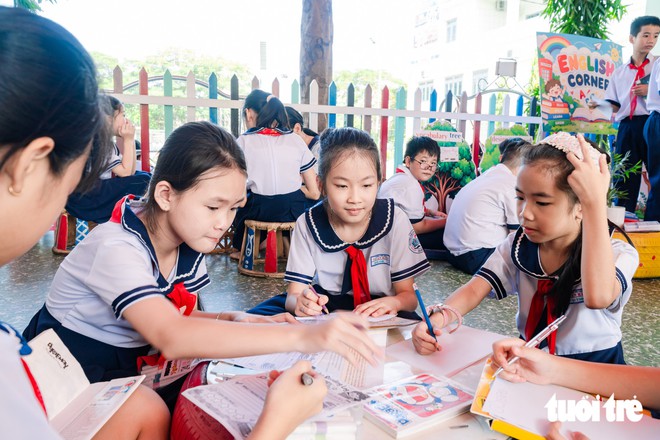
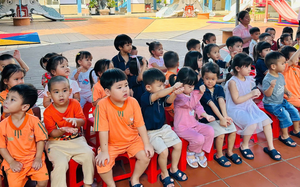
Students at Thuan Kieu Elementary School enthusiastically take part in physical games that combine country recognition with mind-mapping activities to help them absorb English vocabulary naturally. Photo: Quynh Tram / Tuoi Tre
Pham Thi Thu, head of the English department at Thuan Kieu Elementary School, said activities are tailored to each grade level to suit students’ learning abilities.
“First- to third-graders mainly learn vocabulary, arrange words, make flashcards and play educational computer games, or roll dice to name countries. For fourth- and fifth-graders, activities become more advanced, including creating monthly themed mind maps and rewriting memorable sentences or writing paragraphs expressing their thoughts on a story,” Thu said.
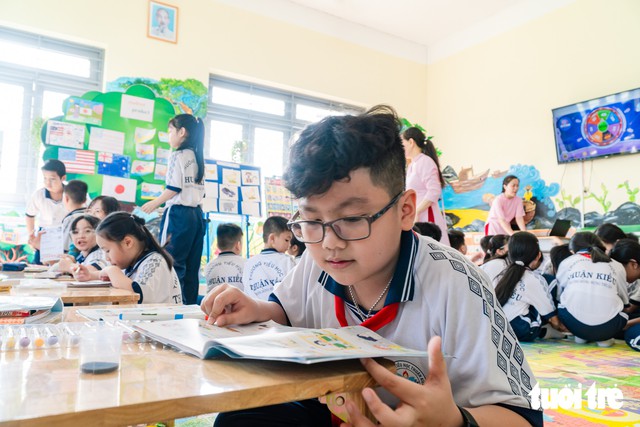
Ho Gia Khang, a fifth-grader at Thuan Kieu Elementary School in Ho Chi Minh City’s Dong Hung Thuan Ward, reads an English book. He said the school’s English-speaking space had helped him gain the confidence to introduce himself and chat with foreigners. Photo: Quynh Tram / Tuoi Tre
Taking language learning beyond the traditional classroom helps students move away from passively listening to lectures and taking notes.
Thu said the model aligns with the new Global Success English textbook series, which emphasizes listening and speaking skills, and supports the broader goal of making English a second language in schools.
Le Thi Thoa, principal of Thuan Kieu Elementary School, said the school would continue to raise the difficulty of experiential activities as part of its efforts to comprehensively reform education.
It also plans to incorporate bilingual elements into STEM subjects and promote digital transformation by having students create digital products as gifts for their mothers for Vietnamese Women's Day on October 20, rather than only making traditional handmade cards.
The school will also launch a 'Reading Passport' program, in which students collect stars to redeem for gifts, to promote a reading culture and foster a modern, bilingual school environment.


Max: 1500 characters
There are no comments yet. Be the first to comment.