


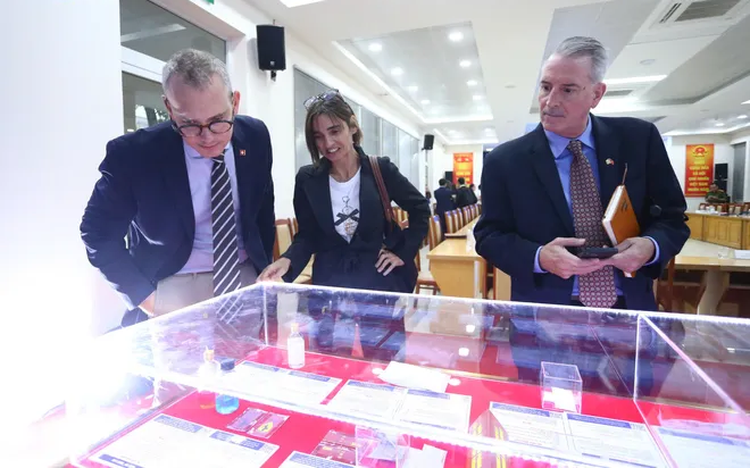
Foreign delegates visit an exhibition featuring samples of drugs in Ho Chi Minh City on October 6, 2026. Photo: VTV.vn
Ho Chi Minh City police and the municipal Department of Foreign Affairs held a conference on Tuesday with representatives of 17 foreign consulates to discuss drug prevention and international cooperation, as the city works toward its goal of becoming drug-free by 2030.
The event, themed “Joining hands to build a drug-free Ho Chi Minh City by 2030,” focused on strengthening cooperation between police, foreign diplomatic missions and the wider community in preventing drug-related crime, particularly cases involving foreigners.
Ho Chi Minh City is a major economic, cultural, commercial and international exchange hub, with about 168,000 foreigners living, studying, working and investing in the city and around 9 million tourist arrivals each year.
The large foreign community and high level of international integration have brought significant benefits to the city but have also created new challenges for maintaining security and public order, particularly in preventing and combating drug-related crime.
In January-September 2026, local authorities handled 209 foreigners for drug-related offenses, including 166 people prosecuted and 43 administratively sanctioned, VTV.vn reported, citing the municipal police.
The figures prompted calls for stronger cooperation with foreign diplomatic missions to provide foreigners with information about Vietnam’s drug laws and warn them about emerging forms of drug-related crime.
Foreigners warned about new drug trends
At the conference, representatives of the Australian, Japanese, Russian and U.S. consulates general asked Vietnamese police about emerging drugs and new trends that authorities have been monitoring in recent years.

Lieutenant Colonel Pham Ngoc Tuan Dung, deputy head of the Ho Chi Minh City Police Department's drug crime investigation police office, said drug use in Vietnam, including Ho Chi Minh City, is increasingly involving synthetic drugs and new psychoactive substances.
He identified three major groups of drugs commonly associated with foreigners.
The first is synthetic drugs, particularly methamphetamine, MDMA and ketamine.
Police have also warned about synthetic drugs being disguised in packaged drinks known as “happy water,” milk tea, fruit-flavored powders and candies containing multiple substances.
The second group is cannabis and products containing new psychoactive substances. Some foreigners may continue to seek, grow or use cannabis after coming to Vietnam because they are accustomed to its legal status in some other countries.
However, cannabis and all cannabis-derived products are prohibited drugs in Vietnam, and the possession, transportation, trafficking and organizing the use of these products are subject to strict penalties.
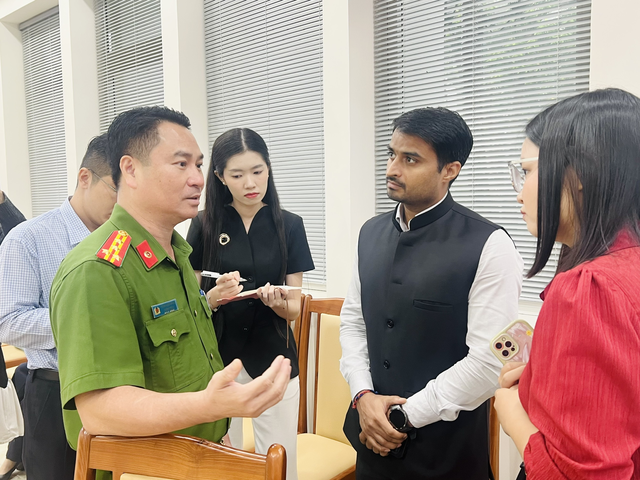
Colonel Pham Dinh Ngoc, head of the Ho Chi Minh City Police Department's drug crime investigation police office, answers questions about drugs. Photo: Ho Chi Minh City Police
The third group comprises newly prohibited substances and products, including e-cigarettes, heated tobacco products, shisha and laughing gas. Police warned that criminals have been using vape and pod products and laughing gas as a cover for mixing new-generation synthetic drugs, posing risks of acute poisoning and psychosis, the municipal police reported.
Authorities have also detected the mixing of substances such as etomidate and synthetic cannabinoids into vape and pod liquids.
Stronger cooperation from prevention to enforcement
Representatives of the foreign consulates general in Ho Chi Minh City and the municipal police also discussed difficulties in coordinating the handling of violations and providing assistance to foreign nationals involved in drug-related cases.
The sides agreed to establish a more proactive, regular and effective coordination mechanism, with an emphasis on prevention and early intervention.
The cooperation will include sharing information, updating warnings about new criminal methods and providing foreigners with information about Vietnamese laws on drugs, prohibited conduct and penalties.
Colonel Pham Dinh Ngoc, head of the Ho Chi Minh City Police Department's drug crime investigation police office, called on foreign consulates to step up the dissemination of Vietnamese drug laws among their citizens living, working, studying and traveling in the city.
He also urged them to help foreigners identify drugs and criminal methods, report suspicious activities, and cooperate with authorities in preventing, detecting and handling drug-related crimes and violations.
Building a safe, civilized and drug-free Ho Chi Minh City is not solely the responsibility of the police, authorities said.
It requires cooperation among government agencies, foreign diplomatic missions, businesses, residents and the foreign community, with closer international coordination expected to help prevent drug-related crime and support the city’s goal of becoming drug-free by 2030.


Max: 1500 characters
There are no comments yet. Be the first to comment.