


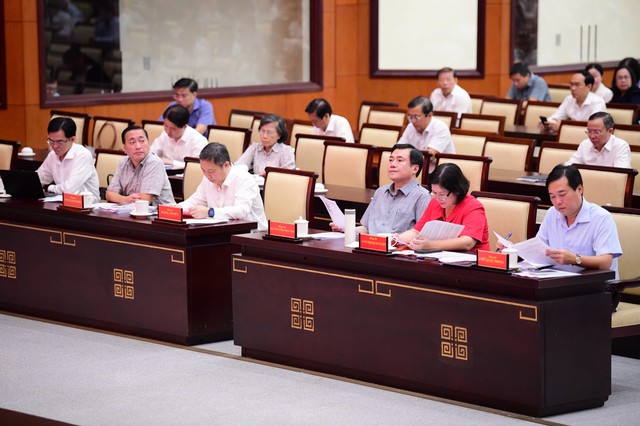
A view of a conference held on September 29, 2026, attended by Standing Deputy Secretary of the Ho Chi Minh City Party Committee Le Quoc Phong, Deputy Secretaries of the Ho Chi Minh City Party Committee Van Thi Bach Tuyet and Nguyen Sinh Nhat Tan, and other members of the municipal Party Committee’s Standing Board. Photo: Quang Dinh / Tuoi Tre
The municipal Party Committee held a conference on Tuesday to implement several Politburo resolutions and directives.
Nguyen Loc Ha, standing vice-chairman of the Ho Chi Minh City People's Committee and a member of the municipal Party Committee's Standing Board, presented the draft action program at the conference.
The program is meant to implement Resolution No. 26-NQ/TW on developing tourism into a key economic sector in the new era.
The city aims to make tourism a key economic sector and a new growth driver.
The plan links tourism development to the city's target of achieving double-digit economic growth.
Ho Chi Minh City also aims to become one of Vietnam's three major tourism growth poles, together with Hanoi and Da Nang.
The city plans to serve as a tourism hub for the southeastern region and the Mekong Delta.
Focus shifts to tourist spending, length of stay
The city plans to shift its tourism strategy from increasing visitor numbers to improving tourist experiences, spending, and the length of stay.
By 2030, Ho Chi Minh City aims to develop high-quality, smart, green, and creative tourism with a strong cultural identity.
The city also plans to turn out tourism products based on its creative urban areas, cultural heritage, waterways, and islands.
The city targets 20 million international visitors and 67 million domestic visitors by 2030.
Tourism revenue is projected to reach VND700 trillion (US$26.7 billion).
It is expected to contribute 12 percent of the city's GRDP.
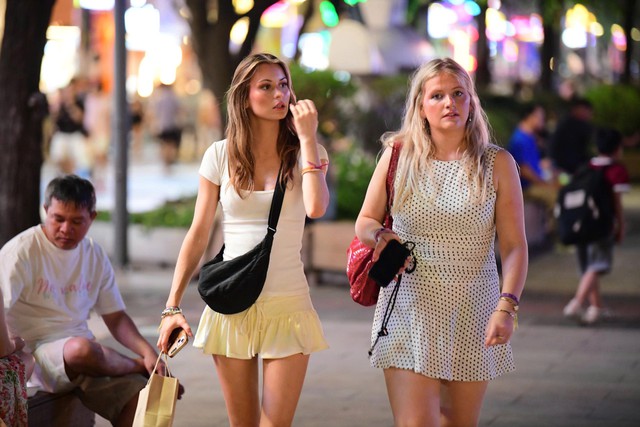
International tourists visit Ho Chi Minh City. Photo: Quang Dinh / Tuoi Tre
The city plans to expand its accommodation capacity to keep pace with rising demand, with a focus on increasing the share of four- and five-star hotels and large-scale upscale properties.
Under the plan, at least three locally based tourism companies are expected to build strong brands, adopt modern management systems, and strengthen their international competitiveness.
By 2045, tourism is expected to become a modern, sustainable sector, and a major driver of economic growth, helping the city establish itself as one of Asia’s leading urban destinations.
The strategy also envisions the development of iconic tourism products and large-scale tourism, cultural and entertainment complexes, along with internationally competitive cultural and tourism value chains.
Tourism is targeted to account for 14-15 percent of the city’s GRDP.
Ho Chi Minh City plans infrastructure, product development
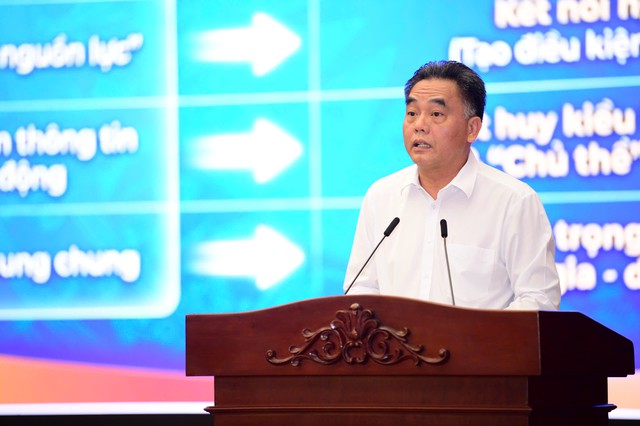
Standing vice-chairman of the Ho Chi Minh City People’s Committee Nguyen Loc Ha. Photo: Quang Dinh / Tuoi Tre
The draft action program sets out eight groups of tasks and solutions for tourism development.
The measures cover a shift in thinking, institutions, infrastructure, tourism products, markets, human resources, and digital transformation.
The city plans to shift from tourism growth based mainly on visitor numbers and resource exploitation to a model focused on quality, efficiency, sustainability, and higher added value.
It also plans to formulate policies for the sharing economy, digital-platform businesses, the night-time economy, river-based and marine economic activities, and tourism, entertainment, cultural and sports complexes.
The city plans to promote innovation, digital transformation, smart tourism, and green tourism.
It will also study controlled pilot programs for urgent issues and strengthen inspection, supervision, and post-implementation reviews.
The city plans to reorganize tourism space and improve transport links between international gateways and tourism centers.
Priority infrastructure projects include airports, international passenger ports, marinas, urban and interprovincial waterways, and tourist rail services.
The city plans to improve its capacity to receive large cruise ships.
Tourism areas will be developed through links among creative urban areas, cultural heritage, waterways and islands.
The city plans to establish multifunctional tourism centers operating during both daytime and nighttime.
These centers will combine tourism with shopping, food, entertainment, arts and major events.
The city will develop cultural tourism, meetings, incentives, conferences and exhibitions/events (MICE), waterway tourism, cruises, beach and island tourism, medical tourism, wellness tourism, shopping, culinary tourism, community-based tourism and agricultural ecotourism.
The plan calls for tourism products with distinctive features, stronger visitor experiences and international competitiveness.








Max: 1500 characters
There are no comments yet. Be the first to comment.