


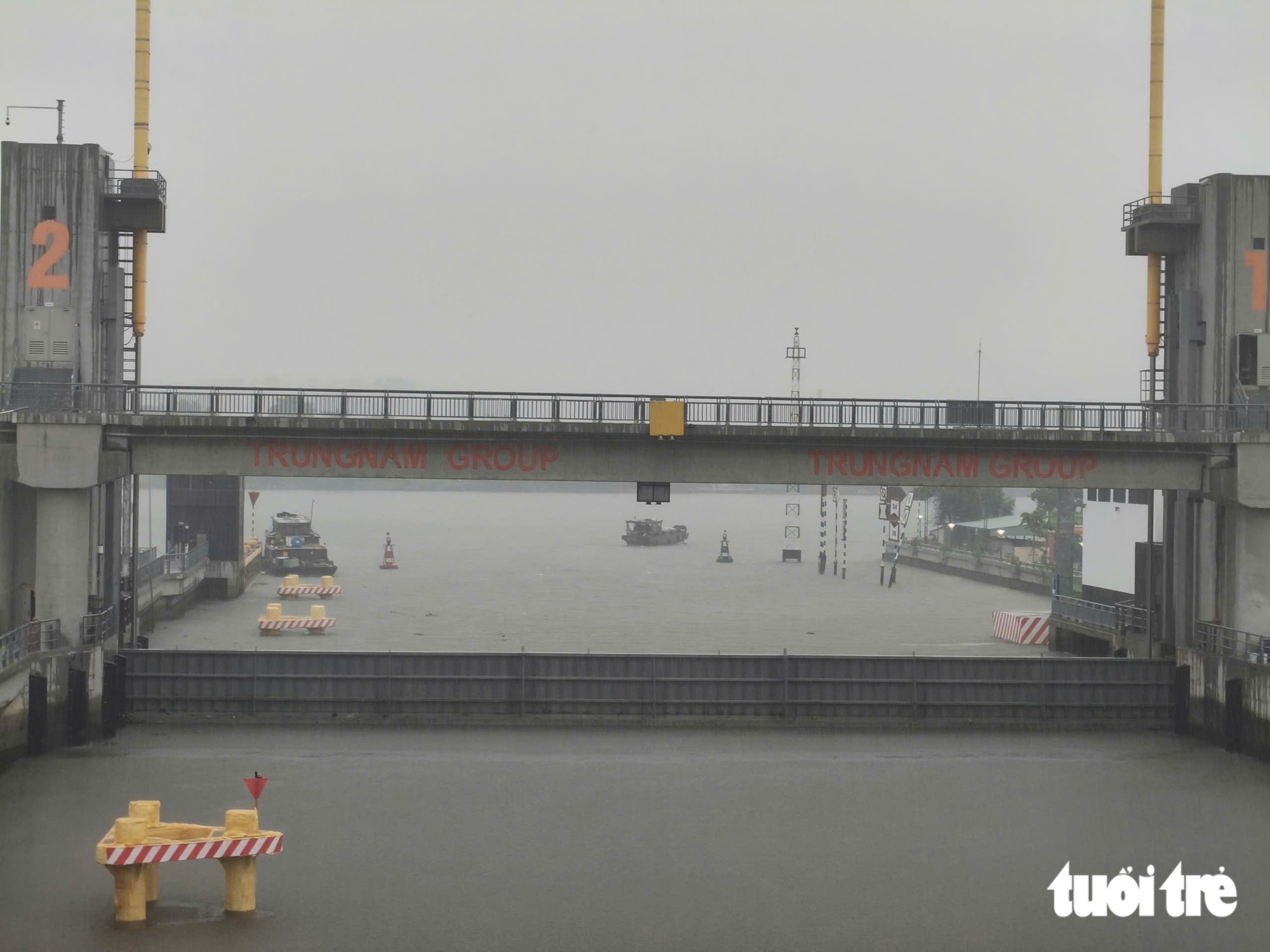
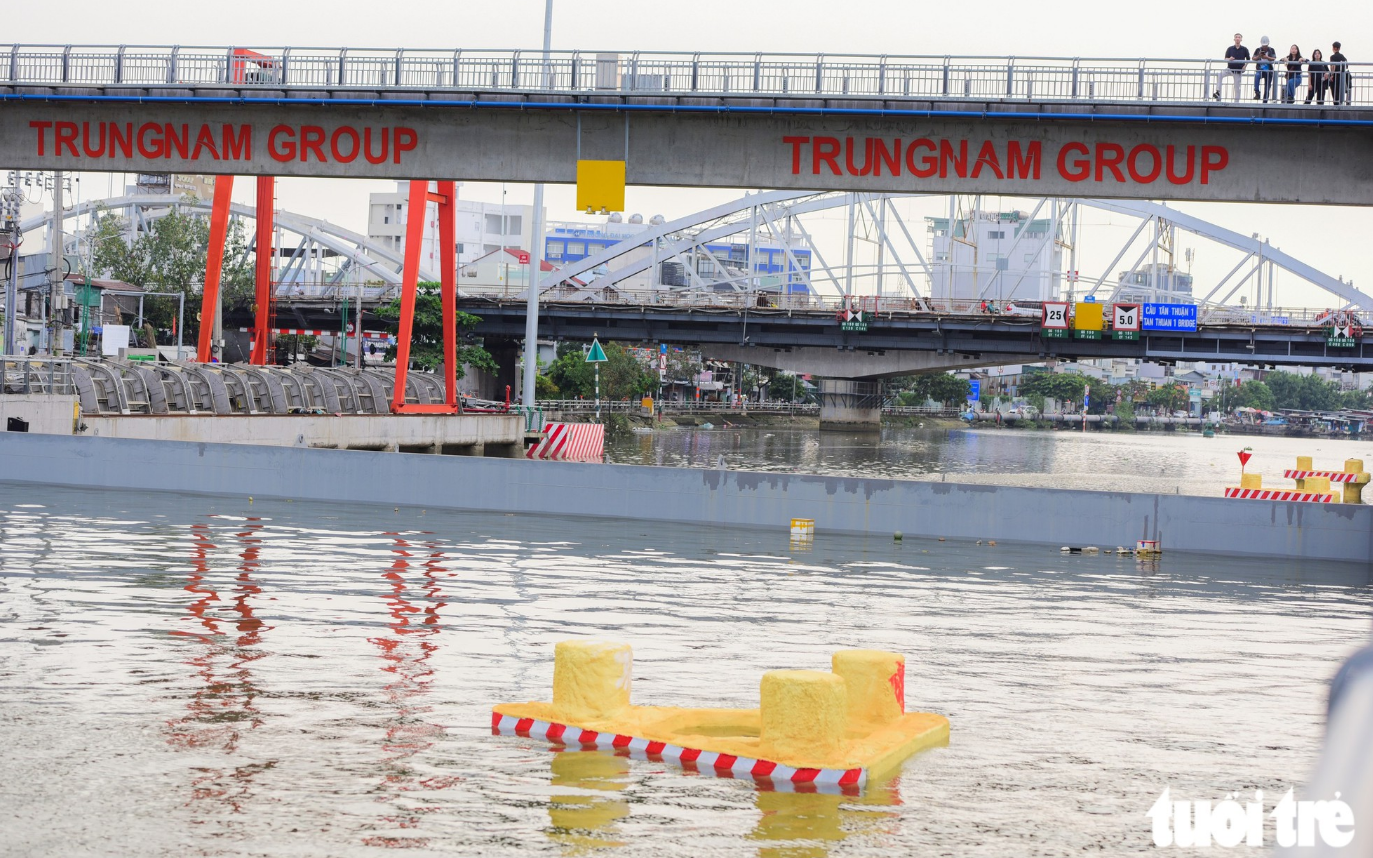
The Tan Thuan tidal gate in Ho Chi Minh City is closed during heavy rain and high tide on November 28, 2026. Photo: Tri Duc / Tuoi Tre
As intense rain swept across the southern metropolis on Saturday afternoon, water levels on the Saigon River remained close to Alert Level 2.
In response, Trungnam Group, the investor behind the city's flood-control project, closed key tidal gates to prevent tidal water from flowing into protected urban areas.
One notable success was Tran Xuan Soan Street, historically one of the city's most flood-prone roads during high tides. Although rainwater temporarily accumulated during the downpour, it quickly drained and no significant flooding was reported.
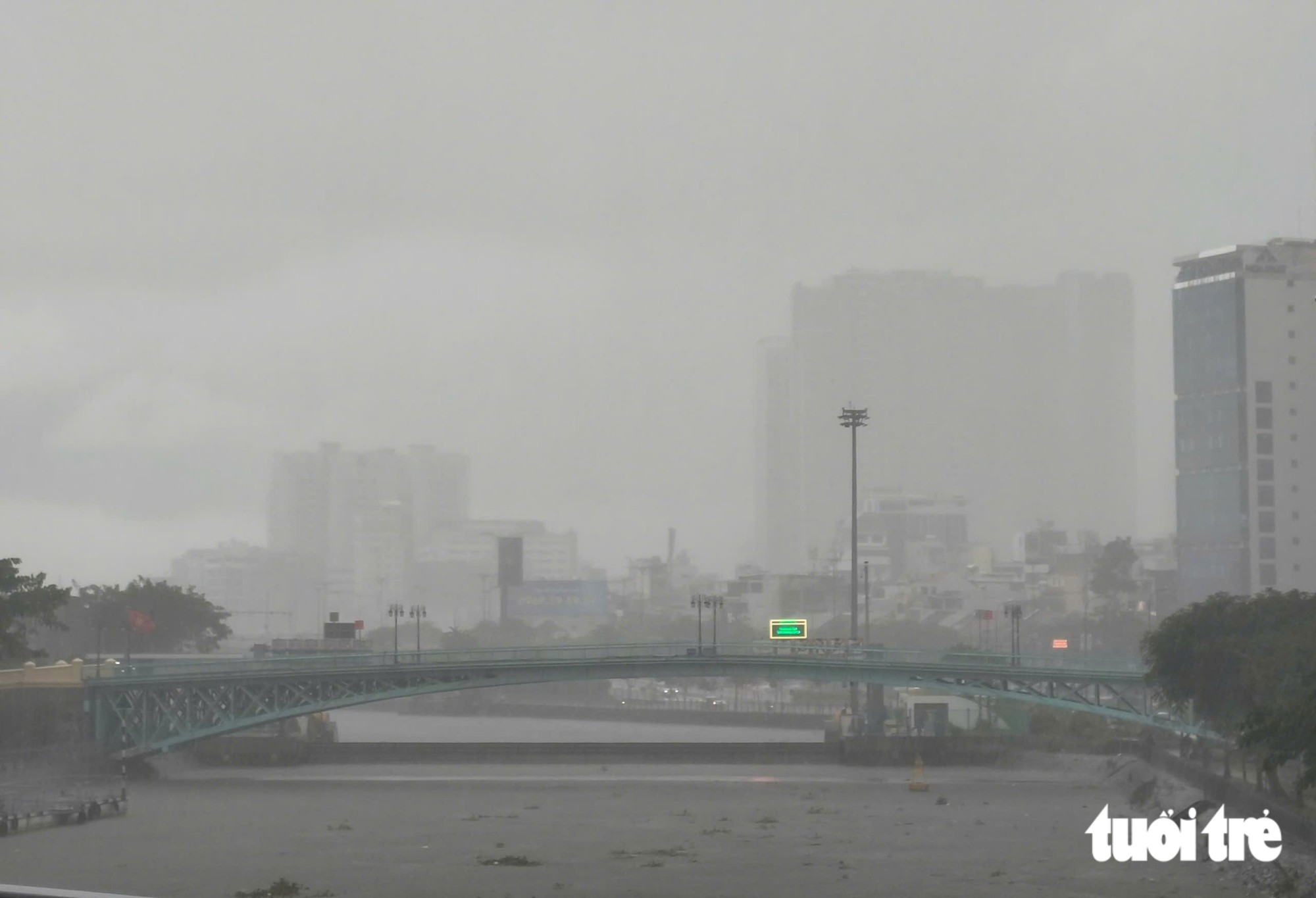
The Ben Nghe tidal gate in Ho Chi Minh City is also activated as part of flood prevention measures during heavy rain and high tide on November 28, 2026. Photo: Tri Duc / Tuoi Tre
A clear difference was observed in water levels inside and outside the project's tidal gates.
Pumping systems installed at the control gates were placed on standby but were not required because water levels within protected canals remained stable.
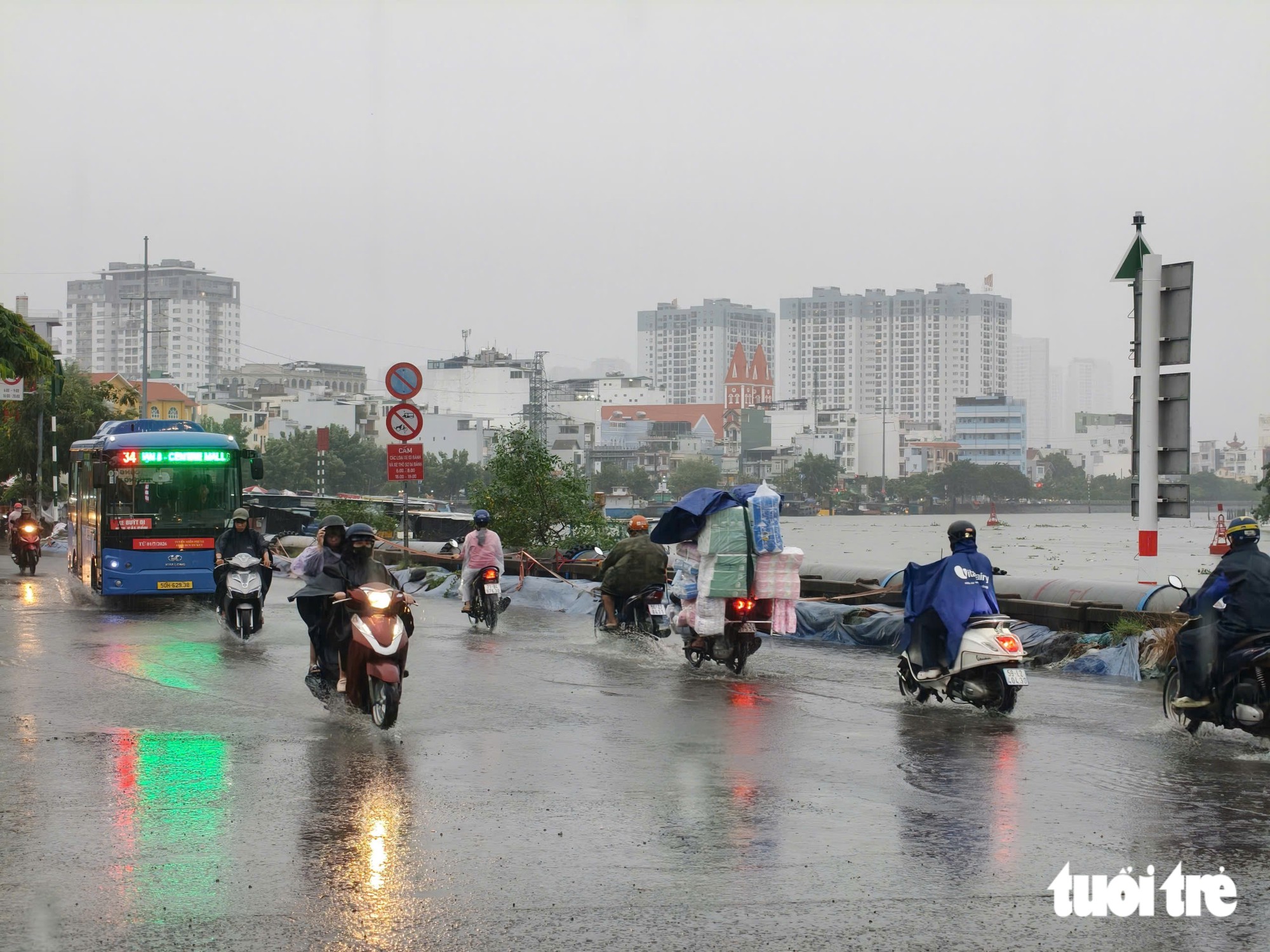
Tran Xuan Soan Street, historically one of Ho Chi Minh City's most flood-prone roads during high tides, remains free of flooding after about 30 minutes of heavy rain, November 28, 2026. Photo: Tri Duc / Tuoi Tre
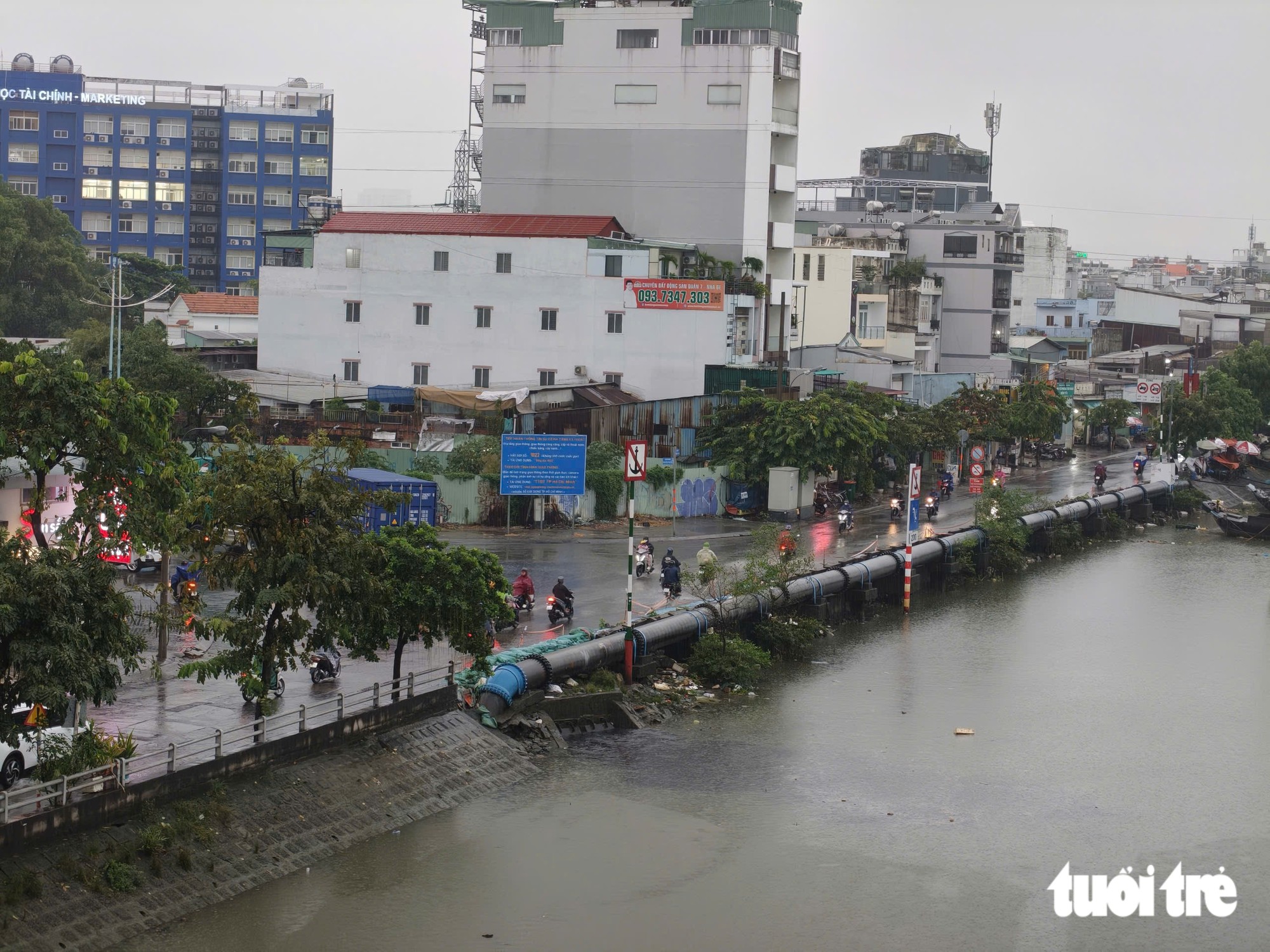
Water levels in Te Canal, inside the area protected by Ho Chi Minh City's VND10-trillion flood-control project and next to Tran Xuan Soan Street, remain stable, November 28, 2026. Photo: Tri Duc / Tuoi Tre

Heavy rain falls on Mai Chi Tho Boulevard in Ho Chi Minh City, November 28, 2026. Photo: Vien Su / Tuoi Tre
The massive flood-control project includes eight major tidal control gates - Ben Nghe, Tan Thuan, Phu Xuan, Muong Chuoi, Cay Kho, Phu Dinh, Cau Kinh and Ba Buom - along with about six kilometers of embankments and protective dikes and 41 smaller sluice structures.
The system is designed to perform three main functions: preventing tidal flooding, retaining water for urban landscapes, and supporting drainage during heavy rainfall.
After years of delays since its construction began in 2016, the project has recently entered operation.
Recent trial runs have shown promising results, with roads that were previously inundated during peak tides remaining dry.
Many residents have expressed optimism that chronic tidal flooding may finally become a thing of the past.



Max: 1500 characters
There are no comments yet. Be the first to comment.