


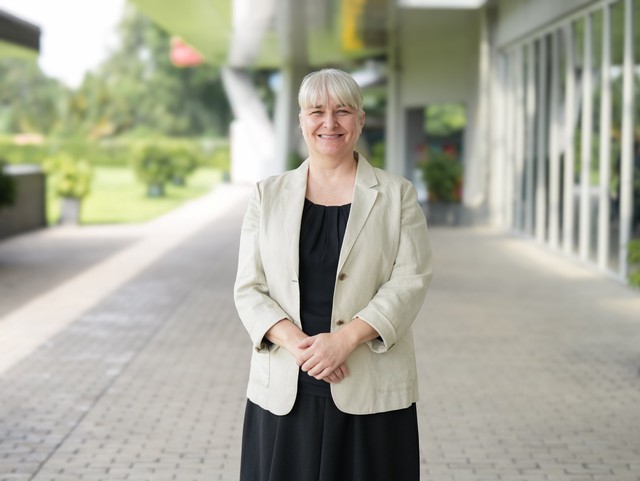
Associate Professor Catherine Earl of RMIT University Vietnam. Photo: RMIT
Population aging is often seen as an issue affecting older people, but its implications extend across society.
In an analysis shared by Associate Professor Catherine Earl, a lecturer in the School of Communication and Design at RMIT University Vietnam, and Professor Philip Taylor of the University of Warwick, the two researchers examine the challenges and opportunities that population aging presents for Vietnam and the wider ASEAN region.
Vietnam has ASEAN's widest gender gap in life expectancy as population ages
Population aging is reshaping societies far beyond the lives of older people, affecting labor markets, healthcare systems, housing needs, retirement incomes and family life. It also influences how governments allocate public funds and how businesses plan for the future.
For developing countries across Southeast Asia, the transition brings a particular challenge: 'getting old before getting rich'. The phrase describes countries whose populations age before they have accumulated enough wealth and developed the economic resources, healthcare systems and social protections needed to support a large older population.
Unlike countries such as Australia, the UK and Japan, which had a longer period to build economic strength before their populations grew older, Southeast Asian nations are facing demographic aging at a much faster pace.
This leaves them with a narrower window to strengthen their economies and prepare public services for the needs of an older population.
Vietnam began experiencing population aging in 2015. Projections suggest it will become an aged society by around 2036, followed by a super-aged society around 2050, when people aged 65 and above are expected to account for more than 21 percent of the population.
However, aging does not present the same challenges across ASEAN.
Research by Associate Professor Catherine Earl and Professor Philip Taylor highlights significant differences among member states in population profiles, health outcomes and pension systems.
One notable finding is that Vietnam has the largest gender gap in life expectancy at birth in ASEAN, with women living about nine years longer than men.
This disparity raises questions about men's physical and mental health throughout their lives.
It also points to the growing need for healthcare, housing and social support for older women, who are likely to make up a larger share of the aging population.
Why aging is more than a social welfare challenge?
Population aging is putting pressure on both labor markets and care systems.
As the share of older people grows, countries will need to rethink retirement ages, opportunities for older people to remain in the workforce, and access to lifelong learning.
At the same time, demand for healthcare, elderly care and other support services is expected to rise.
The economic implications extend to retirement security, which varies across ASEAN depending on workers' gender, occupation and employment status.
Many self-employed and informal workers have limited access to pension schemes, leaving them with little choice but to continue working to make ends meet well into old age.
These pressures make population aging more than a social welfare issue. It is also an economic and labor-market challenge that calls for new approaches to work, care, and social support.
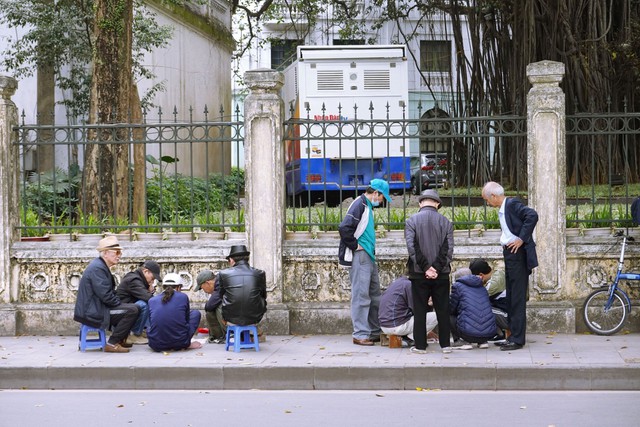
A healthy aging population will require a new approach in Vietnam. Photo: Pexels
What can Vietnam do?
Preparing for an aging population requires more than a single policy fix.
As demographic change affects healthcare, employment, housing, digital access, transportation, financial services and community life, governments need coordinated responses that account for the different needs of men and women, urban and rural residents, and workers in formal and informal employment.
For Vietnam, Assoc. Prof. Catherine Earl identifies four priorities: improving men’s health, developing a sustainable care economy, strengthening pension systems and expanding access to safe, affordable housing.
Together, these measures can help older people remain healthy and connected to their communities as they age.
Older people should also have a role in shaping these solutions, rather than being treated solely as recipients of public support. As their share of Vietnam’s population grows, preparing for demographic change will be essential to helping people live longer, healthier and more fulfilling lives.









Max: 1500 characters
There are no comments yet. Be the first to comment.