


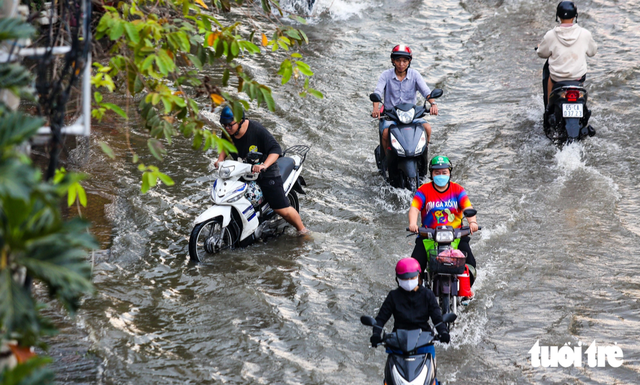
Several vehicles break down on Tran Xuan Soan Street during a high-tide flood in Ho Chi Minh City. Photo: T.L. / Tuoi Tre
Le Dinh Quyet, head of the forecasting division at the Southern Regional Hydro-Meteorological Center, spoke with Tuoi Tre (Youth) online newspaper about factors affecting high tides in Ho Chi Minh City.
What drives Ho Chi Minh City's tidal peaks?
This year's peak tide at Thu Dau Mot Station surpassed last year's level, breaking the previous record.
Tidal patterns are relatively stable and follow a regular cycle, but the combined effects of other influencing factors vary. As a result, peak tide levels may be higher one year and lower the next, which is normal, according to Quyet.
Data from other monitoring stations in Ho Chi Minh City also show fluctuations in peak tidal levels over the years.
At Phu An Station, the tide reached 1.77 meters in 2019 before falling to 1.7 meters annually from 2020 to 2022. It then rose to 1.74 meters in 2023 but dropped to 1.71 meters in 2024.
At Nha Be Station, the tide reached a record high of 1.8 meters in 2019, then remained at 1.71 meters or 1.7 meters from 2020 to 2022. From 2023 to 2025, the peak tide reached 1.78 meters each year.
Natural factors, particularly wind, can cause unusually high tides. When winds are strong and blow toward a river mouth or nearly perpendicular to it, they can push tidal levels higher than usual.
Toward the end of the year, high tides in Ho Chi Minh City can coincide with cold high-pressure systems extending deep into southern Vietnam.
The combined effects of these conditions can further raise tidal water levels.

Le Dinh Quyet, head of the forecasting division at the Southern Regional Hydro-Meteorological Center. Photo: T.L. / Tuoi Tre
Although Nha Be and Phu An Stations are closer to river mouths, Thu Dau Mot Station, farther upstream, recorded a higher peak tide this year, breaking its previous record set in 2025.
According to Quyet, this can happen when high tides coincide with heavy rain and hydropower plants release water, adding to the water flowing downstream and raising levels at Thu Dau Mot.
When hydropower plants and reservoirs do not release water, the pattern can be different.
Nha Be Station, near the river mouth, receives incoming tidal water first and can record a higher water level than stations farther inland. As the water moves upstream, its level may decrease.
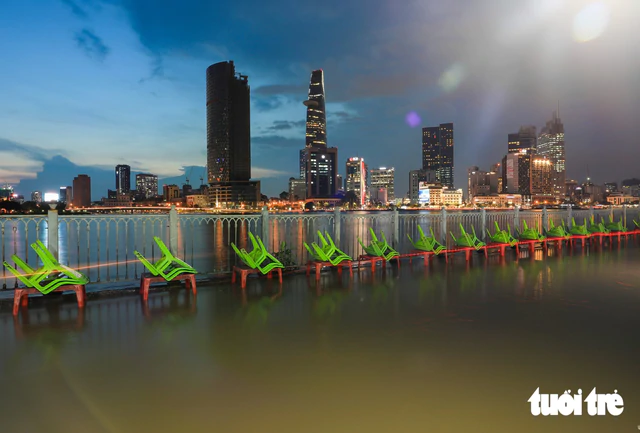
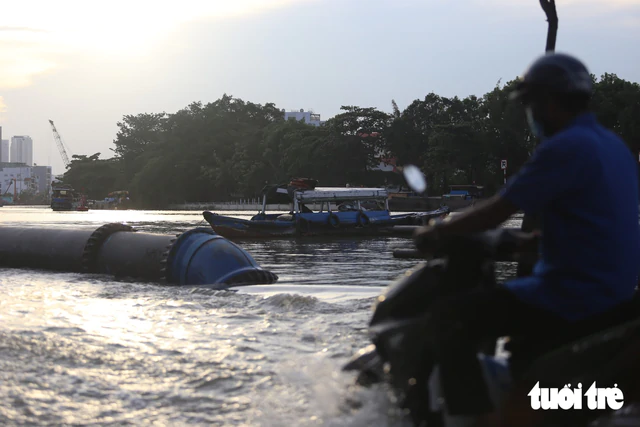
Flooding caused by high tides along the Saigon River. Photo: L.P. / Tuoi Tre
Land subsidence worsens tidal flooding
Speaking of the factors contributing to increasingly high tides in Ho Chi Minh City each year, Quyet said further research, measurements, and monitoring are needed to determine their specific impacts.
However, previous studies have examined how land subsidence in Ho Chi Minh City may contribute to the problem.
If the city's ground continues to sink, it could worsen tidal flooding.
Tidal water levels measured against fixed elevation benchmarks may appear to rise as the ground beneath those benchmarks subsides, affecting recorded levels relative to the land.
Rising sea levels are another contributing factor. As global temperatures increase due to climate change, melting ice at the poles adds water to the oceans, causing sea levels to rise gradually.
When sea levels rise while inland ground remains stable or continues to subside, tidal flooding can become more severe, increasing the risk of inundation in Ho Chi Minh City.
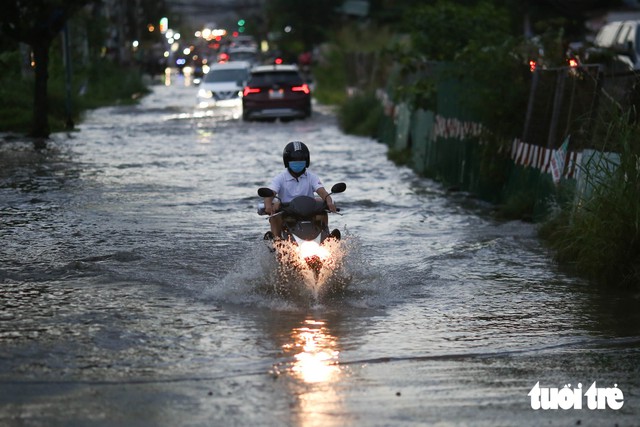
Tidal levels in Ho Chi Minh City have risen over the past decade. Photo: Le Phan / Tuoi Tre
Construction, riverside infrastructure, and urbanization can affect tidal levels and urban flooding in Ho Chi Minh City, according to Quyet.
When river channels become narrower, incoming seawater can cause water levels to rise faster and higher.
Changes to river channels, including realignment, can also alter natural flow patterns, affecting both the movement of tidal water inland and the drainage of urban areas into rivers.
The narrowing of rivers and canals can slow drainage, while urbanization can contribute to sediment build-up in waterways, causing water to remain trapped in urban areas for longer.
These factors can make tidal flooding more severe and prolong its duration.
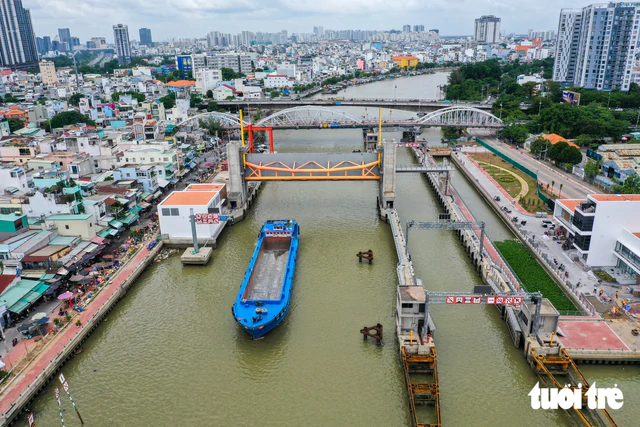
A VND10 trillion (US$393 million) tidal barrier project nearing completion is expected to reduce tidal flooding in Ho Chi Minh City. Photo: Thuan Van / Tuoi Tre
Quyet said Ho Chi Minh City has implemented and planned various flood-control projects and measures.
He said further steps may include checking the elevation benchmarks used to measure water levels, reviewing flood-warning levels along the Saigon River, and improving forecasts for rainfall and high tides.
Water from Te Canal spills onto Tran Xuan Soan Street, causing flooding during high tides. Photo: Le Phan / Tuoi Tre
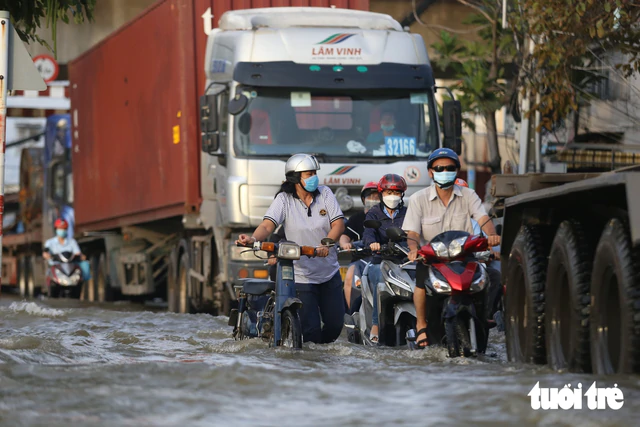
Residents in Ho Chi Minh City struggle to get around as high tides flood roads. Photo: Le Phan / Tuoi Tre










Max: 1500 characters
There are no comments yet. Be the first to comment.