


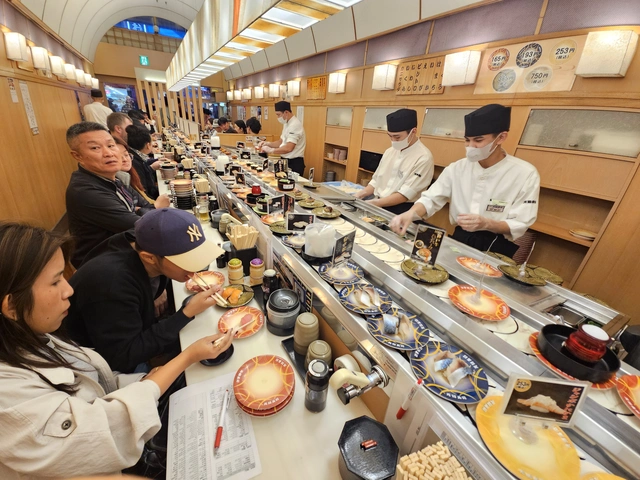
Vietnamese staff serves customers at a Japanese restaurant in Japan. Photo: Ngoc Hien / Tuoi Tre
Many are international students or migrant workers who arrived seeking education and employment opportunities.
Others have settled with spouses and children, creating families whose livelihoods are tied to Japan's vast food and hospitality sector.
'Ambassadors of Japanese cuisine'
At a conveyor-belt sushi restaurant in Osaka's Dotonbori district, more than 20 Vietnamese employees work across roles ranging from cashiers and servers to kitchen staff.
Among them is Tran Cong Khai, 25, from Vietnam's Ninh Binh Province, who has spent more than a year in Japan.
Khai said he relied on fellow Vietnamese to find work after arriving in the country and eventually joined the restaurant, where all employees are Vietnamese.
"Here I feel at home," he said.
"People come from different regions of Vietnam, but we speak the same language and support one another."
Nguyen Phuong Minh, a 23-year-old student from the north-central Vietnamese province of Nghe An who has worked in restaurant kitchens for nearly two years, said Japanese employers value Vietnamese workers for their willingness to work hard and learn.
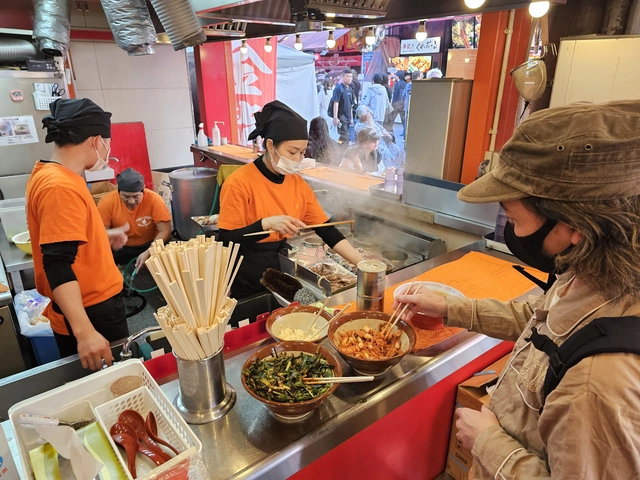
Vietnamese staff works at Kinryu Ramen restaurant in Osaka, Japan. Photo: Ngoc Hien / Tuoi Tre
According to Minh, kitchen work in Japan follows detailed recipes and procedures, making it easier for new employees to adapt with guidance from more experienced colleagues.
"We sometimes joke that we're ambassadors of Japanese cuisine," she said.
"The restaurants are Japanese, but Vietnamese workers contribute a lot to bringing the food to customers."
Across Japan, Vietnamese workers are employed throughout the food supply chain, from food processing factories and wholesale operations to restaurants, delivery services, and catering businesses.
Building lives through Japan's food industry
In the Kansai region, Hoang Minh Thai, 34, from Vietnam's Quang Tri Province, works at a wagyu beef restaurant where dozens of Vietnamese employees rotate through customer service, food preparation, and cashier duties.
His wife, Nhu Lam, moved to Japan in 2017 and later sponsored him to join her.
The couple now have two children and have built their lives around Japan's food industry.

Lam works in trainee management for a company producing sushi and rice rolls for distribution to restaurants.
She said Vietnamese workers participate extensively in Japan's food production and restaurant sectors, contributing at multiple stages from manufacturing to retail service.
Despite stable employment, Thai said language remains a challenge after years in Japan.
The family plans to return to Vietnam in the future and hopes to open a Japanese restaurant there.
Others have chosen a different path.
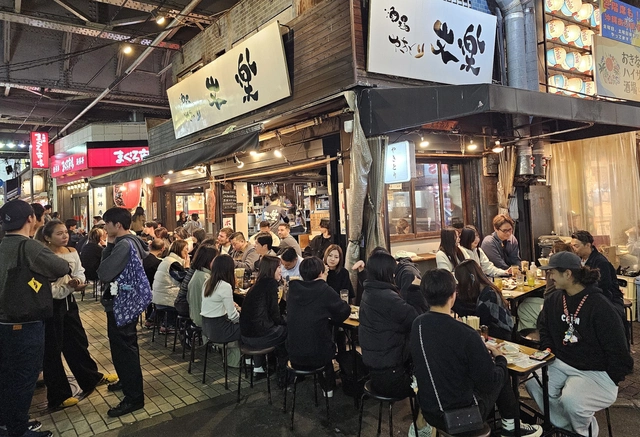
Vietnamese staff works at an izakaya, which serve lots of small eats along with alcohol, in Tokyo, Japan. Photo: Ngoc Hien / Tuoi Tre
Dang Minh Hai, 28, from Hanoi, said he and his wife purchased a home in Japan after several years of living and working in the country.
Hai manages food procurement for a restaurant, tracking inventory and ordering supplies from vendors.
"The best part is having fellow Vietnamese at work and family waiting at home," he said.
As restaurants close late at night and customers leave, many Vietnamese workers remain behind to clean kitchens and prepare for the next day.
Their work is largely unseen by diners but forms part of the daily operation of restaurants across Japan.
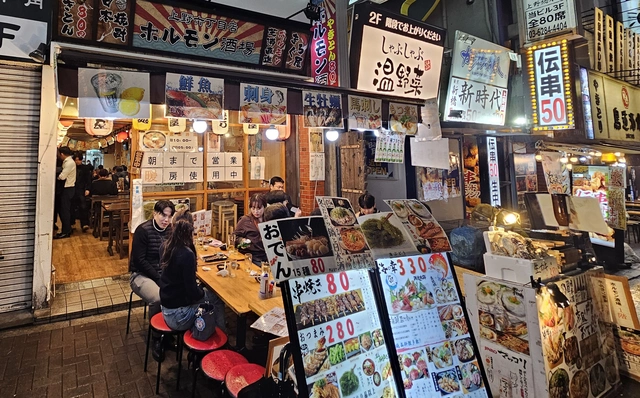
Vietnamese staff works at an izakaya, which serve lots of small eats along with alcohol, in Tokyo, Japan. Photo: Ngoc Hien / Tuoi Tre
Some Vietnamese migrants have moved beyond wage employment to establish their own businesses.
Vietnamese-owned restaurants, bars and other hospitality venues can be found in major Japanese cities, including Tokyo, where they serve both Vietnamese expatriates and local customers.
In Tokyo's nightlife districts, some Vietnamese women work in bars where conversation and customer service are central to the job.
Huong Ly, 22, from Hanoi, said the work can be financially rewarding but also demanding.
She said many customers visit not only to drink but also to seek companionship and conversation, requiring workers to navigate social interactions carefully.
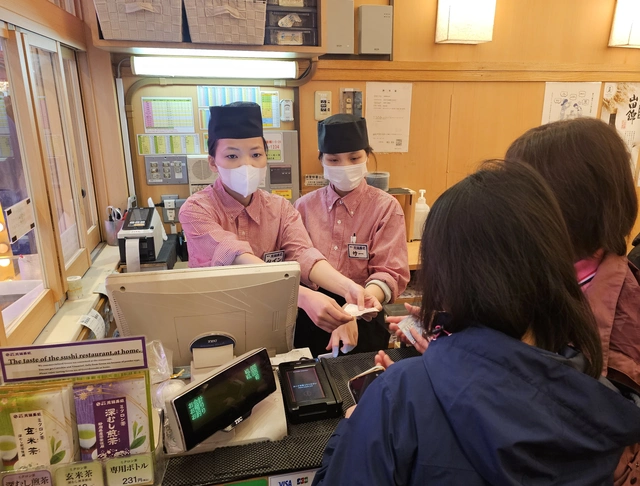
Vietnamese cashiers, who study during the day, work part-time at a Japanese restaurant at night. Photo: Ngoc Hien / Tuoi Tre
Japanese restaurant owners say Vietnamese employees have become an important part of the workforce.
Kenji Sato, owner of a Tokyo-based traditional Japanese izakaya, which serve lots of small eats along with alcohol, said he initially hired Vietnamese staff because of labor shortages but came to appreciate their work ethic and ability to connect with customers.
"Many regular customers come not only for the food," Sato said.
"They also want to meet and talk with the Vietnamese staff."








Max: 1500 characters
There are no comments yet. Be the first to comment.