


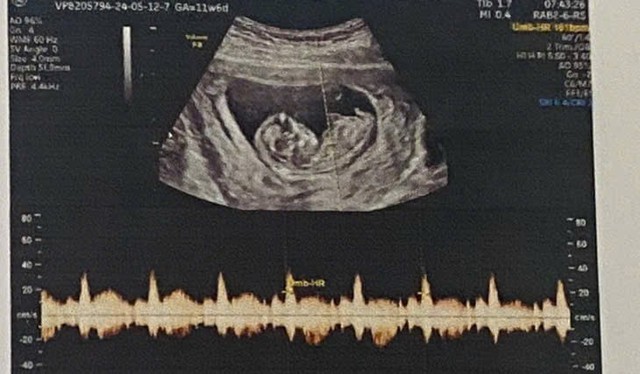
In Vietnam, disclosing fetal sex is illegal unless it is permitted to support disease diagnosis and treatment under Ministry of Health regulations. Photo: Xuan Mai / Tuoi Tre
According to the Ministry of Health, Vietnam's sex ratio at birth remains high compared with the natural balance.
This could lead to a surplus of men and a shortage of women in the future, affecting individuals, families and extended families, as well as the country's sustainable development.
The Population Law No. 113, which took effect on July 1, 2026, identifies reducing the sex imbalance at birth as an important component of population policy.
Article 15 of the law encourages residential communities to incorporate provisions against son preference and sex selection at birth into their community conventions and regulations.
Which acts are punishable by fines?
Under Article 99 of Government Decree No. 90, which took effect on May 15, 2026, anyone who threatens to use force or intimidates another person into using methods to have a fetus of a desired sex faces a fine of VND7-15 million (US$270-579).
The fine increases to VND15-20 million ($579-772) if physical force is used to compel them.
Fines of VND20-25 million ($772-965) apply to those who prescribe or instruct the use of medicines, functional foods or other preparations that affect conception for the purpose of selecting fetal sex; supply equipment, medicines or materials for this purpose; or conduct research into sex-selection methods in violation of the law.
In addition to fines, violating healthcare facilities may have their operations suspended for one to three months.
Healthcare practitioners may have their licenses or practice certificates suspended for the same period.
Article 100 stipulates separate penalties for sex-selective abortion.
A pregnant woman who aborts a fetus because of sex selection without being coerced may be fined VND5-7 million.
Anyone who persuades or entices a pregnant woman to abort a fetus for this reason faces a fine of VND7-10 million ($270-386).
The fine increases to VND10-15 million ($386-579) for threatening to use force or applying psychological pressure to force a pregnant woman to have an abortion, and to VND15-20 million ($579-772) if physical force is used.
Those who supply chemicals or medicines for abortion, or prescribe or instruct the use of chemicals, medicines or other methods to abort a fetus while knowing that the pregnant woman intends to select the fetus's sex face a fine of VND20-25 million ($772-965).
Notably, anyone who performs an abortion knowing that the pregnant woman wishes to abort the fetus because of sex selection faces a fine of VND25-30 million ($965-1,158).
Violators may also have their operating licenses, professional licenses or practice certificates suspended for three to 12 months, depending on the violation.
When is fetal sex disclosure permitted?
In May 2026, the Ministry of Health issued Circular No. 11, specifying the list of diseases for which fetal sex may be disclosed to support diagnosis and treatment. The circular took effect on July 1, 2026.
Heads of healthcare facilities are held responsible if fetal sex is disclosed for unauthorized purposes or beyond the permitted scope.
The ministry defines fetal sex determination for diagnostic and treatment purposes as the use of specialized medical techniques to identify a fetus's sex chromosomes, sex-differentiation genes or sexual phenotype in order to diagnose genetic conditions that manifest differently in males and females.
These conditions include several relatively common or widely known diseases, such as glucose-6-phosphate dehydrogenase (G6PD) deficiency, hemophilia, Turner syndrome, Klinefelter syndrome, fragile X syndrome, disorders of sex development, muscular dystrophy, certain forms of spinal muscular atrophy and congenital genital abnormalities.
Other conditions include rare diseases such as congenital immunodeficiency disorders, inherited metabolic disorders, sex chromosome abnormalities and multiple anomaly syndromes.
- REFERENCE MORE
- REFERENCE MORE
- REFERENCE MORE





Max: 1500 characters
There are no comments yet. Be the first to comment.