


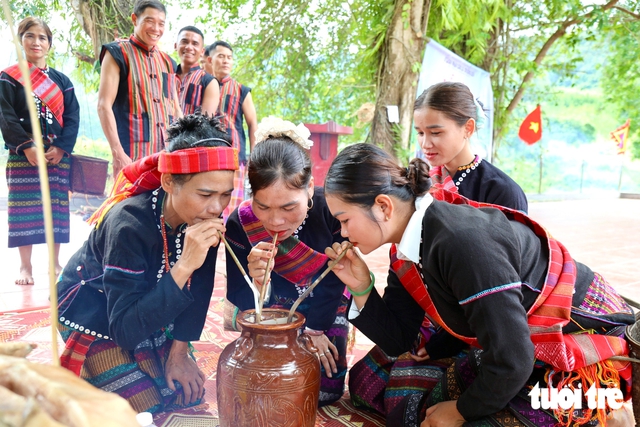
Rice sowing is an important agricultural ritual among the Van Kieu people in Vietnam's Truong Son mountain range. Photo: Hoang Tao / Tuoi Tre
On Monday morning, the traditional rice-sowing festival of the Van Kieu people was held in Khe Cat Village, Truong Son Commune, Quang Tri Province.
The ritual is rooted in agricultural beliefs and expresses people's gratitude to their ancestors, deities, heaven and earth, while praying for a bountiful harvest and a prosperous life.
Major traditional ceremony
The Rice-Sowing Festival, also known as the Hole-Filling Festival, is one of the most important agricultural fests in the lives of the Van Kieu people.
Villagers perform rituals to worship the deities and ancestors, reporting on the planting of their crops and praying for rice, corn and peanuts to grow well, remain safe from birds and wild animals, and produce full, heavy grains at harvest.
Ho Ai, a 77-year-old village elder, said the rice-sowing ceremony helps younger generations remember their roots.
Their ancestors and parents once sowed rice to make a living, and their descendants now continue the ritual and preserve the tradition.
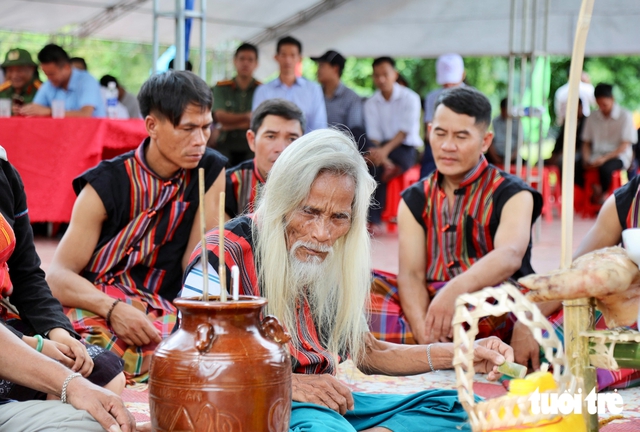
Village elder Ho Ai, the ceremony's presiding officiant, offers prayers to heaven, earth and the rice deity before the ritual. Photo: Hoang Tao / Tuoi Tre
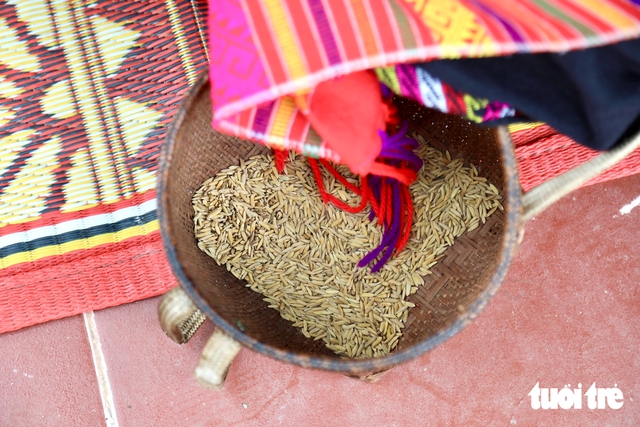
Rice grains are an indispensable part of the Rice-Sowing Festival, a ceremony marking the beginning of a new crop season. Photo: Hoang Tao / Tuoi Tre
At the beginning of the ceremony, village elder Ho Ai, who presided over the ritual, offered prayers to the deities, heaven and earth, asking permission to invite the deities and the rice deity to join the ceremony and bless their descendants with good health, unity and a bountiful harvest.
Tran Van Du, head of Khe Cat Village, said the continued organization of the festival aims to preserve the cultural identity and traditions of the Van Kieu people.
Khe Cat Village currently has 116 households with 483 residents.
Due to limited agricultural land, residents mainly grow peanuts, corn, mung beans, and black beans, as well as acacia trees.
The village has about 3.2 hectares of wet-rice fields.
"We hope to secure more resources to preserve our traditional cultural practices and gradually connect the festival with community-based tourism," Du said
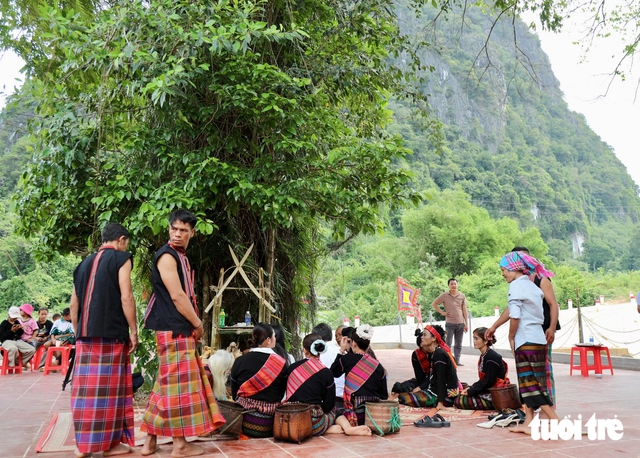
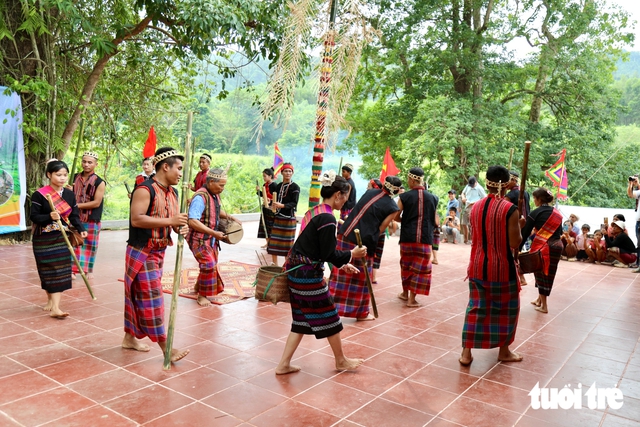
The ceremony is held in the center of the village to pray for a bountiful harvest. Photo: Hoang Tao / Tuoi Tre
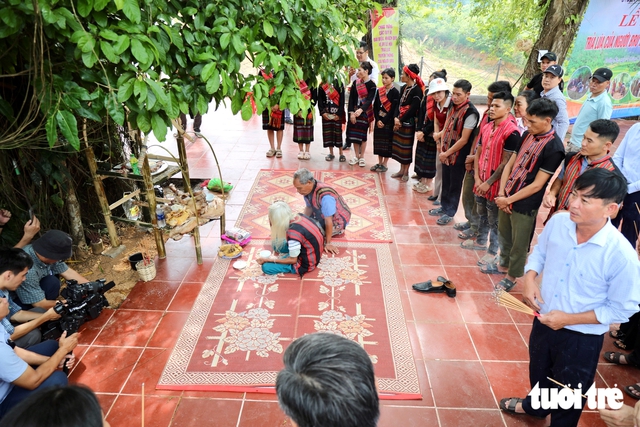
The ceremony is an occasion for strengthening community bonds and fostering solidarity among villagers. Photo: Hoang Tao / Tuoi Tre
Where traditions meet tourism
Hoang Manh Ha, chairman of the People's Committee of Truong Son Commune, said the locality considers culture an important factor in improving residents' quality of life.
Preserving traditional cultural values while developing tourism could also create new livelihood opportunities for local communities.
Given the limited availability of agricultural land, Ha said the commune is planning suitable areas for development, promoting ecotourism and community-based tourism, investing in infrastructure and providing tourism skills training.
These efforts are meant to increase jobs and residents' incomes.
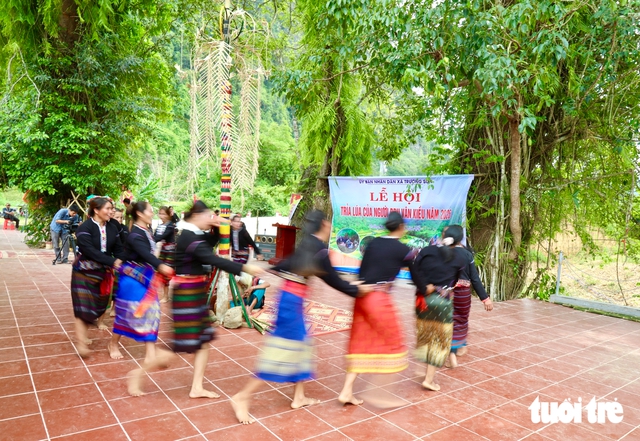
Villagers play traditional games after the ceremony. Photo: Hoang Tao / Tuoi Tre
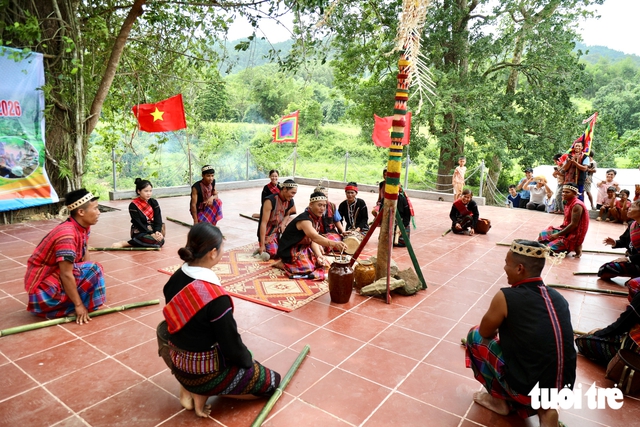
Khe Cat Village is one of the few villages that have preserved the traditional rice-sowing ceremony and related rituals. Photo: Hoang Tao / Tuoi Tre
Ho Thi Minh, deputy director of the Quang Tri Department of Ethnic Minorities and Religion, said preserving and reviving the cultural traditions of ethnic minority groups form an urgent task with long-term significance.
Many traditional cultural practices are at risk of fading away, she said, requiring joint efforts from authorities and communities to preserve and revive them.
For the Van Kieu people, the Rice-Sowing Festival and New Rice Festival hold a special place in their spiritual life.
From the moment seeds are sown until the harvested rice is brought home, villagers perform rituals to report to the deities, heaven and earth, the rice deity and the forest deity, while praying for protection of their crops.
"This is a distinctive cultural tradition of the Van Kieu people in the Truong Son mountains. These values have been passed down to younger generations by village elders and previous generations," Minh said.
"Khe Cat Village has done a good job preserving them and can continue to link cultural preservation with tourism development, both introducing the community's cultural heritage and creating new opportunities for economic development."
The Van Kieu Rice-Sowing Festival in Truong Son Commune has been recognized as national intangible cultural heritage.
Maintaining the festival not only helps preserve traditional agricultural beliefs but also provides a space for community members to meet, socialize, sing and dance, and strengthen solidarity within the village.
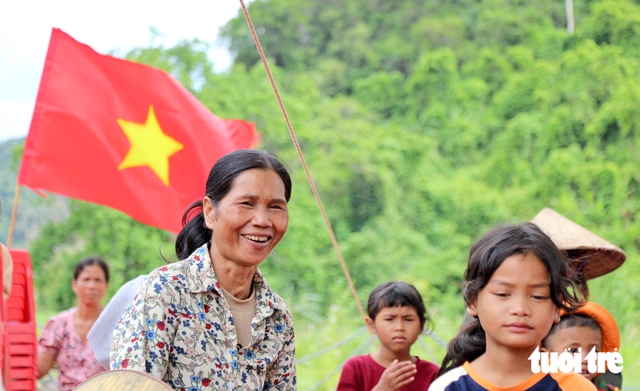
Today, Truong Son Commune is working to integrate the Rice-Sowing Festival into community-based tourism. Photo: Hoang Tao / Tuoi Tre
Ho Thi Minh, deputy director of the Quang Tri Department of Ethnic Minorities and Religion, said Khe Cat has done a good job preserving its traditional rice-sowing ritual and could incorporate it into community-based tourism. Photo: Hoang Tao / Tuoi Tre








Max: 1500 characters
There are no comments yet. Be the first to comment.