


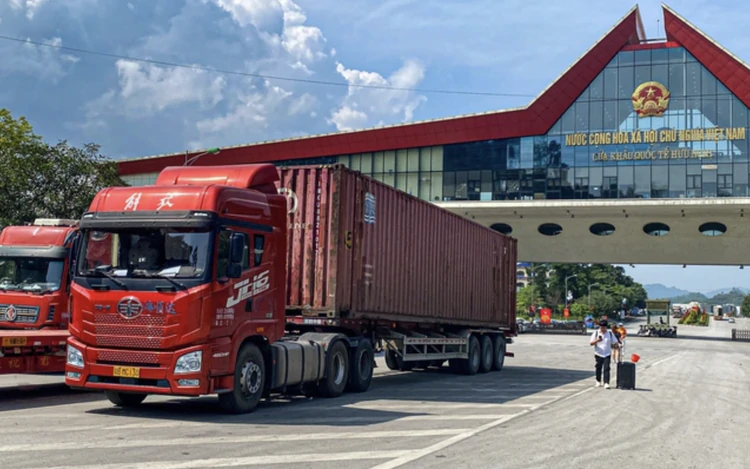
Chinese container trucks handling import and export cargo pass through the Huu Nghi Border Gate area in Lang Son Province, northern Vietnam. Photo: Ha Quan / Tuoi Tre
Deputy Minister of Industry and Trade Nguyen Viet Son stressed the need to develop an integrated, modern and sustainable fresh fruit supply chain at a forum held on Saturday.
He highlighted the importance of strengthening links between production areas and consumer markets while upgrading trade and logistics infrastructure.
The ministry, in coordination with the Lang Son People's Committee, organized the Vietnam-China Fresh Fruit Supply Chain Connectivity Forum to strengthen trade links and facilitate cross-border agricultural commerce.
Investment in wholesale markets, logistics centers, cold storage facilities and trade support services should also be prioritized to improve the collection, sorting, preservation and distribution of fresh fruit, he said.
The ministry is continuing to refine policies and regulatory frameworks for market development and management, while promoting trade infrastructure in border areas.
These efforts aim to create more favorable conditions for businesses to invest, operate and transport goods.
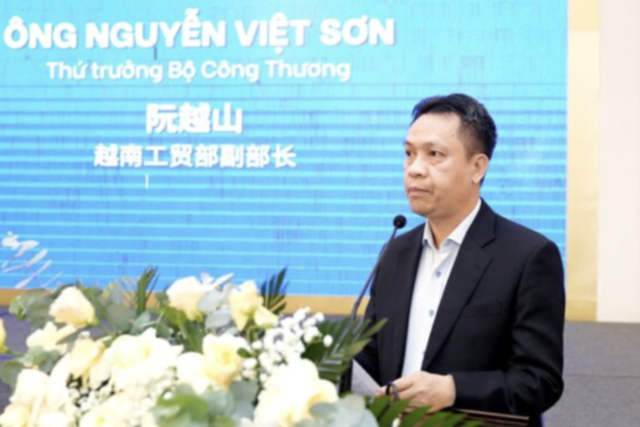
Deputy Minister of Industry and Trade Nguyen Viet Son. Photo: MOIT
Lang Son plays a pivotal role in the Vietnam-China fresh fruit supply chain, thanks to its location along the Nanning-Lang Son-Hanoi-Hai Phong economic corridor.
Its network of border gates provides direct connections with China, facilitating the movement of goods from production hubs across Vietnam to Chinese consumer markets.
Doan Thanh Son, vice-chairman of the provincial administration, noted that some 2,000 vehicles carrying import and export goods pass through the province's border gates each day.
During peak periods, the figure exceeds 2,300 vehicles, with agricultural products accounting for more than 70 percent of the total.
Between January and November, the cumulative value of imports and exports through Lang Son's border gates reached nearly US$118.3 billion.
The province will focus on investment in transport infrastructure, border gates and logistics facilities in the coming months, he said.
It also plans to expand its network of warehouses and cold storage facilities, develop refrigerated transport services, accelerate digital transformation and advance pilot programs for smart border gates.
These measures are expected to increase customs clearance capacity, shorten waiting times and reduce logistics costs, particularly for agricultural products and fresh fruit, which require timely delivery and carefully controlled storage conditions.
Son reaffirmed that the province would continue to work closely with relevant ministries, agencies and local authorities in China to facilitate cross-border trade, strengthen business connections and promptly address obstacles facing exporters and importers.
In the longer term, expanding agricultural trade between Vietnam and China will require businesses to meet increasingly stringent requirements for product quality, traceability, logistics organization and delivery schedules.


Max: 1500 characters
There are no comments yet. Be the first to comment.