


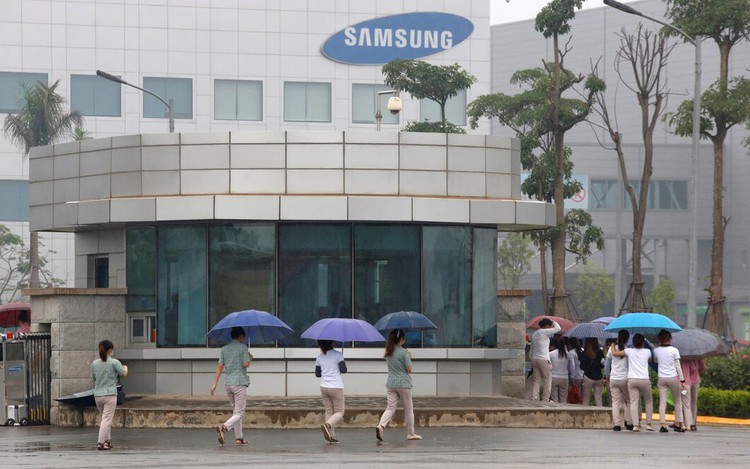
Employees make their way to work at the Samsung factory in Thai Nguyen province, north of Hanoi, Vietnam. Photo: Reuters
Hiroshi, a Japanese manager overseeing a manufacturing plant in Binh Duong, a bustling industrial hub just north of Ho Chi Minh City, recently confessed to a puzzle that had flustered him for months.
“I gave clear instructions, but the team did not follow them to the letter,” he noted. “At first, I mistook it for quiet resistance. Only later did I realize they were improvising on the factory floor simply to avoid saying no to the boss.”
The regional playbook
His predicament is a familiar one across the Mekong region. As Vietnam cements its role as a primary alternative to Chinese manufacturing, capital and executive talent from across East Asia are pouring in.
Managers from China, South Korea, and Japan now run thousands of enterprises and local teams in Vietnam.
They are often grouped together as “East Asian” managers, with the unspoken assumption that they share similar leadership styles because of their shared Confucian heritage and regional proximity.
Yet after years of consulting foreign executives in Vietnam, I have found something quite different. In practice, Vietnamese workers respond to Chinese, Korean, and Japanese bosses in sharply divergent ways. The cause of this friction, I believe, is not merely cultural, but also economic.
Every national economy rewards a specific mode of operation during its period of hypergrowth. Over decades, those rewarded behaviors harden into distinct corporate doctrines.
Consider the dynamic under Chinese leadership. China’s four-decade industrial expansion was an exercise in raw, unprecedented scale.
In an environment defined by intense domestic rivalry and massive volumes, the primary competitive edge belonged to managers who could execute rapidly and slice through inefficiency. The result was what might be termed the Scale Mindset.

Customers shopping inside a Japanese Uniqlo store in Ho Chi Minh City. Photo: Q.N.
When a Chinese manager interrupts a Vietnamese employee’s carefully structured proposal with an abrupt directive to choose the faster, cheaper path, he is not intentionally demonstrating disrespect.
In his native corporate idiom, rapid problem-solving is the highest form of professional courtesy. To his Vietnamese subordinate, however, accustomed to indirect communication and relational harmony, the same intervention may feel like a dismissal of personal effort.
South Korea’s managers operate under a different imperative. Modern South Korea was forged within a single generation through a relentless, state-directed industrial drive.
That rapid ascent embedded a culture of hyper-urgency, encapsulated in the ubiquitous national slogan ppalli-ppalli—“hurry, hurry.”
This Speed Mindset relies on corporate hierarchy not to deliberate, but to accelerate execution.
Korean executives naturally communicate with high emotional intensity, treating rapid movement as the ultimate metric of organizational health.
Yet in Vietnamese offices, where employees prioritize smooth interpersonal dynamics over high-decibel urgency, this management style may be experienced not as drive, but as pressure.
Japan, by contrast, presents the opposite extreme. Having achieved its industrial maturity earlier, Japanese corporate practice evolved around precision, system design, and institutional stability.
The resulting Stability Mindset prioritizes risk mitigation above all else. Decisions undergo tedious pre-alignment—the practice of nemawashi—to build absolute consensus before a single directive is issued.
Learning the local tongue
To a Vietnamese workforce navigating a volatile, fast-moving frontier market, this painstaking approach can sometimes feel overly cautious or slow.
From the vantage point of the Japanese executive, however, spending months on upfront alignment is precisely the mechanism that prevents catastrophic operational failures down the line.
Vietnam itself operates on its own economic wavelength. As a rapidly developing market prone to sudden shifts in policy and trade flows, its domestic workplace culture has cultivated an Adaptability Mindset.
Vietnamese teams rely on informal networks, subtle communication, and improvised flexibility to navigate ambiguity.
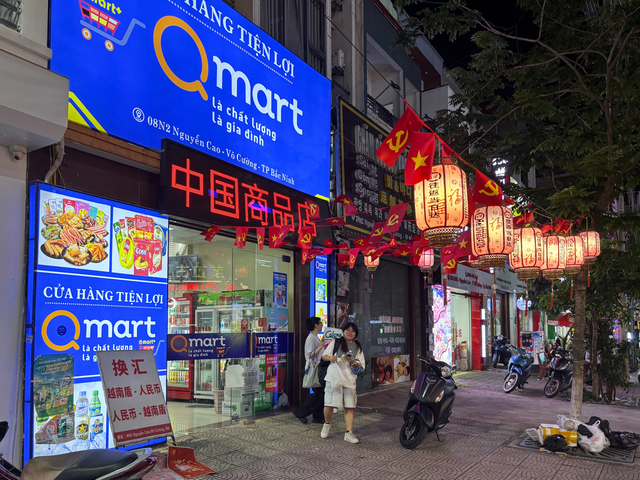
A convenience store with signboard including Chinese characters in downtown Bac Ninh, Vietnam. Photo: AP
When these distinct systems collide, the resulting friction is predictable. Chinese directness may be perceived as insufficiently relational; Korean intensity may be experienced as pressure; Japanese thoroughness may be viewed as overly cautious.
Yet none of these styles is intrinsically flawed. Each represents a highly rational response to the specific economic conditions that created it.
One lesson has become increasingly clear to me through years of intercultural consulting in Vietnam: different management mindsets can benefit from different adjustments.
The mistake made by foreign multinationals is attempting to train managers using generic cross-cultural frameworks. Effective leadership development in emerging markets requires diagnosing the historical economic machinery behind executive behavior.
A Chinese manager should learn that adding relational warmth can support better cooperation alongside operational speed. A Korean executive should balance urgency with emotional awareness so that organizational drive motivates rather than overwhelms local staff. A Japanese director should introduce agile frameworks that permit tactical flexibility within structured systems.
None of these leaders needs to abandon the strengths that made them successful. Instead, they can complement them.
Months after his initial frustration, Hiroshi adjusted his routine. He retained his rigorous standards, but began explicitly inviting team members to voice operational concerns before finalizing plans. The outcome was an immediate drop in unauthorized improvisation.
In emerging Asia, successful leadership is rarely about forcing a local workforce to adopt a foreign corporate dialect. It is about executives recognizing that their own management styles are products of economic history—and to learn the local tongue.
Hana Bui is an intercultural consultant specializing in Vietnam, Laos, Cambodia, Thailand, and Myanmar. She is the author of When Global Meets Local - From the Expat Culture Shock to Thriving in Vietnam; and When Global Meets Local – How Expatriates Can Succeed In Myanmar.








Max: 1500 characters
There are no comments yet. Be the first to comment.