Vietnamese cuisine has long been a key attraction for visitors to Vietnam. In recent years, its appeal has only grown, with international rankings repeatedly highlighting Vietnamese street food and the presence of the Michelin Guide over the past three years helping to showcase the country’s culinary scene from casual to fine dining on a global stage.
Tuoi Tre News invited Sam Aisbett and Chad Kubanoff, two seasoned chefs who share a passion for Vietnamese street food, to join a lively, wide-ranging conversation reflecting on the factors that define Vietnamese cuisine in the eyes of international diners.
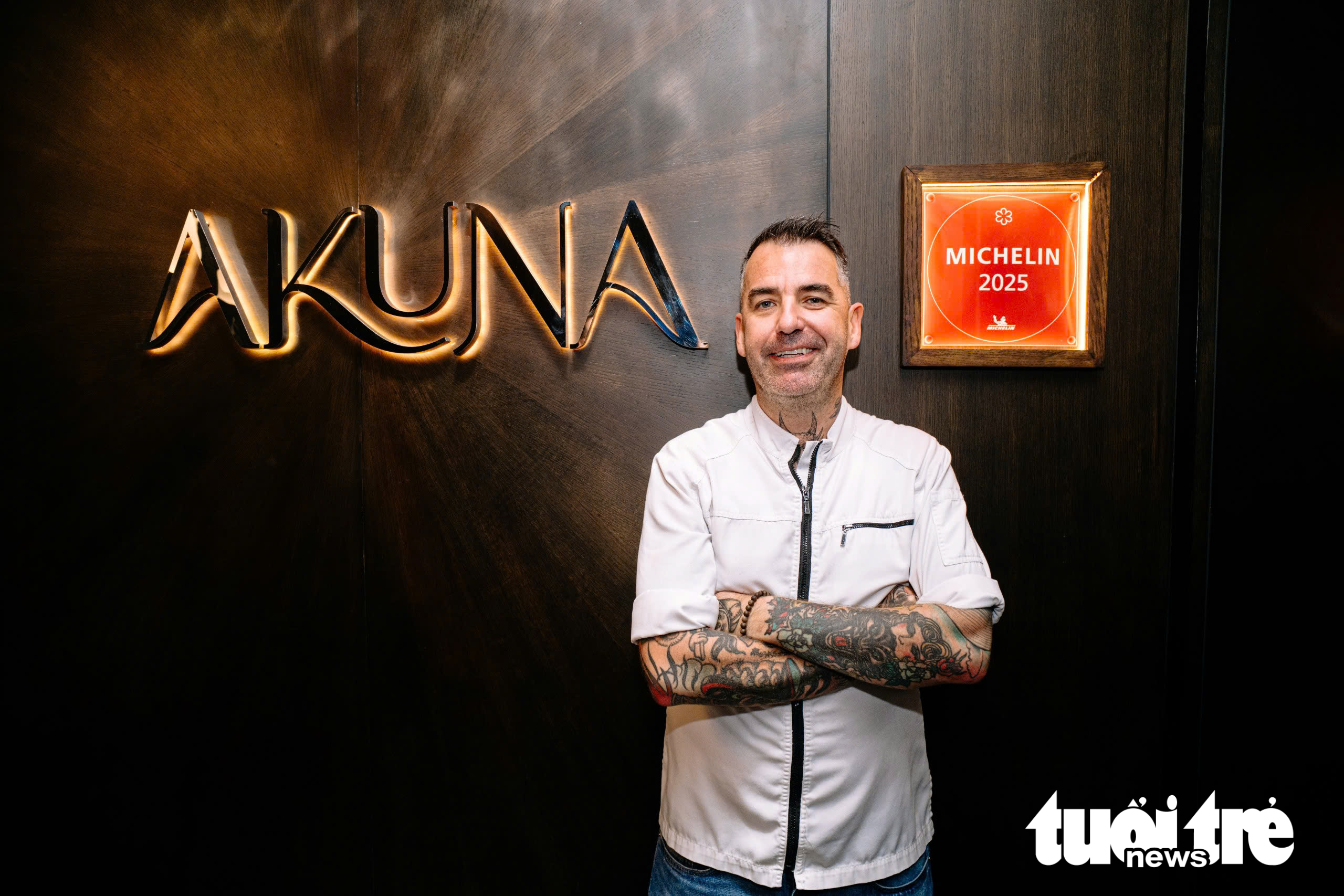
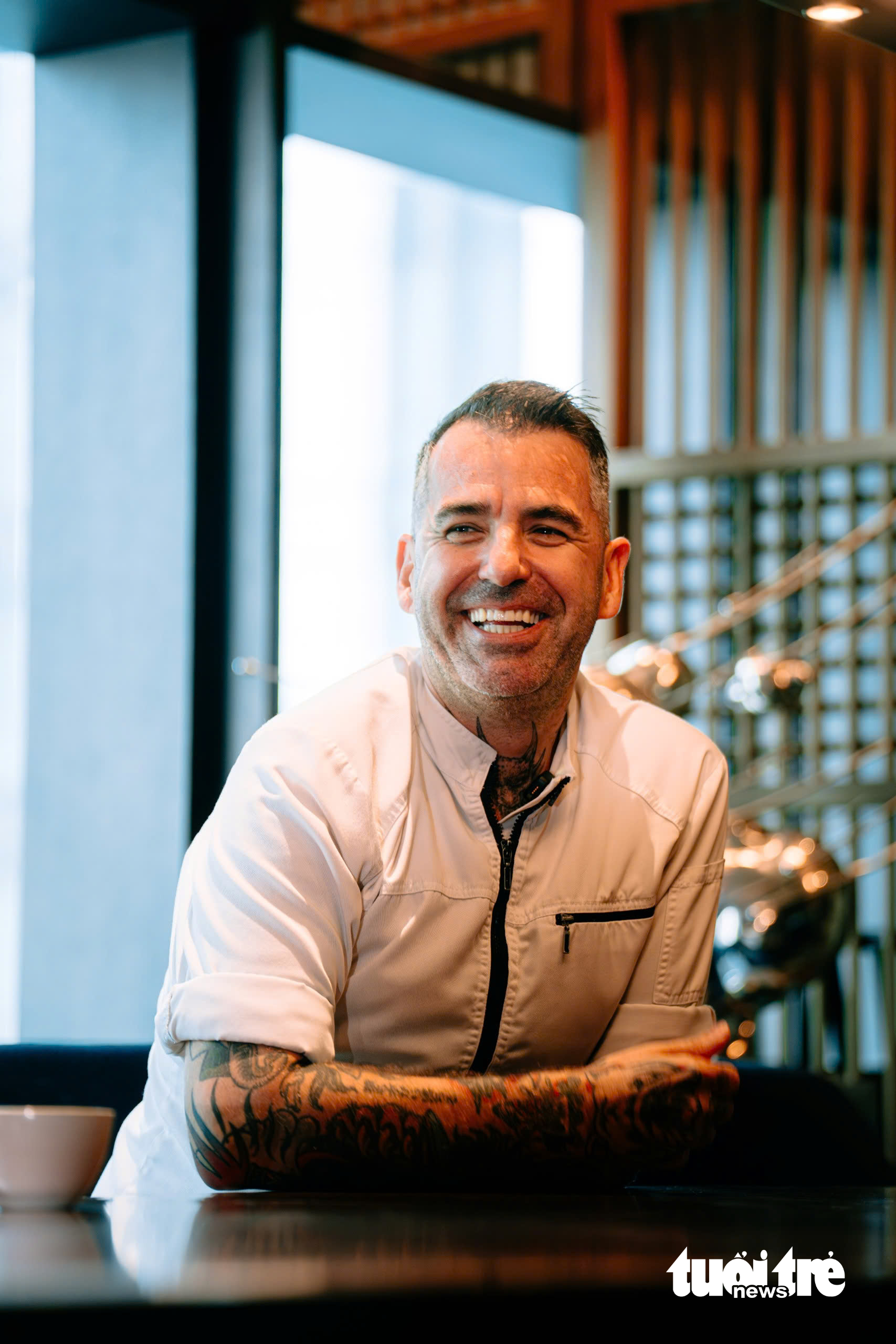
Sam Aisbett is the chef at Akuna, one of Ho Chi Minh City’s five restaurants currently awarded a Michelin star. The Australian chef has over 20 years of experience, having worked at the renowned Quay restaurant in Sydney. He also founded Whitegrass in Singapore, which earned one Michelin star.
Since arriving in Vietnam in 2020,Sam Aisbett has become closely associated with Akuna, where he and his team have been freely creating fine-dining dishes using unique local ingredients such as porcupine, sandworms, and Dong Tao chicken feet, among others.
Sam Aisbett is the chef at Akuna, one of Ho Chi Minh City’s five restaurants currently awarded a Michelin star. Photo: Thanh Hiep / Tuoi Tre News
American chef Chad Kubanoff was trained in both French and Vietnamese cuisine. He worked at several restaurants in the U.S. before opening Same Same in Philadelphia, bringing Vietnamese street food to an international audience.
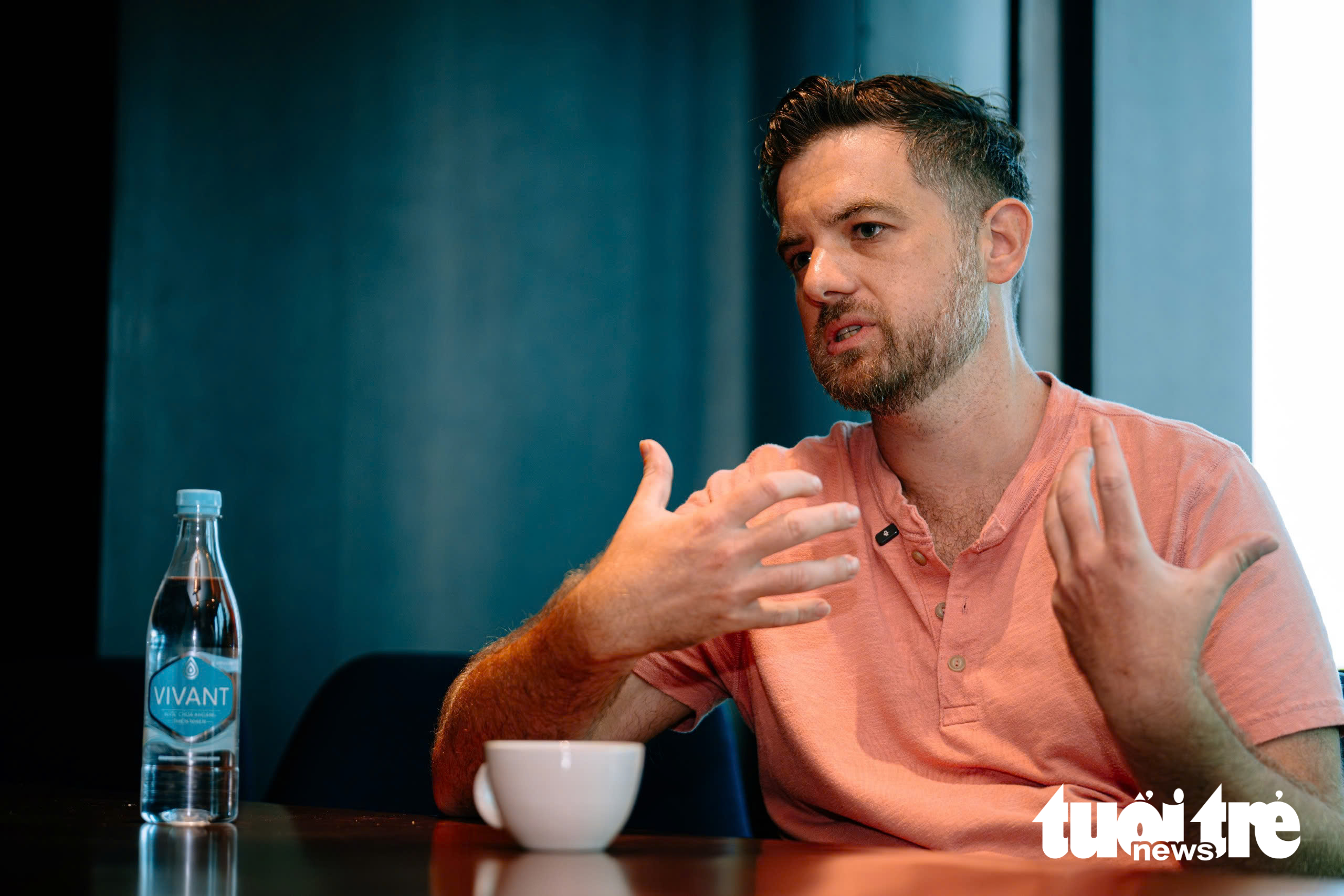
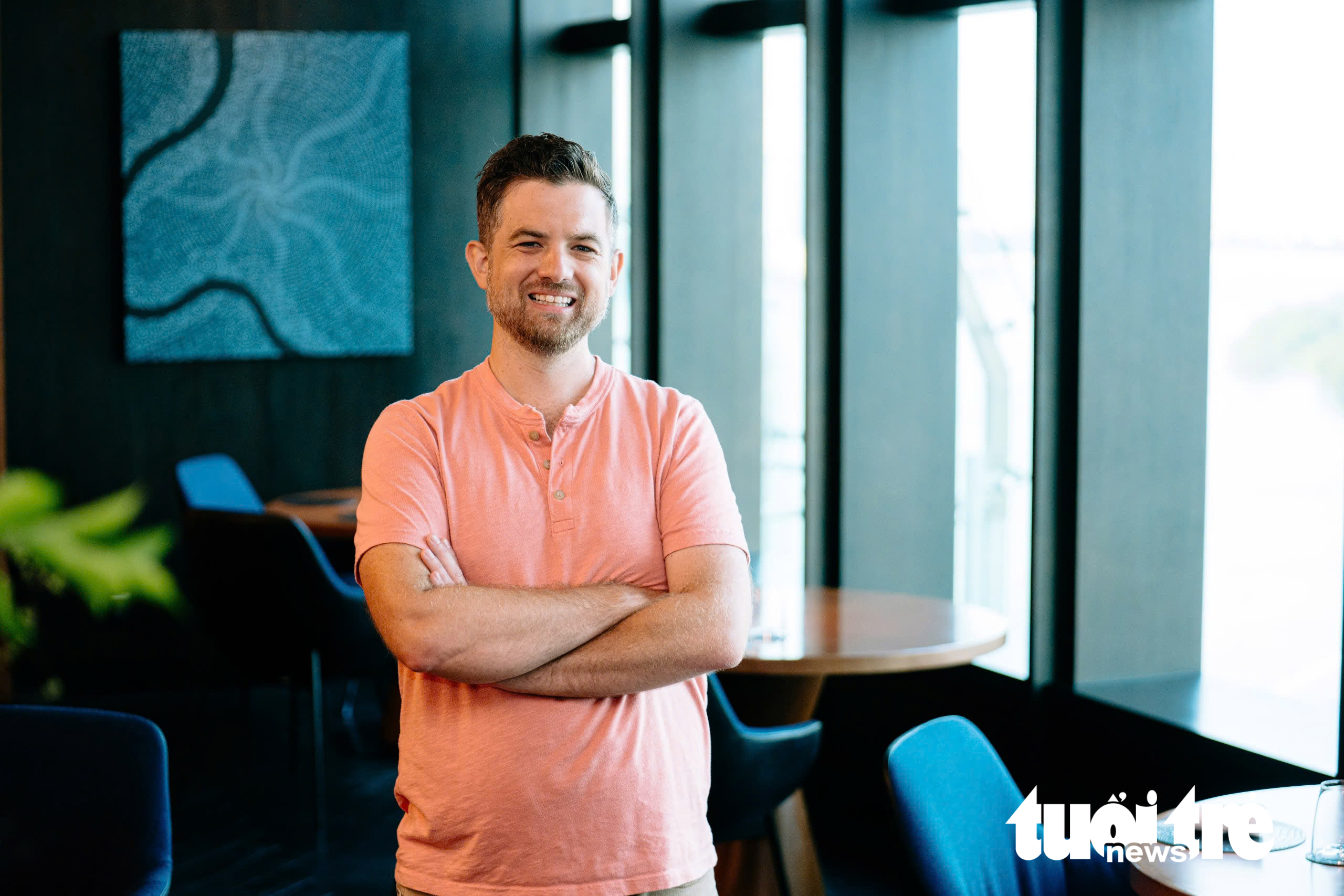
Over the past decade, Chad has explored and experimented with Vietnamese cuisine across the country, from north to south, alley by alley. His culinary journey and creative takes on Vietnamese dishes have attracted a large following on social media, with over 724,000 followers on TikTok, 142,000 on YouTube, and 147,000 on Instagram.
Chad Kubanoff has attracted a large following on Vietnamese social media through content about food in Vietnam. Photo: Thanh Hiep / Tuoi Tre News
‘The best food scene in the world’
How have your views on Vietnamese cuisine changed before and after coming to Vietnam?
Sam: There are a lot of Vietnamese restaurants in Australia, but when you go there, it’s mostly pho and banh mi. So before coming to Vietnam, I thought that was all Vietnamese cuisine was about. But when I actually arrived here, I was like, “Oh my God, there are so many different things, so many flavors, fermented fish, seafood.” The more I travel, the more I notice the differences. Even with banh mi, having it here compared to somewhere else, I can notice the difference.
Pho and banh mi are so popular around the world that people tend to think that’s all there is to Vietnamese food. But in reality, it’s so much more diverse.
Chad: I guess my palate has changed over with my deeper understanding of cuisine now. I deeply appreciate the chewy texture more than I ever did. I deeply appreciate bitterness. I deeply appreciate funk.
I think Vietnamese cuisine is filled with chewy textures, that’s part of it. And it changed the way I think. I used to believe that tenderness was always the goal, but that’s not always true. Sometimes bitterness is important. Sometimes funk is important, and chili is important, too. In America, in the West, chewy savory dishes are often seen as a bad thing, but that's not true at all. When I first started making bun bo (Vietnamese spicy beef noodle), I tried to braise the beef and make it really tender. But when I ate it, I was like, “this isn’t right.”
So my palate has expanded dramatically, and I’m more appreciative of a lot of “foreign” things. Fish sauce, for me, doesn’t feel aggressive anymore. I see it as a balanced, wonderful, salty product.
I think Vietnamese fish sauce is the most refined. It’s the cleanest and the best, in my opinion, while many others feel much more aggressive.
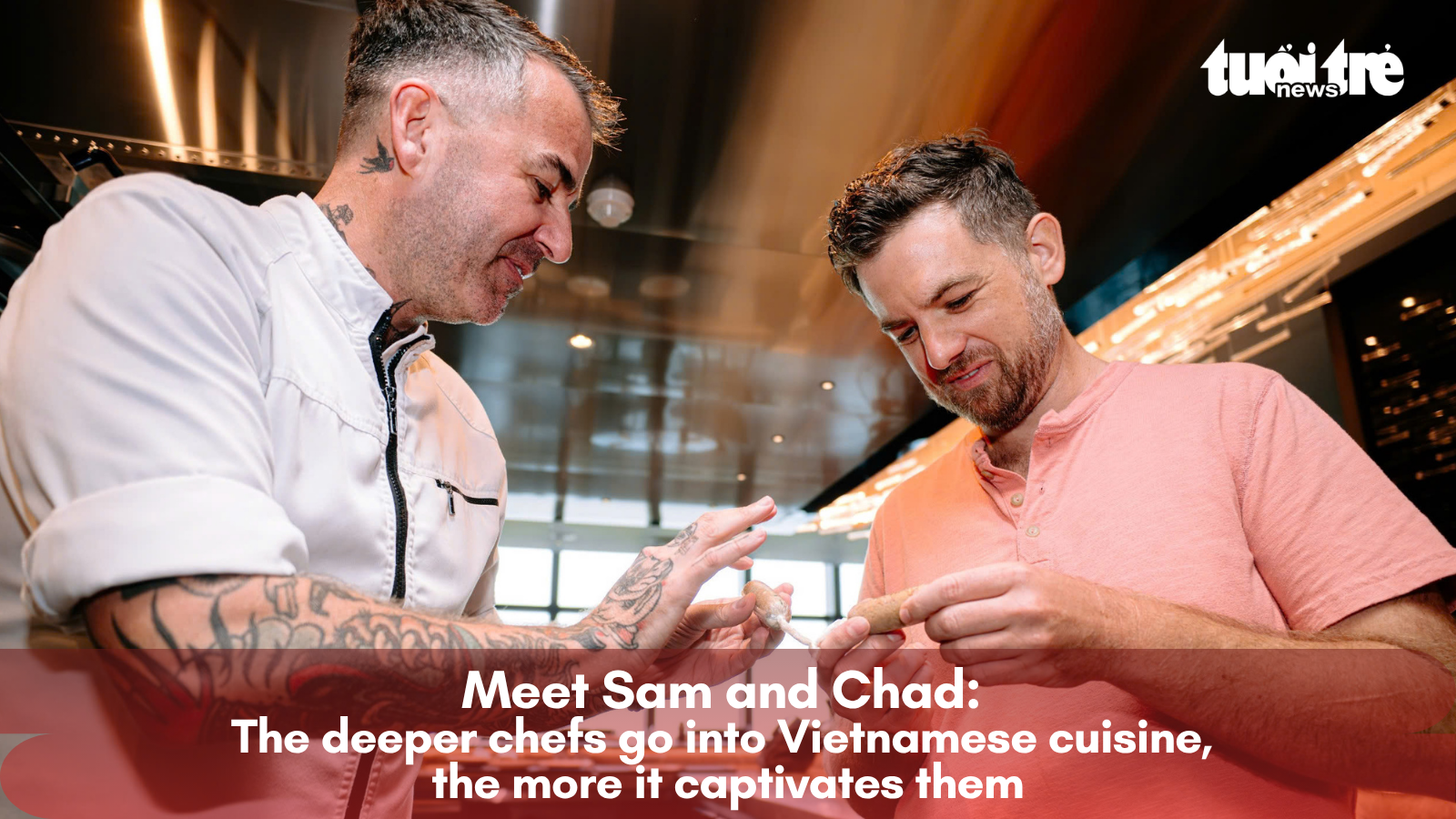
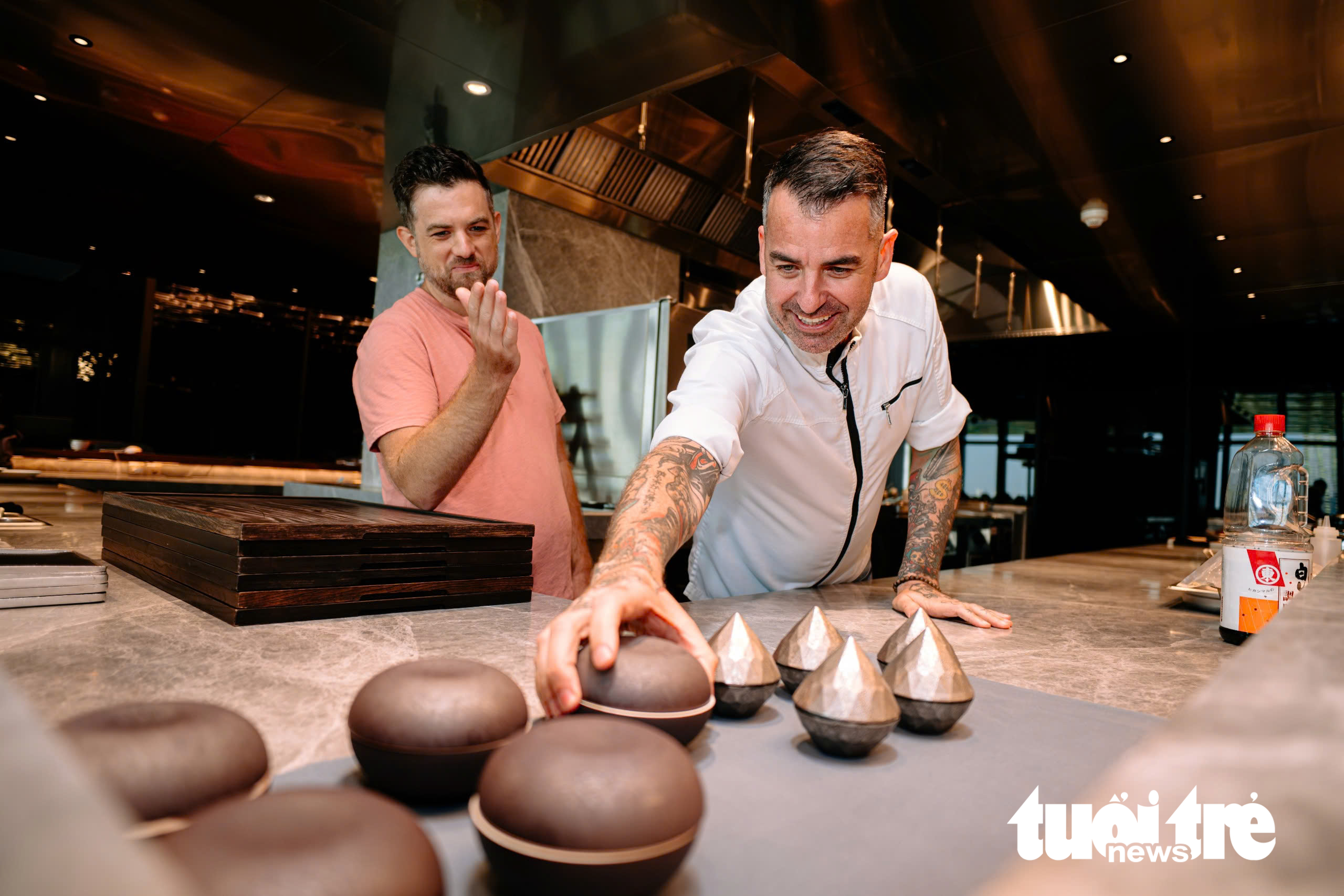
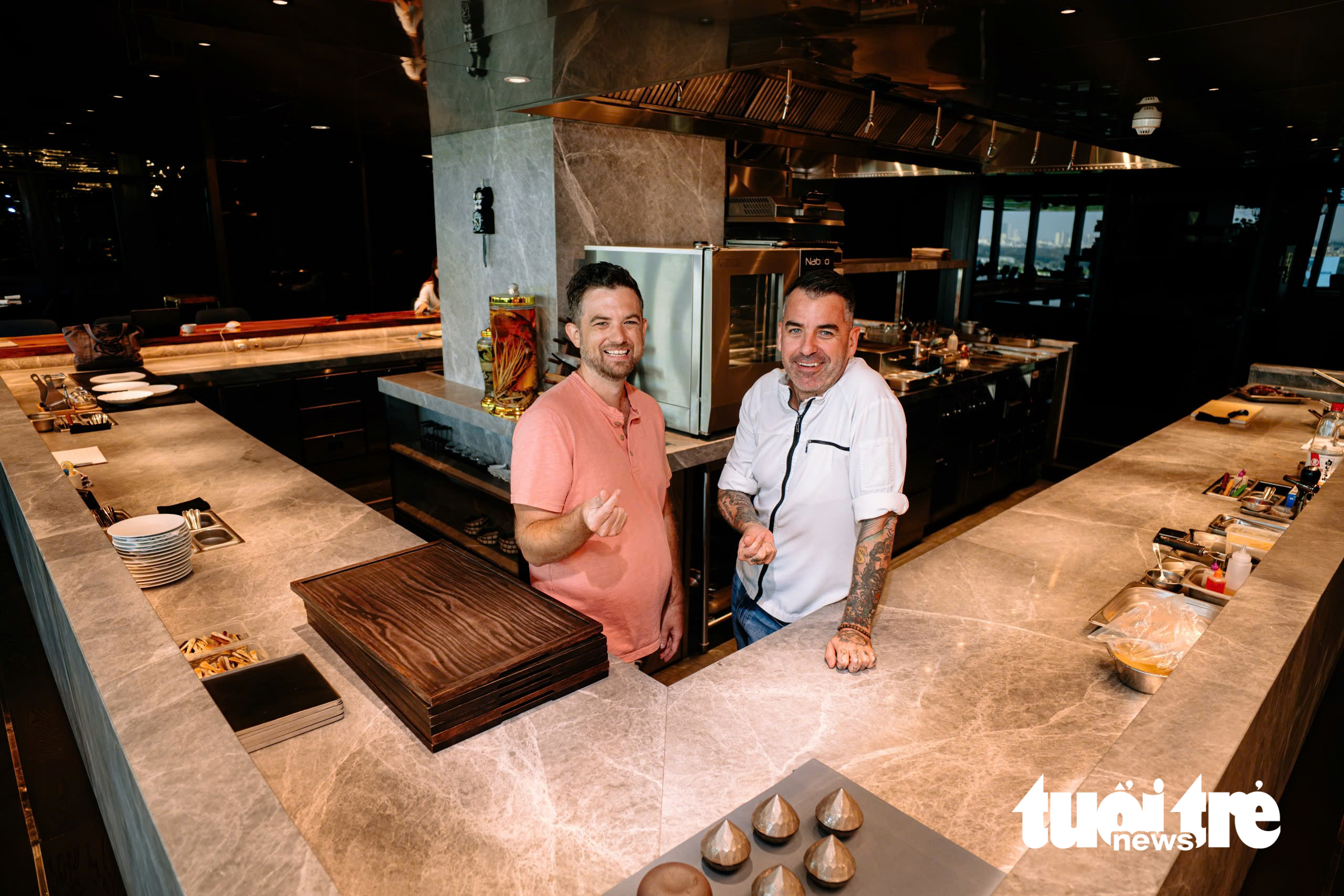
Sam Aisbett (right) and Chad Kubanoff are seen in a photo taken at Akuna in Ho Chi Minh City. Photo: Thanh Hiep / Tuoi Tre News
From your perspective as someone from another country with a strong culinary background, what do you think makes Vietnamse cuisine so appealing to international diners? And when people think about Vietnamese food, do you think street food or fine dining leaves a stronger impression?
Sam: I think most people traveling to Vietnam, street food is probably the first thing they go for, because that’s what it’s known for. So when people come here, they just want to smash some street food and try as much as they can.
And then after that, maybe they move on to fine dining and see a different style of Vietnamese cooking, or the newer kind of Vietnamese cuisine coming through.
That’s hard to say. For me, it’s both. Even for me, I obviously cook this kind of fine dining and I love it, but I also love getting up in the morning, going out for breakfast, and eating something very local.
But there are many amazing restaurants and chefs coming up, especially Vietnamese chefs doing incredible things and starting to get a lot of attention. Recently, I was in Hong Kong at the 50 Best Awards, and Vietnam is getting known as a food destination at a high level, not just for street food.
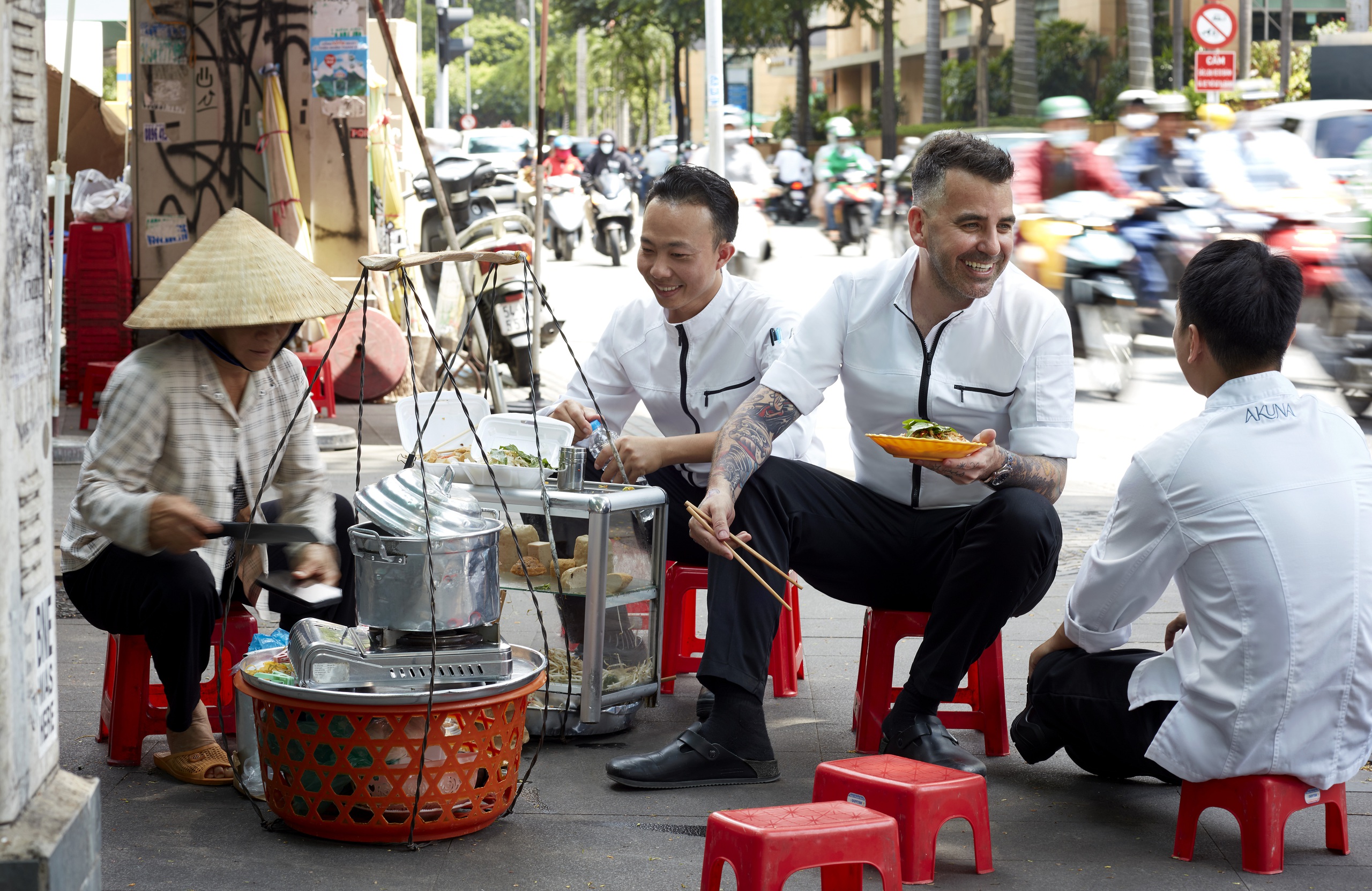
Sam Aisbett is passionate about Vietnamese street food. Photo: Akuna
Chad: For me, it's 100% Vietnamese street food. I think fine dining is already a niche cuisine. And then if we're looking at Vietnamese fine dining, it's more niche. People know banh mi and pho. That's what they know. They don't know any upscale variations. So they want to come here to try real banh mi and pho in their authentic version. So it's got to be street food that represents it.
Asian countries all have amazing street food cultures. In your opinion, what makes Vietnamese street food appealing?
Chad: I would start with the flavor, it just tastes great. The food is great, it’s healthy and fresh, so the cuisine itself already stands out.
But street food, it’s fun. It’s a fun way to eat. The chairs are great, it’s just so casual. I think for people who aren’t too uptight, they just go, “Oh, this is fun. This is really a cool thing.”
Vietnam is very lucky to have the kind of weather that can support that type of eating year-round.
Sam: I think it’s the freshness. The dishes always come with a big plate of fresh herbs and greens. When my friends come here and go out to eat, they’re always surprised to see such a big plate of herbs like that. And for dishes with broth, the flavors are really rich and deep in umami. Vietnamese cuisine has a very own identity.
If you were describing Vietnam's food scene to someone who has never visited the country, especially to tempt them into coming, how would you describe the local cuisine?
Chad: I would describe it as the best food scene in the world: super high energy, constantly changing, constantly evolving, traditional yet not traditional, full of contrast.
Because there are so many small vendors, things can pop up and shut down in a second. You see a new dish on the street, and then two weeks later, you see that same dish at 15 vendors. Then in three months, it’s all over the city. And in six months, there are only two vendors left.
It just explodes and dies down, constantly going through these boom-and-bust cycles. So it’s always changing and evolving, but at the same time, it still holds on to tradition.
Sam: Whenever I have friends come here, I always try to take them to the most local spots I can, get them sitting on plastic stools, drinking street-side coffee.
Some people say to me, “Vietnam must be just like Thailand.” And I’m like, “Not at all, you’ve got to come here and see it for yourself.”
Chef Sam Aisbett. Photo: Thanh Hiep / Tuoi Tre News
And for my chef friends, I usually tell them about the produce here, about these really different experiences, things I’d never done before. Like one time, I went on an overnight boat trip to catch seafood. Another time, I followed some locals on a two-hour trek through the forest to find wild honey.
For me, that’s the way to show them what Vietnam has to offer, the produce that Vietnam has, things that people can get and do here.
As a chef, I travel a lot. I thought I’d seen it all. I’d traveled through Asia, I knew a lot of Asian produce, I thought I knew everything. Then when I came here, I went to the markets and realized there were vegetables I didn’t even know. The seafood, there are like two billion different kinds of snails I’d never seen before in my life. And as a chef, that’s fascinating, because it’s all new, you get to explore and experiment with different ingredients.
The untold story of Vietnam’s premium ingredients
One thing I always want to get a chef’s opinion on is the Vietnamese ingredient. When we talk about fine dining, people often think the ingredient has to be imported, but now, a new generation of young chefs is trying to promote local ingredients and use them in their creations. What do you think about that?
Chad: Beyond the mindset that imported ingredients are better, there’s also the expectation that when people spend a lot of money on fine dining, they want things like beef, truffles, caviar. That’s something that’s very hard to change.
I give tremendous credit to Sam for putting porcupine on the main course. Vietnam may not have the best beef, but we have other great things.
Another issue is the supply line. There are great ingredients, but the transportation isn’t always good enough to maintain the quality from the moment they’re caught. This is where fine dining can help, because restaurants like Sam’s can afford to pay a farmer or fisherman more money for better quality products.
A lot of them don’t understand, or they haven’t had the support behind them to know that if they work harder, if they’re more careful at each step, someone will pay more for that product. Otherwise, it’s just not worth it for them. If no one's going to pay more, why would they spend more time on this?
So we need fine dining to support the farmers, to help build up the quality of ingredients over time.
I want to help promote the local livestock here, which works well, so we can start to appreciate it more. We can’t produce good beef here? Okay, fine, then move on, forget the beef, let’s do something else.
Sam Aisbett (right) and Chad Kubanoff are seen in a photo taken at Akuna in Ho Chi Minh City. Photo: Thanh Hiep / Tuoi Tre News
Sam: Even when I first came here, I didn’t really know how to source seafood. So I just got it from Japan. It was quite easy, I knew how to get it, I knew the quality was good, and I didn’t have to worry about it.
And then as I got more comfortable, I wanted to try and source it in Vietnam, work directly with fishermen, even get them to go and catch it for me.
There's amazing produce in Vietnam. It’s just about getting more restaurants to put it on their menus, getting more people talking about it, more people eating it, and showing the rest of the world that yes, Japan has amazing seafood, but Vietnam also has amazing seafood at the same level.
If you had to choose one thing to define the brand of Vietnamese cuisine, what would it be?
Sam: Vietnam has the potential when it comes to unique, high-quality ingredients. It’s just about having more people tell that story, introduce it to the world, and over time, build a name for it.
Chad: On a global scale, if I'm trying to promote or market Vietnamese food, I guess I would come with the perspective of being healthy. It's a very healthy, delicious cuisine: low in oil, little fat, little frying, little gluten. In general, it's a very health-conscious cuisine, herb-focused, nutritious. I think that's a strong point.
Over the past decade, Chad Kubanoff has explored and experimented with Vietnamese cuisine across the country, from north to south, alley by alley. Photo: Thanh Hiep / Tuoi Tre News
For Vietnamese ingredients, I think the obvious things are rice, fish sauce, and coffee. The coffee culture here is incredible and is an easy sell. Rice is also an easy sell. Fish sauce is getting bigger and bigger. I think the export of fish sauce will get stronger and stronger as people appreciate it. They'll pay a higher price for better fish sauce because I think Vietnam has the best fish sauce in the world I've experienced so far.
And internally, foodies are traveling here. I think one of the biggest people traveling here are foodies, so more food-focused destinations, more food-focused experiences are needed.
Like I have dreams of opening a little food camp, which is two hours away from the city. Guests stay for three or four days and have an in-depth experience. I think that kind of stuff would do really well.









Max: 1500 characters
There are no comments yet. Be the first to comment.