



Nguyen Le Thien Thanh, deputy head of the International Economics Division under the Ho Chi Minh City Department of Industry and Trade, speaks at a regular socio-economic press briefing in the city, March 5, 2026. Photo: Phuong Nhi / Tuoi Tre
The warning was issued at a regular socio-economic press briefing held by the municipal Party Committee’s Commission for Propaganda and Mass Mobilization.
The briefing was co-chaired by Tang Huu Phong, deputy head of the commission, and Nguyen Ngoc Hoi, deputy director of the municipal Department of Culture and Sports.
Speaking at the event, Nguyen Le Thien Thanh, deputy head of the International Economics Division under the city’s Department of Industry and Trade, said the ongoing conflict in the Middle East poses risks to the city’s economic activities.
The conflict escalated last Saturday when U.S. and Israeli forces launched air strikes on targets in Tehran, killing Iranian Supreme Leader Ali Khamenei and senior officials.
Iran later retaliated with missile and drone attacks on Israel and U.S. bases across the Middle East, with no public signs of talks to ease tensions so far.
Preliminary assessments show that the U.S. currently accounts for about 23.43 percent of Ho Chi Minh City’s total import-export turnover, meaning the city’s trade could face notable impacts.
According to Thanh, the conflict could directly disrupt shipping routes, particularly those from Ho Chi Minh City to Europe, potentially extending transit time by around seven to 10 days.
Shipping companies are also raising freight rates as conflict-related surcharges and insurance costs continue to rise.
The department added that in the near future, the number of vessels passing through some key maritime routes could drop about 70 percent, forcing shipping lines to reroute vessels and driving up logistics costs across multiple industries.
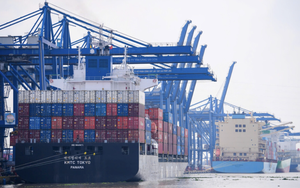


In response, Thanh recommended that businesses consider diversifying export markets, including expanding to nearer markets in East Asia and elsewhere in Asia to help reduce transportation costs.
The department also warned that supplies of certain imported materials for Ho Chi Minh City, particularly components and semiconductors, could be significantly affected because most of these goods are sourced from the U.S. and Europe.
Enterprises should proactively assess the situation and adjust inventory plans to ensure stable supplies for production, Thanh said.
The wood and wood product sector is expected to face a moderate impact but could be affected more significantly if logistics costs continue to rise.
Thanh noted that the department oversees key areas including petroleum and gas supply management as well as import-export and logistics activities.
On Thursday afternoon, the department held a meeting with energy enterprises to discuss response measures, with the results expected to be announced later.
On logistics and trade activities, the department is conducting surveys and working with business associations and companies to assess difficulties under the current circumstances.
Based on preliminary evaluations, the department said it will propose solutions to the Ho Chi Minh City People’s Committee to help reduce the impact on businesses.
These may include interest rate support for importers and exporters to help offset rising logistics costs and ease capital pressure.
The department also suggested that trade promotion agencies strengthen efforts to expand markets in regions less affected by the ongoing conflict.
At the briefing, Phong said the city’s economy is large and deeply integrated with the global market, meaning external developments could have a direct impact on it.
He added that the Department of Industry and Trade has taken proactive steps to monitor developments, share information with the media, and advise city leaders on appropriate response measures.








Max: 1500 characters
There are no comments yet. Be the first to comment.