


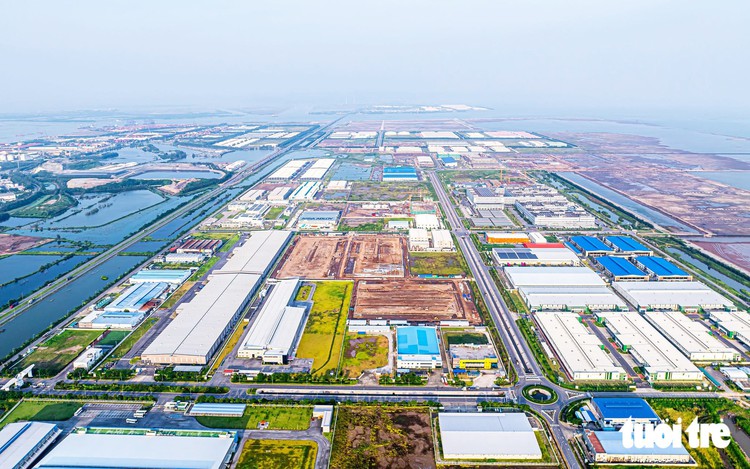
An aerial view of DEEP C Industrial Zones in Hai Phong City, norther Vietnam,, where developers are stepping up construction of ready-built factories meeting international green standards. Photo: Tien Thang / Tuoi Tre
Instead of spending years preparing sites and building their own facilities, FDI companies in Hai Phong can increasingly opt to lease ready-built factories equipped with technical infrastructure, energy systems and environmental treatment facilities.
This reflects a notable shift in the city's industrial real estate market as foreign corporations increasingly demand greater energy efficiency, lower emissions and more sustainable production supply chains.
Green factories gain competitive edge in attracting FDI
As foreign investors increasingly factor environmental, social and governance (ESG) criteria into their factory selection decisions, industrial park developers operating in the city, including DEEP C Industrial Zones, Hai Phong's Vietnam-Singapore Industrial Park, and Nam Dinh Vu and Nam Cau Kien Eco-Industrial Parks, are focusing on developing a new generation of ready-built factories.
These facilities are designed to save energy, maximize natural ventilation, incorporate rooftop solar power and use wastewater recycling systems.
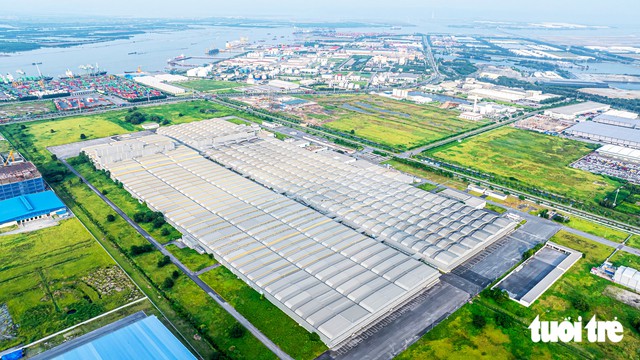
Ready-built factory buildings at an industrial park in Hai Phong help attract foreign direct investment by offering modern production facilities. Photo: Tien Thang / Tuoi Tre
Some projects are also pursuing green building certifications under Vietnam's LOTUS rating system and the U.S.-based LEED program.
The DEEP C Industrial Zones offer a practical example of this approach.
Since joining the global eco-industrial park program in 2020, DEEP C has met 52 of the 64 criteria under the international eco-industrial park framework.
At the park, 15 tenant companies have implemented 65 cleaner production and resource-efficiency solutions, saving more than 4.8 million kWh of electricity and over 79,000 cubic meters of water annually while reducing carbon dioxide equivalent emissions by more than 3,000 metric tons a year.
Hoang Dai, vice-chairman of the Hai Phong Real Estate Association, said the city's strategic seaport connectivity and coordinated investment-attraction policies had created favorable conditions for the ready-built factory segment to grow.
At DEEP C, for example, some factories offer flexible floor areas starting from 3,000 square meters and have obtained LEED Silver certification.
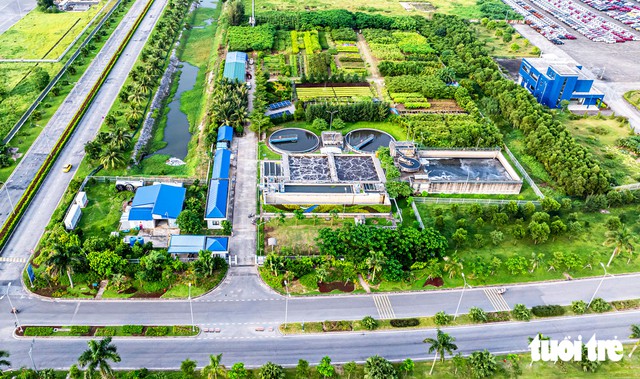
Green spaces and tree-lined areas form part of the environmentally friendly landscape at an industrial park in Hai Phong. Photo: Tien Thang / Tuoi Tre
This model significantly shortens businesses' production preparation time.
Instead of spending one to two years completing procedures and building a factory, tenants can install production lines and begin operations within just a few months.
Ready-built plants help optimize industrial land use
Beyond attracting investment, the development of green ready-built factories also offers a more efficient way to use industrial land.
Instead of conventional single-story plants spread over large areas, multi-story buildings with three to five floors or more can increase usable floor space on the same land area.
Such facilities are suitable for certain light industries, electronic component assembly and other manufacturing activities with specific requirements.
For industrial park developers, leasing factory space also provides a recurring revenue stream, reducing their reliance on land-lease income.
This more stable revenue can provide additional resources for reinvestment, infrastructure upgrades and the development of eco-industrial parks.
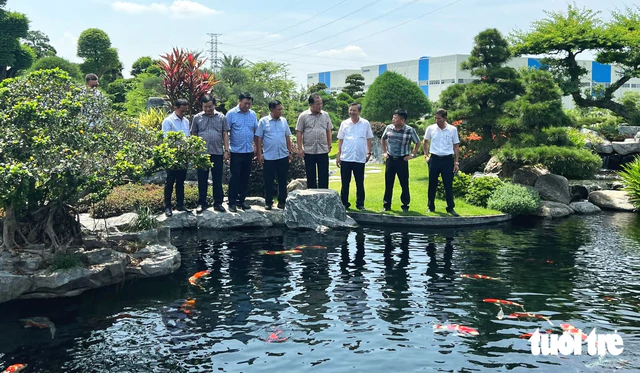
A koi pond uses treated wastewater from factories at Nam Cau Kien Eco-Industrial Park in Hai Phong, demonstrating the park's circular approach to resource use. Photo: Tien Thang / Tuoi Tre
However, Pham Hong Diep, chairman of Hai Phong-based Shinec JSC, the developer of the Nam Cau Kien Eco-Industrial Park, said developing green factories involved much more than installing rooftop solar panels or expanding green spaces.
The model requires integrated solutions covering architectural design, construction materials, energy management, waste sorting and recycling.
Initial investment and maintenance costs for technical systems are also generally higher than those for conventional factories.
Speaking at a green transition conference on November 27, Hoang Minh Cuong, deputy chairman of the Hai Phong administration, said the city was promoting green transition across its industrial parks.
Hai Phong aims to have at least 50 percent of its industrial parks register to transition to or develop under the eco-industrial park model by 2030.
The shift from simply leasing industrial land to providing modern, green production facilities is therefore becoming more than a trend in the industrial real estate market.
It is also a key requirement for Hai Phong to attract higher-quality FDI and deepen its participation in global supply chains.


Max: 1500 characters
There are no comments yet. Be the first to comment.