


Editor's note: This piece is written by Darren Chua, a Singaporean who has lived in Vietnam for 12 years. He shares his thoughts after learning about Ho Chi Minh City's plan to require owners of cats and dogs to register their animals as part of ongoing efforts to prevent rabies.
In 2014, I attended a wedding in Ba Ria–Vung Tau Province, now part of Ho Chi Minh City. At my student’s home, her Border Collie greeted her with eager affection. Later that evening, however, her parents served dog meat at dinner. I knew immediately from the pungent smell, it was unlike any meat I had encountered.
What followed was a polite dance: they insisted I should try it, while I declined without causing offense. I did not accept. It was unsettling. I asked my student how one could love a pet dog yet eat dog meat. Her reply was simple: “The meat on the plate is not my dog.”
That answer revealed a cultural logic both pragmatic and profound. For her, the Border Collie was family; the meat was food.
In Singapore, by contrast, pet owners often elevate dogs to the status of children. Some even forgo parenthood, choosing instead to raise a pet and call it “Baby.” Consuming dog meat would be inconceivable.
This contrast shows how cultural boundaries around animals are contextual, shaped by history and norms.
Rabies is one of the deadliest zoonotic diseases, responsible for tens of thousands of deaths annually, mostly from dog bites. Once symptoms appear, rabies is almost always fatal within days.
Vietnam still faces cases, making rabies a pressing threat.

Ho Chi Minh City recently mandated that all dog and cat owners register their pets as part of a prevention drive.
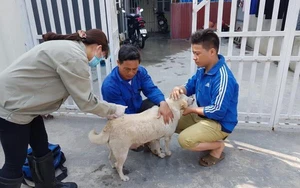
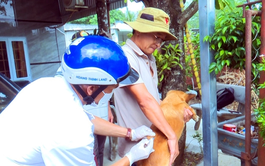
The policy requires owners to declare animals, vaccinate them, and comply with monitoring measures.
Registration is not just bureaucracy; it is accountability, ensuring vaccination campaigns reach necessary coverage.
In a society where dogs may be companions or livestock, the state must impose structure and responsibility. This reflects Vietnam’s diverse practices of dog ownership, where affection and utility coexist uneasily.
The urgency is underscored by recent statistics. In 2024, Vietnam reported over 80 rabies‑related deaths across 33 provinces, with Binh Thuan, Dak Lak, and Nghe An hit the hardest.
Many fatalities were linked to delays in receiving post‑exposure prophylaxis or reliance on ineffective remedies. The persistence of rabies highlights gaps in awareness, access to vaccines, and compliance with preventive measures.
For policymakers, the challenge is not only logistical but cultural: persuading communities that vaccination and registration are essential, even when dogs are not viewed primarily as family members.

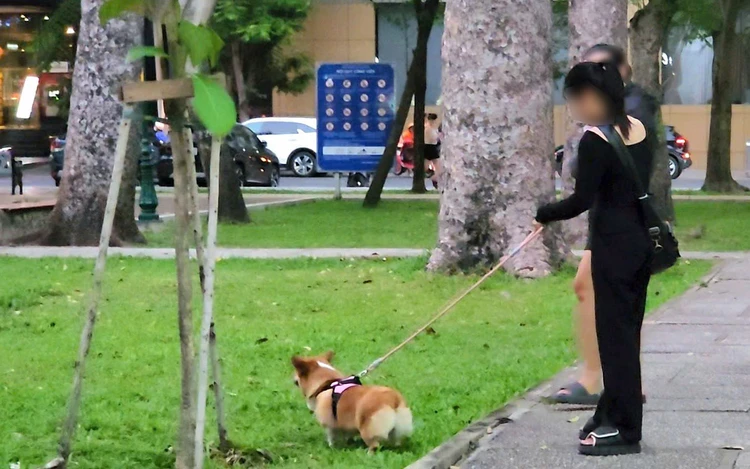
A dog is walked in 23/9 Park in Ho Chi Minh City without a muzzle. Photo: Ngoc Khai / Tuoi Tre
Singapore, by contrast, has been rabies‑free since 1953, yet this freedom is not taken for granted.
The Animal & Veterinary Service runs Operation Vax Lyssa, an annual vaccination program targeting dogs on Pulau Ubin and coastal farms. This “immune belt” safeguards against incursions from neighboring regions where rabies remains endemic.
Singapore also enforces strict import and quarantine controls: animals entering from rabies‑risk countries must undergo vaccination, blood tests, and quarantine.
Smuggling is treated as a serious biosecurity threat, with offenders prosecuted. Vigilance reflects not only public health priorities but also cultural expectations that pets are kin and must be protected.
In Singapore, the rabies threat is external, not internal. Government action focuses on keeping rabies out rather than suppressing it within.

A girl lets a leashed dog down onto the ground at Bach Dang Wharf Park in District 1, Ho Chi Minh City, February 27, 2025. Photo: Ngoc Khai / Tuoi Tre
The contrast in government approaches mirrors the cultural differences highlighted in my anecdote.
In Vietnam, dogs occupy dual roles: beloved pets and, in some households, livestock. Rabies prevention policies must therefore address a wide spectrum of ownership practices, from urban pet lovers to rural households where dogs roam freely. Registration brings order to this diversity, creating a system where vaccination can be monitored and enforced.
In Singapore, dogs are firmly situated as companions. The rabies threat is external, not internal, and government action reflects that. Both approaches are rational within their contexts.
Vietnam must fight rabies where it exists; Singapore must prevent it from entering.
Rabies is more than a disease; it is a lens through which societies define boundaries between humans and animals. Vietnam’s registration drive reflects a pragmatic response to a persistent threat, balancing affection with utility. Singapore’s vigilance reflects a society that has elevated pets into the realm of family, demanding protection from external risks.
Both countries show that rabies prevention is not only about science and medicine but also about culture and values. The Vietnamese government must persuade owners who may not see dogs as family to vaccinate and register them, while Singapore reassures owners who treat dogs as children that their “babies” are safe.
The persistence of rabies in Vietnam also reveals the limits of policy without cultural buy‑in. Registration campaigns can only succeed if communities accept the premise that dogs, whether pets or livestock, must be vaccinated. This requires education, outreach, and trust in public health systems.
Singapore’s success, meanwhile, shows how cultural attitudes toward pets can reinforce policy. When dogs are seen as family, compliance with vaccination and biosecurity measures becomes almost automatic. The difference is not only epidemiological but philosophical: one society must persuade, the other must protect.
The moment at that wedding in Ba Ria–Vung Tau, where a Border Collie was cherished while dog meat was served, captures the paradox of cultural relativism. Rabies prevention policies in Vietnam and Singapore extend that paradox into public health.
For Vietnam, the challenge is to regulate and vaccinate across diverse practices of dog ownership. For Singapore, the challenge is to guard its rabies‑free status through vigilance and biosecurity.
In both cases, the dog is more than an animal; it is a mirror of society’s values. And in the fight against rabies, those values shape not only how we live with our pets, but how we protect our communities. The juxtaposition reminds us that ideology is not always about universal consistency, but about boundaries drawn by context.








Max: 1500 characters
There are no comments yet. Be the first to comment.