From a humble salted crab dish in Ca Mau, Vietnam's southernmost province, a man has spent time and effort transforming it into a specialty: cua gach ngam mam nhi (crab with tomalley marinated in high-grade fish sauce).
In Quach Pham Commune, Nguyen Van Mien of Dam Doi Sesarmid Crab Cooperative has devoted nearly two years to reviving the old salted crab of difficult old times with a completely new method.
His version soaks crabs with tomalley in high-grade fish sauce.
For him, the dish is not only food but also a memory of the days when Ca Mau’s seawater crabs were so abundant that people had to salt them to save for stormy days.
Reviving an old flavor through a new process
Back then, coastal communities typically buried crabs in jars filled with coarse salt for long-term storage.
This method preserved the bright red tomalley but often left the meat mushy and overly salty.
As crab became a higher priced commodity, the rustic dish gradually slipped into memory.
Missing the old flavor, Mien set out to turn the salty tradition of his ancestors into a new product suited to modern tastes.
The challenge lies in the crab itself. Its hard shell and firm meat make it difficult for seasonings to penetrate.
Figuring out how to let fish sauce seep into the flesh while keeping the tomalley intact became a major hurdle.
The first batches failed repeatedly.
Some crabs did not cure properly, giving off a strong raw smell that overwhelmed the fish sauce. Others turned mushy.
Mien threw away more than VND40 million (US$1,516) worth of crabs but refused to give up.
“With crab full of tomalley, diners must be able to enjoy both the meat and the tomalley, not just a hint of the past,” he insisted.
Mien eventually found the final formula which involves an elaborate 90-day process.
Each crab must weigh about 300 grams to ensure sweetness of the flesh and full tomalley.
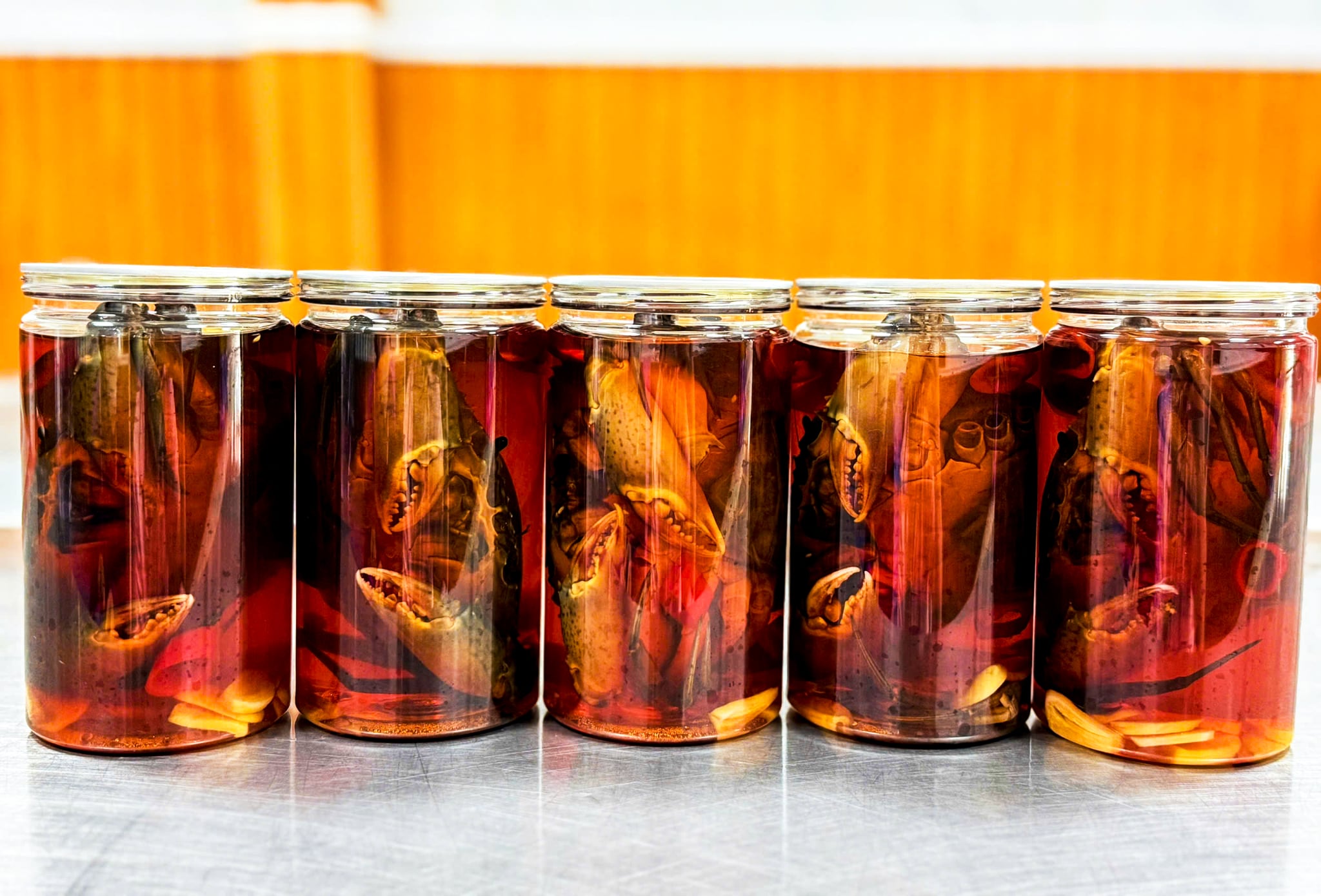
The crabs are cleaned and soaked in high-protein premium fish sauce mixed according to his own ratio.
Each jar of crab marinated in fish sauce is sold for around VND300,000 ($11.37). Photo: Thanh Huyen / Tuoi Tre
During the first 30 days, they cure gently thanks to natural salinity.
The fish sauce is then drained, distilled, seasoned with flavors typical of the Mekong Delta, cooled and poured back in for another 60 days.
“Only one spoiled crab can ruin the whole batch because the leaking tomalley will cloud the sauce and taint the flavor,” Mien said.
Time remains the biggest challenge. Large crabs take longer to cure, and each one must be selected with extreme care.
Rushing or making one mistake can waste the entire batch, Mien said.
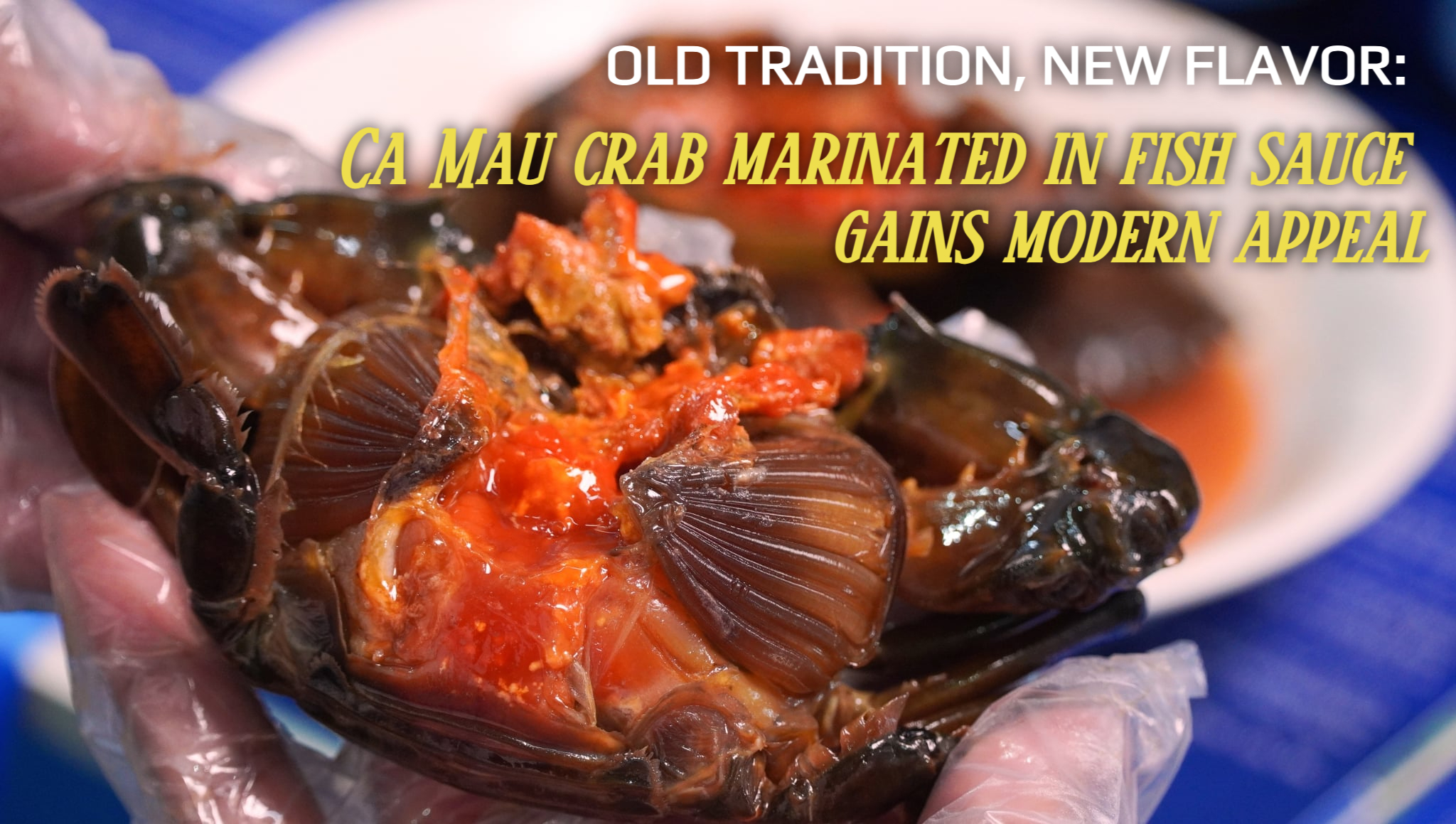
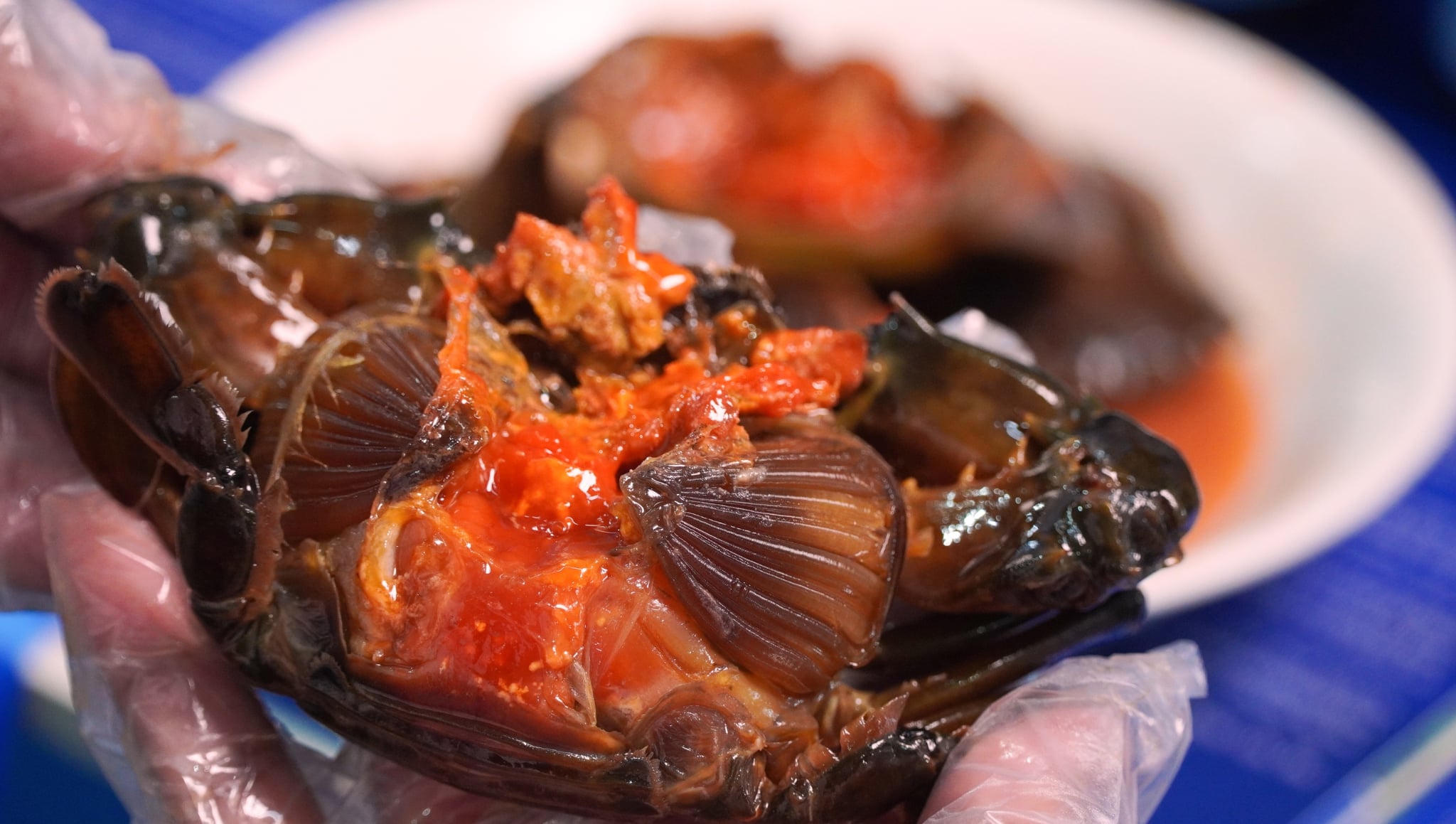
The finished crab has a brownish golden hue.
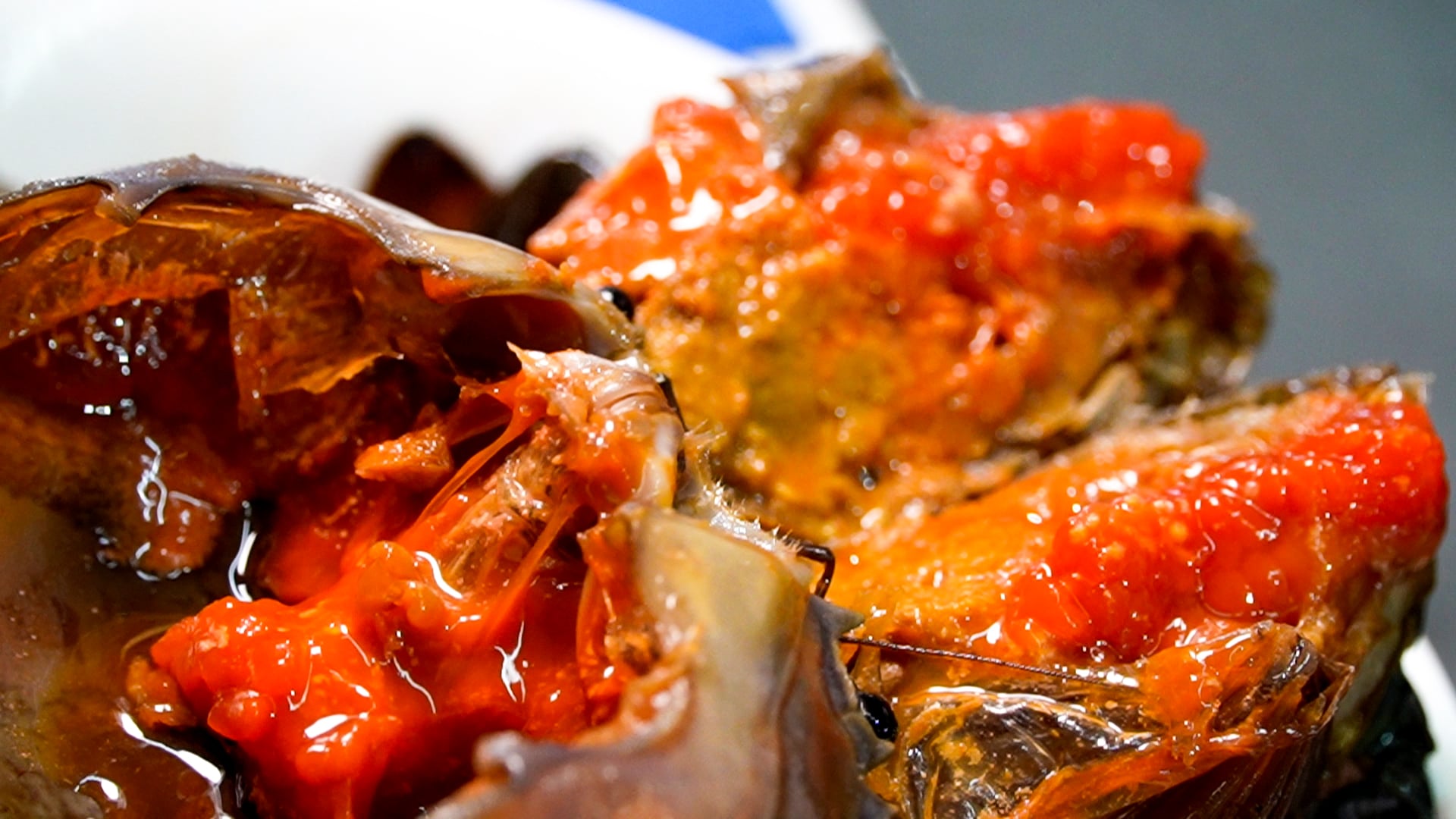
Lifting the shell reveals glossy, bright red tomalley with a strong yet clean aroma.
The crab marinated in fish sauce has a distinctive aroma and the sweet, rich taste of crab tomalley. Photo: Thanh Huyen / Tuoi Tre
After three months of marinating in fish sauce, the crab meat and tomalley remain firm. Photo: Thanh Huyen / Tuoi Tre
The salty notes blend well with the natural richness of Ca Mau crab, creating an unforgettable taste experience.
When paired with herbs, sliced green banana or starfruit, the saltiness softens and becomes balanced.
Diners can eat it as is or mix it with lime juice, garlic and chili. The crab goes well with hot rice or fresh vermicelli.
For many older diners, the taste brings back memories of difficult but warm village days.
The dish has become not only a specialty but a culinary heritage of Vietnam’s southernmost province.
Ca Mau, known for its quality crab delicacy, currently has more than 360,000 hectares of crab farming, producing about 36,000 tons each year and supporting tens of thousands of households.
Products like Mien's crab marinated in fish sauce are expected to elevate the value of Ca Mau crab and preserve the spirit of the land and its people.
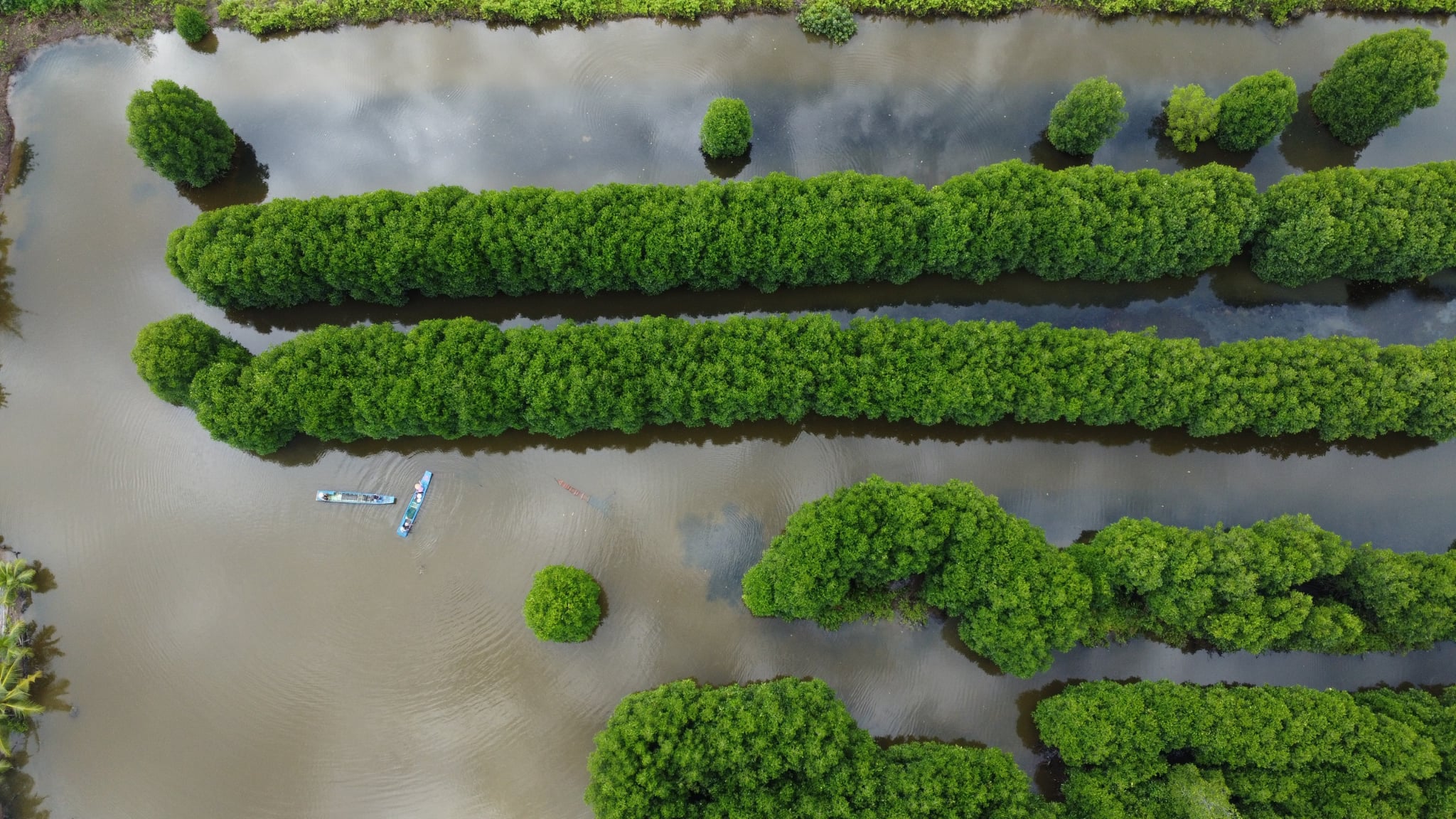
Ca Mau’s natural mangrove forests and fertile alluvial soil provide shelter for crabs, making it home to some of the country’s finest crabs. Photo: Thanh Huyen / Tuoi Tre
A timeless rural delicacy
At the recent Ca Mau Crab Festival, Mien’s booth drew large crowds.
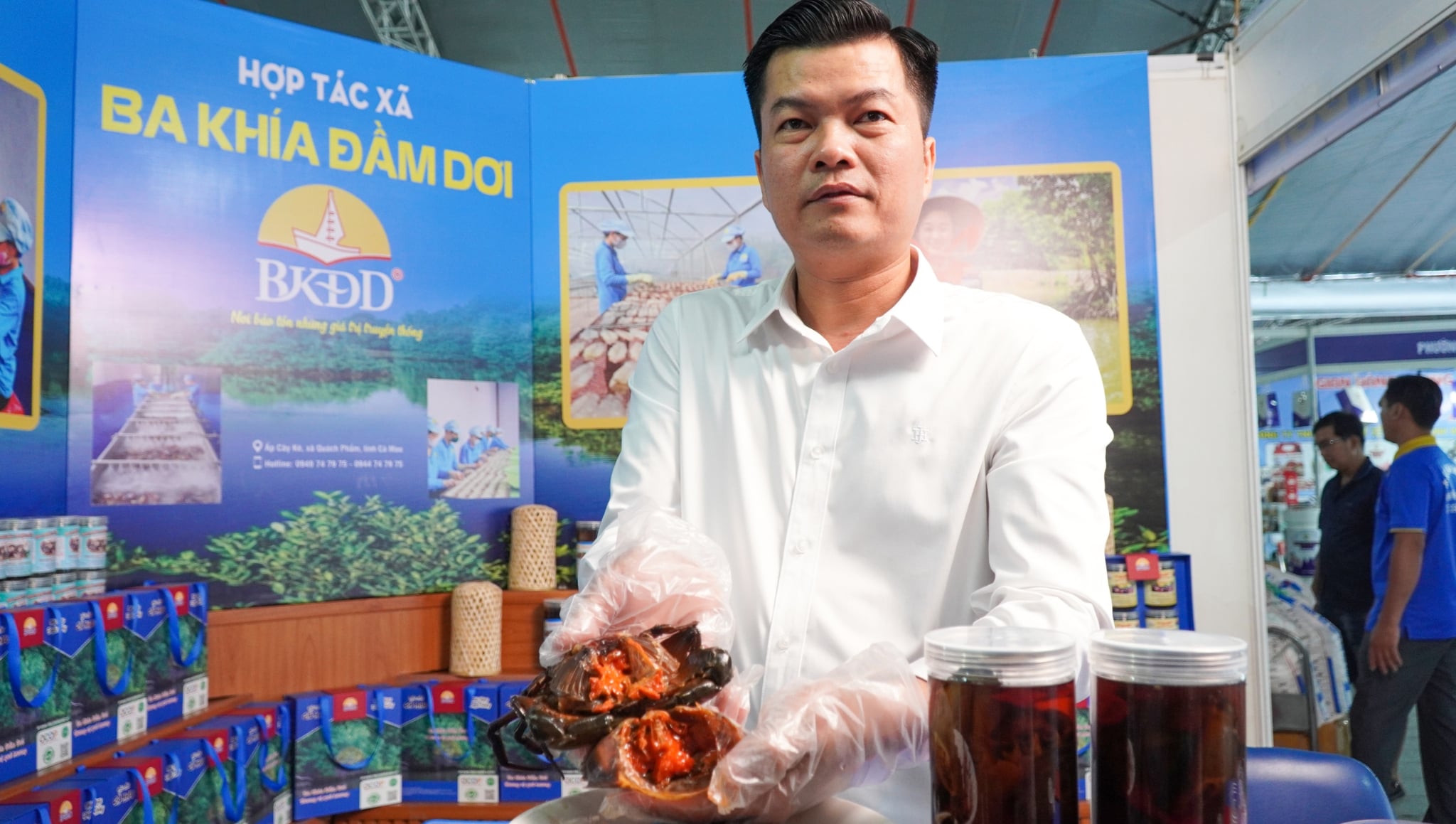
Nguyen Van Mien introduces his crab tomalley marinated in fish sauce at the 2025 Ca Mau Crab Festival from November 16 to 22, 2025 in Ca Mau Province, southern Vietnam. Photo: Thanh Huyen / Tuoi Tre
“The tomalley is rich and fragrant. The fish sauce is just salty enough. It still tastes like crab without any fishy smell,” Diep Bao An, a Ca Mau local, said after tasting the dish.
“This would be perfect for Tet [Vietnamese Lunar New Year] gatherings,” he added.
“I had only heard my father talk about salted crab from the old days. Now I finally get to try this new version. It is truly a timeless rural delicacy.”
Diep Bao An (first from left) enjoys crab marinated in fish sauce at the 2025 Ca Mau Crab Festival from November 16 to 22, 2025 in Ca Mau Province, southern Vietnam. Photo: Thanh Huyen / Tuoi Tre
Stories from his parents about the time when crabs were plentiful “as if given by the heavens” encouraged Mien to realize the value of preserving traditional dishes in a way that suits the present.
In the past, locals set traps in the river, sometimes catching hundreds of kilograms in one go.
Large crabs were eaten or made into paste. Small ones were brushed back into the river.
No one thought about branding or exporting. Their biggest worry was simply how to store the crabs for longer.
Now, Mien plans to introduce his product more widely during the upcoming Tet holiday and aims for OCOP (Vietnam’s One Commune One Product) certification as a tribute to his hometown.










Max: 1500 characters
There are no comments yet. Be the first to comment.