


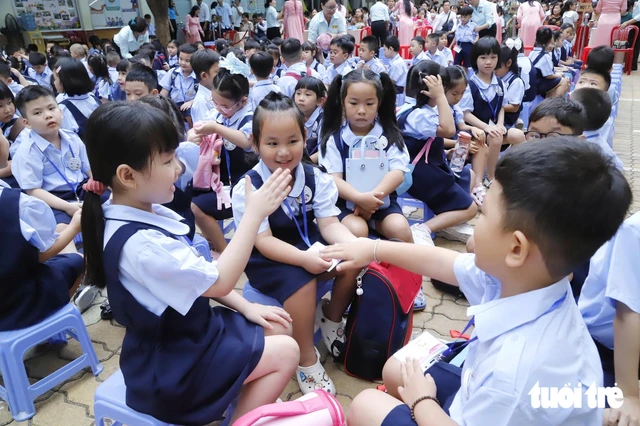
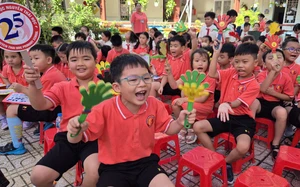
First-graders at Luong Dinh Cua Elementary School in Ban Co Ward, Ho Chi Minh City, excitedly return to school ahead of the 2026-27 academic year on the morning of August 17, 2026. Photo: Nhu Hung / Tuoi Tre
Editor’s note: This article by Luong Dung Nhan, a Master of Education Leadership from the University of Queensland, Australia, was written in response to a recent warning from the Ho Chi Minh City Department of Education and Training about homeschooling.
The warning came after some children were homeschooled from Grade 1 through elementary level before seeking admission to school for Grade 6.
The article is originally written in Vietnamese. Tuoi Tre News presents the English translation below.
On August 14, the Ho Chi Minh City Department of Education and Training noted that some children had been homeschooled through Grades 1, 2 and 3, while in some exceptional cases, children had spent all five years of elementary school studying at home before their parents sought to enroll them in school for Grade 6.
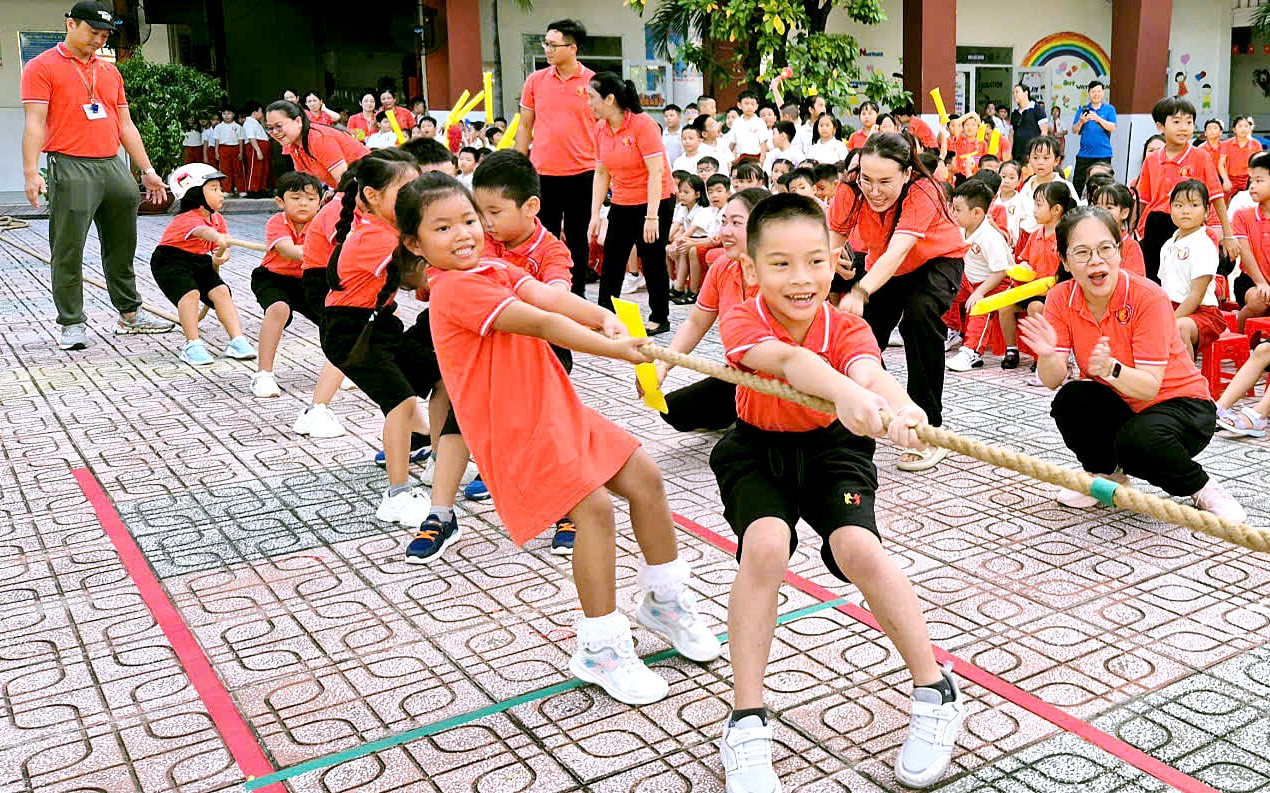
Behind these cases are centers that claim to be authorized to provide academic education, send teachers to students’ homes, issue their own certificates and charge tuition of around VND20 million ($763) a year.
The department has transferred the case files to the police and reiterated the regulations: elementary education is compulsory, and parents are responsible for sending their children to school.
I support the department’s warning, not simply because of the legal requirements, but because of children’s right to an education.
After nearly 20 years working in education and psychological counseling, I understand that most parents who want to keep their children at home do so out of love and concern: They worry about large class sizes and their children falling behind; they fear bullying; or they hope to find a “tailor-made” curriculum for their child.
In some countries, homeschooling is legal, but it is always accompanied by a framework for registration, accreditation and government oversight.
In Vietnam, homeschooling exists in a legal gray area: no one evaluates the teachers, no one recognizes the certificates issued, and the child bears all the risks.
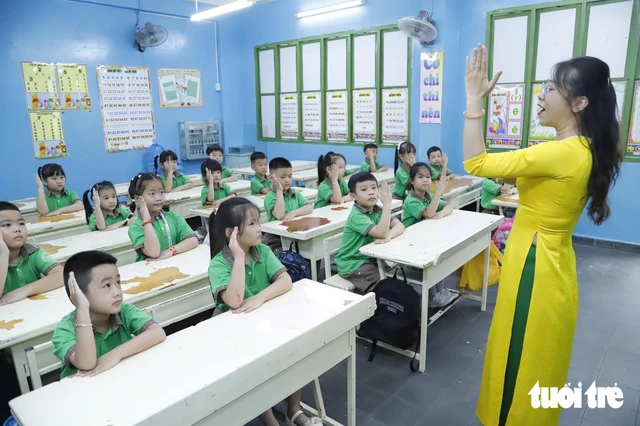
First-graders at Ky Dong Elementary School in Nhieu Loc Ward, Ho Chi Minh City, are guided by teachers on school routines on their first day back on August 17, 2026. Photo: Nhu Hung / Tuoi Tre
As an education professional, I also want to warn parents against the misconception that education only requires a good curriculum and a dedicated teacher. This is the most dangerous misunderstanding.
Modern education is a complex system. A curriculum is merely a seed; no matter how good the seed is, if it is planted in a tiny pot, the plant will still be stunted.
A complete school has subject teachers with their own areas of expertise, departments where teachers observe and give feedback to one another, school administrators responsible for educational quality and, above all, many pairs of eyes watching the same child.
A homeroom teacher may notice that a student writes more slowly than classmates. A physical education teacher may notice that the child avoids physical activity. A librarian may notice that the child loves reading comic books. It is this multidimensional attention that allows each student to be seen as a whole and supported where needed.
No matter how good a tutor who comes to a child’s home may be, they remain a single agent, without cross-checking or professional feedback. When that tutor belongs to a center operating outside any oversight framework, the child faces a double risk: losing a complete educational environment while also losing basic quality standards.
From the perspective of developmental psychology, primary school children also have a need that no textbook can replace: peers.
Psychologist Erik Erikson describes the 6-to-12 age range as a struggle between a sense of competence – feeling "I can do it" – and a sense of inferiority. A central feature of this stage is the “miniature society” of school: Children see themselves through their peers to understand where they stand, learn to compete and cooperate, get upset with one another and make up, and learn to tolerate and resolve disagreements that are appropriate to their capacity.
Parents may remember the heat rising to their faces after losing a game, their hearts pounding the first time they read aloud in front of the class, or the relief they felt when a friend who had been angry with them for three days suddenly invited them out for ice cream.
These lessons are not found in any textbook. They are absorbed through thousands of small interactions at school every day, and they help build the social adaptability needed later in life. No matter how much parents love their children or how good a tutor may be, neither can substitute for the hundreds of peers growing up alongside them.
In my counseling work, I have met quite a few accomplished adults who still struggle with teamwork, conflicts and adapting to group situations. The roots of these difficulties do not lie in a lack of knowledge.
I am deeply concerned about a child who spends five years studying alone and then enters Grade 6, just as they begin approaching puberty, for the first time joining a group whose members have already known one another since primary school. How unsteady and out of place might that child feel?
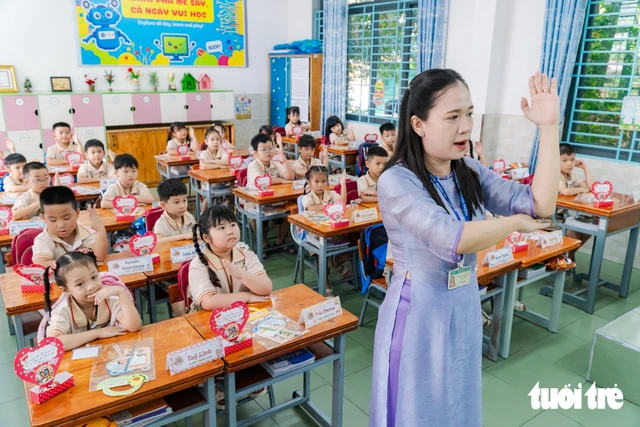
First-grade homeroom teachers and students at Tan Son Nhi Elementary School in Tan Son Nhi Ward, Ho Chi Minh City, spend time together on their first day at school. Photo: Quynh Tram / Tuoi Tre
This does not mean our schools are perfect. Class sizes remain large, pressure to achieve is still intense, and I myself have often been disappointed by shortcomings in my own work in running schools.
I understand why some parents want to turn away. But the way to improve an imperfect ecosystem is to participate and speak up: engage in dialogue with teachers and school leaders, choose a school that better suits your child, and spend evenings and weekends helping your child make up for what the school may lack.
Learning at home can be a valuable supplement, but turning it into a substitute for an entire childhood spent among peers comes at a much higher cost.
The warning from the Ho Chi Minh City Department of Education and Training not only protects children’s right to education, but also an even more fundamental right: the right to grow up among other people. Some lessons cannot be found in any textbook. So where, and with whom, will homeschooled children learn them?








Max: 1500 characters
There are no comments yet. Be the first to comment.