
AI cameras detect hundreds of traffic violations after 3 days of citywide operation in Hanoi
Hanoi’s AI-integrated traffic surveillance camera system detected 393 traffic violations during its full-scale operation from Saturday last week to Tuesday, according to the city’s traffic police division.
Among them, 125 involved cars while 268 motorcycles were found committing traffic violations.
The most common offense was running red lights, accounting for 352 cases, with 87 by cars and 265 by motorcycles.
Besides, the system also identified five cases of cars failing to comply with road markings, one case of a car driving against traffic on a one-way street and three cases of motorcycles carrying more passengers than permitted.
In addition, these AI cameras detected 21 cases of cars stopping in areas where stopping is prohibited, and 11 cases of cars picking up or dropping off passengers in no-stopping or no-parking zones.
Beyond detecting violations, the AI camera system enables officers to monitor traffic conditions in real time and promptly identify congestion points and accidents in order to proactively organize traffic flow and implement timely control measures.
Initial assessments showed that the AI camera system has been operating stably and effectively.
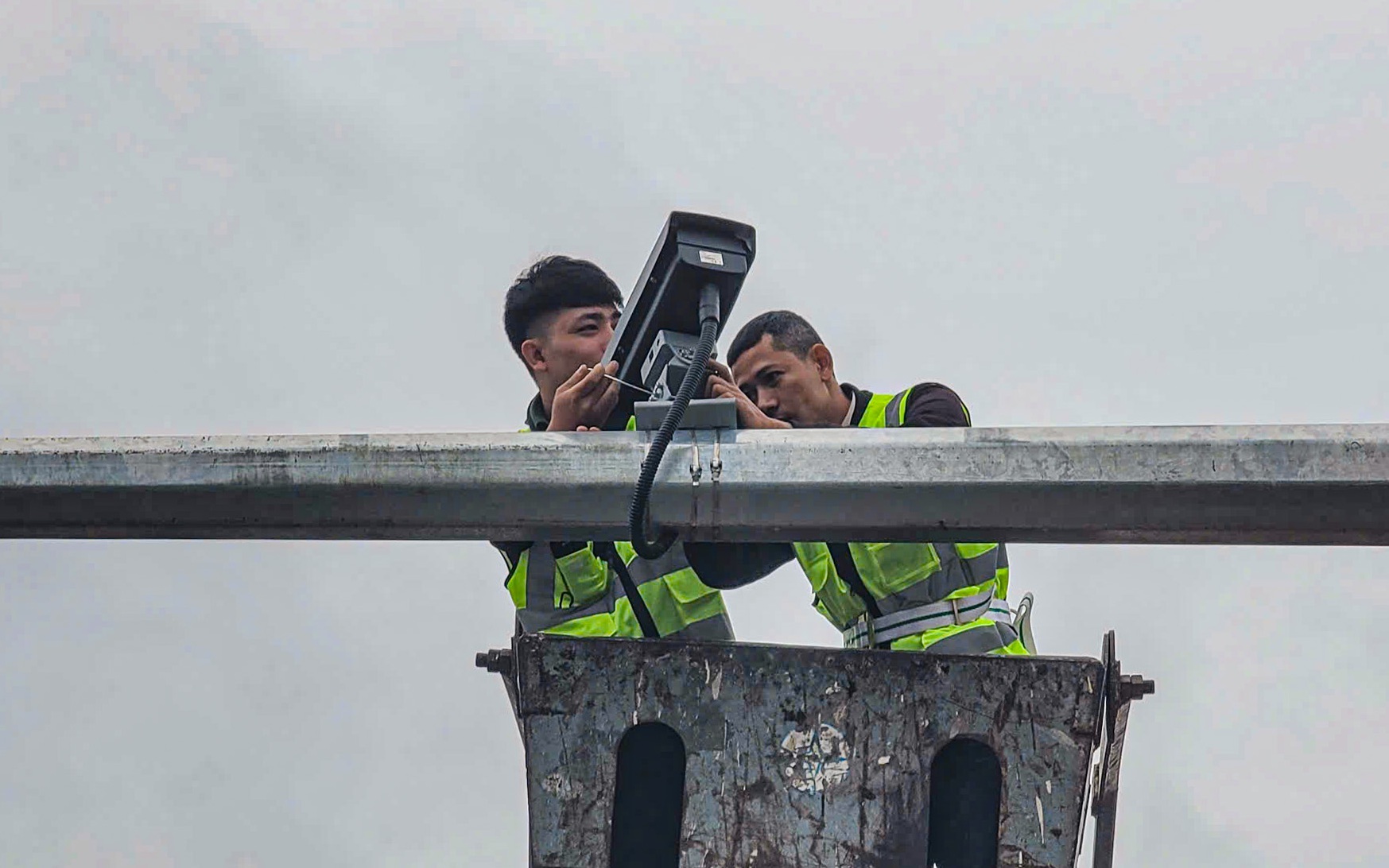
The number of violations recorded has increased significantly compared with traditional patrol and inspection methods, and is notably higher than figures prior to the system’s official launch.
Images captured by the AI cameras are of high resolution, clearly showing license plates, timestamps, and specific violations.
This supports accurate verification and the preparation of electronic records for automated enforcement, ensuring objectivity, accuracy, and strong evidentiary value.
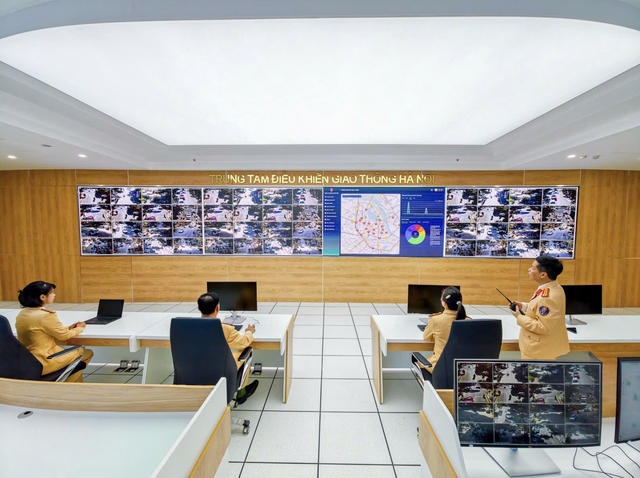
Hanoi’s AI camera system operates effectively after three days of its launch.
The Hanoi Smart Traffic Control Center officially began operations on Saturday last week, marking the start of large-scale electronic traffic enforcement across the city.
The center serves as the command hub for 1,837 cameras of various types, all directly connected to traffic signal controllers and integrated with artificial intelligence (AI).
The automated control system is built on a comprehensive traffic flow database and adapts in real time using camera data from 195 signalized intersections, out of a total 564 traffic light junctions transferred from the municipal Department of Construction in early October.
In addition, pan-tilt-zoom cameras capable of panning, tilting, and zooming expand monitoring coverage to support security and public order operations.
The Hanoi Department of Public Security said that the AI cameras used for traffic enforcement feature high resolution, automatically analyze visual data, and store records in the system for up to 75 days.
The technology is capable of detecting 28 different types of traffic violations.
Tieu Bac - Hong Quang / Tuoi Tre News