
Beyond master plan: Building Ho Chi Minh City’s urban operating system for next century
A century is far too long for any blueprint to accurately predict. The real question for Ho Chi Minh City is not what the city will look like in 2125, but how it can function and adapt to unprecedented changes.
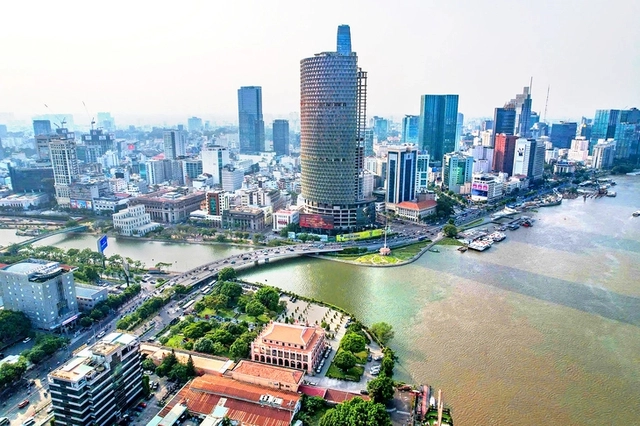
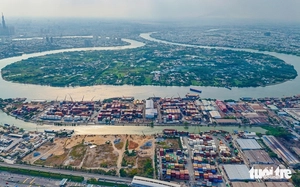
The Saigon River flows through downtown Ho Chi Minh City. Photo: Quang Dinh / Tuoi Tre
Rather than trying to predict, long-term planning should focus on creating a framework that allows each generation to respond to new conditions while preserving the city’s core values.
The concept, described as an urban operating system, would combine long-term principles, development rules, real-time data, and mechanisms for policy adjustment.
From a 'genetic code' to an 'operating system'
Ho Chi Minh City needs to identify the core values it must preserve across generations, including its ecosystems, waterways, heritage, quality of life, resilience, and safety thresholds.
But a city needs more than a “genetic code.” It also needs a system that allows it to respond to change.
While the genetic code defines what should be protected, the “operating system” determines how the city functions, makes decisions, and adapts over time.
A 100-year plan, therefore, should not be fixed.
The long-term vision should be organized across different time horizons: 100 years for overarching goals and core values, 20-30 years for spatial structure and infrastructure, 10 years for strategy, five years for priority projects, and annual reviews for evaluation and adjustment.
A good plan is not one that predicts everything correctly, but one that enables the city to adapt when earlier forecasts no longer hold true.
Development should match infrastructure capacity
Ho Chi Minh City should avoid applying the same development intensity across all areas and instead determine how much growth each location can accommodate based on its infrastructure and environmental capacity.
Areas with metro access, public transport, schools, hospitals, public spaces, and adequate infrastructure could support higher-density development, while locations with weaker infrastructure or significant ecological value would require stricter controls.
Rather than focusing only on how high buildings can rise, planners should assess whether transport systems, public services, infrastructure, and the environment can support additional development without undermining residents’ quality of life.
The approach would shift the city from pursuing maximum development intensity to identifying an optimal level for each area.
TOD should go beyond high-rises around stations
The principle is particularly relevant as Ho Chi Minh City expands its urban railway network and promotes transit-oriented development, or TOD.
TOD should not simply mean building more high-rises around stations.
Instead, it should reorganize urban development around access to public transport and better integrate housing, mobility, public services, infrastructure, and land use.
At major future transport hubs such as Binh Trieu, planning should therefore focus not only on building density but also on how different urban functions can work together.
Infrastructure investment should create new development opportunities, while the resulting development should help generate resources for further infrastructure upgrades.
Planning seen as a tool for mobilizing development resources
Urban planning should go beyond allocating space and be closely linked with land management, urban finance, and Land Value Capture (LVC).
New infrastructure projects, particularly public transport, often improve accessibility and increase surrounding land values.
If cities can capture part of this increase, the proceeds can be reinvested in infrastructure and public spaces.
This can create a virtuous cycle: infrastructure investment improves accessibility, which raises land values; part of that added value is then captured and reinvested, generating further value.
Under this approach, planning does not merely determine where development can take place but also becomes a tool for creating and mobilizing resources for urban development.
Major development decisions can also be assessed through the five “5E” principles: Ecology, Economy, Equity, Efficiency, and Engagement.
Specifically, projects should be evaluated on whether they protect ecosystems and strengthen resilience, generate economic value and development resources, distribute benefits fairly, use land and infrastructure efficiently, and ensure meaningful participation by residents, businesses, and other stakeholders.
These criteria also help distinguish simple urban growth from sustainable urban development.
Combining top-down planning with bottom-up place-making
For a large city, urban development cannot be shaped solely through a citywide master plan.
City-level planning should establish the overall vision, development structure, guiding principles, development thresholds, and backbone infrastructure.
At the same time, wards, communes, and local communities are often better positioned to understand the specific challenges, needs, and potential of their areas.
This calls for a combination of “top-down planning” and “bottom-up place-making.”
Under this model, the city sets the overall direction and development framework, while local authorities translate them into area-specific spatial plans, needs, opportunities, projects, and resource requirements.
Residents and businesses, meanwhile, participate in consultation, co-creation, investment, and oversight.
Ho Chi Minh City should build an “urban operating system” capable of guiding development over generations, rather than relying on a fixed master plan that could quickly become outdated as conditions change.
Such an urban operating system should comprise four key layers: core values (DNA) that must be preserved, rules governing where and how development can take place, data to measure changes against targets, and feedback mechanisms that allow policies and plans to be adjusted when reality differs from forecasts.
The approach would replace the conventional linear process of “planning, approval and implementation” with a continuous adaptive cycle.
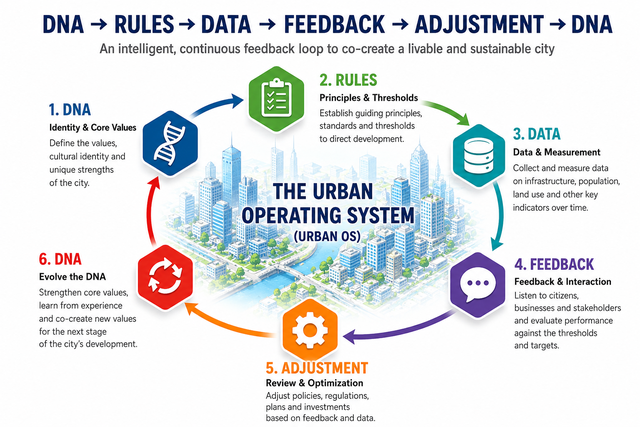
An intelligent, continuous feedback loop to co-create a livable and sustainable city
For the system to work, planning must also become measurable.
The city would need to continuously monitor indicators such as population, density, infrastructure capacity, green space, access to public services and areas approaching their development limits.
When certain indicators exceed predefined thresholds, authorities should be able to respond by adjusting policies or development plans.
Planning would therefore become an ongoing cycle of observation, assessment, decision-making, implementation, measurement and adjustment.
The planning framework should also be translated from the citywide level down to individual neighborhoods, projects, land plots and buildings.
At each level, authorities would need to determine what should be developed, where development should occur, how much development an area can accommodate, whether infrastructure can support it, who will invest and how projects will be financed.
This is where urban planning must connect with land management, investment, urban finance and architecture, turning planning from a tool for shaping physical space into a system capable of directing and sustaining development.
For the city’s 100-year vision, the objective should therefore not be to produce an unchanging map of the future.
A century is too long for any city to predict its development with precision.
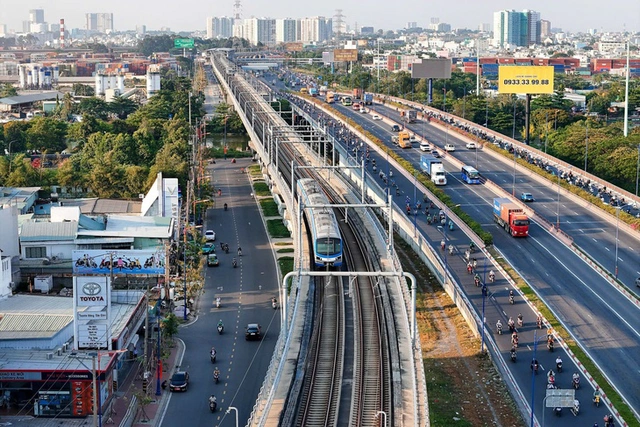
Ho Chi Minh City’s Ben Thanh-Suoi Tien Metro Line 1. Photo: Quang Dinh / Tuoi Tre
What the city can do today, however, is establish principles that should remain intact across generations.
These include respecting the city’s rivers and waterways, protecting ecosystems, making public transport the backbone of urban development, ensuring that growth matches infrastructure capacity, capturing part of rising land values to finance public investment, promoting meaningful public participation and keeping development within appropriate limits.
Under this approach, Ho Chi Minh City would need a durable urban structure, a clear set of core principles and a sufficiently flexible operating system that allows future generations to continue shaping the city without undermining the values inherited from their predecessors.
An enduring city, in this sense, is not one that remains unchanged, but one that can adapt without losing its identity, resilience, equity and quality of life.
The ultimate goal is not to make decisions on behalf of future generations, but to leave them “a sufficiently sound structure, sufficiently clear principles and a sufficiently flexible system to shape their own future.”
Ho Chi Minh City is drawing up its master plan for the 2025-50 period, with a 100-year vision extending to around 2125, as it seeks to shape a long-term development strategy for the expanding megacity, coordinate infrastructure investment and overhaul urban governance.
Under the vision, Ho Chi Minh City aims to become a global, smart, modern and inclusive city on par with leading urban centers worldwide.
The city is expected to pursue a more balanced development model that combines economic growth with environmental protection, social equity and the preservation and promotion of cultural values.
Ngoc Nguyen - Nguyen Dinh Hoa / Tuoi Tre News
Link nội dung: https://news.tuoitre.vn/beyond-master-plan-building-ho-chi-minh-citys-urban-operating-system-for-next-century-10326082414254756.htm