
Beyond pink church: Why is Ho Chi Minh City's Tan Dinh a must-visit for foreign tourists?
From its iconic pink church to bustling markets, traditional eateries, and trendy cafés, Ho Chi Minh City's Tan Dinh neighborhood is capturing the attention of foreign tourists looking for a taste of authentic local life.
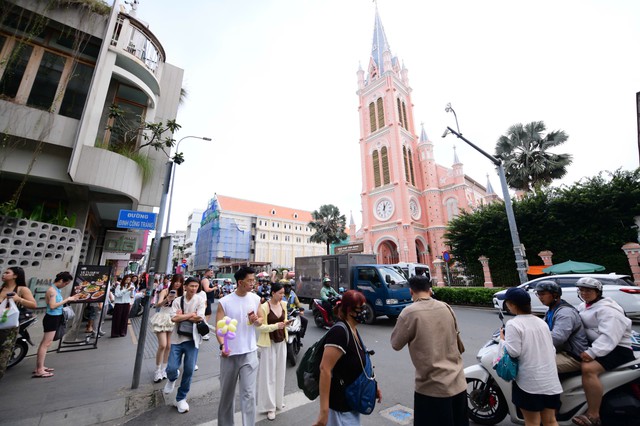
Tourists visit Tan Dinh's iconic pink church on a weekend morning. Photo: Quang Dinh / Tuoi Tre
The neighborhood recently ranked 12th on Time Out magazine's list of the world's 40 coolest neighborhoods in 2026, becoming the only Vietnamese destination to make the list.
Much of Tan Dinh's appeal centers on its famous pink church, an Instagram favorite that draws international visitors and brings growing business to nearby cafés, restaurants, and shops.
Yet beyond the photogenic landmark, Tan Dinh offers much more: a lively mix of historic architecture, traditional markets, local food, and modern urban culture that gives visitors a glimpse into everyday life in Vietnam's southern metropolis.
From viral landmark to local experiences
For Aisyah, a 27-year-old Malaysian tourist returning to Ho Chi Minh City with friends after her first visit in 2018, Tan Dinh's famous pink church was the main attraction.
Drawn by its popularity on social media, she initially planned to visit the church for photos.
But after learning more about the neighborhood, she and her friends decided to set aside an entire day to explore the area.
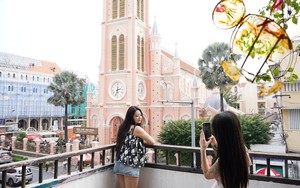
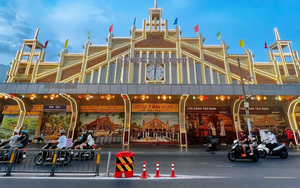
"We plan to take photos at the church at 8:00 am to avoid the crowds, then head to Tan Dinh Market for breakfast and some local shopping," she said.
Their itinerary also included browsing trendy souvenir shops and stopping at cafés along the way, especially if they needed a break or encounter rain.
Similarly, New Zealand tourists Carlie and Kane discovered Tan Dinh through travel recommendations on Instagram, TikTok, and ChatGPT.
"Tan Dinh Church caught our attention with its beautiful architecture and distinctive pink color. We told each other it was a place we absolutely had to visit," Carlie said.
The pair had already explored Ho Chi Minh City by motorbike at night, enjoyed banh mi for breakfast, and planned to sample more Vietnamese coffee.
"What we love is that all the local experiences we're looking for can be found right here in Tan Dinh," Carlie said, adding that the neighborhood offers a blend of authentic local culture and modern services.
She described Ho Chi Minh City as a vibrant destination with French-influenced architecture, friendly residents, and a distinctive energy unlike Bali or California.
According to Tuoi Tre (Youth) online newspaper's observations, cafés, restaurants, and shops are thriving within a one-kilometer radius of Tan Dinh Church, with new businesses capitalizing on the landmark's popularity.
Pink church boosts business for local shops, eateries
The growing popularity of Tan Dinh's iconic pink church is bringing more than just tourists to the neighborhood, creating new business opportunities for nearby cafés, restaurants, and long-established eateries.
Located directly opposite the church on Hai Ba Trung Street, Sense Tea café is one of the businesses capitalizing on the landmark's social media appeal.
Since opening in June 2026, the café has attracted a significant number of international visitors, particularly from the United States and China.
Nguyen Pham Hoang Quan, a 20-year-old employee, said foreign tourists passing through the area account for a large share of its customers.
To make the most of its location, the café has adjusted its design, adding windows overlooking the pink church to give visitors better spots for taking photos.
Long-established eateries are also benefiting from the area's growing popularity.
Nguyen Thi Thu Ha, 65, owner of Ma Oi beef noodle soup restaurant at 59 Thach Thi Thanh Street, said she had been selling food in the area since 2009.
Over the past two to three years, her restaurant has welcomed more visitors from other parts of Vietnam and overseas, particularly South Korea, as Tan Dinh Church has become better known.
Some customers have shared their dining experiences on social media, helping the restaurant attract even more diners.
Daily sales have risen from around 50 bowls of bun bo (Vietnamese beef noodle soup) to 70-80 bowls, she said.
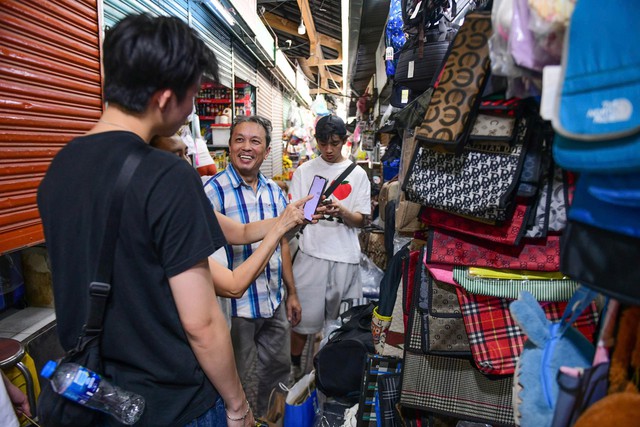
Tourists shop at the century-old Tan Dinh Market. Photo: Quang Dinh / Tuoi Tre
Nearby Tan Dinh Market, which celebrated its 100th anniversary in July, has also undergone improvements, including new murals, decorative arches, and free drinking water stations.
Le Quang Thien, deputy director of the Tan Dinh Ward Public Service Provision Center, suggested organizing regular discount campaigns among market vendors, possibly once every quarter, to draw more shoppers, promote the market, and boost sales.
Turning local character into tourism appeal
Tan Dinh's growing popularity reflects a broader trend in urban tourism, where neighborhoods attract visitors by showcasing their distinctive culture, history, and everyday life.
In Kyoto, Japan, the 400-year-old Nishiki Market draws tourists with more than 100 stalls selling traditional food, spices, and local specialties along a 400-meter street.
Tokyo's Kappabashi district, meanwhile, has become a destination in its own right, with around 170 shops specializing in kitchenware, ceramics, and realistic plastic food models.
In Seoul, South Korea, the former industrial neighborhood of Seongsu has transformed old factories and warehouses into fashionable cafés, galleries, and pop-up stores while preserving traces of its manufacturing past.
These examples highlight how existing cultural and commercial spaces can become attractions without losing their original character.
For Tan Dinh, the international recognition offers an opportunity to build on the popularity of its pink church while encouraging visitors to explore the neighborhood's markets, eateries, and local businesses.
As tourists venture beyond the famous landmark, the benefits of Tan Dinh's growing appeal are extending to the wider community.
Ngoc Nguyen - Truong Linh / Tuoi Tre News
Link nội dung: https://news.tuoitre.vn/beyond-pink-church-why-is-ho-chi-minh-citys-tan-dinh-a-must-visit-for-foreign-tourists-103261025151303177.htm