
Cheap Nike, Adidas shoes in Vietnam: too good to be true
Cheap Nike and Adidas shoes may seem like a bargain, but experts warned that unusually low prices can signal counterfeits, which are increasingly difficult to distinguish from genuine products even for experienced buyers.
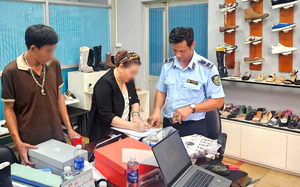
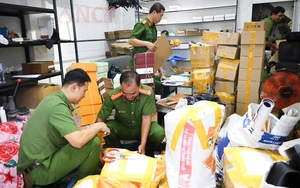
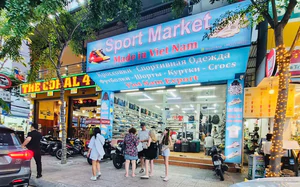
The warning comes as market surveillance authorities in Khanh Hoa Province recently fined a local store over US$1,900 and ordered the destruction of 180 pairs of fake Nike and Adidas shoes.
The shop was exposed after a customer bought two pairs for a total of VND1.3 million ($50) as a gift for her boyfriend in Russia, only for a specialist there to confirm they were knockoffs.
Unpleasant as the discovery was, experts say the outcome was hardly surprising -- two pairs of genuine shoes from major international brands simply cannot be bought for $50.
In other words, consumers looking for Nike or Adidas shoes at exceptionally low prices are unlikely to find genuine products.
Genuine shoes rarely come that cheap
Nguyen Truong An, in charge of litigation and enforcement at the Ho Chi Minh City branch of Pham and Associates Law Firm, which represents the owner of the Adidas trademark in Vietnam, said genuine shoes generally cost several million dong per pair and can reach tens of millions of dong (VND10 million = US$384).
They are typically sold through authorized retail channels, with genuine products more readily available in major cities.
Adidas footwear and fashion products sold officially in Vietnam are also rarely offered at very deep discounts, making genuine products at unusually low prices difficult to find.
“Authorities have stepped up efforts to crack down on counterfeit goods, and many cases have been dealt with, but the situation remains complicated,” An said.
“As many as 99 percent of Adidas shoes sold outside the brand’s authorized retail network are counterfeit, and we handle several cases involving fake or imitation products almost every week.”
Consumers buying major branded footwear and fashion products such as Nike and Adidas outside official retail networks face a very high risk of buying counterfeit products, Nguyen Van Khanh, vice-chairman of the Ho Chi Minh City Leather and Footwear Association, told Tuoi Tre (Youth) online newspaper.
Khanh noted that some genuine products with manufacturing defects may be sold outside official channels at lower prices.
However, defective products account for only around 1-1.5 percent of output at many major fashion brands and are generally required to be destroyed under company policies.
As a result, there are not enough of these products to account for the large quantities of supposedly “defective genuine goods” sold cheaply on the market.
“Counterfeit products are manufactured in many forms, with a large proportion smuggled in from abroad,” Khanh said.
“Counterfeiters copy designs very quickly and use increasingly advanced technology, making it difficult for both brands and consumers. This forces companies to constantly change their designs to make counterfeiting more difficult.”
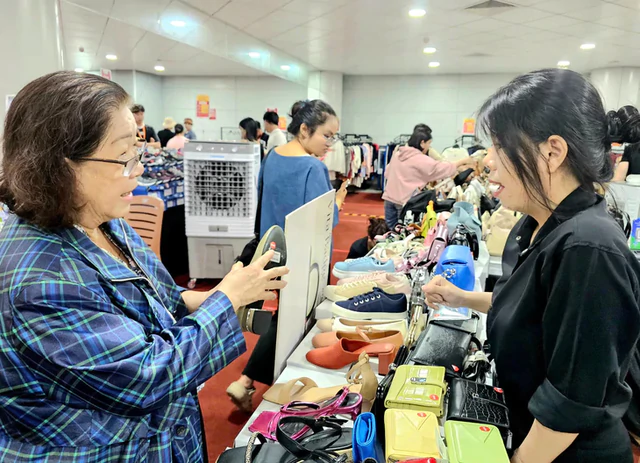
Large numbers of customers shop for discounted fashion products at a promotional event in Ho Chi Minh City.
Challenge of telling real from fake
An said brands have repeatedly warned customers about counterfeit products and advised them to buy from stores within official distribution networks to ensure authenticity.
Companies also regularly work with authorities on inspections and crackdowns on counterfeit goods.
Khanh said brands are generally reluctant to publicly reveal detailed authentication features because counterfeiters could use such information to copy products more easily.
As a result, even people working in the industry can correctly identify genuine products based on appearance only around 50-60 percent of the time, he said, as counterfeit technology has become increasingly sophisticated.
Nevertheless, there are some basic differences consumers can look for.
Genuine and counterfeit shoes may differ in the number and spacing of stitches.
Genuine products generally have sharper, cleaner stitching, while printed lettering tends to be more durable.
Genuine soles are also typically smoother and better finished.
Tran Dinh Han, a fashion industry expert in Ho Chi Minh City, said genuine Nike and Adidas products can generally be expensive.
Genuine products brought into Vietnam through unofficial personal import channels are also unlikely to be extremely cheap.
“Counterfeit goods come in many grades and quality levels, so prices vary. Some can even be sold at prices similar to those of genuine products,” Han said.
“There are also cases in which manufacturers produce goods only under contract, with the brand requiring them not to sell those products on the Vietnamese market.”
Experts recommended that consumers purchase genuine products through official online channels, including brand websites and reputable e-commerce platforms.
Wherever they shop, buyers should carefully check the seller’s information and business scale, as well as look for proof of authorization, invoices and warranty policies.
Thanh Ha - Nguyen Tri / Tuoi Tre News
Link nội dung: https://news.tuoitre.vn/cheap-nike-adidas-shoes-in-vietnam-too-good-to-be-true-103260908200427759.htm