
Drones expected to transform rescue operations, urban management in Da Nang
Da Nang City in central Vietnam can position itself to capitalize on low-altitude airspace as a new economic frontier by using drones in search-and-rescue missions on Son Tra Peninsula, forest fire monitoring, and urban management, heard an unmanned aerial vehicle (UAV) technology workshop held on Friday.
The low-altitude economy is increasingly viewed worldwide as a future engine of growth.
At the event, organized by the Da Nang Innovation Startup Support Center in collaboration with the Vietnam Low-Altitude Economy Partnership, many participating experts said that the coastal central city possesses unique advantages for developing a low-altitude economy, which utilizes drones and advanced aerial vehicles operating at lower airspace levels for commercial and public-service applications.
A permanent UAV network could enable the city to monitor forest fires on Son Tra Peninsula, inspect infrastructure, detect unauthorized construction activities, track encroachments on roads and beaches, and support emergency rescue operations far more efficiently than traditional methods.
One of the workshop's most discussed proposals was the development of an integrated low-altitude flight safety system across Son Tra Peninsula.
Experts cited past incidents involving tourists in the area to illustrate the challenges of conducting search-and-rescue operations in the peninsula’s rugged terrain, where dense forests and mountainous landscapes often make access difficult.
As such, a continuously operating UAV surveillance system, combined with centralized positioning and coordination technology, could reduce the time needed to locate missing or injured individuals to just a few minutes.
Drones could also reach emergency sites rapidly to transmit signals, provide illumination, or deploy life-saving equipment before rescue teams arrive.
International experience demonstrates the growing role of drones in coastal rescue systems.
In some cases, UAVs have been able to deliver life buoys to victims in little more than a minute.
Given its unique combination of mountains, forests, and coastline, experts said Son Tra Peninsula could serve as a natural testing ground for Vietnam’s first low-altitude economic models.
Apart from rescue operations, tech companies and specialists hinted at creating a shared UAV network to serve multiple departments and agencies.
Dr. Trinh Cong Duy, a lecturer at the University of Science and Technology under the University of Da Nang, said that drones equipped with artificial intelligence can already automatically identify dozens of urban violations, including illegal waste dumping, sidewalk encroachment, unauthorized construction, improper parking, and forest fire risks.
Data collected by UAVs could also support 3D mapping, urban planning, transportation infrastructure management, monitoring of bridges, roads and coastal embankments, and disaster prevention efforts.
Rather than having individual agencies invest separately in drone systems, Da Nang could establish a shared UAV infrastructure serving a broad range of sectors, including urban management, environmental protection, tourism, and emergency response.
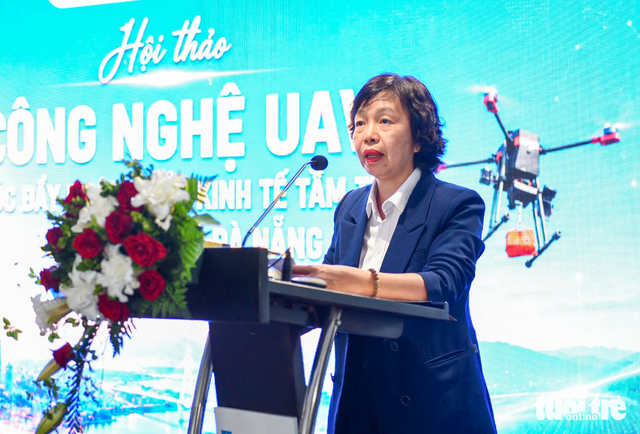
The leader of the Da Nang Department of Science and Technology sees UAVs and aerospace technologies as strategic drivers. Photo: Thanh Nguyen
Le Thi Thuc, deputy director of the Da Nang Department of Science and Technology, said the city is planning a strategic technology development program for the 2026-30 period, with a vision to 2045.
Under the plan, UAVs and aerospace technologies have been identified as strategic aspects for research, development, and commercialization.
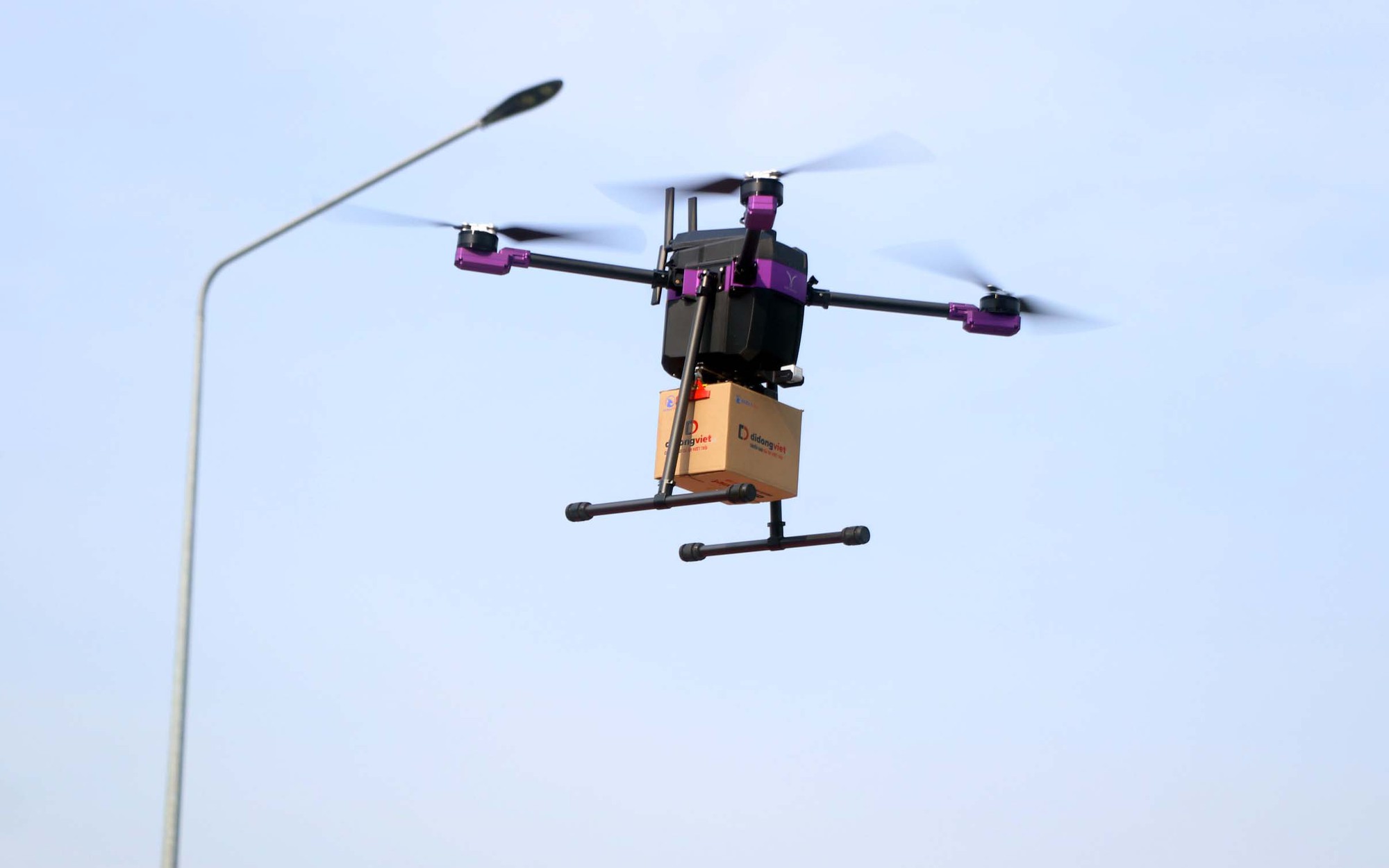
She noted that many countries regard the low-altitude economy as a field capable of generating breakthrough business models across logistics, smart agriculture, urban management, infrastructure monitoring, public services, tourism, and rescue operations.
For Da Nang, which is pursuing growth through science-technology, innovation, and digital transformation, the low-altitude economy represents more than a technological trend.
It offers a strategic opportunity to create new industries, enhance competitiveness, and drive sustainable economic development in the years ahead.
Among many of its favorable conditions for growth in this sector are an innovation ecosystem, a system of universities and research institutions, and a hi-tech park and concentrated information technology zones.
Also, the demand for UAV applications remains strong across urban management, environmental monitoring, tourism, logistics, disaster prevention, and emergency response.
Despite these advantages, Thuc noted that the city still faces significant challenges, including regulatory frameworks, testing infrastructure, technical standards, specialized human resources, and market connectivity.
The department has pledged to continue advising municipal authorities on policies supporting strategic technologies, particularly UAV development.
The department also plans to promote research and technology transfer, support innovative startups, facilitate technology market development, strengthen industry partnerships, and expand domestic and international cooperation to attract resources for the sector’s long-term growth.
Tieu Bac - Thanh Nguyen / Tuoi Tre News
Link nội dung: https://news.tuoitre.vn/drones-expected-to-transform-rescue-operations-urban-management-in-da-nang-103260612155728818.htm