
Explainer: Why bus riders in Ho Chi Minh City still need to tap ID, bank cards despite free fares
Although Ho Chi Minh City has waived fares on its public bus network, authorities still require passengers to tap their ID cards, bank cards, or other supported devices when boarding in order to record ridership, a city official said.
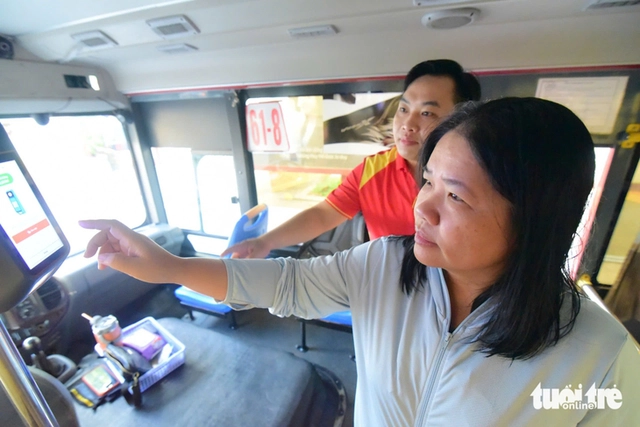
Bus driver Minh Tuan on Route 61-2 guides a passenger on how to use the T10 validator on the first day of Ho Chi Minh City's free bus program on July 1, 2026. Photo: Tri Duc / Tuoi Tre
Since this month, the city has provided free rides on 134 bus routes to encourage greater use of public transport and help reduce traffic congestion and air pollution.
Pham Ngoc Dung, director of the city’s Public Transport Management Center, explained that the process is not for payment but for ridership verification.
Authorities need accurate data on passenger numbers to evaluate the effectiveness of the free-fare policy, adjust bus schedules, and allocate vehicles more efficiently.
Passengers can verify their trips by tapping their ID cards, scanning a VNeID QR code, using a bank card, or having bus attendants record the trip on T10 readers.
Dung emphasized that passengers will not be charged when they tap a card or scan a QR code.
Elderly passengers, people with disabilities, or those who forget their ID cards can simply inform attendants, who will record their trips manually.
The Public Transport Management Center also plans to issue physical cards for seniors and disabled riders to make the process easier.
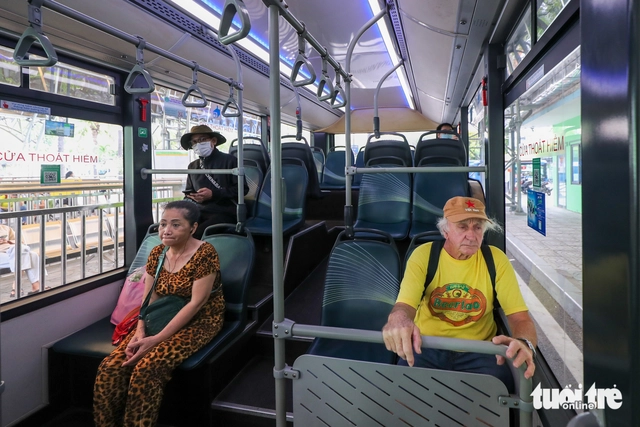
Richard (R), an 80-year-old British visitor, said Ho Chi Minh City's buses are clean, convenient, and even more attractive now that rides are free. Photo: Hoang Trieu
He added that trip verification is optional from July 1 through September 30, allowing passengers to get used to the system while operators refine technical procedures.
From October 1 to the end of this year, verification becomes mandatory on free bus routes to ensure accurate ridership data for government subsidies to transport companies.
Foreign residents and tourists can validate their trips using EMV chip-enabled bank cards, including Visa and Mastercard, or digital wallets such as Apple Pay, Google Wallet, and Samsung Pay.
As with Vietnamese passengers, tapping a payment card or mobile device is only for recording usage, not for charging fares.
Dung said that the verification process takes only a few seconds and is common in many countries, even where public transport is free or heavily subsidized.
The data helps the city identify high-demand routes, increase service frequency, and ensure public funds are used transparently.

Minh Duy - Tri Duc / Tuoi Tre News