
Fashion shopping complexes: new hotspot for international visitors to Ho Chi Minh City
From old apartment blocks to creative shopping complexes, new commercial spaces are drawing visitors to Ho Chi Minh City, opening up opportunities for growth in services and tourism while breathing new life into the megacity.
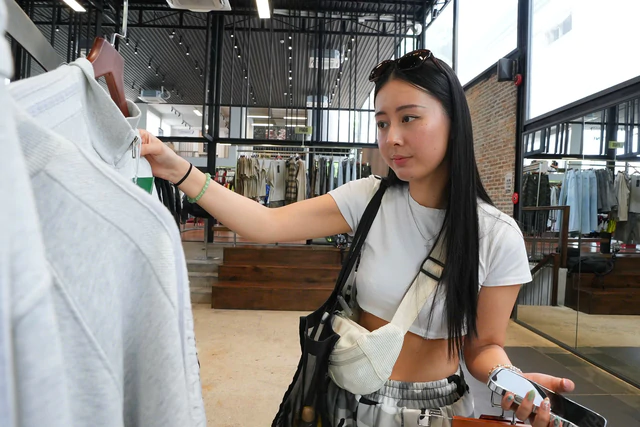
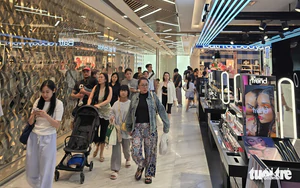
Many tourists visit Vietnam to shop for fashion items they discover through trending social media videos. Photo: The Kiet / Tuoi Tre
As major cities compete to attract visitors, their appeal lies not only in familiar tourist attractions but also in their ability to offer distinctive experiences that connect business with culture, tourism and local life.
For Ho Chi Minh City, spaces that may once have seemed ordinary are becoming destinations in their own right, opening up opportunities for new service models and helping shape the city's urban identity.
The newly passed Urban Development Law also creates opportunities for Ho Chi Minh City to develop new business models that combine shopping, cultural activities and tourism, making the city more attractive to visitors.
Tourists flock to Vietnam for fashion shopping
On a recent afternoon at a fashion shopping complex in Ben Thanh Ward, Ho Chi Minh City, Axel Onana, 23, from Paris, France, browsed individual stores, tried on clothes and looked for designs that differed from what he was used to seeing back home.
Axel discovered fashion shopping destinations in Vietnam through TikTok. He was surprised by the spacious, clean stores, eye-catching displays and fresh designs.
Compared with Paris, the world’s fashion capital, where he said the stores he usually visited tended to be small and the clothing styles simple, Vietnamese local brands offered a different shopping experience.
“Prices in Vietnam are much more affordable than in Paris. The products are attractive and good quality, so I am willing to spend around $1,000 on shopping,” Axel said.
British tourists Ebun Adebanjo and Venus Njekwe, both 25, visited Ho Chi Minh City during a nine-day trip. Through content shared on social media, they discovered local fashion brands and set aside time to explore shopping complexes.
What appealed to the two visitors was not just the clothing. The stores were close to one another, with air-conditioned, spacious interiors and a wide selection of styles, from streetwear and beachwear to outfits for a night out.
The two tourists said the appeal of these fashion complexes was one reason they chose Ho Chi Minh City as the first stop on their journey through Vietnam.
Alongside experiencing the city’s vibrant pace of life, they also took the opportunity to shop for clothes to wear during their trip.
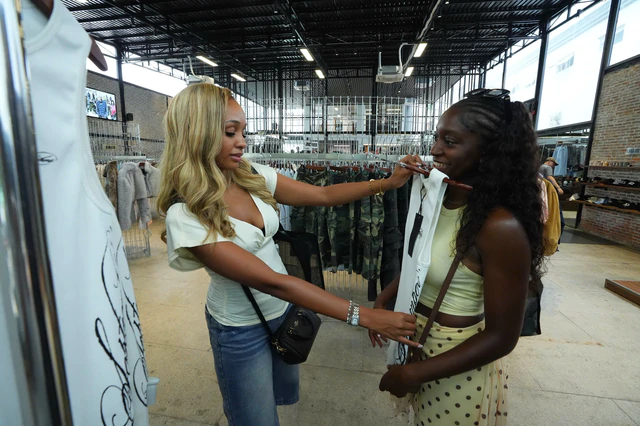
British tourists Ebun Adebanjo and Venus Njekwe, both 25, shop at a fashion complex in Ho Chi Minh City. Photo: The Kiet / Tuoi Tre
“When people think of local brands, they usually think of the domestic market. So we also see this as a cultural experience, a chance to see what young people in Vietnam wear, what they like and what they do,” the British tourist said.
Terresa, 22, from the United States, was drawn to more experimental designs. She said Vietnamese local brands offered a wide range of unique styles, allowing wearers to mix and match different looks.
Beyond shopping for clothes, Terresa found that places like these also encouraged tourists to learn more about Vietnam’s cuisine, culture and people.
From old apartment blocks to new shopping complexes
Shopping complexes are not an entirely new concept.
For years, old apartment buildings in central areas, such as 14 Ton That Dam, 42 Nguyen Hue and 26 Ly Tu Trong, have been popular destinations for young people seeking local fashion brands.
Stores housed in old buildings, along with retail spaces in underground shopping areas, once sparked a shopping craze among some young Vietnamese consumers.
Building on this foundation, a new generation of fashion complexes has emerged with a different operating model.
Rather than simply renting out kiosks to multiple retailers, these complexes have adopted an all-in-one model, centrally managing the entire space, selecting brands and designing the visitor experience.
Observations show that even on weekdays, these venues attract hundreds of visitors per hour, mainly young people and international tourists.
Visitors can shop, dine, relax, take photos and explore multiple brands in one place. The space itself has thus become part of the overall product, rather than merely a place to sell goods.
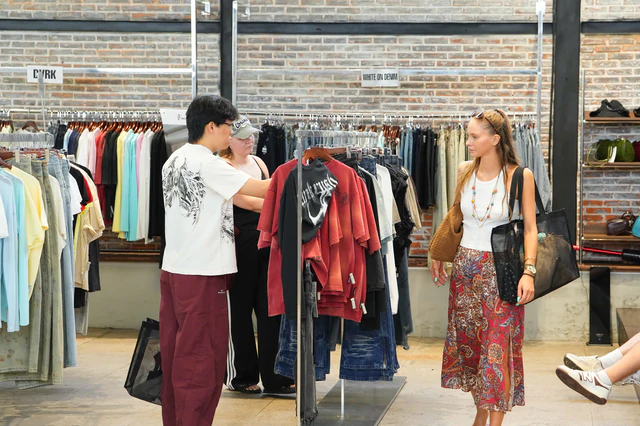
Popular destinations such as 11 Garmentory, Compound Garment and Tan Dinh Compound have also adopted a multi-brand, multi-experience model focused on local fashion labels. Photo: The Kiet / Tuoi Tre
A representative of 11 Garmentory said the complex began noticing an increase in international visitors in late 2024, with the trend becoming more pronounced in early 2026. On weekends, the venue records around 2,000 visits a day, about 1.5 times the weekday figure.
Notably, international visitors come to shop, not just browse. According to 11 Garmentory, international customers spend an average of around VND3 million (US$116) per shopping transaction, with some purchases reaching VND60 million to VND70 million ($2,320-$2,710).
“International visitors are looking for a comfortable, air-conditioned shopping space with seating areas where they can rest and enough variety to explore. This is also why the multi-brand model appeals to this group,” the representative of 11 Garmentory said.
Notable fashion shopping complexes in Ho Chi Minh City
11 Garment (117B Nguyen Dinh Chinh Street, Cau Kieu Ward) focuses on streetwear for men and women, with designs ranging from minimalist to bold.
Rue Miche (171 Dong Khoi Street, Saigon Ward) draws inspiration from French fashion, embracing a modern urban aesthetic and one-of-a-kind designs.
Tan Dinh Compound (234-236 Hai Ba Trung Street, Tan Dinh Ward) focuses on simple, practical everyday clothing.
ASA Compound (90 Nguyen Van Thu Street, Tan Dinh Ward) brings together fashion brands offering streetwear with a Y2K-inspired aesthetic.
NOI Space (385E2 Nguyen Trai Street, Cau Ong Lanh Ward) offers both new and secondhand clothing and accessories, with an accessible vintage style.
Van Giang - Truong Linh / Tuoi Tre News
Link nội dung: https://news.tuoitre.vn/fashion-shopping-complex-new-hotspot-for-international-visitors-to-ho-chi-minh-city-10326102322264586.htm