
Foreigners allowed to own up to 30% of apartments in each condominium building in Vietnam
Foreign organizations and individuals will be allowed to own apartments in Vietnam, subject to a limit of 30 percent of the units in each condominium building, under the country’s amended Housing Law.
Vietnam's lawmaking National Assembly passed the amended Housing Law on Saturday morning, with a majority of lawmakers present voting in favor.
The law will take effect on July 1, 2027, introducing several notable provisions concerning foreign ownership of housing and social housing development policies.
These two areas directly affect the property market, while highlighting the need to balance wider access to housing and the attraction of investment with national defense and security requirements and the proper targeting of social welfare policies.
One of the law's notable provisions concerns housing ownership in Vietnam by foreign organizations and individuals.
Under the law, foreign individuals permitted to enter Vietnam may own condominium apartments by purchasing or entering into lease-purchase agreements for commercial housing from project developers.
They may also receive commercial housing in eligible projects as gifts or inherit it, provided the projects are not located in areas requiring protection for national defense and security.
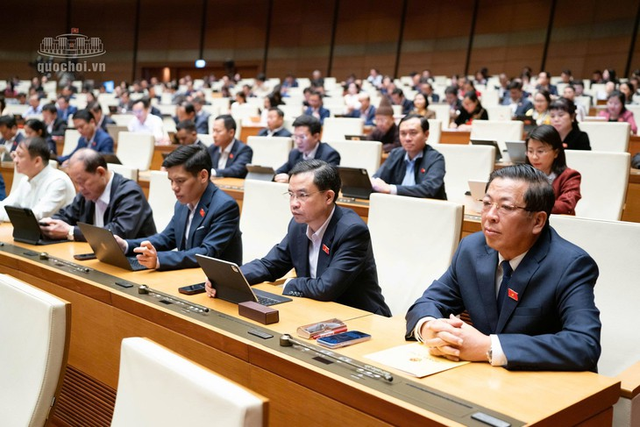
Vietnamese National Assembly deputies attend a session on November 21, 2026. Photo: National Assembly
Notably, foreign organizations and individuals may own no more than 30 percent of the apartments in a condominium building. For projects comprising multiple buildings, the 30-percent cap applies separately to each building.
The provision establishes a legal framework for foreign participation in Vietnam's housing market while setting a clear ownership limit to prevent excessive concentration of apartment ownership among foreign entities and individuals.
Not all housing projects will be eligible for sale to foreigners.
Local authorities are responsible for identifying and publicly announcing the list of housing development projects in which foreign organizations and individuals are permitted to own homes.
During the process of selecting project developers, local authorities must seek opinions from the Ministry of National Defense and the Ministry of Public Security to ensure that the projects are not located in areas requiring protection for national defense and security.
Regarding ownership duration, foreign individuals may own housing for the period agreed upon in the transaction, but no longer than 50 years from the date they are granted a certificate of ownership.
They may apply for a one-time extension if needed, subject to the remaining useful life of the condominium building and a maximum extension of 50 years.
The law also stipulates that foreign individuals who marry Vietnamese citizens living in Vietnam may jointly own condominium apartments with their spouses and enjoy the same ownership rights as Vietnamese citizens.

National Assembly deputies attend the session on November 21, 2026. Photo: National Assembly
One social housing unit per eligible buyer, resale restricted for 5 years
The amended law defines social housing as a category of policy-based housing developed under projects for sale, lease-purchase or rent to eligible beneficiaries in accordance with regulations.
Notably, each eligible individual or household may purchase or enter into a lease-purchase agreement for only one social housing unit.
The provision is intended to prevent individuals or households from acquiring multiple social housing units while people with genuine housing needs remain unable to access the policy.
The law also maintains restrictions on resales during the first five years from the date the buyer or lease-purchaser has fully paid for the property.
Anyone wishing to sell a social housing unit within this five-year period may resell it only to the project developer or another person eligible to purchase social housing.
The resale price must not exceed the original selling price stated in the purchase contract with the developer.
After five years from the date of full payment, buyers and lease-purchasers may resell their social housing units to eligible buyers, provided that an ownership certificate has been issued.
Sellers are exempt from land-use fees but must fulfill their personal income tax obligations.
These provisions make clear that social housing is not intended to be treated like ordinary real estate that buyers can freely trade for profit.
Restrictions on resale during the initial period serve to protect the policy's social welfare objectives and prevent speculation and profiteering from state-supported housing.
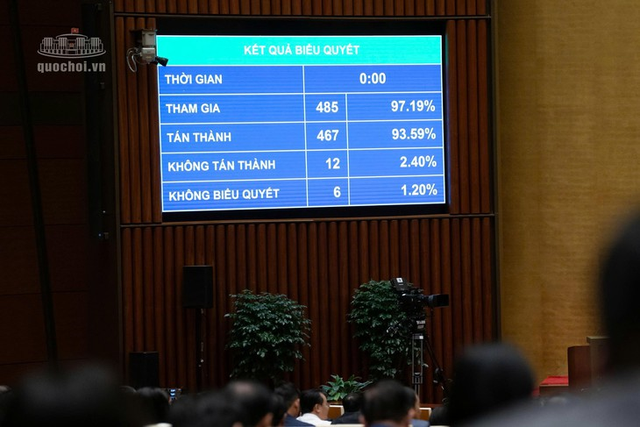
The amended Housing Law was passed with 467 of the 485 lawmakers present voting in favor. Photo: National Assembly
Toward more transparent housing market
Another notable aspect of the housing development policy is the state's priority on developing rental housing and policy-based housing alongside homes for sale.
It also encourages a wider range of housing segments and types that people can afford.
For social housing, developers are also required to update information on projects, selling prices, lease-purchase prices, rental rates and eligible buyers, lease-purchasers and tenants in the information system on housing and the real estate market.
These provisions aim to improve public disclosure and transparency, making it easier to manage policy beneficiaries and strengthen oversight of social housing development.
Thanh Ha - Tien Long - Thanh Chung / Tuoi Tre News
Link nội dung: https://news.tuoitre.vn/foreigners-allowed-to-own-up-to-30-of-apartments-in-each-condominium-building-in-vietnam-103261121152438446.htm