
GM corn accounts for half of Vietnam’s total corn-growing area
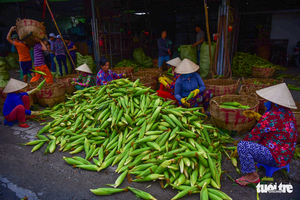
Genetically modified (GM) corn represented some 50 percent of Vietnam’s total corn-growing area in 2025, reflecting farmers’ growing acceptance of agricultural biotechnology.
The figure was revealed by a representative of the Plant Production and Protection Department at a seminar on global trends in agricultural biotechnology and development orientations for Vietnam, held on Tuesday.
The event was organized by the Ministry of Agriculture and Environment’s Agency of Science and Technology in coordination with relevant agencies.
Vietnam approves 31 GM corn varieties
The application of genetically modified crops in Vietnam has delivered notable results, particularly in corn production, said Dr. Phung Danh Huan of the department.
Over the past decade, the proportion of GM corn in the country’s total cultivated corn area rose from 1.1 percent in 2015 to nearly 50 percent in 2025.
As of August this year, Vietnam had approved 31 GM corn varieties for commercial cultivation.
More than 80 percent of the GM corn-growing area was planted with varieties combining insect resistance and herbicide tolerance.
Huan attributed farmers’ growing adoption of the technology primarily to its economic efficiency and environmental benefits.
Between 2016 and 2025, GM corn varieties achieved yields 15.2-30 percent higher than conventional varieties, generating additional profits of some VND4.34-7.34 million (US$169-284) per hectare.
The adoption of GM corn also helped reduce herbicide use by nearly 135,000 kilograms and insecticide use by more than 62,000 kilograms over the decade.
Other benefits included a lower risk of aflatoxin contamination in corn kernels, reduced labor requirements, and less environmental impact.
During the 2021-25 period, the agricultural biotechnology program mobilized 19 research institutions, conducted research on 26 crop species, and developed 36 new crop varieties, Huan said.
However, unlike genetically modified crops that have already been commercialized, gene-edited products in Vietnam remain at the research and regulatory development stages.
“Going forward, we need to establish a legal framework for gene-edited crops that do not contain foreign DNA, with the aim of reducing the cost and time required to bring new varieties to market by 50-70 percent,” Huan said.

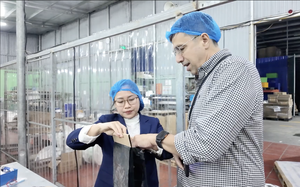
Speakers at a seminar on global trends in agricultural biotechnology and development orientations for Vietnam, November 10, 2026. Photo: Nguyen Hanh
Cautious approach needed in expanding GM crops
Drawing on Vietnam’s experience with GM corn cultivation, insect-resistant varieties had demonstrated clear benefits in agricultural production, said Dr. Tran Xuan Dinh, vice-chairman and general secretary of the Vietnam Seed Trade Association.
However, he noted that introducing GM crops into commercial farming still faced considerable challenges.
Businesses must navigate multiple stages of assessment, field trials and licensing procedures covering biosafety, food safety and animal feed safety before their varieties can receive approval for commercial circulation, Dinh said.
These lengthy procedures increase both the time and costs involved in bringing new products to market.
Prof. Tran Dinh Long, chairman of the Vietnam Seed Association, said gene-editing technology should be applied selectively, focusing on traits that conventional breeding methods struggle to address.
The economic benefits and practical applicability of each technology should also be carefully considered.
“We could start with crops that have less impact on export activities, such as flowers, food corn and waxy corn,” Long said.
“Rice, however, requires more careful consideration because of its implications for international markets and trade.”
Dr. Nguyen Van Vuong, head of the crop variety management division under the department, also stressed that expanding the range of GM crops in Vietnam requires thorough research and cautious assessment.
He pointed out that not all countries accept genetically modified crops, while Vietnam is a major agricultural exporter.
Without careful consideration, the expansion of GM crop cultivation could affect the marketability and export prospects of Vietnamese agricultural products, he warned.
- REFERENCE MORE
- REFERENCE MORE
Tieu Bac - Nguyen Hanh / Tuoi Tre News
Link nội dung: https://news.tuoitre.vn/gm-corn-accounts-for-half-of-vietnams-total-corn-growing-area-103261111154124743.htm