
Hanoi man dies after returning from Japan to care for sick mother, family donates his organs
A young Hanoi man who returned from Japan to care for his sick mother died suddenly from a brain hemorrhage, and his family donated his organs to give several critically ill patients a chance to live, according to Bach Mai Hospital.
The Hanoi-based hospital shared the story on Monday after the organ recipients began to show signs of stable recovery.
The man was born and raised in Hanoi. His father and younger sister died early, and he had lived with his mother for many years.
His mother said he was healthy, kind, caring and always willing to share with others.
About two years ago, he went to Japan to study, but after learning that his mother had fallen ill, he returned to Hanoi to take care of her, the hospital said.
One day in late August, he suddenly developed a severe headache accompanied by pain in his neck, shoulders and nape and was taken to a hospital.
Doctors diagnosed him with a subarachnoid hemorrhage caused by a ruptured aneurysm in his left vertebral artery, according to the hospital.
Despite intensive treatment, he suffered severe brain damage and fell into a deep coma, with widespread swelling in both cerebral hemispheres, falling blood pressure and progressively losing his reflexes.
As his brain injury became irreversible, his family decided to donate his organs to help other patients, the hospital said.
His mother said she had previously watched programs about organ donation and transplantation and had been moved by stories of people who donated their organs after death to help others continue living.
However, she had never imagined that her own family would one day have to make such a decision.
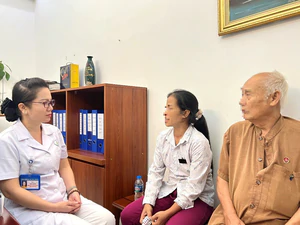
"We were devastated that our son died so suddenly. From an early age, our family taught him to be a kind person who loved and shared with others. This is the last good thing he could do, giving patients a chance to live," his mother said.
She also hoped that the organ recipients would remain healthy and safe so that her son could rest in peace.
After the family agreed to the donation, members of Vietnam's national organ donation and transplantation network were mobilized.
Procedures were urgently carried out to assess brain death, evaluate the quality of the donated organs and identify suitable recipients, the hospital said.
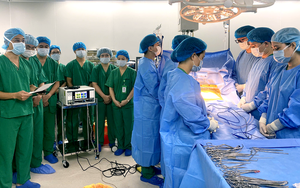
Assoc. Prof. Nguyen Van Chi, an expert at the hospital's A9 Emergency Center, said strict procedures were followed to ensure the quality of the donated organs, with medical teams carefully preparing for each stage of organ retrieval and transplantation.
Dr. Nguyen Ngoc Hung, director of the hospital's Center for Digestive Surgery, said organ retrieval and transplantation had become routine at the hospital, which can mobilize specialists from different departments as soon as a donor's family makes the decision.
"Every minute that passes is a chance of survival for people waiting for transplants," Dr. Hung said.
The man's heart, two kidneys, liver and two corneas were then allocated to patients, with the organ retrieval and transplantation coordinated among Bach Mai Hospital, the National Organ Transplant Coordination Center, Hue Central Hospital, 108 Military Central Hospital and the National Children's Hospital.
His heart was transplanted into a 37-year-old woman with dilated cardiomyopathy and severe heart failure who had been hospitalized several times for acute heart failure.
Her heart function improved after the transplant, Bach Mai Hospital said.
His two kidneys were transplanted into two patients with end-stage kidney failure who had depended on dialysis for a long time.
Both kidneys showed good initial function after transplantation.
His liver was transplanted into a six-year-old child with congenital biliary atresia and severe liver disease.
The child had undergone surgery at two and a half months of age before developing liver failure accompanied by severe hepatopulmonary syndrome, according to Bach Mai Hospital.
The child had waited for a liver transplant for nearly a year, while the parents had previously hoped to donate part of their liver but were not medically eligible to do so.
The two corneas were also allocated to patients with severe corneal damage.
One recipient was a woman in Ha Tinh Province who had suffered from severe ulceration of her left cornea for years and could only perceive light.
Her eye showed signs of recovery after the transplant, giving her a chance to improve her vision, the hospital said.
According to Bach Mai Hospital, the man's sudden death left his family mourning a loved one who was healthy and had many plans for the future.
But amid the loss, his mother's decision to donate his organs gave several critically ill patients a chance to live.

Vinh Tho - Duong Lieu / Tuoi Tre News