
Hanoi’s trackside coffee street remains bustling after foreign tourist’s phone knocked away by train
Cafés along Hanoi’s famous ‘Train Street’ were still opening their doors to customers early on Tuesday, just days after a foreign tourist’s phone was knocked from her hand by a passing train.
Tables were set up right beside the railway tracks, with tourists already arriving at the trackside coffee street.
Train knocks phone out of foreigner’s hand
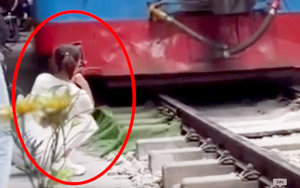
At around 2:00 pm on Friday last week, a group of four foreign tourists stood in front of a house in Van Mieu-Quoc Tu Giam Ward to film a train passing through the coffee street.
One woman in the group sat close to the railway tracks and used her phone to record the train.
As the train passed, the locomotive struck the phone, sending it flying away.
The tourist did not report the incident to police and left the area afterward.
A video capturing the incident began circulating on social media on Monday, prompting local authorities to quickly investigate the case.
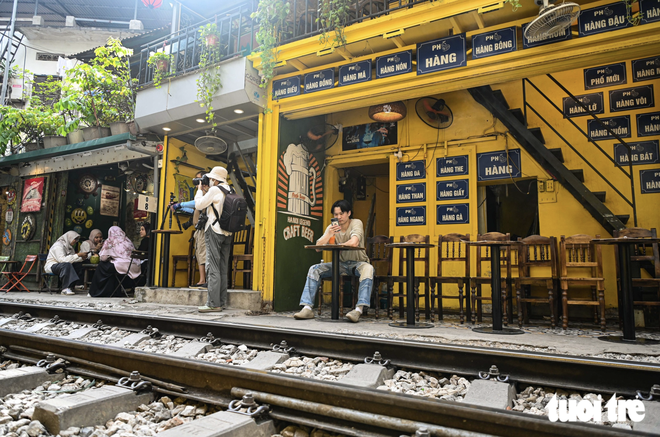
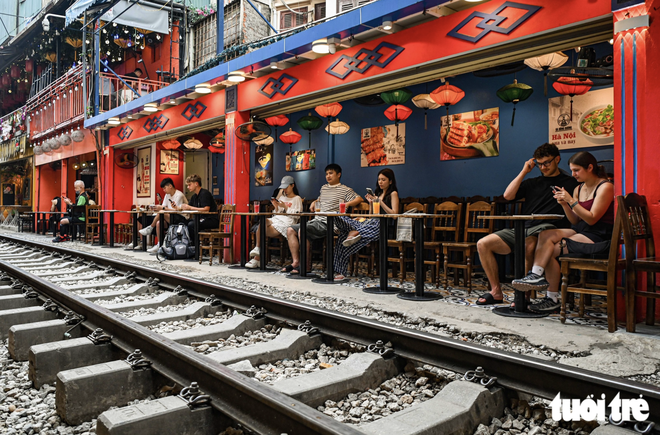
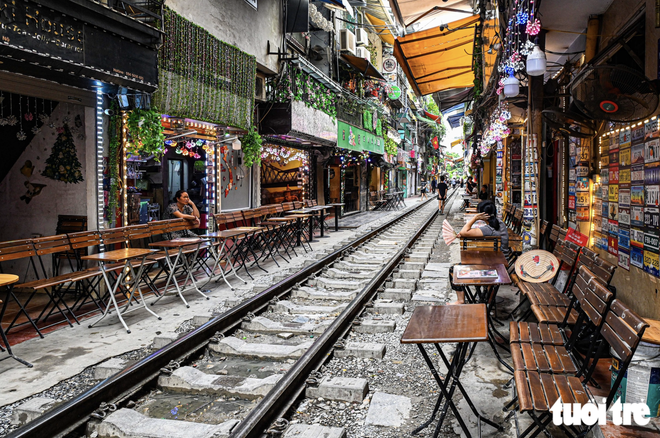
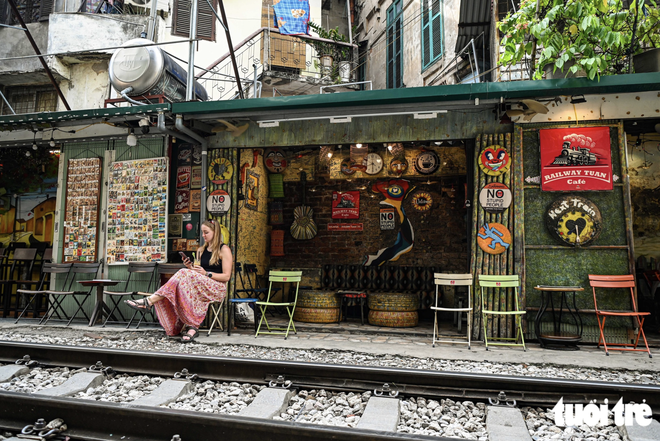
Tables are set up right beside the railway tracks, with tourists already arriving on Hanoi’s Train Street, August 11, 2026. Photo: Hong Quang / Tuoi Tre
Trackside sites create opportunities for business
Dung, who has lived near the tracks for more than 20 years, shared that he has witnessed the area’s transformation into what has become a neighborhood popular with foreign visitors.
His son, who had married and moved out, has now returned to live with him in the family’s roughly 20-square-meter house because its location directly alongside the railway offers business opportunities.
“It’s crowded in the morning, but the trains draw the biggest crowds around 3:00 to 4:00 pm,” he said.
Like Dung, local residents and people who have come from elsewhere to earn a living say it is difficult to give up their livelihoods simply because they serve drinks to tourists seeking the train street experience.
Narrow alleys running alongside railway tracks and crisscrossed by overhead electrical wires along Kham Thien, Dien Bien Phu, Le Duan, Phung Hung and Ly Nam De Streets have a rhythm of life distinctly different from that of streets just a few dozen meters away.
Nighttime and early morning are when long-time residents earn their livelihoods and live out their daily routines.
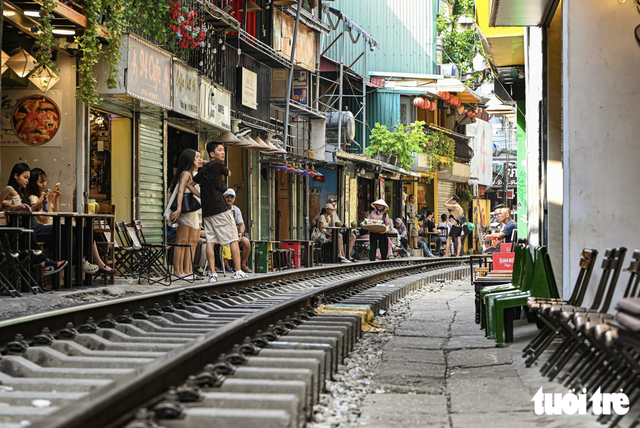
Tables and chairs are set up right alongside the railway tracks as the street grows busier after 8:00 am on August 11, 2026. Photo: Hong Quang / Tuoi Tre
As the first trains of the day sound their whistles, the neighborhood comes alive with noise and activity, including the chatter, shouting and even arguments involving foreign visitors who have been drinking.
The sounds continue from morning until late at night.
“We did not discover this place through any official tourism campaign,” said Lee Dae Jong, a South Korean tourist.
“We found out about it through social media.
“People share it a lot on Instagram.”
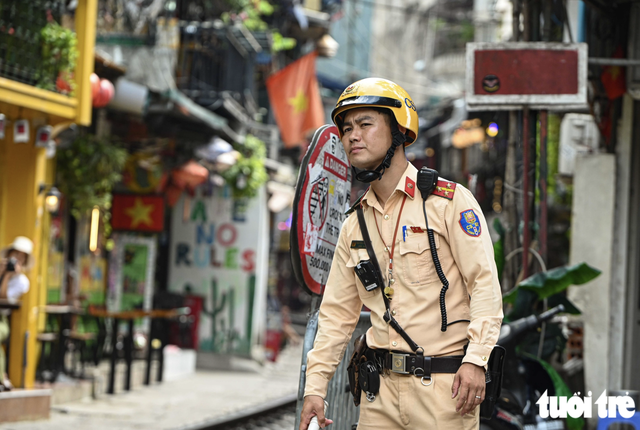
A police officer keeps watch ahead of the train’s arrival. Photo: Hong Quang / Tuoi Tre

Train street must be viewed through lens of railway safety
As the first trains begin sounding their whistles, a traffic police officer quickly arrives to monitor the situation.
He walks along the tracks, ensuring that no one sits too close to the rails and that tourists do not recklessly enter dangerous areas.
In 2019, authorities ordered businesses operating along the train street to be dealt with, but the activity has repeatedly returned after inspection campaigns.
Under a plan proposed by the Hanoi People’s Committee in January, passenger trains from the south would stop at Hanoi Railway Station, while passenger trains from the north would stop at Gia Lam Station.
Under the plan, the section between the two stations, where the busy train street and Long Bien Bridge are located, would no longer carry passenger trains.
A passenger transfer system between the two stations has also been considered.
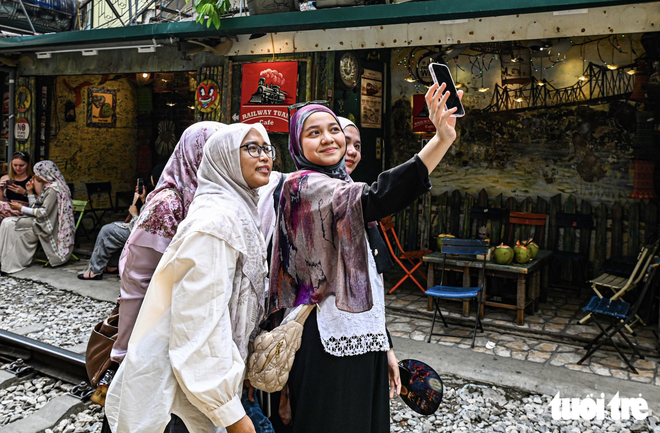
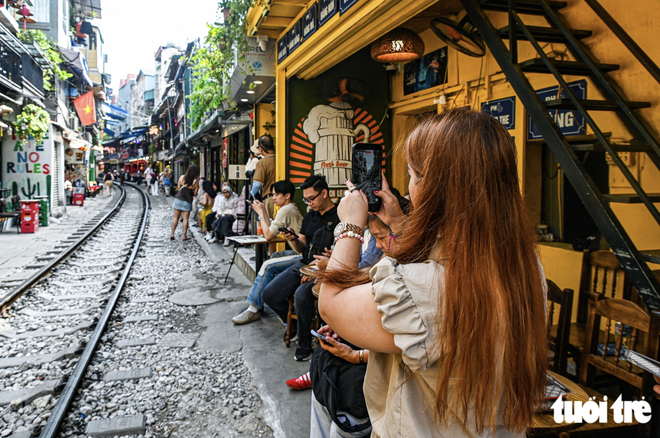
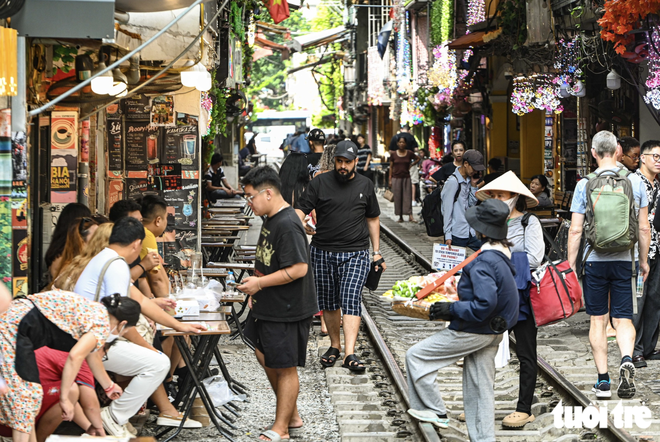
Hanoi’s trackside coffee street is crowded at 8:25 am, August 11, 2026. Photo: Hong Quang / Tuoi Tre
The incident in which the woman’s phone was struck is not the first mishap on the street caused by tourists’ careless behavior.
As such, Hanoi authorities have struggled to eliminate trackside coffee businesses, but have yet to resolve the issue completely.
Experts say authorities need to take stronger measures, even if doing so means accepting some trade-offs in terms of the tourist experience.
“The proposal to stop trains from running through Hanoi’s Train Street should not be viewed merely through the emotions of tourism, but through the operational logic and safety requirements of an urban railway system,” said Dr. Phan Le Binh, a transport expert and chief representative of the Japan-based OCG consulting office.
Tourism needs creativity, but railway transportation has a boundary that cannot be crossed, safety, he stressed.
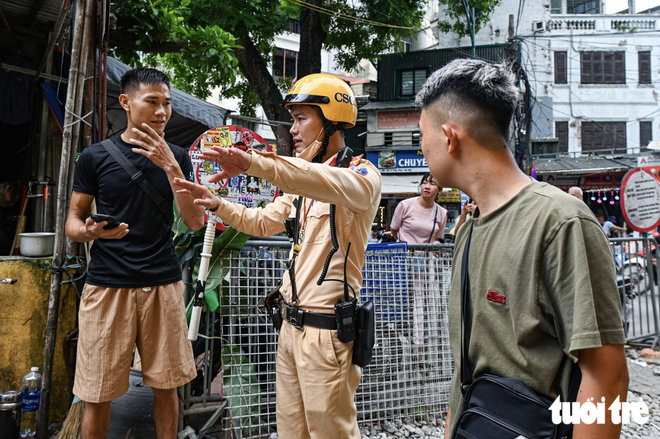
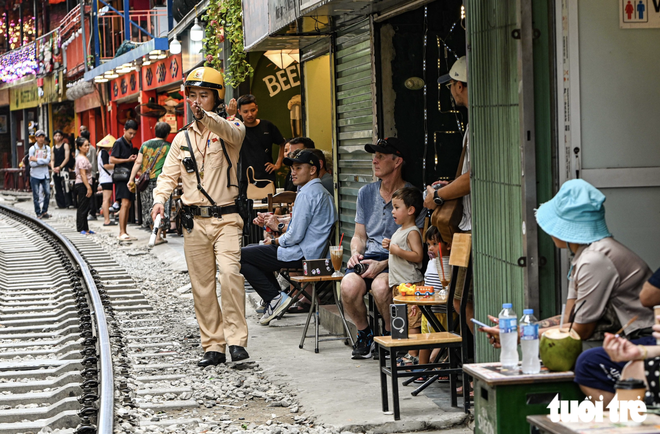
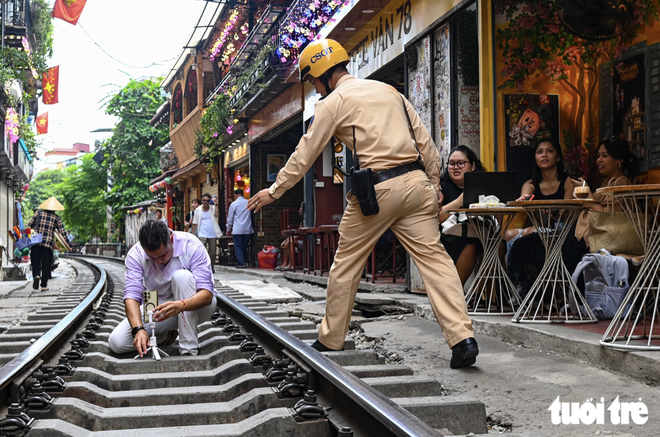
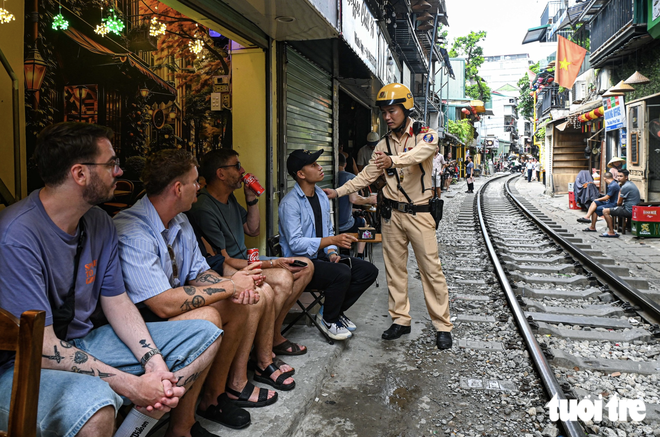
A traffic police officer repeatedly patrols the area, warning tourists who sit too close to the tracks or behave recklessly on the railway. Photo: Hong Quang / Tuoi Tre
He noted that trains are extremely difficult to stop within a short distance once they are moving.
In an urban area, if even one person or motorbike gets onto the tracks, an accident is almost impossible to avoid.
Even a minor collision with a train can result in extremely serious consequences.
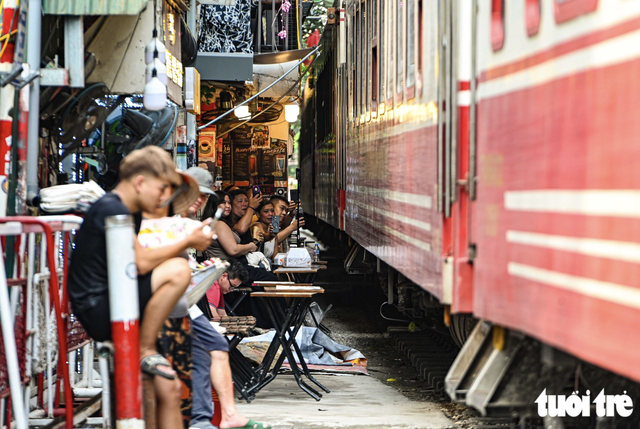
Tourists film as a train passes. Photo: Hong Quang / Tuoi Tre
While acknowledging the appeal of the Train Street, the expert said the dense concentration of cafés and other businesses immediately alongside railway tracks is an unusual and dangerous situation that would be virtually unacceptable in other cities around the world.
“If the trackside coffee street disappears, there will certainly be a sense of regret,” he said.
“However, Hanoi is not short of destinations.
“Tourism cannot be traded for the risk of a railway accident, because if such an accident occurs even once, the consequences could be unimaginable.”
Tieu Bac - Hong Quang / Tuoi Tre News