
Ho Chi Minh City seeks new growth model for AI era
Ho Chi Minh City is seeking a new growth model built on technology, human capital, and international cooperation as artificial intelligence reshapes the global economy, experts and officials said at the on-going 2026 Autumn Economic Forum on Tuesday.
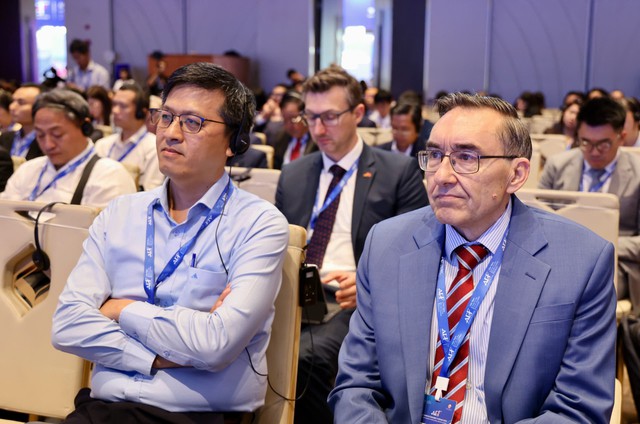
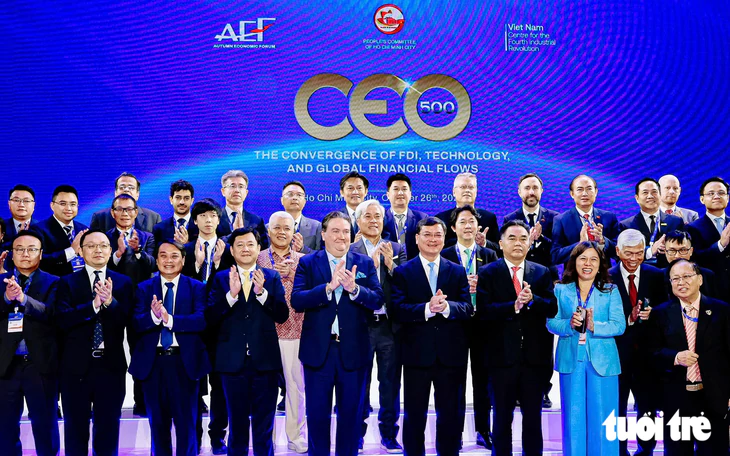
Experts and delegates attend the 2026 Autumn Economic Forum in Ho Chi Minh City, October 27, 2026. Photo: Courtesy of organizers
At the forum, held in the city from Monday to Thursday, experts and leaders discussed shifts in economic growth models and lessons from economic restructuring.
Nguyen Cong Vinh, vice-chairman of the Ho Chi Minh City administration, said the forum’s theme, ‘Cooperation Spirit in a New Era,’ reflected profound changes in the global economy, as value chains are being reorganized and traditional growth drivers are losing momentum.
AI has become a major force reshaping production methods, governance, and economic organization, Vinh said.
Citing the World Economic Forum’s Future of Jobs Report 2025, he said that 170 million jobs are projected to be created and 92 million others to be displaced by 2030, while 39 percent of workers’ existing skill sets could become outdated.
Against this backdrop, economic value will increasingly accrue to localities that can prepare their people, institutions and data infrastructure quickly enough to adapt, he said.
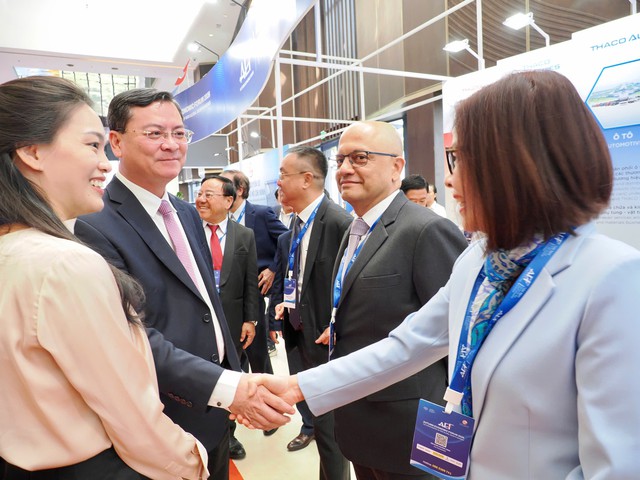
Nguyen Cong Vinh (L, 2nd), vice-chairman of the Ho Chi Minh City People’s Committee, speaks with delegates at the 2026 Autumn Economic Forum in Ho Chi Minh City, October 27, 2026. Photo: Courtesy of organizers
Vinh outlined three key considerations in developing a new growth model.
First, uncertainty is no longer an exception but a fundamental condition of the global economy. As a result, adaptability rather than size alone will determine long-term success.
Second, no economy can independently build all the data resources, technologies, capital, and talent it requires. Cooperation across borders and industries has become increasingly important.
Third, megacities are emerging as important actors in international cooperation alongside states.
Megacities, which are hubs of people, businesses, knowledge and innovation resources, are well positioned to lead new development models.
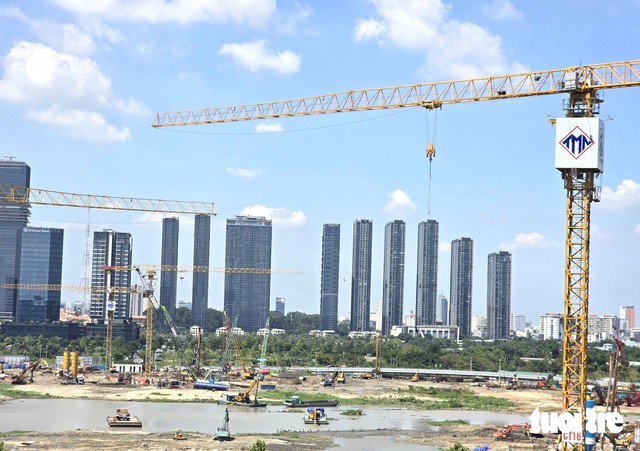
The new Ho Chi Minh City political and administrative center is under construction in Thu Thiem New Urban Area in An Khanh Ward, a project expected to help transform the city’s urban landscape. Photo: Cong Trieu / Tuoi Tre
Speaking at the event, Albert Antoine, chief strategy officer and co-founder of Singapore-headquartered digital transformation consultancy Avaiga, said AI is restructuring the global economy and intensifying competition among technology hubs.
Citing the emergence of DeepSeek in early 2025, which drew attention for its cost-efficient AI models, and the US$500-billion Stargate project in the U.S., Antoine highlighted the intensifying global race to build computing capacity.
While AI is expected to generate new industries and employment opportunities, Antoine warned that it could also cause significant job displacement and increase pressure on social welfare systems, the Singapore-based expert said.
However, income support measures cannot replace the need to improve workers’ skills and capabilities.
Drawing on nearly four decades of experience in Singapore, Antoine highlighted lifelong learning initiatives such as SkillsFuture as a way to upgrade the workforce.
Investment in education, people, manufacturing, and technology should be treated as a strategic priority for Vietnam and Ho Chi Minh City, he said.
He also urged Vietnam to leverage its intellectual resources and large workforce to pursue proactive partnerships with global tech companies.
The government has a crucial enabling role to play, Antoine said, including establishing specialized agencies modeled on Singapore’s GovTech and Infocomm Media Development Authority, creating regulatory sandboxes, and building an environment that encourages private businesses to invest in high-risk sectors such as AI.
Seizing the opportunities created by AI will require a coordinated strategy covering human resources, institutions, public investment, and international cooperation, he said.
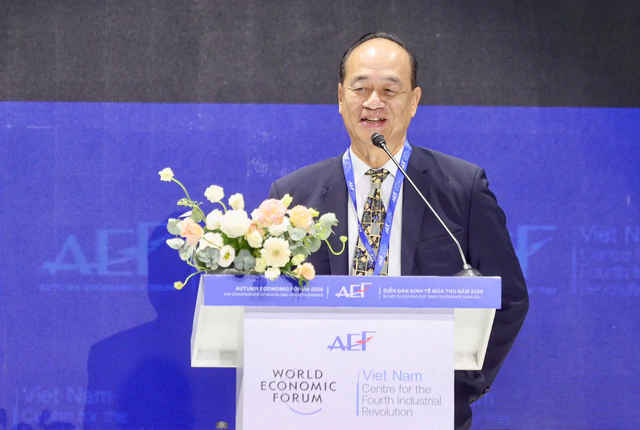
Albert Antoine, chief strategy officer and co-founder of Singapore-based Avaiga. Photo: Courtesy of organizers
The forum also highlighted ASEAN's growing appeal to international investors.
Nguyen Thuy Lam Tuyen, chairwoman, general director and country managing director of ABB in Vietnam, a tech group specializing in electrification and automation, said ASEAN's attractiveness is driven by three factors, including a large market with rising energy demand, expanding manufacturing capabilities, and strong regional integration.
She added that the bloc's competitive advantage is no longer based solely on low labor costs.
Countries such as Vietnam, Thailand, Malaysia, and Indonesia are increasingly investing in advanced manufacturing technologies and digital transformation.
ASEAN's economic integration through trade frameworks such as the Regional Comprehensive Economic Partnership has also strengthened the region's position as a connected production platform rather than a collection of separate economies.
Minh Duy - Cong Trieu / Tuoi Tre News
Link nội dung: https://news.tuoitre.vn/ho-chi-minh-city-seeks-new-growth-model-for-ai-era-103261027202523227.htm