
Ho Chi Minh City sets sights on becoming global city under 100-year master plan
Ho Chi Minh City is pursuing an ambitious vision to become a smart, modern, and globally competitive metropolis, with its population projected to reach between 18 million and more than 27 million by 2050.
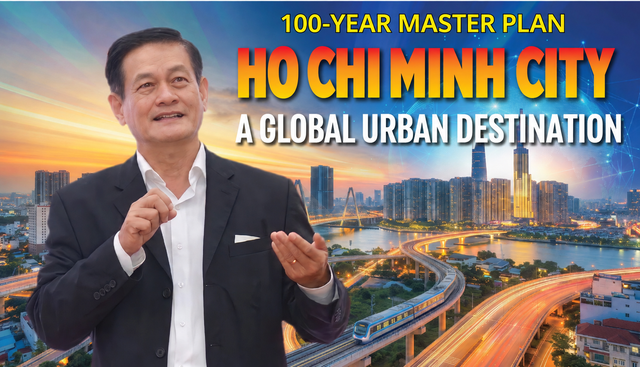
Urban planning expert Ngo Viet Nam Son discusses Ho Chi Minh City's 100-year master plan and its vision to transform the city into a globally connected metropolis.
The vision is outlined in the city's master plan for 2025-50, with a 100-year outlook, recently endorsed in Politburo Conclusion No. 112.
As the plan is set to shape the city's development for generations to come, Tuoi Tre (Youth) newspaper spoke with urban planning expert Dr. Ngo Viet Nam Son about what it will take for Ho Chi Minh City to realize its ambition of becoming a global metropolis.
Ho Chi Minh City's leading role in Vietnam's new era of development
As an architect deeply committed to Ho Chi Minh City's development, how do you feel about the city's master plan for 2025-50, with a 100-year vision, recently approved by the municipal People's Council?
Dr. Ngo Viet Nam Son: The master plan must be viewed in a broader context, as Vietnam is entering a new era of national development. Ho Chi Minh City therefore has a crucial role to play, not only as the country's leading city but also as a driving force behind Vietnam's urban development.
The city's success will be strategically important, providing valuable lessons that other localities can learn from and adapt to support their own development and contribute to the country's overall progress.
Like many experts across different fields, I am excited about the country's determination to pursue sustainable socio-economic growth. At the same time, I recognize the enormous challenges involved in turning such ambitious plans into reality.
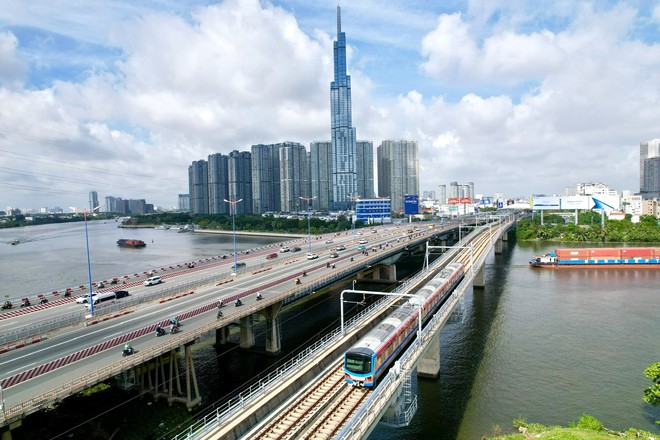
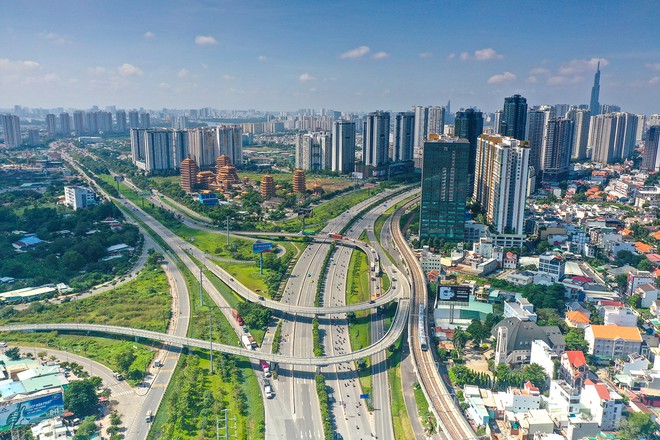
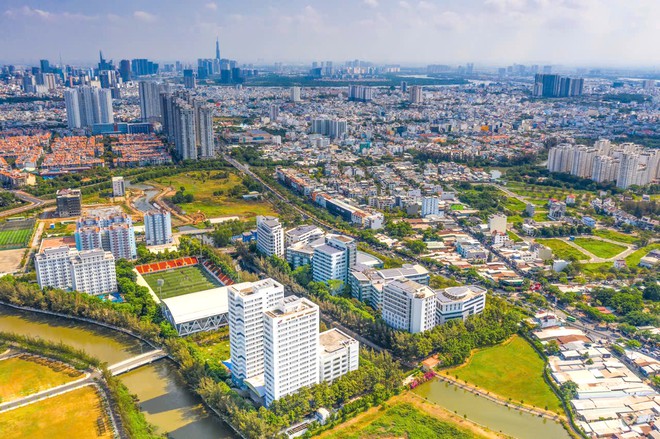
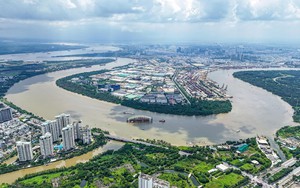
Accounting for approximately 23.4 percent of Vietnam's GDP, 30 percent of national budget revenue, and 30 percent of foreign direct investment, Ho Chi Minh City is entering a new phase of development with expanded space, greater potential, and new demands. Photo: Quang Dinh / Tuoi Tre
Still, I am optimistic about recent developments.
One major opportunity is the unprecedented potential for stronger regional integration, particularly between Ho Chi Minh City, Binh Duong, and Ba Ria-Vung Tau.
This will provide a foundation for a multipolar, multicenter urban model, further strengthening Ho Chi Minh City's position as a megacity.
The city is also looking to adopt internationally proven development models that remain relatively new to Vietnam, including transit-oriented development (TOD), airport cities, international financial centers, and free trade zones.
It is encouraging that Ho Chi Minh City now has a clearer sense of its long-term direction and development goals.
Equally important, the plan places climate change adaptation, flood prevention, quality of life, heritage preservation, and digital transformation at the center of its development strategy.
These priorities will be crucial to building a sustainable, competitive metropolis in the decades ahead.
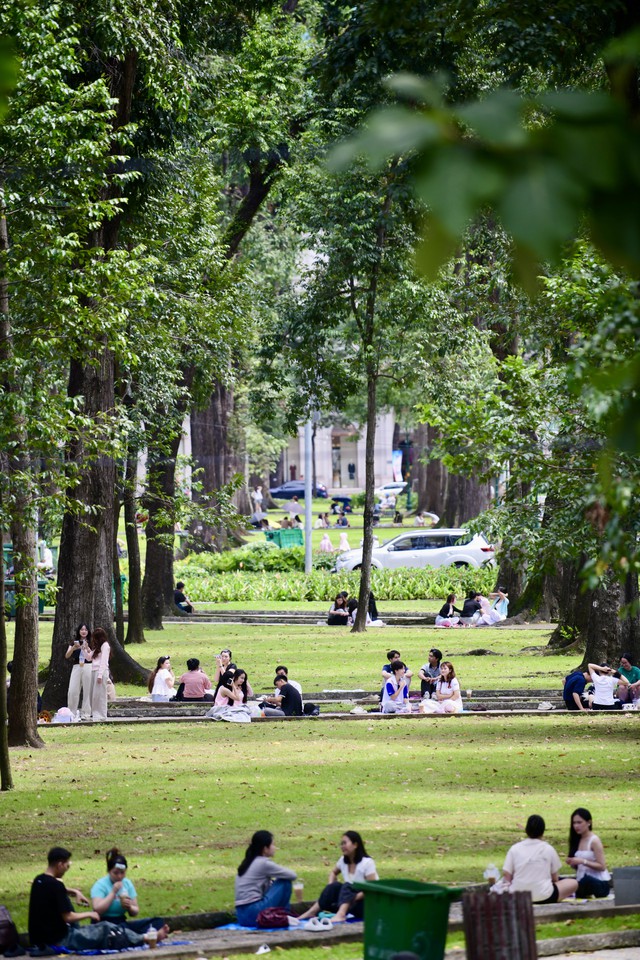
The development of five satellite urban centers will create more opportunities for Ho Chi Minh City to expand green spaces in its urban core. Photo: Quang Dinh / Tuoi Tre
Ho Chi Minh City previously had a population of 14 million, but the actual number of people living and working there was much higher, particularly in its urban core. The new master plan projects populations of 18 million by 2030, 25 million by 2045, and more than 27 million by 2050. How should these figures be interpreted?
The city's actual population has already exceeded 14 million, although not everyone is captured in official statistics. This includes temporary visitors and people who live and work in the city for extended periods without registering as permanent residents.
From an urban planning perspective, the figures of 18 million, 25 million, and 27 million should be understood as planning targets that will guide the city's preparations for infrastructure and public services capable of meeting the needs of both permanent and non-permanent residents.
Regardless of their residency status, everyone living and working in the city contributes to its socio-economic growth. The city's infrastructure must therefore be able to serve them all.
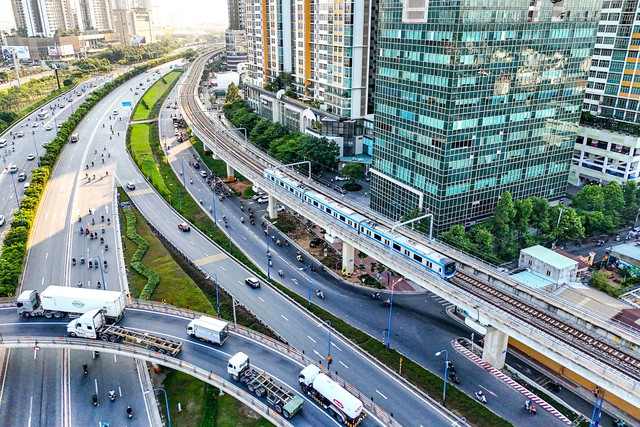
As transit-oriented development (TOD) takes shape, urban living environments will become more convenient, while residents gradually adapt to a more modern urban lifestyle. Photo: Quang Dinh / Tuoi Tre
5 satellite urban centers and the 15-minute city concept
How can the development of five satellite urban centers, including Con Dao, Long Hai-Ho Tram, Hoc Mon-Cu Chi, Bau Bang, and Tan Uyen-Bac Tan Uyen, help Ho Chi Minh City tackle the challenges facing major metropolitan areas?
The most important thing is to ensure that these satellite centers offer the same essential infrastructure, public services, and amenities as the inner city, though on a smaller scale. This would allow residents to meet their daily needs without relying on the city center.
Historically, Ho Chi Minh City has followed a largely monocentric development model, with its best schools, hospitals, parks, and most vibrant economic activities concentrated in the urban core.
Even as satellite urban areas emerged, many lacked essential services, forcing residents to commute to the city center for work, education, healthcare, shopping, and entertainment.
This has led to heavy traffic congestion, overcrowding, and mounting pressure from dense urban development.
The city's five planned satellite centers should therefore be developed into self-sufficient communities based on the 15-minute city concept, where residents can access jobs, essential services, and everyday amenities within a short distance of their homes.
Such an approach would deliver five major benefits.
First, it would ease population pressure on the inner city by encouraging people to relocate to areas with adequate jobs and amenities.
Second, it would reduce unnecessary commuting across the urban core, helping ease traffic congestion as more people live and work within the same communities.
Third, it would create opportunities to expand green spaces, water bodies, and public facilities in the city center. Ho Chi Minh City currently has just 0.5 square meters of green space per person, compared with a target roughly 20 times higher.
Fourth, spreading development more evenly would create a healthier, less crowded urban environment and support long-term sustainability.
Fifth, it would help establish a more balanced and harmonious urban structure.
Ultimately, the success of satellite urban centers will depend on more than providing affordable housing. They must also offer employment opportunities, essential services, and a good quality of life.
Only then can residents build their lives and careers locally rather than having to travel long distances in search of opportunities.
Multilevel urban planning: Aboveground, underground, and elevated spaces
Ho Chi Minh City's development space, largely concentrated at ground level, has become increasingly limited. The master plan calls for a multilevel approach that integrates aboveground, underground, and elevated spaces. How will this reshape urban lifestyles, particularly as residents adapt to high-density developments and underground transport systems?
As new development models such as transit-oriented development (TOD) take shape, residents will need to adapt to new ways of living and moving around the city.
At ground level, Ho Chi Minh City has traditionally been shaped by a combination of street-front houses and motorbikes, with people often riding even for trips of just 50-100 meters.
As the city shifts toward high-rise developments, metro lines, bus networks, and a multicenter urban structure connecting former Binh Duong, Ba Ria-Vung Tau, Bien Hoa, and other areas, residents will gradually embrace walking and public transport as safer and more convenient alternatives to motorbikes.
With millions of people expected to walk between their homes, metro stations, and bus stops, the city's streetscape will also have to change. Sidewalk encroachments must be cleared, and pedestrian spaces restored.
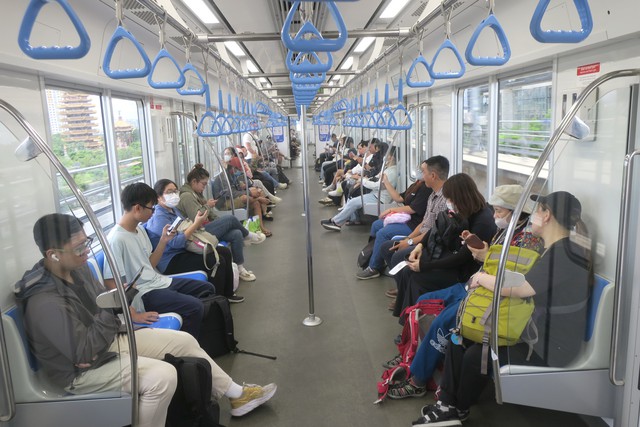
Residents are gradually shifting toward public transport as a safer alternative to private vehicles. Photo: T.T.D / Tuoi Tre
Underground, major transport hubs such as Ben Thanh Station and the area bounded by Nguyen Hue, Le Loi, and Ham Nghi Boulevards offer significant opportunities for multifunctional underground development as the metro network expands.
Residents could eventually walk directly from Ben Thanh Station through underground passages to nearby buildings such as The Spirit of Saigon, the SJC building, and the former Tax Trade Center site without returning to street level.
These underground connections would offer a cooler, safer walking environment, free from conflicts with road traffic.
However, they would also require a much higher standard of urban management.
Underground spaces should not be limited to pedestrian passages connecting stations and buildings. They should also accommodate retail, services, public activities, parking facilities, and essential infrastructure.
This includes ventilation, air conditioning, fire prevention and safety systems, emergency exits, drainage networks, and stormwater retention facilities to help reduce flooding.
At elevated levels, densely developed downtown areas could feature pedestrian skybridges linking the podiums or upper floors of neighboring high-rise buildings.
Across all three levels, urban management will need to evolve to address the boundaries between public, private, and semi-public spaces.
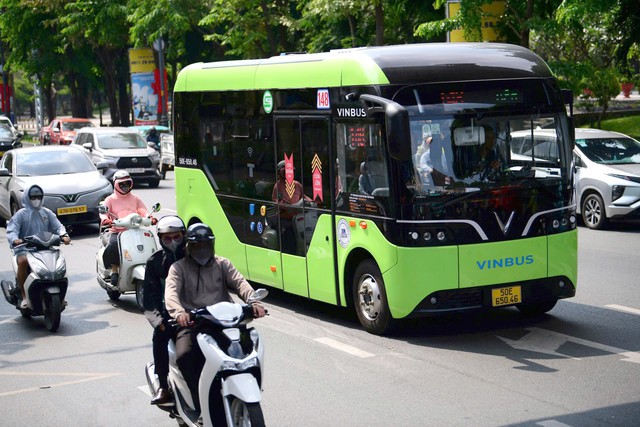
Ho Chi Minh City's public transport network is becoming increasingly diverse, with various modes connecting destinations within the city and neighboring provinces. Photo: T.T. Dung / Tuoi Tre
Effective urban management key to tackling flooding and traffic congestion
Some may wonder whether a multipolar, multicenter urban development model can actually reduce flooding and traffic congestion. What is your opinion?
In theory, a well-designed master plan can significantly reduce the risks of flooding and traffic congestion. In practice, however, its success depends largely on how effectively it is implemented and how well urban development is managed afterward.
A good master plan is a necessary condition, but effective implementation and management are what ultimately make it work.
Take the South Saigon development project, which we helped design, as an example. The master plan applied consistent planning standards across a 2,600-hectare area stretching 17 kilometers.
Yet the outcomes have been markedly different.
Phu My Hung has maintained extensive green spaces and waterways, along with effective drainage systems, leaving it largely free from flooding even during heavy rainfall.
Meanwhile, surrounding areas such as Le Van Luong and Huynh Tan Phat Streets, despite falling under the same planning framework, have experienced a different pattern of development.
Under local management, unregulated land subdivision and construction, along with the filling of ponds and canals for widespread concrete development, have contributed to persistent flooding.
This shows that a good master plan is only half the equation. Without effective oversight, uncontrolled construction and excessive concrete development can still leave a city vulnerable to flooding and traffic congestion.
Effective implementation and urban management key to success
Following the merger, Ho Chi Minh City has a much larger development area, but traveling between different parts of the city remains difficult. How can such a vast, multipolar, multicenter metropolis be managed while ensuring convenience for residents?
If the 15-minute city model is successfully implemented, residents will be able to meet most of their daily needs, including work, education, healthcare, administrative services, and shopping, within 15 minutes of their homes during the five-day workweek.
Even administrative procedures could be handled at local offices rather than requiring trips to the inner city.
People would then mainly travel longer distances on weekends, such as residents of former Binh Duong heading to Vung Tau for a beach getaway or those in the inner city visiting Da Lat or Nha Trang.
Even if weekend travel creates overlapping traffic flows, it would be less problematic because demand would no longer be concentrated during weekday rush hours.
From a governance perspective, authorities must make full use of digital technology, including online meetings, digital building permit applications, and online public services for administrative procedures.
The master plan only sets out the direction for development. The next challenge is how to put it into practice and manage urban growth effectively.
That challenge is no less demanding than drafting the plan itself.
For a megacity like Ho Chi Minh City, the greatest challenge is no longer defining its long-term vision but turning that vision into reality and effectively managing an urban area of unprecedented scale over the coming decades.
The real test is only beginning, and the city must start preparing for it today.
Tuoi Tre News
Link nội dung: https://news.tuoitre.vn/ho-chi-minh-city-sets-sights-on-becoming-global-city-under-100-year-master-plan-103261106184201529.htm