
Ho Chi Minh City's 100-year master plan: Where can affordable housing find its place?
As Ho Chi Minh City charts its long-term development toward a megacity of more than 27 million people by 2050, the distribution of affordable housing across emerging growth centers is becoming an important consideration for urban planners and middle-income residents alike.
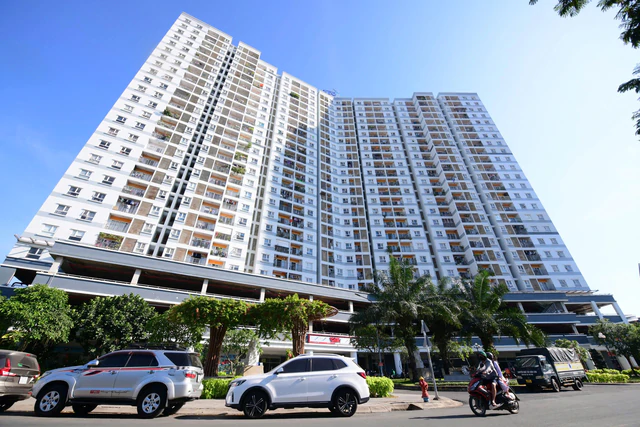
High-rise residential buildings in Ho Chi Minh City. The city's 100-year master plan could create new opportunities to expand housing options for middle-income households. Photo: Quang Dinh / Tuoi Tre
More homes, but not necessarily more affordable
For many middle-income households in Ho Chi Minh City, owning a home remains out of reach despite years of working and saving.
One couple, who had lived and worked in the city for eight years, managed to save nearly VND700 million (US$27,120). With their first child on the way, they began looking for a two-bedroom apartment.
Their combined monthly income exceeded VND50 million ($1,940), putting them above the income threshold for social housing. Yet a commercial apartment priced at around VND4 billion ($155,000) remained beyond their budget.
Their experience is hardly unusual in a city where apartment prices remain high.
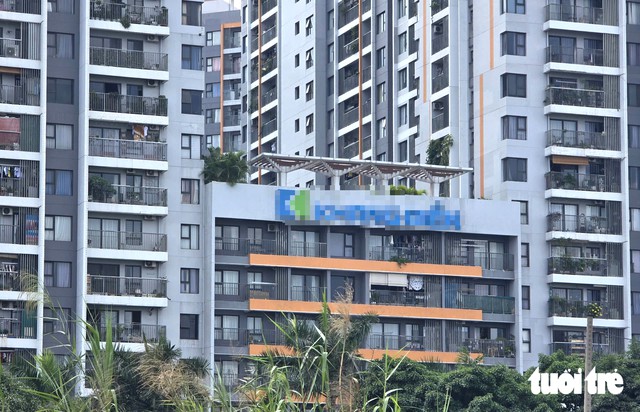
A residential apartment complex in Ho Chi Minh City. Photo: Supplied
A report by property services firm DKRA Group showed that the average primary apartment price in Ho Chi Minh City stood at VND69.3 million ($2,685) per square meter in October 2026, despite an increase in housing supply.
At that price, a 60-square-meter apartment would cost around VND4.16 billion ($161,000), well beyond the budget of many middle-income households.
New housing supply has also been unevenly distributed, with a substantial share concentrated in the former Binh Duong Province. The area accounted for more than 55 percent of the 21,165 apartments approved for sale in the first seven months of 2026, according to Savills.
But the imbalance extends beyond location to affordability. In the city's core market, high-end, luxury, and ultra-luxury apartments accounted for 86 percent of new launches in the third quarter of 2026, leaving just 14 percent in the mid-range segment, according to Cushman & Wakefield.
The imbalance extends beyond location. In the former Ho Chi Minh City area, high-end, luxury, and ultra-luxury apartments accounted for 86 percent of new launches in the third quarter of 2026, leaving just 14 percent in the mid-range segment, according to Cushman & Wakefield.
With much of the new supply concentrated in higher-priced segments, questions remain over where more affordable homes could be developed as the city expands.
Can a multi-centered city make housing more accessible?
Ho Chi Minh City's 100-year master plan envisions a multi-centered urban structure, with five growth poles and five satellite centers designed to distribute economic activity, infrastructure, and urban services across the expanded metropolis.
The shift could create new opportunities to address the city's housing affordability challenges by moving residential development beyond the traditional urban core and closer to emerging employment hubs in the former Ho Chi Minh City, Binh Duong, and Ba Ria-Vung Tau areas.
Tran Hoang Nam, head of the Real Estate program at the University of Economics and Finance (UEF) in Ho Chi Minh City, said the expansion could support a more diverse housing supply, including commercial and social housing, rental homes, and rent-to-own options.
Better transport connectivity could also allow residents to live farther from the city center while maintaining convenient access to jobs and essential services.

Tran Hoang Nam, MSc, head of the Real Estate program at the Ho Chi Minh City University of Economics and Finance (UEF). Photo: Supplied
However, Nam cautioned that a larger urban footprint would not automatically translate into more affordable homes. The outcome would depend on where housing is developed, the types of homes supplied, and whether they match residents' incomes and needs.
"Affordable housing should not simply be developed where land is cheaper, but where residents can afford to live while having convenient access to jobs, transport, and essential services," he said.
Nam identified four priority locations for affordable housing: emerging employment hubs, public transport corridors, developing urban areas, and established neighborhoods suitable for redevelopment.
Housing near industrial parks, high-tech zones, commercial centers, and logistics facilities could serve workers and young families, while transit-oriented development (TOD) along metro lines, regional railways, and bus networks could expand residential choices without increasing dependence on private vehicles.
New urban areas could accommodate additional housing if essential infrastructure and public services were developed alongside residential projects. Meanwhile, urban renewal and more efficient land use in established neighborhoods could increase supply without pushing middle-income residents exclusively toward the outskirts.
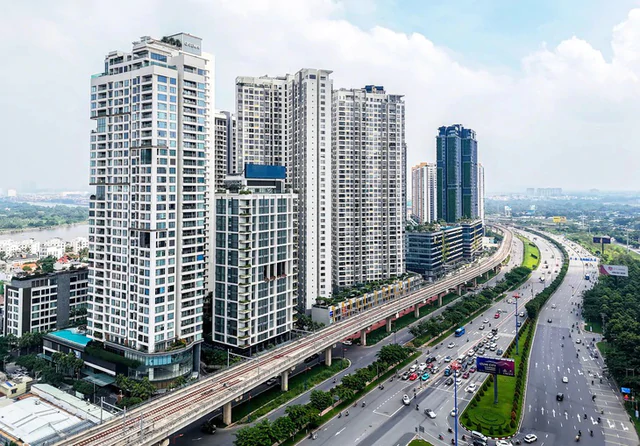
The development of social housing, rental housing, and affordable commercial housing linked to metro lines and transit-oriented development (TOD) is among the key directions in Ho Chi Minh City’s comprehensive master plan. Photo: Chau Tuan / Tuoi Tre
Beyond location, Nam emphasized that housing development should reflect the expected population, employment structure, and income levels of each growth center.
He also argued that affordability should be measured against total living costs rather than property prices alone.
"A lower-priced apartment located far from work, without public transport or essential services, is not necessarily an economical choice for residents," he said.
This would require housing, transport, schools, healthcare facilities, and public spaces to be planned together. Even homes near metro stations might remain poorly connected without safe pedestrian access, feeder buses, and links to surrounding neighborhoods.
Environmental risks, including flooding, land subsidence, and climate-related hazards, would also need to be addressed to ensure that lower housing prices do not come at the expense of higher long-term living costs.
Making affordable housing part of the city's growth
Realizing the housing potential of Ho Chi Minh City's multi-centered development strategy will require specific land-use policies, financial mechanisms, and incentives to encourage the construction of homes that middle-income residents can afford.
Tran Hoang Nam outlined five policy priorities to make affordable housing an integral part of the city's emerging growth centers.
First, the city should secure land for affordable housing before new growth centers take shape and rising land prices make development more difficult.
Housing needs and land allocations should be determined by the projected population, employment structure, and purchasing power of each growth center. Public land, sites eligible for conversion, and urban redevelopment areas should also be considered, particularly near employment hubs and public transport corridors.
Second, the city should explore land value capture (LVC), allowing authorities to recover part of the increase in land values generated by public infrastructure investment and planning decisions.
The proceeds could be reinvested in public transport, social infrastructure, land acquisition, and affordable housing, particularly in transit-oriented development (TOD) areas. Nam stressed that the calculation, recovery, and use of these funds must be transparent.
Third, stronger incentives are needed to encourage private developers to build moderately priced commercial housing.
Nam noted that many middle-income households do not qualify for social housing but still cannot afford market-priced apartments. He suggested easier land access, streamlined investment procedures, and appropriate financial or planning incentives.
Mixed-income developments could also diversify supply, provided that developer incentives are tied to clear conditions on selling prices, buyer eligibility, and affordability periods.
Fourth, affordable housing targets should be incorporated into the planning of each growth center and TOD area, rather than addressed through individual projects alone.

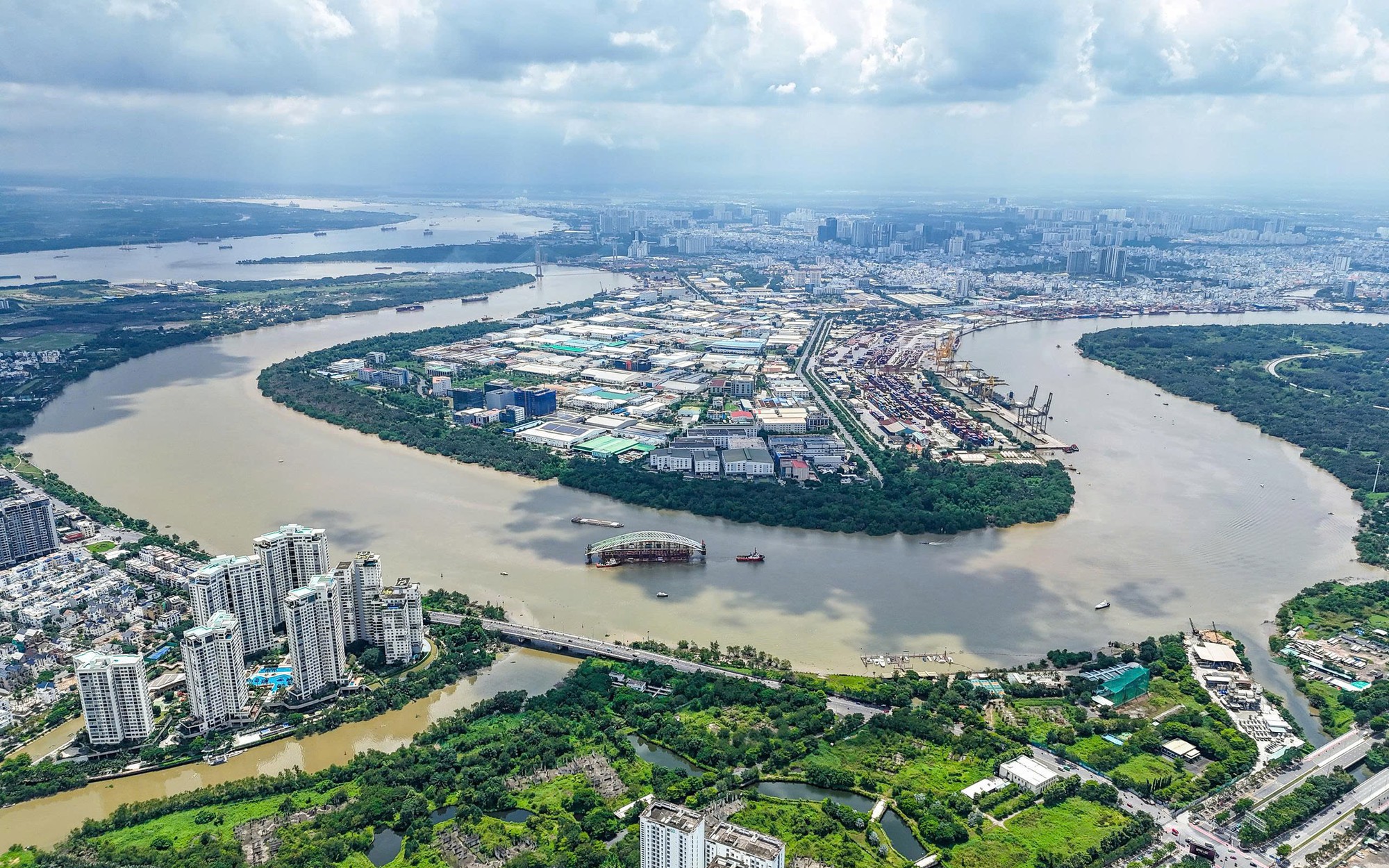
These targets should reflect local housing demand and income levels, ensuring that moderately priced homes are developed near jobs, public transport, and essential services instead of being pushed toward cheaper, less accessible locations.
Fifth, the city should diversify housing financing and options beyond outright ownership.
Nam proposed mobilizing long-term investment for rental housing while encouraging long-term rentals, rent-to-own arrangements, and smaller, efficiently designed apartments. Cost reductions, he said, should come from greater efficiency rather than compromises in housing quality.
He also cautioned against treating the former Binh Duong and Ba Ria-Vung Tau areas merely as additional land reserves, noting that their different economic functions, environmental conditions, and housing needs require tailored policies.
Ultimately, Nam argued that the city must move beyond relying on market-driven supply and actively shape a housing market that reflects residents' needs and purchasing power.
"The effectiveness of housing policies should not be measured solely by the number of apartments built or the total floor area supplied, but by whether people can actually afford to buy or rent a home, commute conveniently to work, and access essential services," he said.
A new growth center, he added, can only develop sustainably if households across different income groups have opportunities to live there.
Ngoc Nguyen / Tuoi Tre News
Link nội dung: https://news.tuoitre.vn/ho-chi-minh-citys-100-year-master-plan-where-can-affordable-housing-find-its-place-103261119141834615.htm